The First Clinical Medical College of Guangzhou University of Chinese Medicine, No. 16 Airport Road, Baiyun District, Guangzhou, 510504, Guangdong Province, China.
Department of Ophthalmology, The First Affiliated Hospital of Guangzhou University of Chinese Medicine, Guangzhou, 510504, Guangdong Province, China.
Sci Rep. 2024 Oct 3;14(1):22947. doi: 10.1038/s41598-024-73337-4.
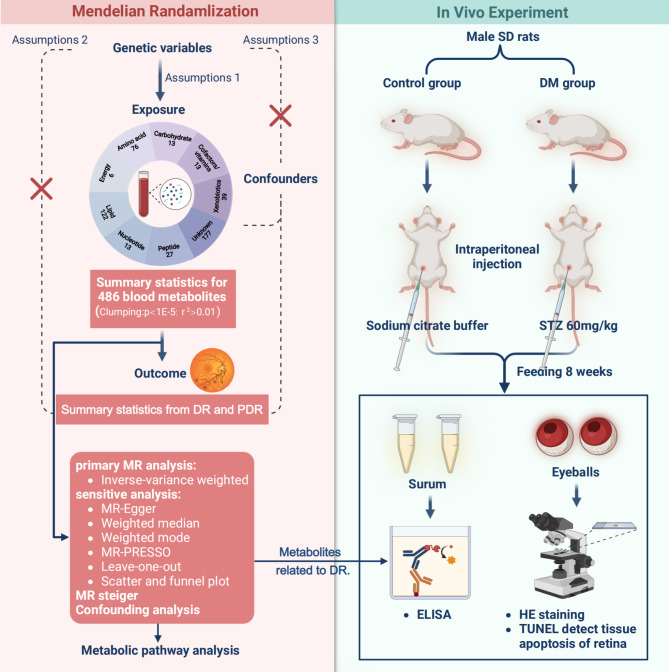
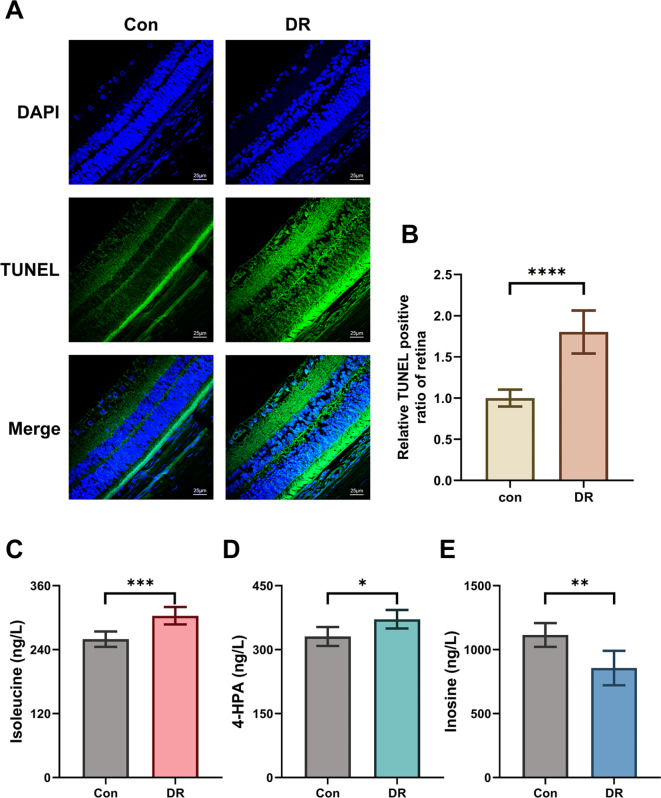
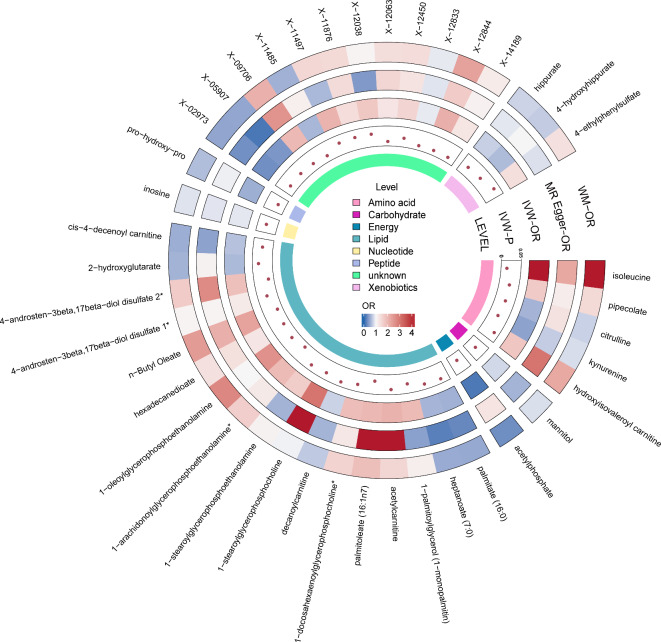
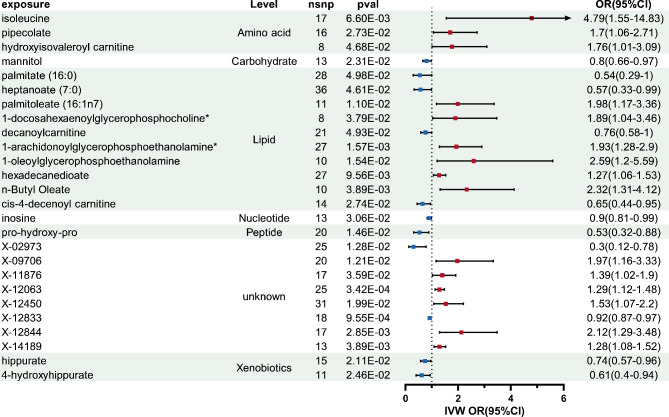
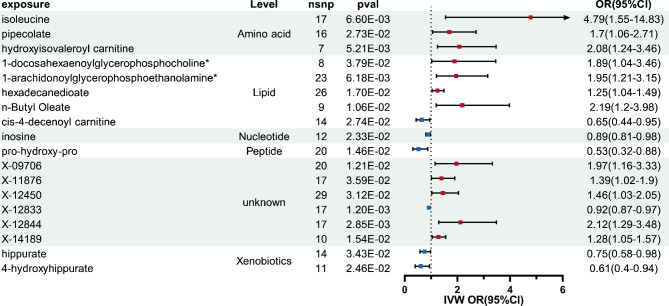
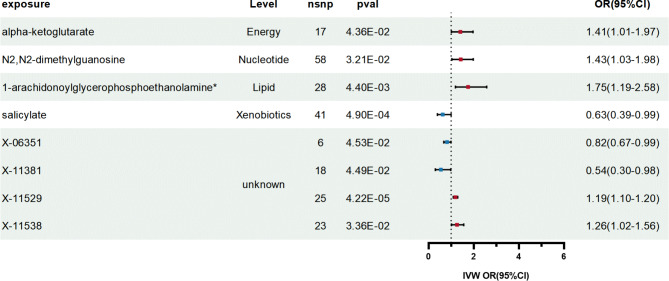
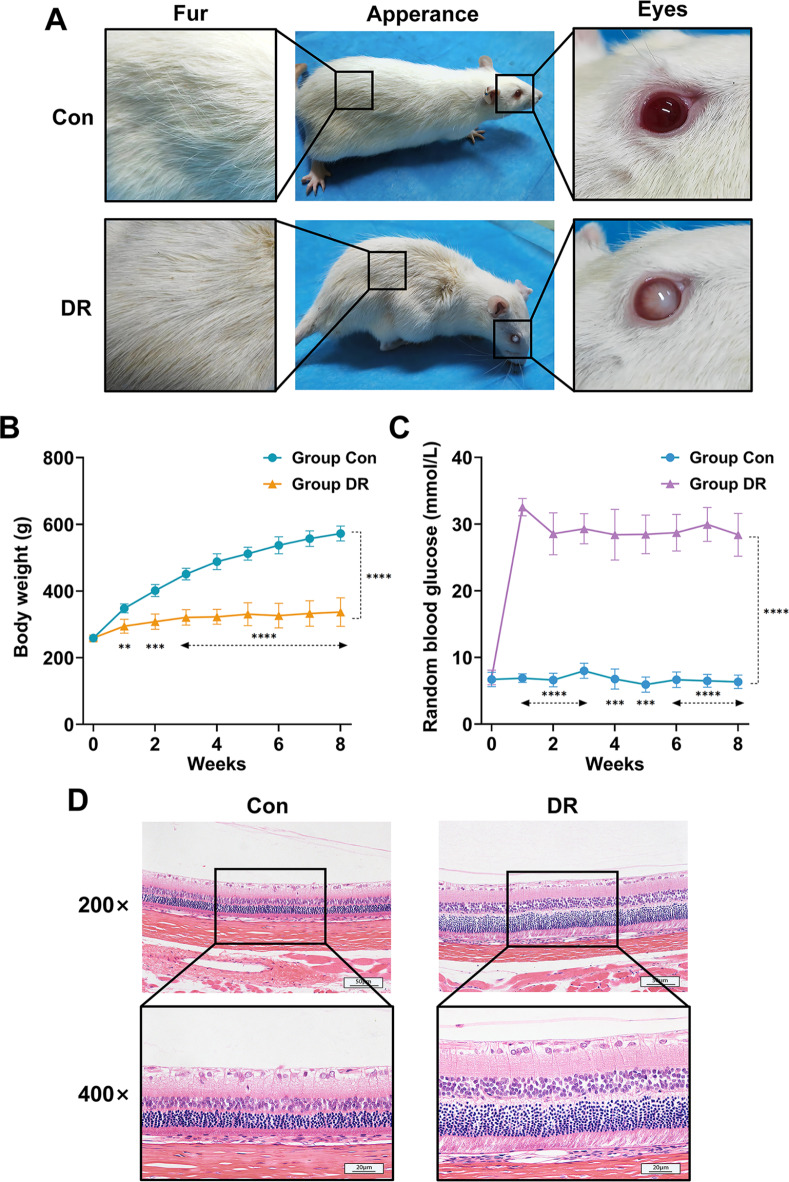
We addressed fundamental questions about the influence of metabolites on the development of Diabetic retinopathy (DR), and explored the related pathological mechanism. Genome-wide association study (GWAS) database data for metabolites and DR were used to perform Mendelian randomization (MR) studies. The inverse variance weighting (IVW) was chosen as the primary analysis method. Sensitivity analysis was conducted using MR-PRESSO, leave-one-out and Cochran's Q test. Confounding factors were eliminated to ensure robustness. We also conducted metabolic pathway analysis. In vivo experimental validation was conducted using Sprague Dawley rats. The serum metabolites of the DR group rats and normal group rats were examined to evaluate the MR results. The screen identified eighteen metabolites associated with DR risk, twelve of which were known components. Seven metabolites were positively correlated with DR risk, while five could reduce it. Eight metabolites associated with proliferative DR (PDR) risk were identified, four of which are known components. Three of these were positively associated with PDR risk and one metabolite reduced PDR risk. Additionally, two possible metabolic pathways involved in the biological mechanism of DR were identified. The ELISA results showed that the serum levels of isoleucine and 4-HPA were significantly increased in DR rats, while the level of inosine was decreased. This study offers novel insights into the biological mechanisms underlying DR. Metabolites that are causally linked to DR may serve as promising biomarkers and therapeutic targets.
我们探讨了代谢物对糖尿病视网膜病变(DR)发展的影响的基本问题,并探索了相关的病理机制。使用代谢物和 DR 的全基因组关联研究(GWAS)数据库数据进行孟德尔随机化(MR)研究。选择逆方差加权(IVW)作为主要分析方法。使用 MR-PRESSO、单样本剔除和 Cochran's Q 检验进行敏感性分析。消除混杂因素以确保稳健性。我们还进行了代谢途径分析。使用 Sprague Dawley 大鼠进行体内实验验证。检查 DR 组大鼠和正常组大鼠的血清代谢物,以评估 MR 结果。筛选确定了与 DR 风险相关的十八种代谢物,其中有 12 种是已知成分。七种代谢物与 DR 风险呈正相关,而五种代谢物可以降低 DR 风险。确定了与增殖性 DR(PDR)风险相关的八种代谢物,其中有四种是已知成分。其中三种与 PDR 风险呈正相关,一种代谢物降低了 PDR 风险。此外,还确定了两个可能涉及 DR 生物学机制的代谢途径。ELISA 结果表明,DR 大鼠血清中的异亮氨酸和 4-HPA 水平显著升高,而肌苷水平降低。这项研究为 DR 的生物学机制提供了新的见解。与 DR 有因果关系的代谢物可能成为有前途的生物标志物和治疗靶点。