Department of Pediatrics, School of Medicine, University of Yamanashi, Chuo, Yamanashi, Japan.
Clinical Research Center, Murayama Medical Center, 2-37-1 Gakuen, Musashimurayama, Tokyo, 208-0011, Japan.
Sci Rep. 2024 Oct 3;14(1):22984. doi: 10.1038/s41598-024-73345-4.
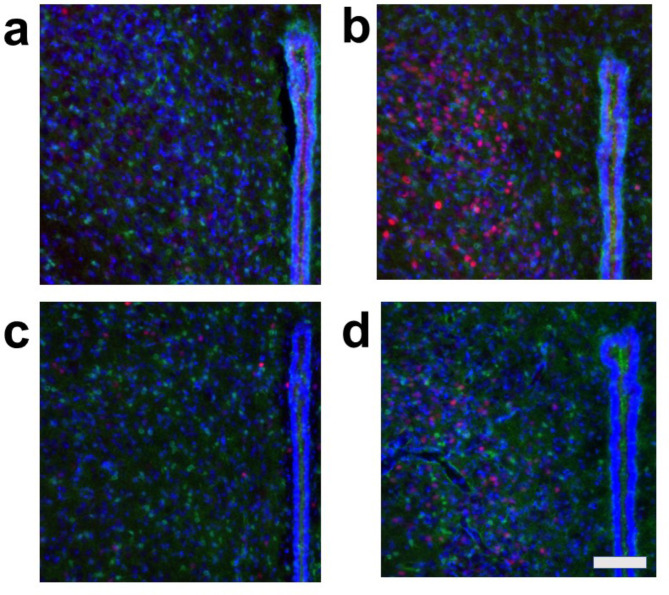
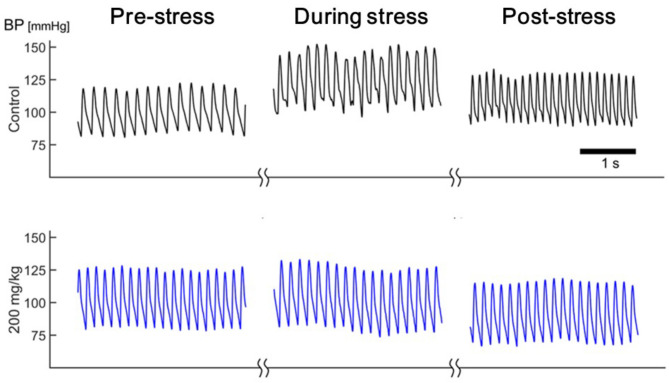
The reflexive excitation of the sympathetic nervous system in response to psychological stress leads to elevated blood pressure, a condition that persists even after the stress has been alleviated. This sustained increase in blood pressure, which may contribute to the pathophysiology of hypertension, could be linked to neural plasticity in sympathetic nervous activity. Given the critical role of astrocytes in various forms of neural plasticity, we investigated their involvement in maintaining elevated blood pressure during the post-stress phase. Specifically, we examined the effects of arundic acid, an astrocytic inhibitor, on blood pressure and heart rate responses to air-jet stress. First, we confirmed that the inhibitory effect of arundic acid is specific to astrocytes. Using c-Fos immunohistology, we then observed that psychological stress activates neurons in cardiovascular brain regions, and that this stress-induced neuronal activation was suppressed by arundic acid pre-treatment in rats. By evaluating astrocytic process thickness, we also confirmed that astrocytes in the cardiovascular brain regions were activated by stress, and this activation was blocked by arundic acid pre-treatment. Next, we conducted blood pressure measurements on unanesthetized, unrestrained rats. Air-jet stress elevated blood pressure, which remained high for a significant period during the post-stress phase. However, pre-treatment with arundic acid, which inhibited astrocytic activation, suppressed stress-induced blood pressure elevation both during and after stress. In contrast, arundic acid had no significant impact on heart rate. These findings suggest that both neurons and astrocytes play integral roles in stress-induced blood pressure elevation and its persistence after stress, offering new insights into the pathophysiological mechanisms underlying hypertension.
交感神经系统对心理应激的反射性兴奋导致血压升高,即使应激缓解后,这种血压持续升高的情况仍然存在。这种持续的血压升高可能与交感神经活动的神经可塑性有关,而交感神经活动在高血压的病理生理学中起着关键作用。鉴于星形胶质细胞在各种形式的神经可塑性中起着至关重要的作用,我们研究了它们在应激后阶段维持血压升高中的作用。具体来说,我们研究了星形胶质细胞抑制剂阿仑酸对气压应激引起的血压和心率反应的影响。首先,我们证实了阿仑酸的抑制作用是特异性针对星形胶质细胞的。通过 c-Fos 免疫组织化学,我们观察到心理应激激活了心血管脑区的神经元,而阿仑酸预处理可抑制这种应激诱导的神经元激活。通过评估星形胶质细胞突起厚度,我们还证实了应激激活了心血管脑区的星形胶质细胞,而阿仑酸预处理可阻断这种激活。接下来,我们对未麻醉、未束缚的大鼠进行了血压测量。气压应激导致血压升高,在应激后阶段,血压升高持续了很长一段时间。然而,预先给予阿仑酸抑制星形胶质细胞激活,不仅在应激期间,而且在应激后,均可抑制应激引起的血压升高。相比之下,阿仑酸对心率没有显著影响。这些发现表明,神经元和星形胶质细胞在应激引起的血压升高及其在应激后的持续存在中都起着不可或缺的作用,为高血压的病理生理学机制提供了新的见解。