College of Life Sciences, Shihezi University, Shihezi, Xinjiang, 832003, The People's Republic of China.
BMC Plant Biol. 2024 Oct 5;24(1):926. doi: 10.1186/s12870-024-05644-x.
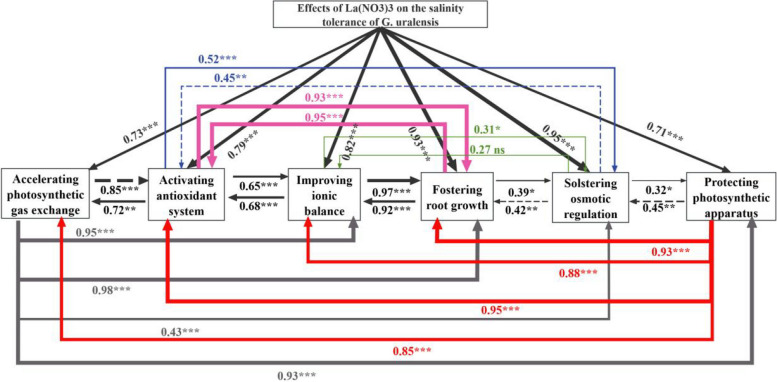
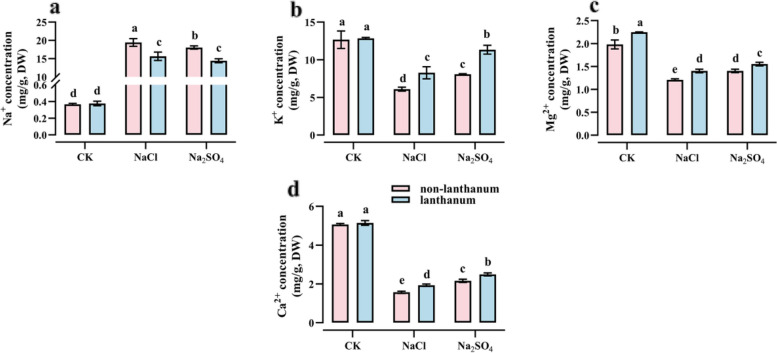
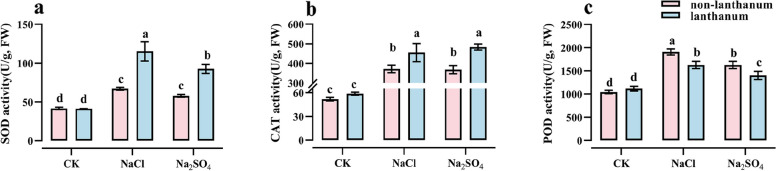
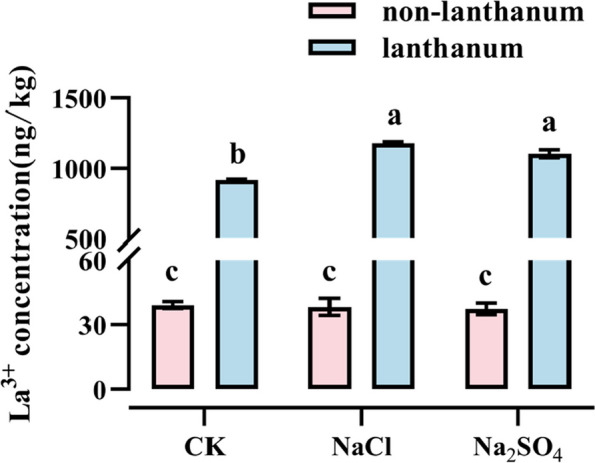
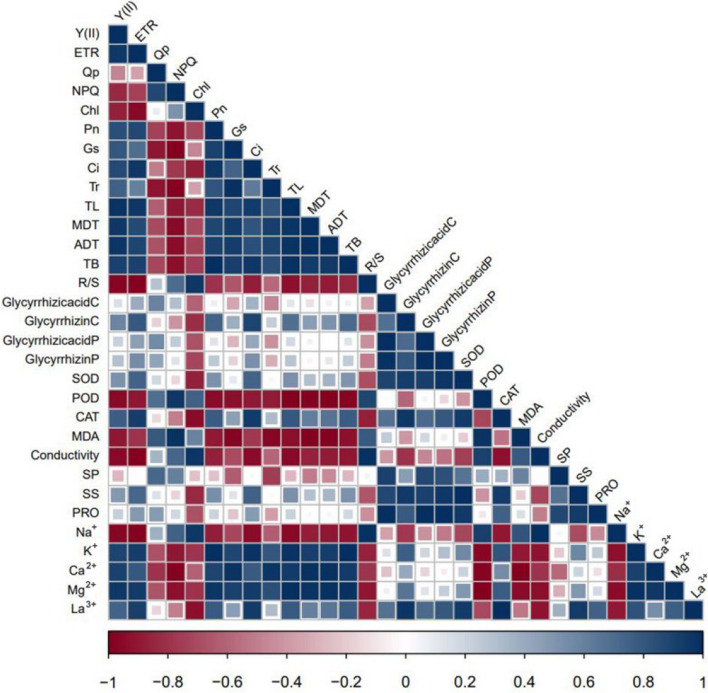
The taproot of Glycyrrhiza uralensis is globally appreciated for its medicinal and commercial value and is one of the most popular medicinal plants. With the decline of wild G. uralensis resources, cultivated G. uralensis has become a key method to ensure supply. However, soil salinization poses challenges to G. uralensis cultivation and affects the yield and quality of it. In this study, the inhibitory effects of NaCl and NaSO on yield and quality of G. uralensis were comprehensively evaluated in a three-year large-scale pot experiment, and the alleviating effects of supplementation with lanthanum nitrate (La (NO)) on G. uralensis were further evaluated under salt stress. The findings indicate that La (NO) significantly strengthened the plant's salt tolerance by enhancing photosynthetic capacity, osmolyte accumulation, antioxidant defenses, and cellular balance of ions, which led to a substantial increase in root biomass and accumulation of major medicinal components. In comparison to the NaCl-stress treatment, the 0.75 M La (NO) + NaCl treatment resulted in a 20% and 34% increase in taproot length and biomass, respectively, alongside a 52% and 43% rise in glycyrrhizic acid and glycyrrhizin content, respectively. Similar improvements were observed with 0.75 M La (NO) + NaSO treatment, which increased root length and biomass by 14% and 26%, respectively, and glycyrrhizic acid and glycyrrhizin content by 40% and 38%, respectively. The combined showed that application of La (NO) not only significantly improved the salt resilience of G. uralensis, but also had a more pronounced alleviation of growth inhibition induced by NaCl compared to NaSO stress except in the gas exchange parameters and root growth. This study provides a scientific basis for high-yield and high-quality cultivation of G. uralensis in saline soils and a new approach for other medicinal plants to improve their salt tolerance.
甘草的主根因其药用和商业价值而在全球范围内受到重视,是最受欢迎的药用植物之一。随着野生甘草资源的减少,种植甘草已成为确保供应的关键方法。然而,土壤盐渍化对甘草的种植构成了挑战,并影响其产量和质量。在这项为期三年的大型盆栽实验中,全面评估了 NaCl 和 NaSO 对甘草产量和质量的抑制作用,并进一步评估了添加硝酸镧(La(NO )对盐胁迫下甘草的缓解作用。研究结果表明,La(NO )通过增强光合能力、渗透调节物质积累、抗氧化防御和离子细胞平衡,显著增强了植物的耐盐性,从而导致根生物量和主要药用成分积累显著增加。与 NaCl 胁迫处理相比,0.75 M La(NO )+NaCl 处理使主根长度和生物量分别增加了 20%和 34%,甘草酸和甘草苷含量分别增加了 52%和 43%。在 0.75 M La(NO )+NaSO 处理中也观察到了类似的改善,根长和生物量分别增加了 14%和 26%,甘草酸和甘草苷含量分别增加了 40%和 38%。综合结果表明,应用 La(NO )不仅显著提高了甘草的耐盐性,而且与 NaSO 胁迫相比,对 NaCl 胁迫引起的生长抑制具有更明显的缓解作用,除了气体交换参数和根生长外。本研究为在盐渍土壤中高产优质种植甘草提供了科学依据,并为其他药用植物提高耐盐性提供了一种新方法。