Department of Medical Imaging Center, First Affiliated Hospital of Shihezi University, Shihezi, Xinjiang, 832002, China.
Department of Physiology, Shihezi University School of Medicine, Xinjiang, North Second Road, Shihezi, Xinjiang, 832000, China.
BMC Cardiovasc Disord. 2024 Oct 4;24(1):535. doi: 10.1186/s12872-024-04192-4.
Pulmonary arterial hypertension (PAH) is a worldwide challenging disease characterized by progressive elevation of pulmonary artery pressure. The proliferation, migration and phenotypic transformation of pulmonary smooth muscle cells are the key steps of pulmonary vascular remodeling. Quercetin (3,3', 4', 5, 6-pentahydroxyflavone, Que) is a natural flavonol compound that has antioxidant, anti-inflammatory, anti-tumor and other biological activities. Studies have shown that Que has therapeutic effects on PAH. However, the effect of quercetin on pulmonary vascular remodeling in PAH and its mechanism remain unclear.
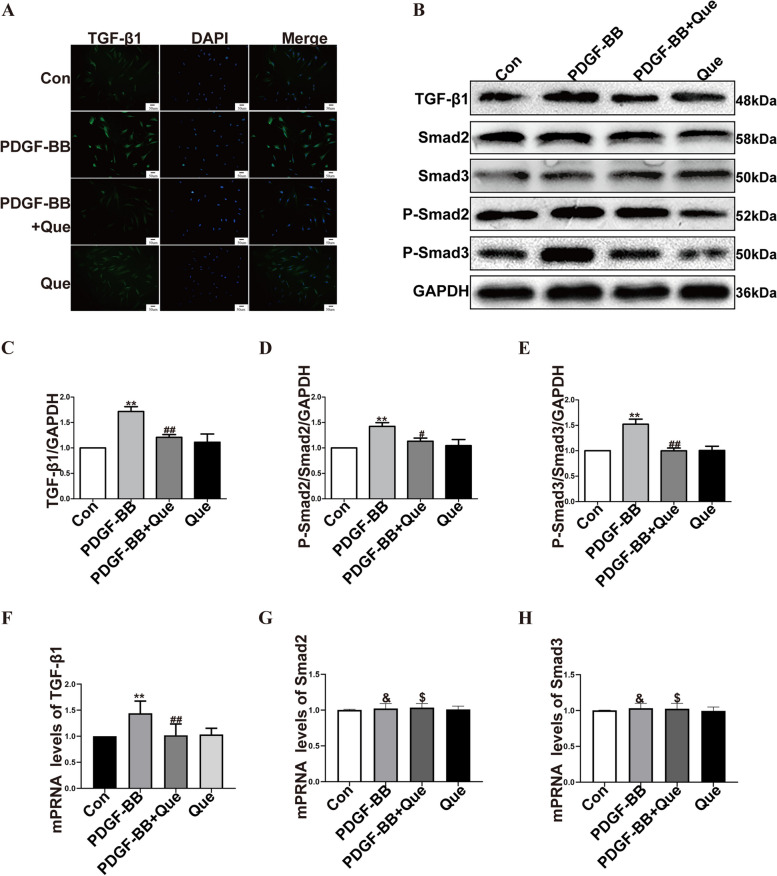
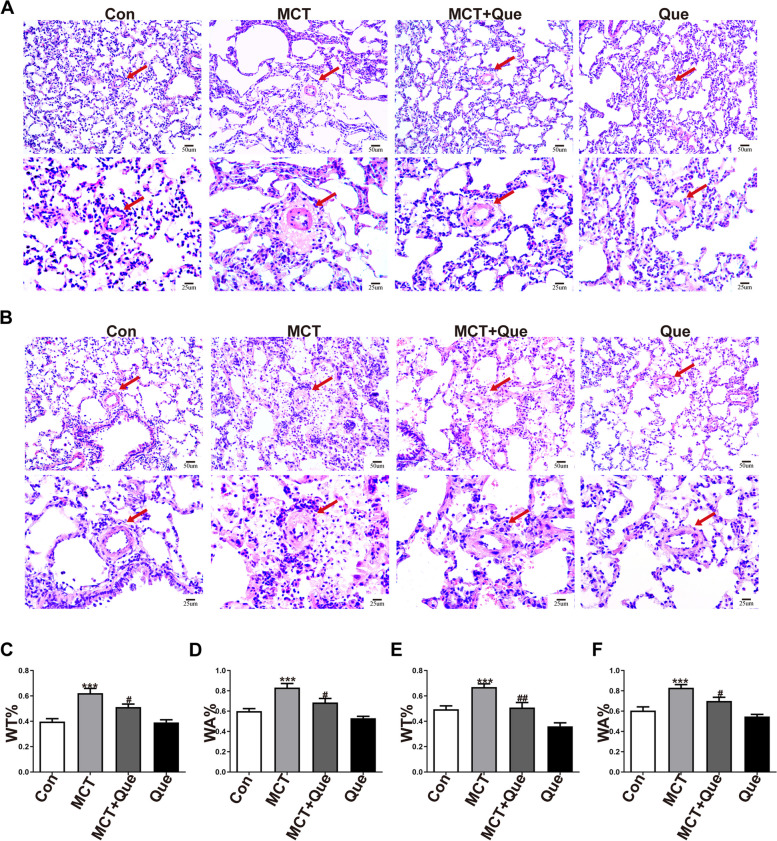
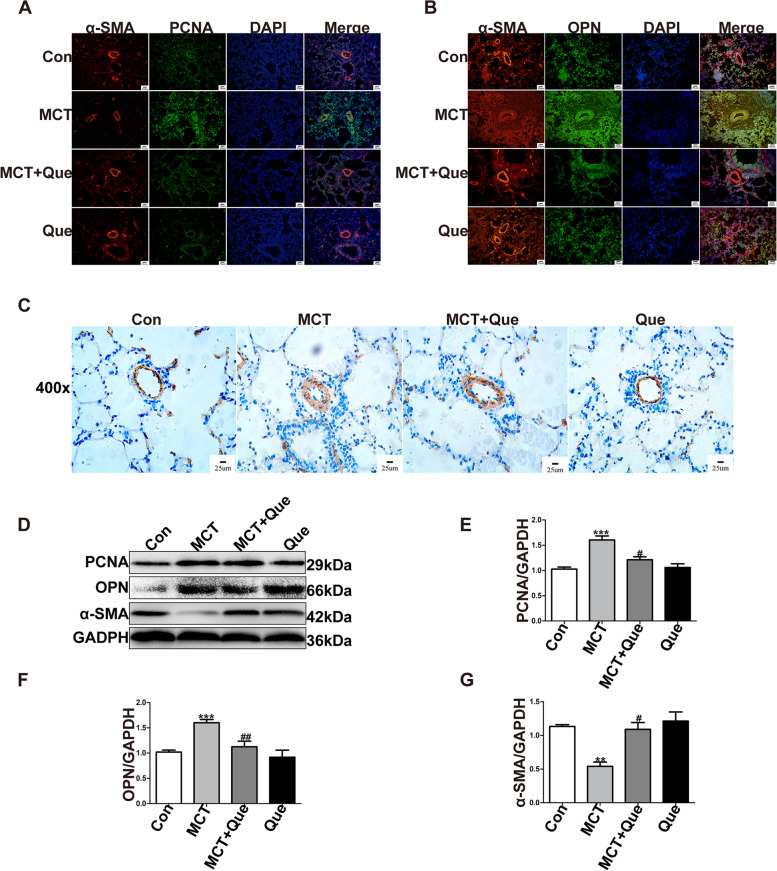
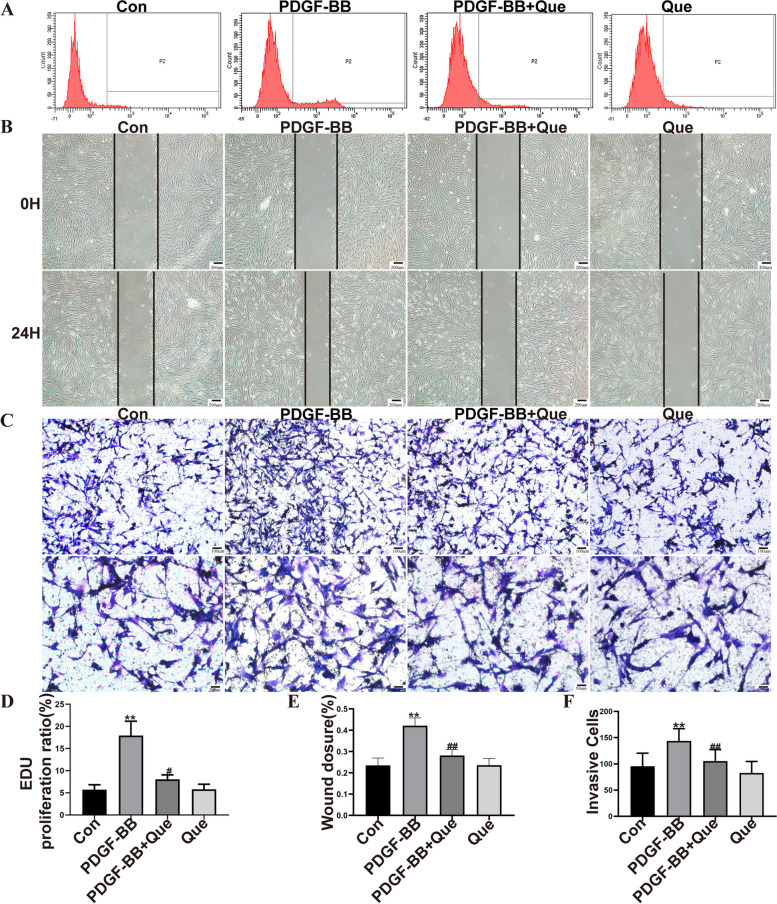
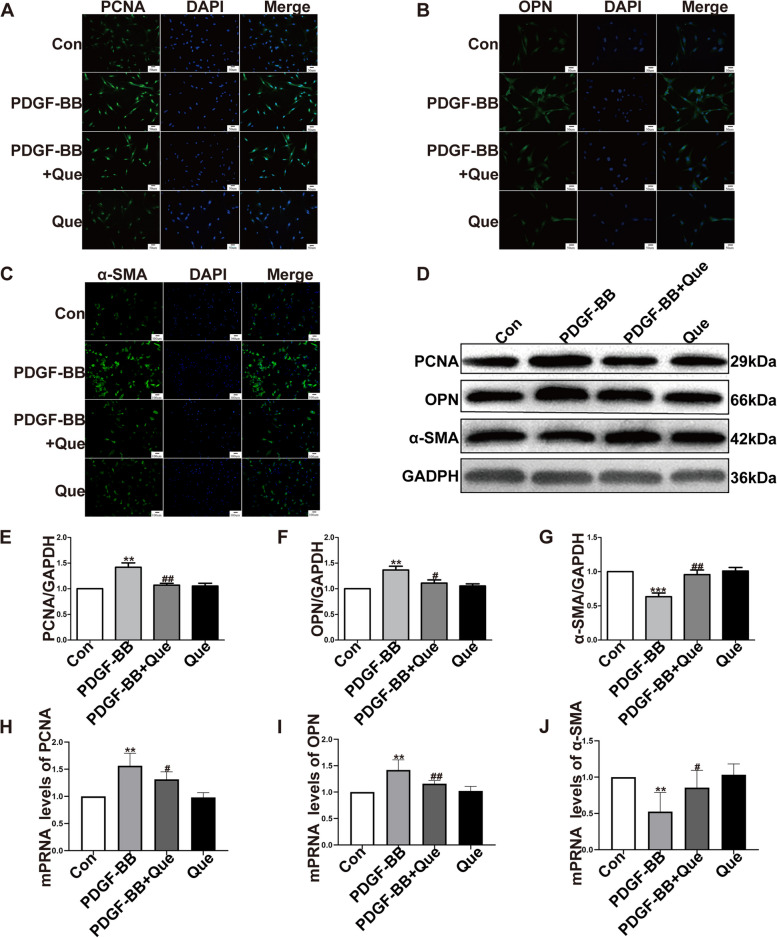
In vivo, PAH rats were constructed by intraperitoneal injection of monocrotaline (MCT) at 60 mg/kg. Human pulmonary artery smooth muscle cells (HPASMCs) were treated with platelet-derived growth factor BB (PDGF-BB) 20 ng/mL to construct PAH cell model in vitro. The results showed that in vivo studies, MCT could induce right ventricular wall hyperplasia, narrow the small and medium pulmonary artery cavity, up-regulate the expression of proliferating and migration-related proteins proliferating cell nuclear antigen (PCNA) and osteopontin (OPN), and down-regulate the expression of alpha-smooth muscle actin (α-SMA). Que reversed the MCT-induced results. This process works by down-regulating the transforming growth factor-β1 (TGF-β1)/ Smad2/3 signaling pathway. In vitro studies, Que had the same effect on PDGF-BB-induced proliferation and migration cell models.
Que inhibits the proliferation, migration and phenotypic transformation of HPASMCs by down-regulating TGF-β1/Smad2/Smad3 pathway, thereby reducing right ventricular hyperplasia (RVH) and pulmonary vascular remodeling, providing potential pharmacological and molecular explanations for the treatment of PAH.
肺动脉高压(PAH)是一种全球性的挑战性疾病,其特征是肺动脉压逐渐升高。肺血管平滑肌细胞的增殖、迁移和表型转化是肺血管重构的关键步骤。槲皮素(3,3', 4', 5, 6-五羟基黄酮,Que)是一种天然类黄酮化合物,具有抗氧化、抗炎、抗肿瘤等多种生物学活性。研究表明,Que 对 PAH 具有治疗作用。然而,槲皮素对 PAH 肺血管重构的影响及其机制尚不清楚。
体内,通过腹腔注射 60mg/kg 尾加压素构建 PAH 大鼠模型。体外,用血小板衍生生长因子 BB(PDGF-BB)20ng/ml 处理人肺动脉平滑肌细胞(HPASMCs)构建 PAH 细胞模型。结果表明,体内研究中,MCT 可诱导右心室壁肥厚,缩小中小肺动脉腔,上调增殖和迁移相关蛋白增殖细胞核抗原(PCNA)和骨桥蛋白(OPN)的表达,下调α-平滑肌肌动蛋白(α-SMA)的表达。Que 逆转了 MCT 诱导的结果。这个过程通过下调转化生长因子-β1(TGF-β1)/Smad2/3 信号通路来实现。体外研究中,Que 对 PDGF-BB 诱导的增殖和迁移细胞模型也有同样的作用。
Que 通过下调 TGF-β1/Smad2/Smad3 通路抑制 HPASMCs 的增殖、迁移和表型转化,从而减少右心室肥厚(RVH)和肺血管重构,为 PAH 的治疗提供了潜在的药理和分子解释。