School of Thermal Medicine, Department of Clinical, Internal Medicine, Anesthesiological and Cardiovascular Sciences, Sapienza University of Rome, Piazzale Aldo Moro 5, Rome 00185, Italy.
Department of Biochemical Sciences, Sapienza University of Rome, Piazzale Aldo Moro 5, Rome 00185, Italy.
Clin Med (Lond). 2024 Nov;24(6):100251. doi: 10.1016/j.clinme.2024.100251. Epub 2024 Oct 5.
The long-COVID syndrome is characterised by a plethora of symptoms. Given its social and economic impact, many studies have stressed the urgency of proposing innovative strategies other than hospital settings. In this double-blinded, randomised, case-control trial, we investigate the effects of sulphur thermal water inhalations, rich in HS, compared to distilled water inhalations on symptoms, inflammatory markers and nasal microbiome in long-COVID patients.
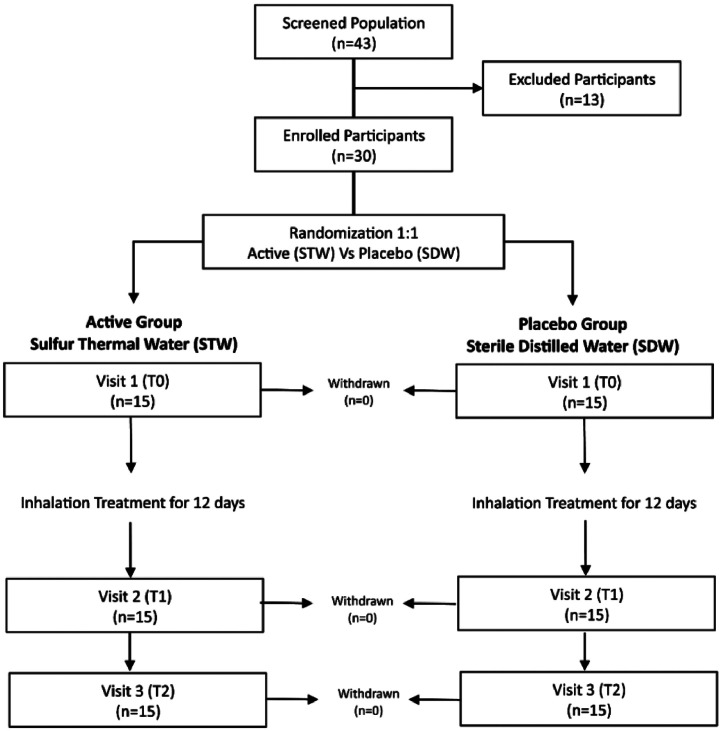
About 30 outpatients aged 18-75 with positive diagnosis for long-COVID were randomised in two groups undergoing 12 consecutive days of inhalations. The active group (STW) received sulphur thermal water inhalations whereas the placebo group received inhalations of sterile distilled non-pyrogenic water (SDW). Each participant was tested prior treatment at day 1 (T0), after the inhalations at day 14 (T1) and at 3 months follow-up (T2). At each time point, blood tests, nasal swabs for microbiome sampling, pulmonary functionality tests (PFTs) and pro-inflammatory marker measure were performed.
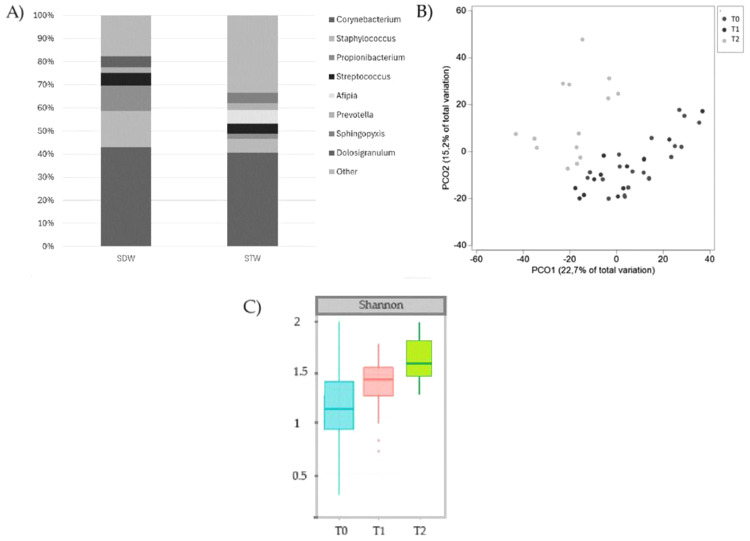
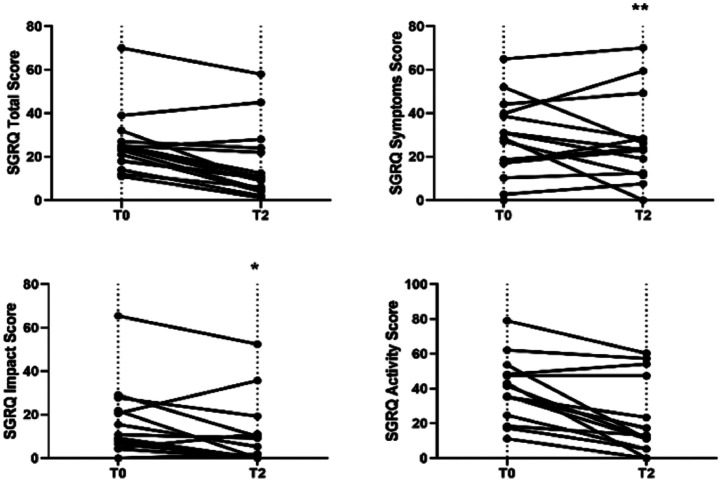
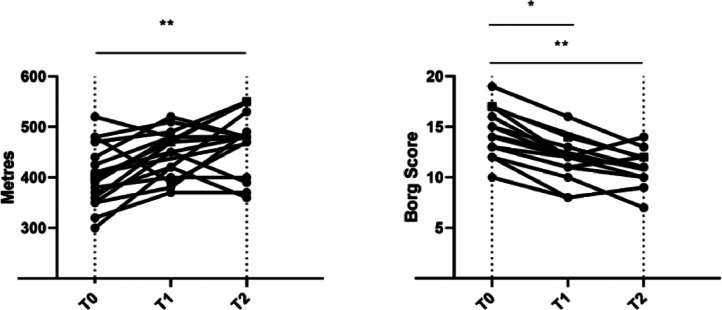
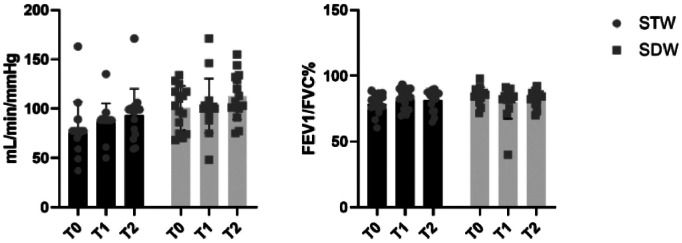
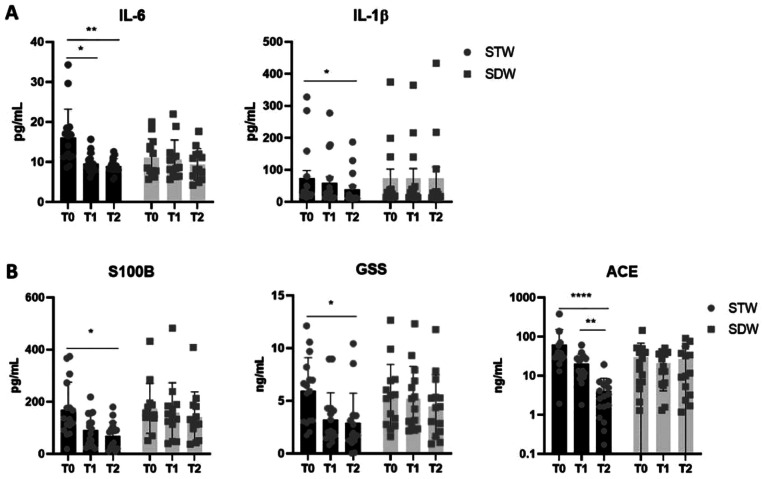
The scores obtained in the administered tests (6MWT, Borg score and SGRQ) at T0 showed a significant variation in the STW group, at T1 and T2. Serum cytokine levels and other inflammatory biomarkers reported a statistically significant decrease. Some specific parameters of PFTs showed ameliorations in the STW group only. Changes in the STW nasopharyngeal microbiota composition were noticed, especially from T0 to T2.
Inhalations of sulphur thermal water exerted objective and subjective improvements on participants affected by long-COVID. Significant reduction of inflammatory markers, dyspnoea scores and quantitative and qualitative changes in the nasopharyngeal microbiome were also assessed.
长新冠综合征的特征是多种症状。鉴于其对社会和经济的影响,许多研究强调除了医院环境外,迫切需要提出其他创新策略。在这项双盲、随机、病例对照试验中,我们研究了富含 HS 的硫磺温泉吸入与蒸馏水吸入对长新冠患者症状、炎症标志物和鼻腔微生物组的影响。
约 30 名年龄在 18-75 岁之间、长新冠诊断阳性的门诊患者被随机分为两组,连续接受 12 天的吸入治疗。实验组(STW)接受硫磺温泉吸入,对照组(SDW)接受无菌、非致热蒸馏水吸入。每位参与者在治疗前第 1 天(T0)、吸入后第 14 天(T1)和 3 个月随访(T2)进行测试。在每个时间点,进行血液检查、鼻腔拭子微生物组采样、肺功能测试(PFTs)和促炎标志物测量。
T0 时进行的测试(6MWT、Borg 评分和 SGRQ)中,实验组的评分在 T1 和 T2 时出现显著变化。血清细胞因子水平和其他炎症生物标志物报告有统计学意义的下降。PFTs 的一些特定参数仅在实验组中显示出改善。STW 鼻咽微生物组组成的变化在 T0 到 T2 期间也被注意到。
硫磺温泉吸入对长新冠患者产生了客观和主观的改善。炎症标志物、呼吸困难评分以及鼻咽微生物组的定量和定性变化也显著减少。