Institute of Biomedical Ethics and History of Medicine, Faculty of Medicine, University of Zurich, Winterthurerstrasse 30, 8006, Zurich, Switzerland.
Centre for Biomedical Ethics and Law, Faculty of Medicine, KU Leuven, Kapucijnenvoer 7, 3000, Louvain, Belgium.
Med Health Care Philos. 2024 Dec;27(4):579-606. doi: 10.1007/s11019-024-10225-8. Epub 2024 Oct 7.
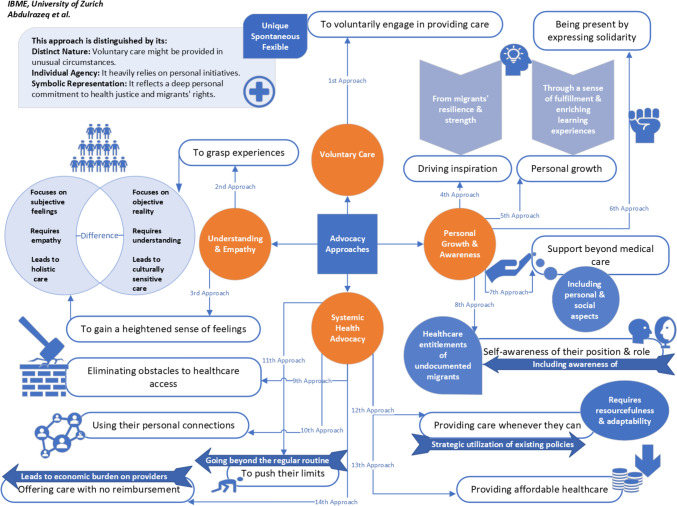
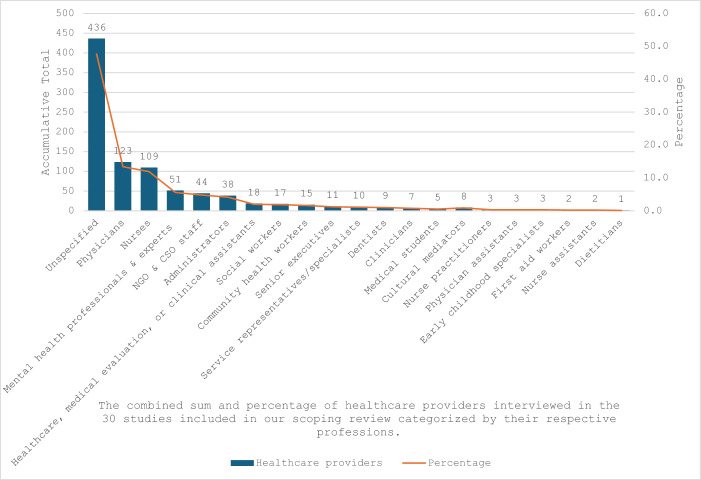
Delivering healthcare to undocumented migrants presents a complex challenge for healthcare providers. Integrating advocacy efforts into their daily practices can be ambiguous in practical terms, stemming from the intricate task of addressing the health needs of this population while simultaneously advocating for their health rights within the constraints imposed on them. This study seeks to consolidate findings from literature regarding the advocacy approaches employed by healthcare providers and the correlated ethical challenges. We conducted a scoping review of qualitative literature by systematically searching four databases-PubMed/Medline, Embase, Cinahl, and Cochrane Library. For developing our search strategy, we employed the PICO (Population, Intervention, Comparison, Outcome) scheme. Our analysis followed the qualitative content analysis approach proposed by Graneheim and Lundman. 30 studies were included, revealing a cumulative total of 915 healthcare providers who were interviewed. A total of 30 themes emerged comprising 14 advocacy approaches and 16 ethical challenges. Healthcare providers made a deliberate choice to engage in advocacy, responding to injustices experienced by undocumented migrants. The spectrum of advocacy initiatives varied, encompassing voluntary participation in healthcare provision, empathetic understanding, and healthcare-focused strategies. We also identified numerous correlated ethical challenges, necessitating healthcare providers to strike a balance between their eagerness to assist and their professional competence, respect the autonomy of undocumented migrants, and establish trust with them. These findings not only offer practical guidance for healthcare providers to enhance accessibility to healthcare services for undocumented migrant patients but also foster awareness of the ethical challenges that may arise in their advocacy roles.
向无证移民提供医疗保健对医疗服务提供者来说是一个复杂的挑战。将宣传工作纳入日常实践在实践中可能存在歧义,这源于在限制条件下解决这一人群的健康需求,同时倡导他们的健康权利这一复杂任务。本研究旨在整合文献中关于医疗服务提供者所采用的宣传方法和相关伦理挑战的研究结果。我们通过系统地搜索四个数据库 - PubMed/Medline、Embase、Cinahl 和 Cochrane Library,对定性文献进行了范围审查。为了制定我们的搜索策略,我们采用了 PICO(人群、干预、比较、结果)方案。我们的分析遵循 Graneheim 和 Lundman 提出的定性内容分析方法。共纳入 30 项研究,共采访了 915 名医疗服务提供者。共出现 30 个主题,包括 14 种宣传方法和 16 种伦理挑战。医疗服务提供者故意选择参与宣传活动,回应无证移民所经历的不公正待遇。宣传倡议的范围各不相同,包括自愿参与医疗保健服务、同情理解和以医疗保健为重点的策略。我们还确定了许多相关的伦理挑战,这要求医疗服务提供者在帮助无证移民的愿望和他们的专业能力之间取得平衡,尊重无证移民的自主权,并与他们建立信任。这些发现不仅为医疗服务提供者提供了增强无证移民患者获得医疗保健服务的可及性的实用指导,还提高了他们在宣传角色中可能出现的伦理挑战的认识。