Ughade Prachi A, Shrivastava Deepti, Chaudhari Kamlesh
Obstetrics and Gynaecology, Jawaharlal Nehru Medical College, Datta Meghe Institute of Higher Education and Research, Wardha, IND.
Cureus. 2024 Sep 4;16(9):e68619. doi: 10.7759/cureus.68619. eCollection 2024 Sep.
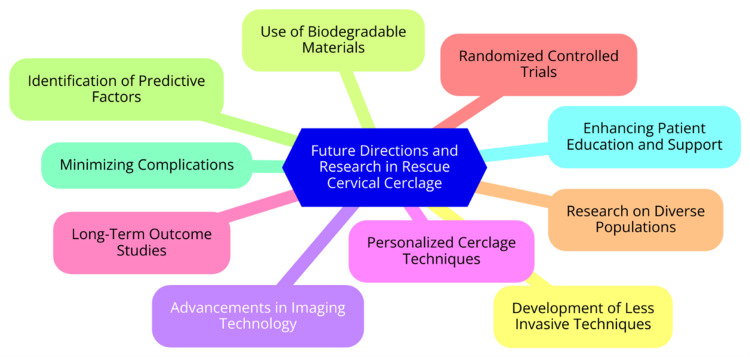
Cervical cerclage is a surgical intervention aimed at preventing previable birth by providing mechanical support to the cervix through the placement of a suture. This procedure is primarily indicated for cases of cervical incompetence, where the cervix is prone to premature dilation and can lead to early miscarriage or preterm birth. This review seeks to comprehensively analyze rescue cervical cerclage (RCC), focusing on its indications, techniques, and outcomes. The goal is to offer an in-depth understanding of its effectiveness in preventing previable birth and to guide clinical decision-making in managing pregnancies at risk of premature delivery. A thorough literature review examined recent studies and clinical data on RCC. Key aspects evaluated include the criteria for intervention, various surgical techniques employed, and the associated maternal and fetal outcomes. Comparative analysis was also performed with other preventive measures, such as progesterone therapy and bed rest. RCC has demonstrated efficacy in reducing the incidence of previable births, particularly when performed in cases of identified cervical incompetence or shortening. The review highlights variations in the technique, such as McDonald and Shirodkar cerclage, and discusses their relative success rates and potential complications. The procedure is associated with improved pregnancy outcomes and reduced risk of previable birth, though it carries some risks, including infection and cervical laceration. RCC remains a valuable intervention for preventing previable births in selected patients. This review underscores its importance in managing pregnancies at risk due to cervical incompetence and provides a detailed evaluation of its indications, techniques, and outcomes. Future research should optimize criteria for cerclage placement and explore novel strategies to enhance its effectiveness and safety.
宫颈环扎术是一种外科手术干预措施,旨在通过缝合为宫颈提供机械支撑,以防止未达可存活孕周的早产。该手术主要适用于宫颈机能不全的病例,此类病例中宫颈易于过早扩张,可能导致早期流产或早产。本综述旨在全面分析补救性宫颈环扎术(RCC),重点关注其适应证、技术和结局。目的是深入了解其在预防未达可存活孕周早产方面的有效性,并指导对有早产风险的妊娠进行临床决策。通过全面的文献综述,研究了有关RCC的近期研究和临床数据。评估的关键方面包括干预标准、采用的各种手术技术以及相关的母胎结局。还与其他预防措施,如孕激素治疗和卧床休息进行了比较分析。RCC已证明在降低未达可存活孕周早产的发生率方面有效,尤其是在已确定宫颈机能不全或宫颈缩短的病例中实施时。该综述强调了技术上的差异,如麦克唐纳(McDonald)环扎术和希罗德卡尔(Shirodkar)环扎术,并讨论了它们的相对成功率和潜在并发症。该手术与改善妊娠结局及降低未达可存活孕周早产风险相关,尽管它存在一些风险,包括感染和宫颈撕裂伤。RCC对于特定患者预防未达可存活孕周早产仍然是一种有价值的干预措施。本综述强调了其在处理因宫颈机能不全而有风险的妊娠中的重要性,并对其适应证、技术和结局进行了详细评估。未来的研究应优化环扎术的放置标准,并探索新的策略以提高其有效性和安全性。