Battistelli Marco, Izzo Alessandro, D'Ercole Manuela, D'Alessandris Quintino Giorgio, Di Domenico Michele, Ioannoni Eleonora, Gelormini Camilla, Martinelli Renata, Valeri Federico, Grilli Fulvio, Montano Nicola
Department of Neuroscience, Neurosurgery Section, Università Cattolica del Sacro Cuore, Rome, Italy.
Department of Neurosurgery, Fondazione Policlinico Universitario Agostino Gemelli IRCCS, Rome, Italy.
Surg Neurol Int. 2024 Sep 6;15:319. doi: 10.25259/SNI_268_2024. eCollection 2024.
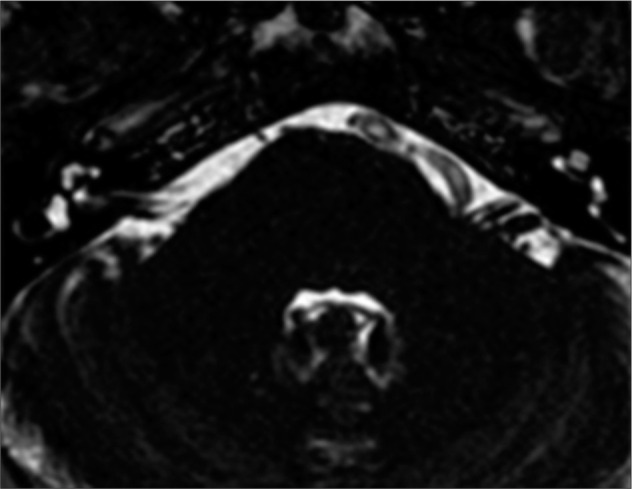
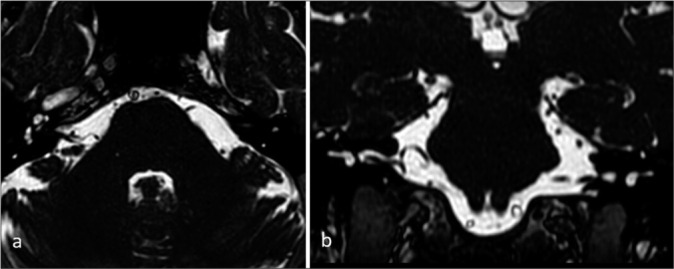
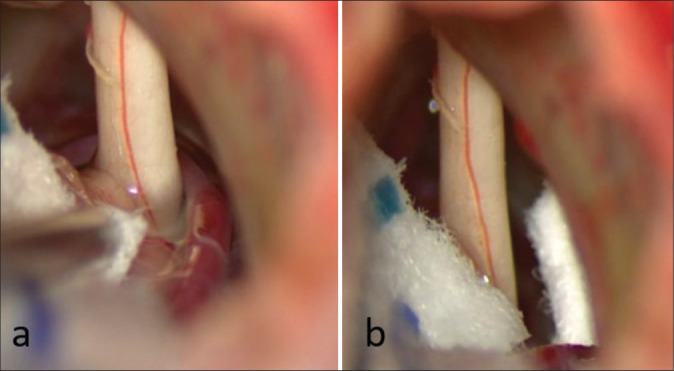
Microvascular decompression (MVD) through a retrosigmoid approach is considered the treatment of choice in cases of hemifacial spasm (HFS) due to neurovascular conflict (NVC). Despite the widespread of neuronavigation and intraoperative neuromonitoring (IONM) techniques in neurosurgery, their contemporary application in MVD for HFS has been only anecdotally reported.
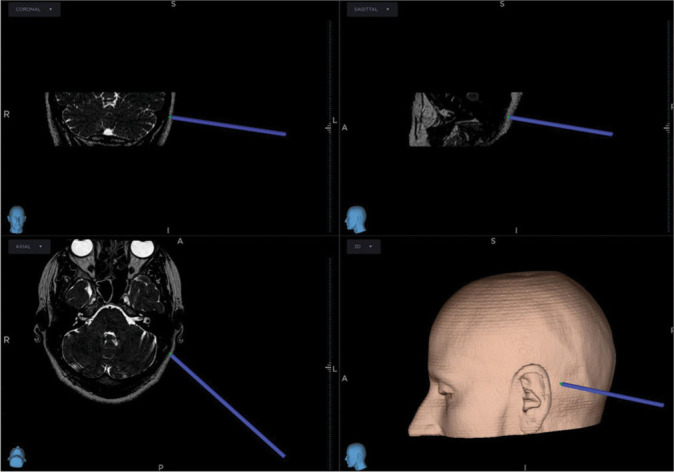
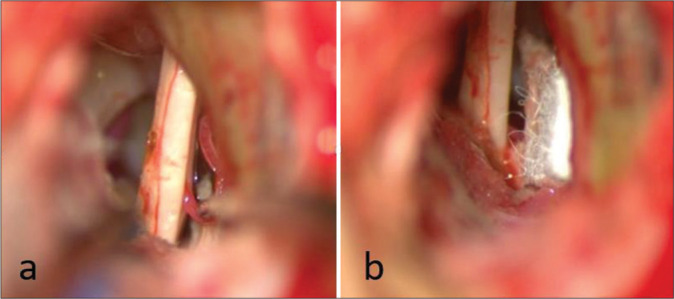
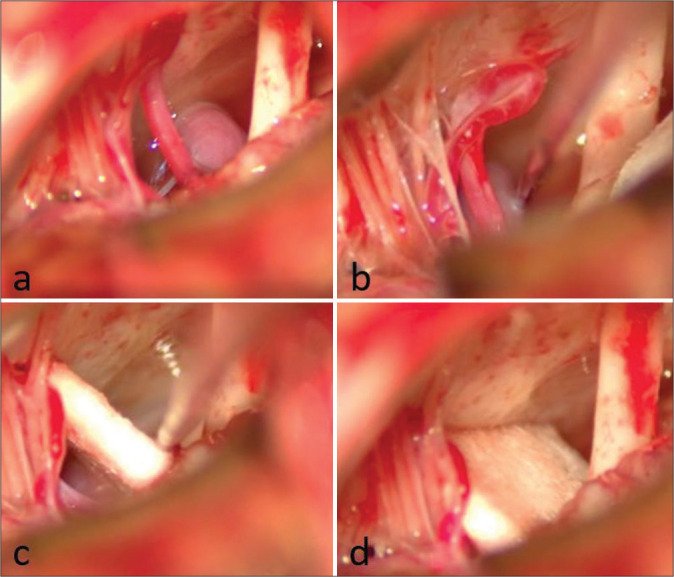
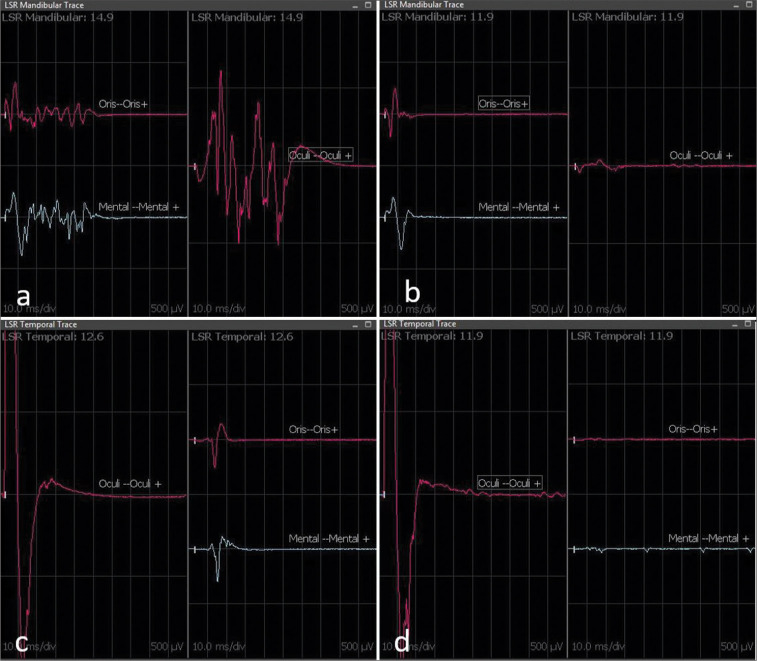
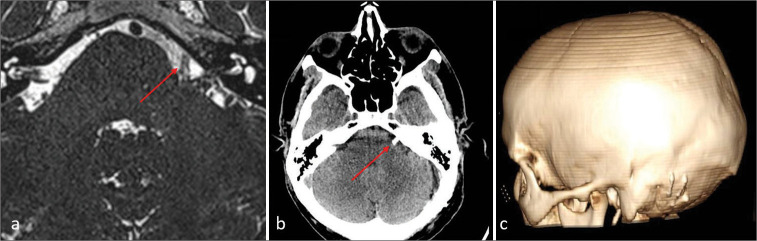
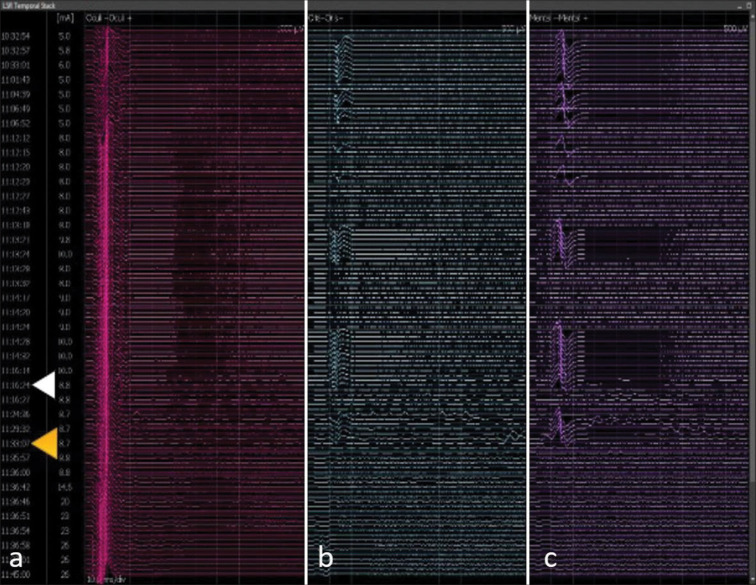
Here, we report the results of MVD performed with a combination of neuronavigation and IONM, including lateral spread response (LSR) in 20 HFS patients. HFS clinical outcome and different surgical-related factors, such as craniotomy size, surgical duration, mastoid air cell (MAC) opening, postoperative cerebral spinal fluid (CSF) leakage, sinus injury, and other complications occurrence, and the length of hospitalization (LOS) were studied.
Postoperatively, residual spasm persisted only in two patients, but at the latest follow-up (FU) (mean: 12.5 ± 8.98 months), all patients had resolution of symptoms. The mean surgical duration was 103.35 ± 19.36 min, and the mean LOS was 2.21 ± 1.12 days. Craniotomy resulted in 4.21 ± 1.21 cm in size. Opening of MAC happened in two cases, whereas no cases of CSF leak were reported as well as no other complications postoperatively and during FU.
MVD for HFS is an elective procedure, and for this reason, surgery should integrate all technologies to ensure safety and efficacy. The disappearance of LSR is a crucial factor for identifying the vessel responsible for NVC and for achieving long-term resolution of HFS symptoms. Simultaneously, the benefits of using neuronavigation, including the ability to customize the craniotomy, contribute to reduce the possibility of complications.
对于因神经血管冲突(NVC)导致的半面痉挛(HFS)病例,经乙状窦后入路微血管减压术(MVD)被认为是首选治疗方法。尽管神经导航和术中神经监测(IONM)技术在神经外科手术中广泛应用,但其在HFS的MVD中的当代应用仅有零星报道。
在此,我们报告20例HFS患者采用神经导航和IONM联合进行MVD的结果,包括侧方扩散反应(LSR)。研究了HFS临床结果以及不同手术相关因素,如开颅大小、手术时长、乳突气房(MAC)开放、术后脑脊液(CSF)漏、窦损伤及其他并发症的发生情况,以及住院时长(LOS)。
术后,仅2例患者残留痉挛,但在最新随访(FU)(平均:12.5±8.98个月)时,所有患者症状均消失。平均手术时长为103.35±19.36分钟,平均LOS为2.21±1.12天。开颅大小为4.21±1.21厘米。2例发生MAC开放,未报告CSF漏病例,术后及FU期间也未出现其他并发症。
HFS的MVD是一种选择性手术,因此,手术应整合所有技术以确保安全性和有效性。LSR的消失是识别导致NVC的血管以及实现HFS症状长期缓解的关键因素。同时,使用神经导航的益处,包括能够定制开颅,有助于降低并发症的可能性。