Department of Paediatrics, University of Turin, Turin, Italy.
Division of Metabolic Diseases and Hepatology, Bambino Gesù Children‛s Hospital IRCCS, Piazza S. Onofrio 4, 00165, Rome, Italy.
Ital J Pediatr. 2024 Oct 7;50(1):204. doi: 10.1186/s13052-024-01782-y.
Long-chain fatty acid oxidation disorders (LC-FAOD) are rare and potentially life-threatening diseases that cause deficient energy production and accumulation of toxic metabolites. Despite dietary management, adherence to maximum fasting guidelines, restricted long-chain triglyceride intake and supplementation with medium-chain triglyceride (MCT) oil (current standard of care), most patients experience recurrent decompensation episodes that can require hospitalisation. Herein, we analysed the effectiveness and safety of triheptanoin (a highly purified, synthetic medium odd-chain triglyceride) treatment in a cohort of Italian patients with LC-FAOD.
This retrospective, nationwide study included nine patients with LC-FAOD who switched from standard therapy with MCT oil to triheptanoin oral liquid. Data were collected between 2018 and 2022. Clinical outcome measures were the number and duration of intercurrent catabolic episodes and number and duration of metabolic decompensation episodes requiring hospitalisation. Creatine kinase (CK) levels and treatment-related adverse effects were also reported.
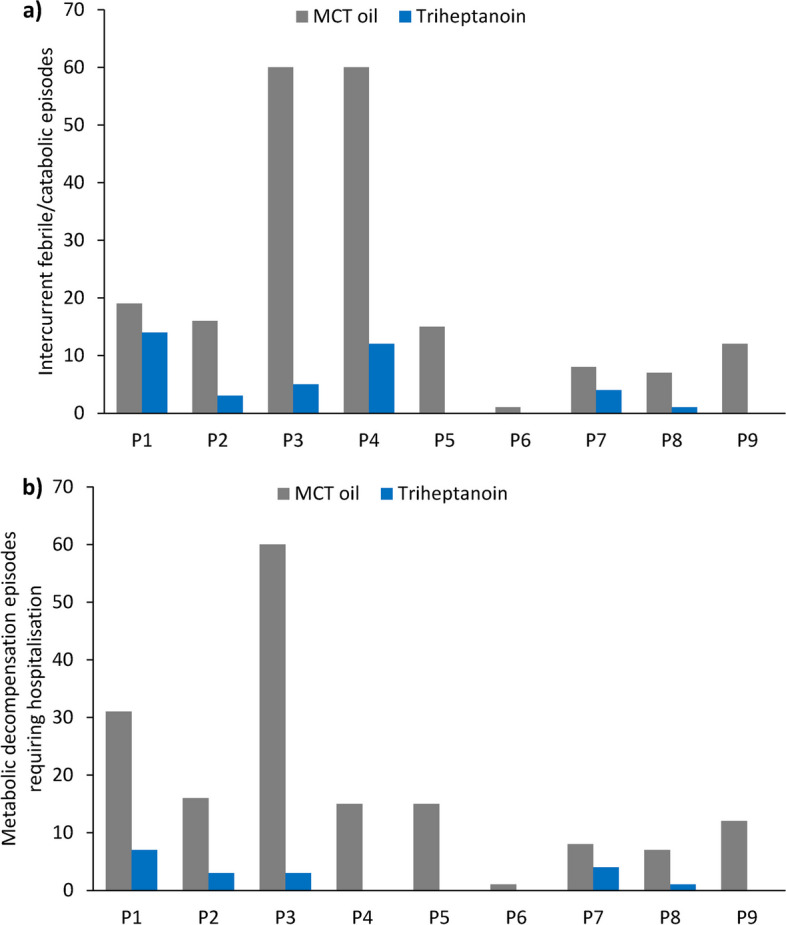
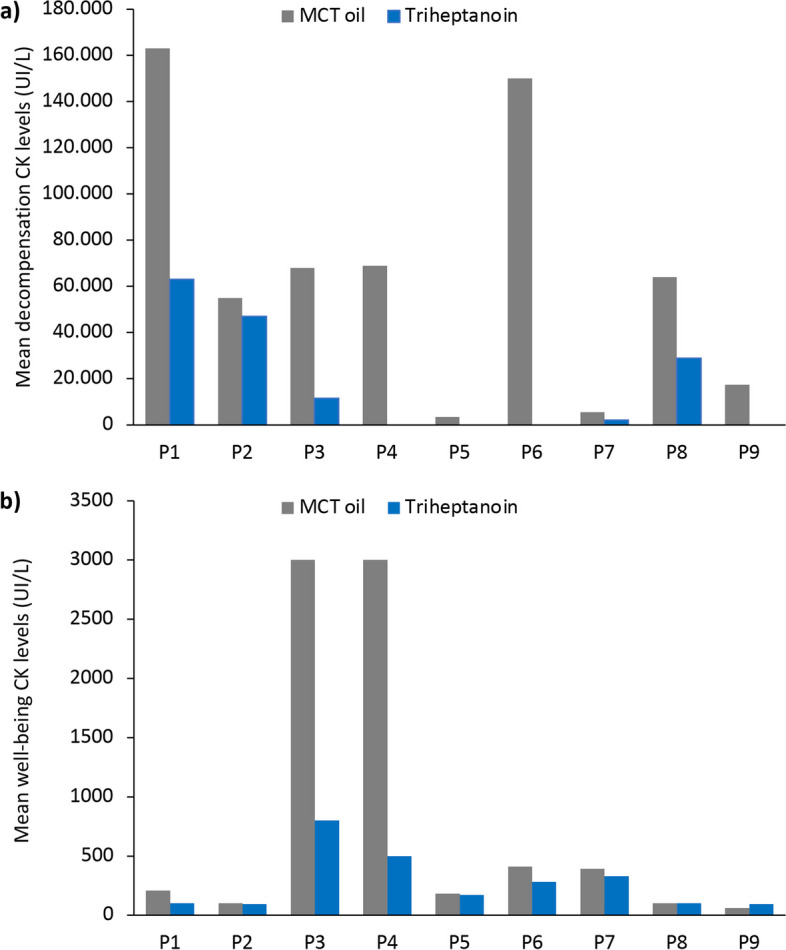
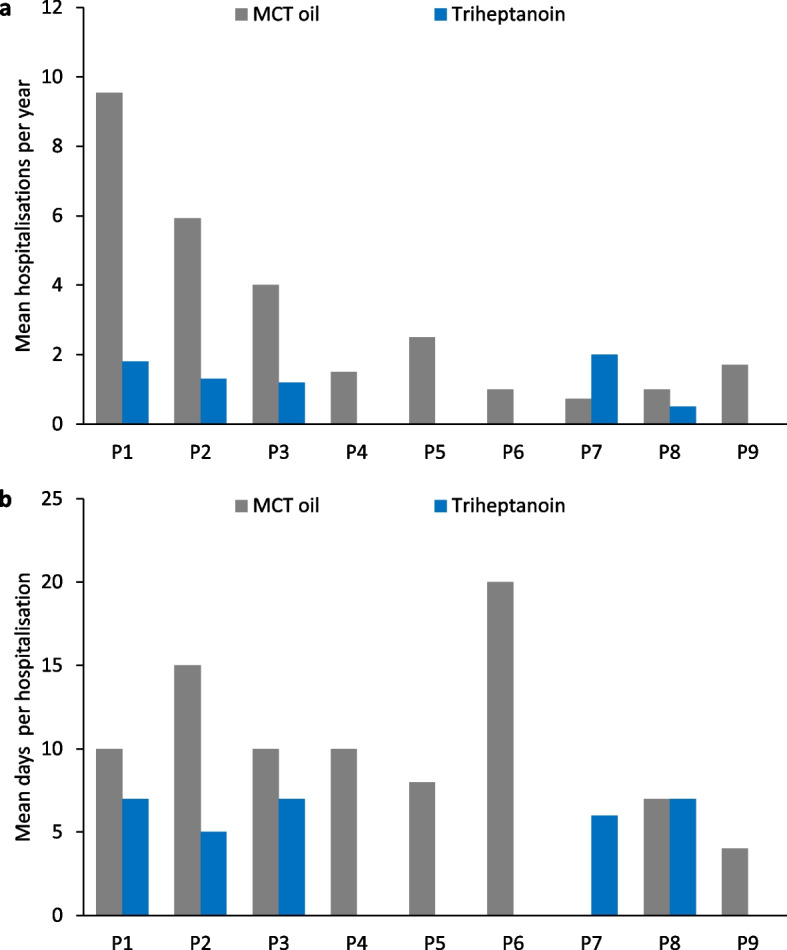
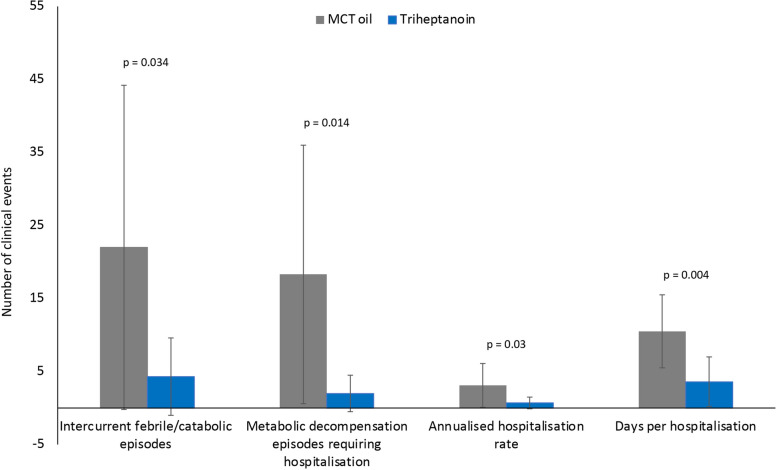
Patients were provided a mean ± standard deviation (SD) triheptanoin dose of 1.5 ± 0.9 g/kg/day in four divided administrations, which accounted for 23.9 ± 8.9% of patients' total daily caloric intake. Triheptanoin treatment was started between 2.7 and 16 years of age and was continued for 2.2 ± 0.9 years. The number of intercurrent catabolic episodes during triheptanoin treatment was significantly lower than during MCT therapy (4.3 ± 5.3 vs 22.0 ± 22.2; p = 0.034), as were the number of metabolic decompensations requiring hospitalisation (mean ± SD: 2.0 ± 2.5 vs 18.3 ± 17.7; p = 0.014), and annualised hospitalisation rates and duration. Mean CK levels (outside metabolic decompensation episodes) were lower with triheptanoin treatment versus MCT oil for seven patients. No intensive care unit admissions were required during triheptanoin treatment. Epigastric pain and diarrhoea were recorded as adverse effects during both MCT and triheptanoin treatment.
The significant improvement in clinical outcome measures after the administration of triheptanoin highlights that this treatment approach can be more effective than MCT supplementation in patients with LC-FAOD. Triheptanoin was well tolerated and decreased the number of intercurrent catabolic episodes, metabolic decompensation episodes requiring hospitalisation, and the annualised rate and duration of hospitalisations.
长链脂肪酸氧化障碍(LC-FAOD)是罕见的、潜在危及生命的疾病,可导致能量产生不足和有毒代谢物积聚。尽管进行了饮食管理、坚持禁食指导原则、限制长链甘油三酯摄入以及补充中链甘油三酯(MCT)油(目前的标准治疗方法),但大多数患者仍会反复发作代谢失代偿,需要住院治疗。在此,我们分析了在一组意大利 LC-FAOD 患者中,使用三庚酸(一种高度纯化的合成中链奇数链甘油三酯)治疗的有效性和安全性。
这是一项回顾性、全国性研究,纳入了 9 名从 MCT 油标准治疗转为口服三庚酸的 LC-FAOD 患者。数据收集时间为 2018 年至 2022 年。临床结局指标为代谢性分解发作的次数和持续时间、需要住院治疗的代谢性分解发作的次数和持续时间。还报告了肌酸激酶(CK)水平和与治疗相关的不良反应。
患者平均(±标准差)接受 1.5(±0.9)g/kg/天的四等分三庚酸剂量,占患者每日总热量摄入的 23.9(±8.9)%。三庚酸治疗开始于 2.7 至 16 岁之间,持续 2.2(±0.9)年。三庚酸治疗期间的代谢性分解发作次数明显低于 MCT 治疗期间(4.3(±5.3)比 22.0(±22.2);p=0.034),需要住院治疗的代谢性失代偿发作次数也明显减少(平均(±标准差):2.0(±2.5)比 18.3(±17.7);p=0.014),年住院率和持续时间也减少。七名患者在代谢性失代偿发作之外,接受三庚酸治疗时 CK 水平(均值)低于 MCT 油。在三庚酸治疗期间,不需要入住重症监护病房。在 MCT 和三庚酸治疗期间,均记录到上腹痛和腹泻作为不良反应。
在给予三庚酸后,临床结局指标的显著改善表明,与 MCT 补充相比,这种治疗方法在 LC-FAOD 患者中可能更有效。三庚酸耐受性良好,减少了代谢性分解发作次数、需要住院治疗的代谢性失代偿发作次数、年住院率和持续时间。