Translational Medicine, Oncology R&D, AstraZeneca, Cambridge, United Kingdom.
Oncology Data Science, Oncology R&D, AstraZeneca, Cambridge, United Kingdom.
Front Immunol. 2024 Sep 20;15:1422206. doi: 10.3389/fimmu.2024.1422206. eCollection 2024.
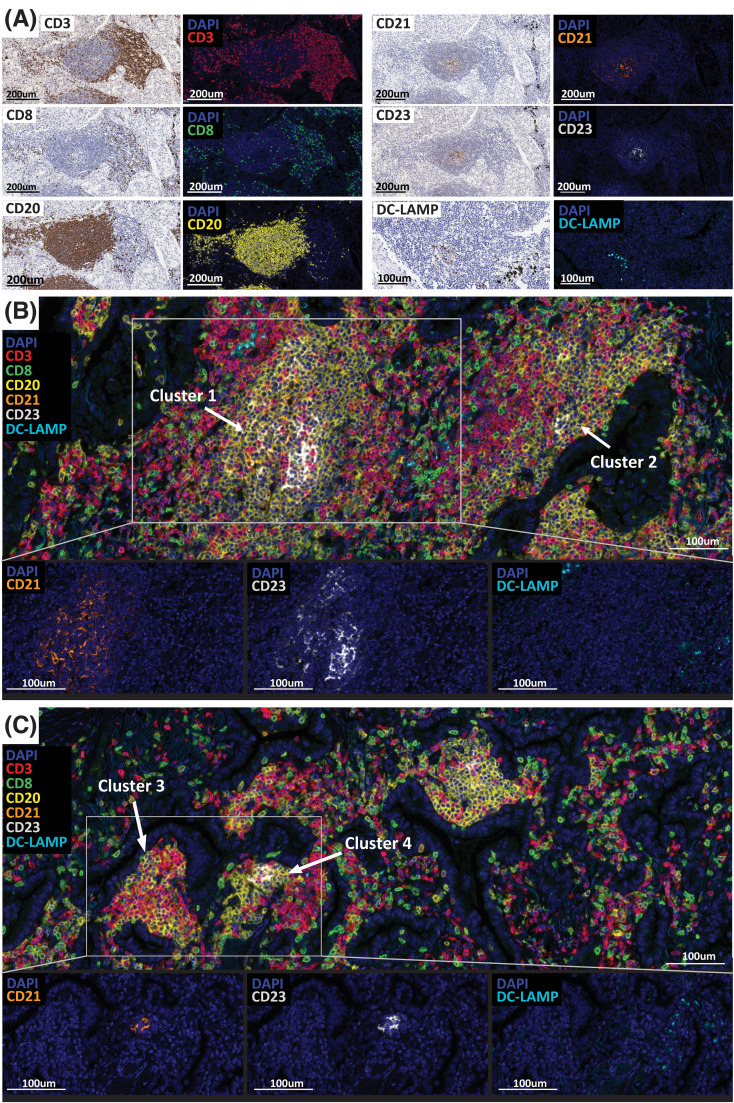
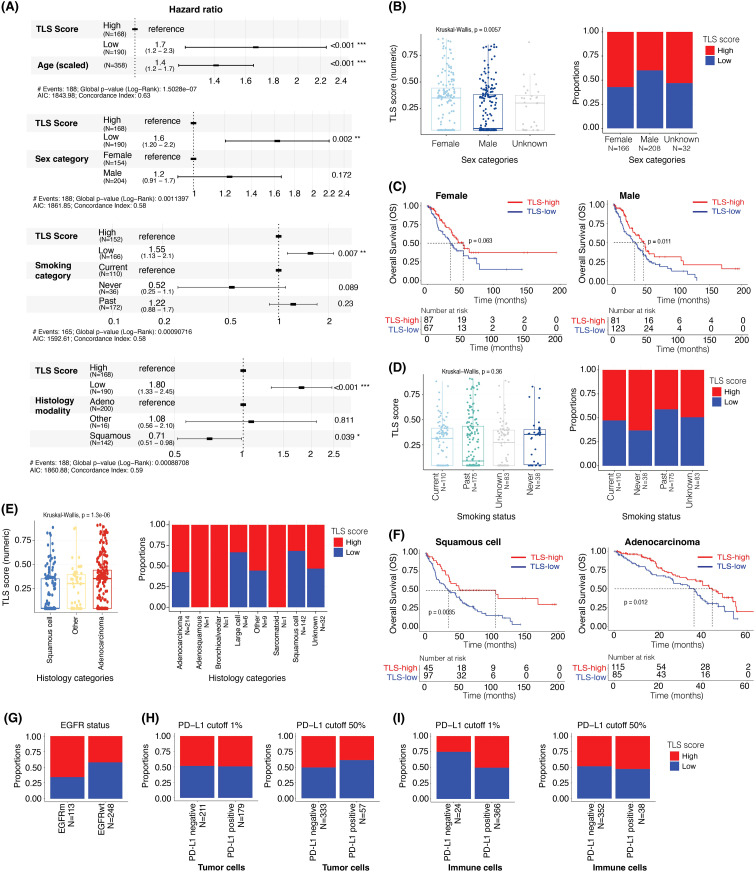
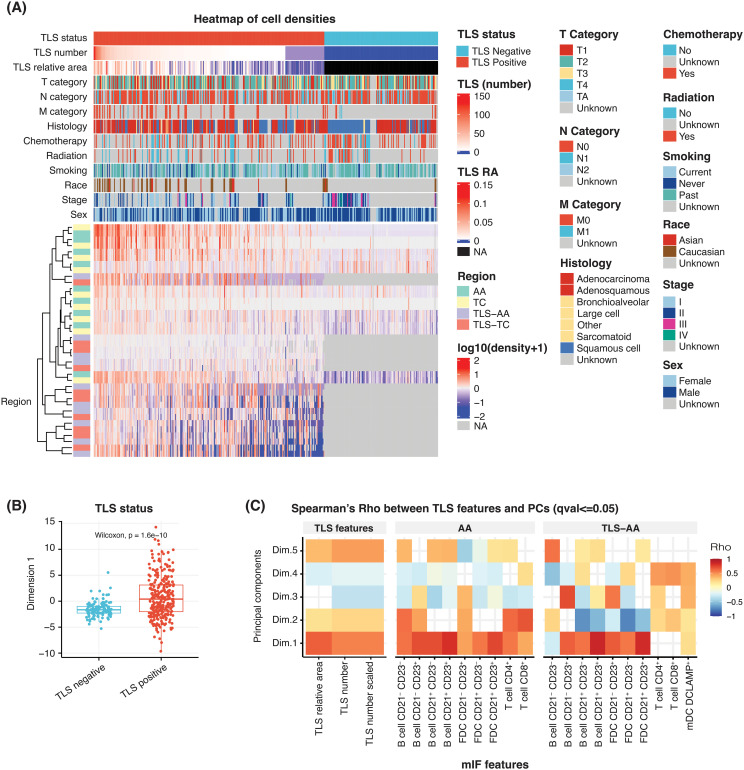
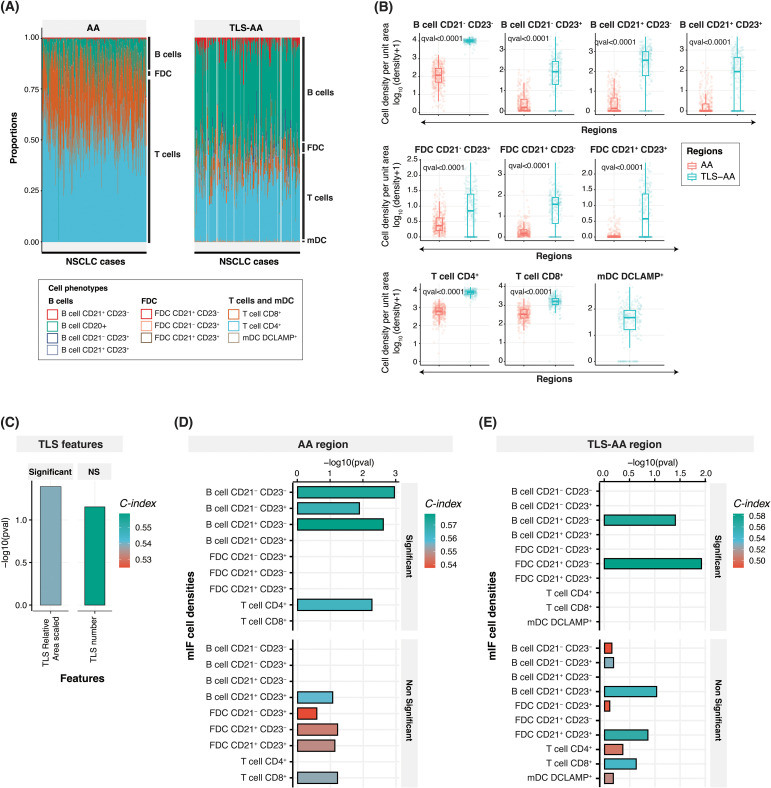
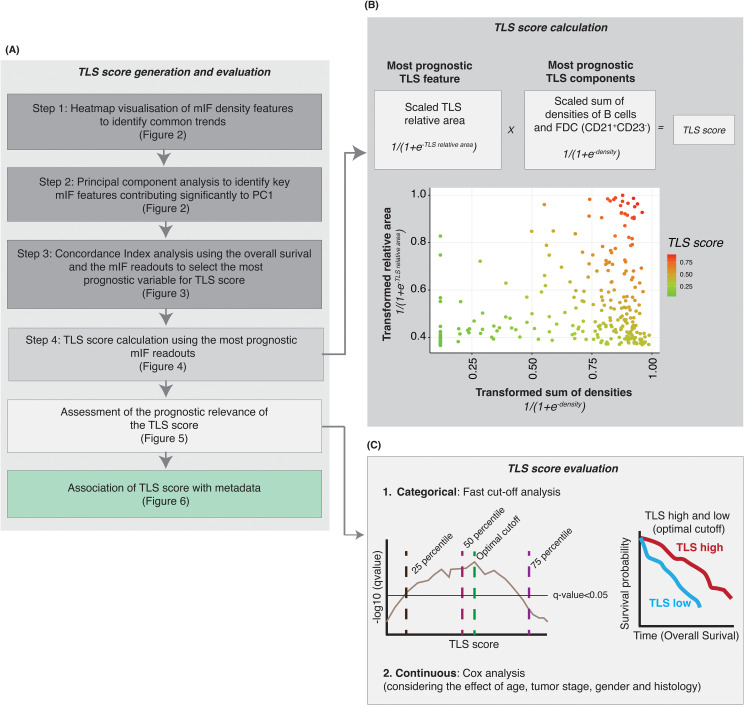
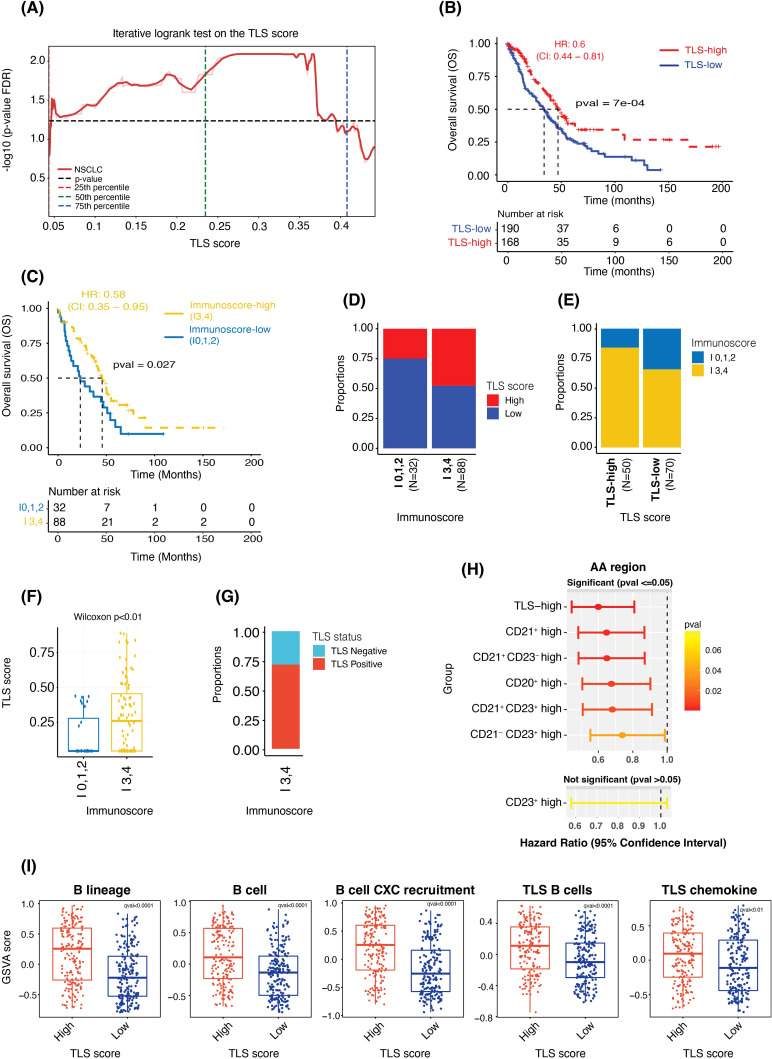
Tertiary Lymphoid Structures (TLS) are lymphoid structures commonly associated with improved survival of cancer patients and response to immunotherapies. However, conflicting reports underscore the need to consider TLS heterogeneity and multiple features such as TLS size, composition, and maturation status, when assessing their functional impact. With the aim of gaining insights into TLS biology and evaluating the prognostic impact of TLS maturity in Non-Small Cell Lung Carcinoma (NSCLC), we developed a multiplex immunofluorescent (mIF) panel including T cell (CD3, CD8), B cell (CD20), Follicular Dendritic cell (FDC) (CD21, CD23) and mature dendritic cell (DC-LAMP) markers. We deployed this panel across a cohort of primary tumor resections from NSCLC patients (N=406) and established a mIF image analysis workstream to specifically detect TLS structures and evaluate the density of each cell phenotype. We assessed the prognostic significance of TLS size, number, and composition, to develop a TLS scoring system representative of TLS biology within a tumor. TLS relative area, (total TLS area divided by the total tumor area), was the most prognostic TLS feature (C-index: 0.54, p = 0.04). CD21 positivity was a marker driving the favorable prognostic impact, where CD21 CD23 B cells (C-index: 0.57, p = 0.04) and CD21 CD23 FDC (C-index: 0.58, p = 0.01) were the only prognostic cell phenotypes in TLS. Combining the three most robust prognostic TLS features: TLS relative area, the density of B cells, and FDC CD21 CD23 we generated a TLS scoring system that demonstrated strong prognostic value in NSCLC when considering the effect of age, sex, histology, and smoking status. This TLS Score also demonstrated significant association with Immunoscore, EGFR mutational status and gene expression-based B-cell and TLS signature scores. It was not correlated with PD-L1 status in tumor cells or immune cells. In conclusion, we generated a prognostic TLS Score representative of the TLS heterogeneity and maturity undergoing within NSCLC tissues. This score could be used as a tool to explore how TLS presence and maturity impact the organization of the tumor microenvironment and support the discovery of spatial biomarker surrogates of TLS maturity, that could be used in the clinic.
三级淋巴结构(TLS)是与癌症患者生存改善和免疫治疗反应相关的淋巴结构。然而,相互矛盾的报告强调,在评估其功能影响时,需要考虑 TLS 的异质性和多个特征,如 TLS 的大小、组成和成熟状态。为了深入了解 TLS 生物学,并评估 TLS 成熟度对非小细胞肺癌(NSCLC)的预后影响,我们开发了一种包含 T 细胞(CD3、CD8)、B 细胞(CD20)、滤泡树突状细胞(FDC)(CD21、CD23)和成熟树突状细胞(DC-LAMP)标志物的多重免疫荧光(mIF)面板。我们将该面板应用于 NSCLC 患者的原发性肿瘤切除标本队列(N=406),并建立了 mIF 图像分析工作流程,专门用于检测 TLS 结构并评估每种细胞表型的密度。我们评估了 TLS 大小、数量和组成的预后意义,以开发代表肿瘤内 TLS 生物学的 TLS 评分系统。TLS 相对面积(TLS 总面积除以肿瘤总面积)是最具预后意义的 TLS 特征(C 指数:0.54,p=0.04)。CD21 阳性是具有有利预后影响的标志物,其中 CD21 CD23 B 细胞(C 指数:0.57,p=0.04)和 CD21 CD23 FDC(C 指数:0.58,p=0.01)是 TLS 中唯一具有预后意义的细胞表型。将三个最稳健的预后 TLS 特征:TLS 相对面积、B 细胞密度和 FDC CD21 CD23 相结合,我们生成了一个 TLS 评分系统,在考虑年龄、性别、组织学和吸烟状态的影响时,该系统在 NSCLC 中具有很强的预后价值。该 TLS 评分还与免疫评分、EGFR 突变状态以及基于基因表达的 B 细胞和 TLS 特征评分显著相关。它与肿瘤细胞或免疫细胞中的 PD-L1 状态不相关。总之,我们生成了一个代表 NSCLC 组织内发生的 TLS 异质性和成熟度的预后 TLS 评分。该评分可作为一种工具,用于探索 TLS 的存在和成熟度如何影响肿瘤微环境的组织,并支持发现 TLS 成熟度的空间生物标志物替代物,这些替代物可用于临床。