Duke Human Vaccine Institute.
Center for Human Systems Immunology.
JCI Insight. 2024 Oct 8;9(19):e178801. doi: 10.1172/jci.insight.178801.
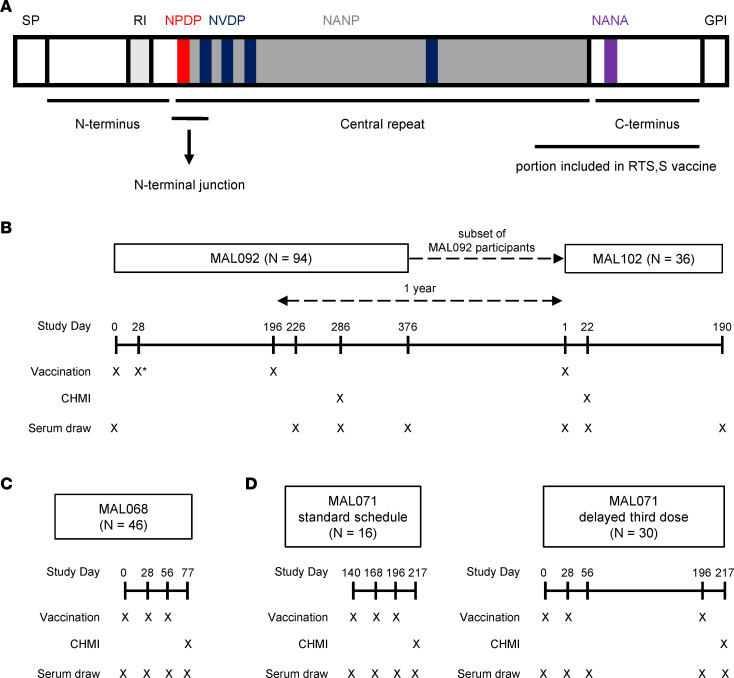
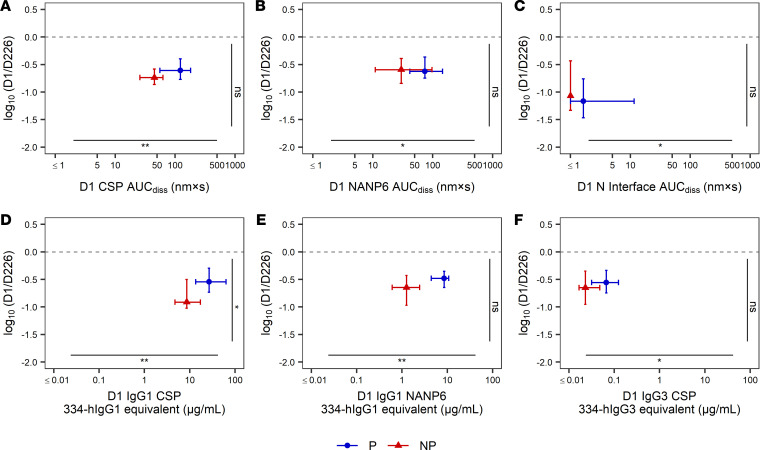
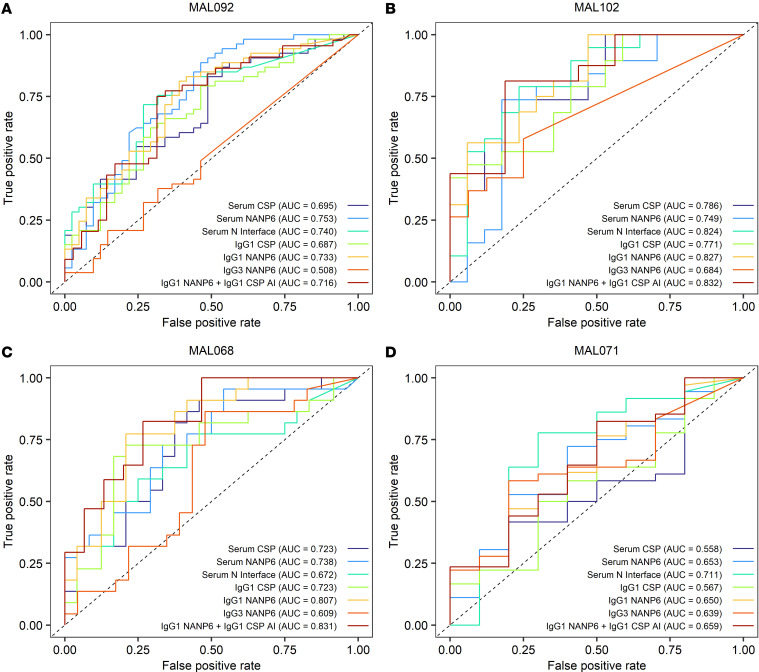
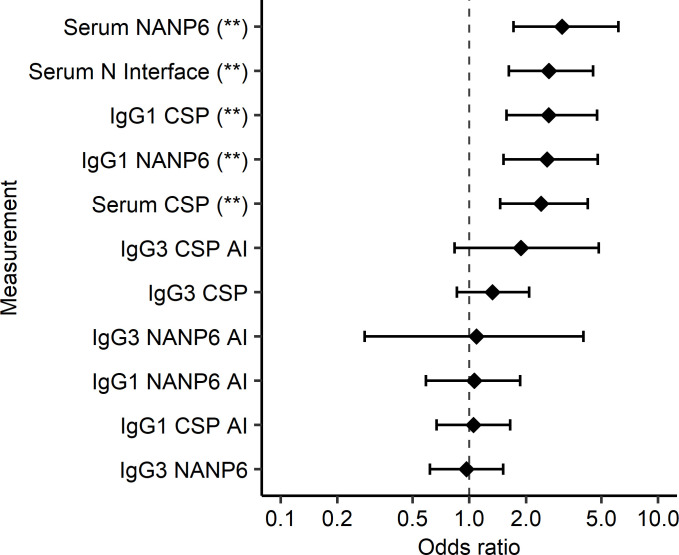
BACKGROUNDThe mechanism(s) responsible for the efficacy of WHO-recommended malaria vaccine RTS,S/AS01 are not completely understood. We previously identified RTS,S vaccine-induced Plasmodium falciparum circumsporozoite protein-specific (PfCSP-specific) antibody measures associated with protection from controlled human malaria infection (CHMI). Here, we tested the protection-predicting capability of these measures in independent CHMI studies.METHODSVaccine-induced total serum antibody (immunoglobulins, Igs) and subclass antibody (IgG1 and IgG3) responses were measured by biolayer interferometry and the binding antibody multiplex assay, respectively. Immune responses were compared between protected and nonprotected vaccinees using univariate and multivariate logistic regression.RESULTSBlinded prediction analysis showed that 5 antibody binding measures, including magnitude-avidity composite of serum Ig specific for PfCSP, major NANP repeats and N-terminal junction, and PfCSP- and NANP-specific IgG1 subclass magnitude, had good prediction accuracy (area under the receiver operating characteristic curves [ROC AUC] > 0.7) in at least 1 trial. Furthermore, univariate analysis showed a significant association between these antibody measures and protection (odds ratios 2.6-3.1). Multivariate modeling of combined data from 3 RTS,S CHMI trials identified the combination of IgG1 NANP binding magnitude plus serum NANP and N-junction Ig binding magnitude-avidity composite as the best predictor of protection (95% confidence interval for ROC AUC 0.693-0.834).CONCLUSIONThese results reinforce our previous findings and provide a tool for predicting protection in future trials.TRIAL REGISTRATIONClinicalTrials.gov NCT03162614, NCT03824236, NCT01366534, and NCT01857869.FUNDINGThis study was supported by Bill & Melinda Gates Foundation's Global Health-Discovery Collaboratory grants (INV-008612 and INV-043419) to GDT.
世界卫生组织推荐的疟疾疫苗 RTS,S/AS01 的疗效机制尚不完全清楚。我们之前已经确定了 RTS,S 疫苗诱导的恶性疟原虫环子孢子蛋白特异性(PfCSP 特异性)抗体与预防人体疟疾感染(CHMI)有关。在这里,我们测试了这些测量方法在独立的 CHMI 研究中的保护预测能力。
通过生物层干涉法和结合抗体多重分析分别测量疫苗诱导的总血清抗体(免疫球蛋白,Ig)和亚类抗体(IgG1 和 IgG3)反应。使用单变量和多变量逻辑回归比较了保护者和非保护者之间的免疫反应。
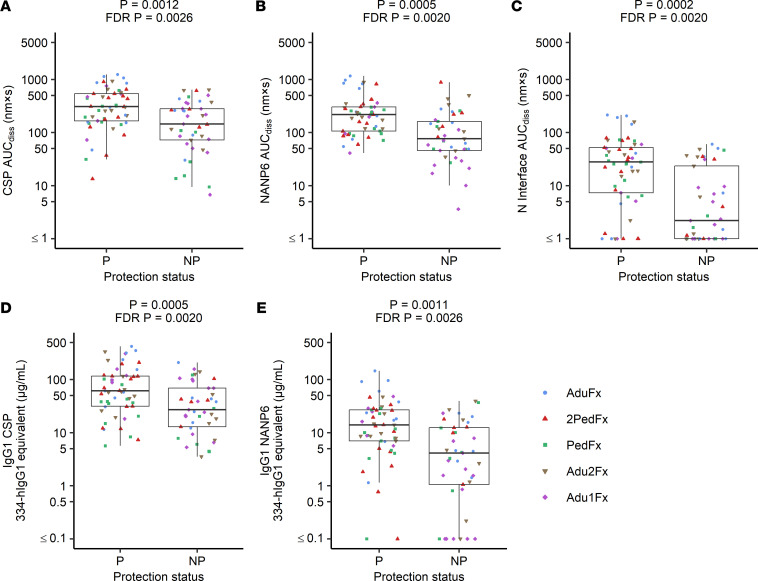
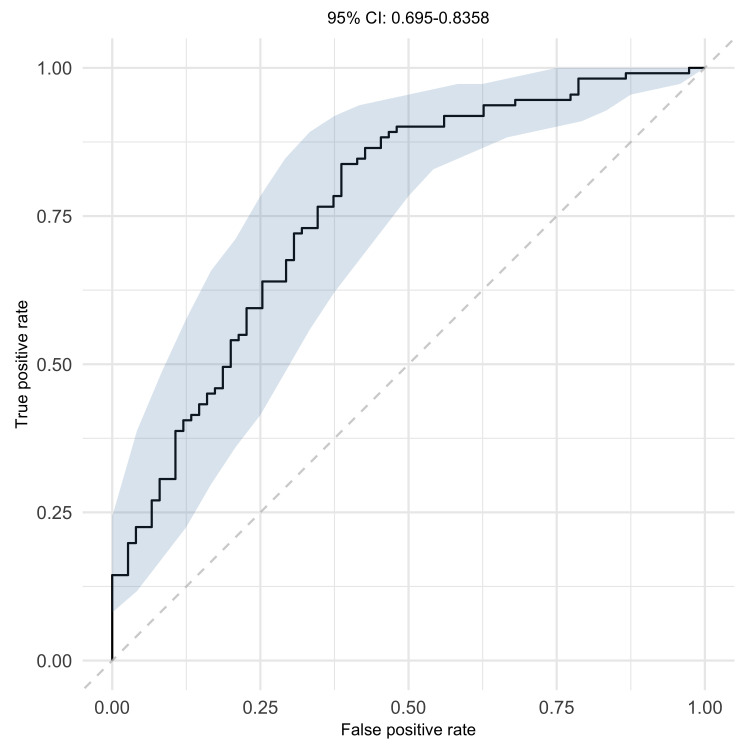
盲法预测分析表明,在至少一项试验中,5 种抗体结合测量值,包括血清针对 PfCSP 的 Ig 的量-亲和复合、主要 NANP 重复和 N 端接头、PfCSP 和 NANP 特异性 IgG1 亚类量,具有良好的预测准确性(ROC 曲线下面积 [AUC] > 0.7)。此外,单变量分析显示这些抗体测量值与保护之间存在显著关联(优势比 2.6-3.1)。对来自 3 项 RTS,S CHMI 试验的综合数据进行多变量建模,确定了 IgG1 NANP 结合量加上血清 NANP 和 N 接头 Ig 结合量-亲和复合作为保护的最佳预测因子(ROC AUC 的 95%置信区间为 0.693-0.834)。
这些结果加强了我们之前的发现,并为未来试验中的保护预测提供了工具。
ClinicalTrials.gov NCT03162614、NCT03824236、NCT01366534 和 NCT01857869。
本研究得到比尔和梅琳达盖茨基金会全球健康-发现协作实验室资助(INV-008612 和 INV-043419)。