Fan Mingzhu, Hu Jin, Xu Xiaoyan, Chen Jia, Zhang Wenwen, Zheng Xiaoping, Pan Jinheng, Xu Wei, Feng Shan
Key Laboratory of Structural Biology of Zhejiang Province, Westlake University, Hangzhou, 310024, Zhejiang, China.
Mass Spectrometry & Metabolomics Core Facility, The Biomedical Research Core Facility, Westlake University, Hangzhou, 310024, Zhejiang, China.
Heliyon. 2024 Sep 20;10(19):e38182. doi: 10.1016/j.heliyon.2024.e38182. eCollection 2024 Oct 15.
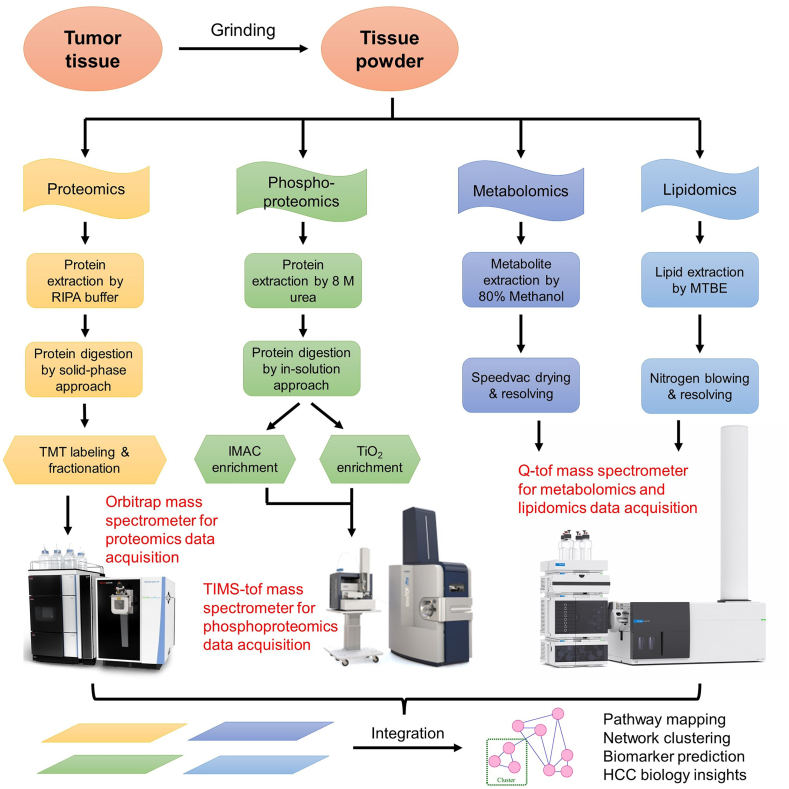
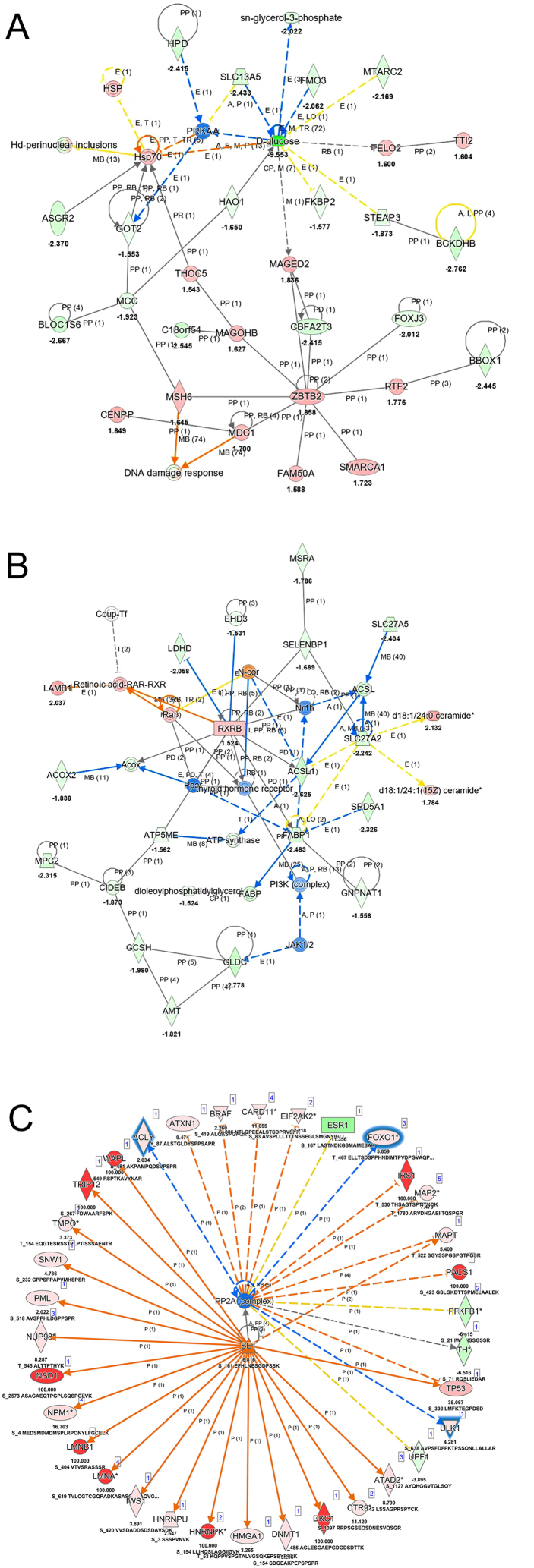
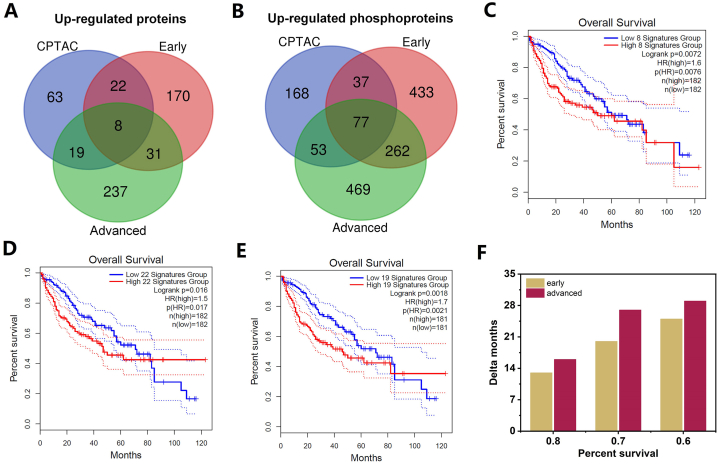
Hepatocellular Carcinoma (HCC) is a serious primary solid tumor that is prevalent worldwide. Due to its high mortality rate, it is crucial to explore both early diagnosis and advanced treatment for HCC. In recent years, multi-omics approaches have emerged as promising tools to identify biomarkers and investigate molecular mechanisms of biological processes and diseases. In this study, we performed proteomics, phosphoproteomics, metabolomics, and lipidomics to reveal the molecular features of early- and advanced-stage HCC. The data obtained from these omics were analyzed separately and then integrated to provide a comprehensive understanding of the disease. The multi-omics results unveiled intricate biological pathways and interaction networks underlying the initiation and progression of HCC. Moreover, we proposed specific potential biomarker panels for both early- and advanced-stage HCC by overlapping our data with CPTAC database for HCC diagnosis, and deduced novel insights and mechanisms related to HCC origination and development, such as glucose depletion during tumor progression, ROCK1 deactivation and GSK3A activation.
肝细胞癌(HCC)是一种严重的原发性实体瘤,在全球范围内普遍存在。由于其高死亡率,探索HCC的早期诊断和先进治疗方法至关重要。近年来,多组学方法已成为识别生物标志物以及研究生物过程和疾病分子机制的有前途的工具。在本研究中,我们进行了蛋白质组学、磷酸蛋白质组学、代谢组学和脂质组学研究,以揭示早期和晚期HCC的分子特征。从这些组学获得的数据分别进行分析,然后整合以全面了解该疾病。多组学结果揭示了HCC发生和发展背后复杂的生物途径和相互作用网络。此外,我们通过将我们的数据与HCC诊断的CPTAC数据库重叠,提出了早期和晚期HCC的特定潜在生物标志物面板,并推导了与HCC起源和发展相关的新见解和机制,例如肿瘤进展期间的葡萄糖消耗、ROCK1失活和GSK3A激活。