Turner Paul J, Bognanni Antonio, Arasi Stefania, Ansotegui Ignacio J, Schnadt Sabine, La Vieille Sébastien, Hourihane Jonathan O'B, Zuberbier Torsten, Eigenmann Philippe, Ebisawa Motohiro, Morais-Almeida Mario, Barnett Julie, Martin Bryan, Monaci Linda, Roberts Graham, Wong Gary, Gupta Ruchi, Tsabouri Sophia, Mills Clare, Brooke-Taylor Simon, Bartra Joan, Levin Michael, Groetch Marion, Tanno Luciana, Hossny Elham, Weber Barbara Ballmer, Fierro Vincenzo, Remington Ben, Gerdts Jennifer, Gowland M Hazel, Chu Derek, Van Ravenhorst Marjan, Koplin Jennifer, Fiocchi Alessandro
National Heart & Lung Institute, Imperial College London, London, UK.
Department of Health Research Methods, Evidence, and Impact, McMaster University, Hamilton, ON, Canada.
World Allergy Organ J. 2024 Sep 25;17(10):100972. doi: 10.1016/j.waojou.2024.100972. eCollection 2024 Oct.
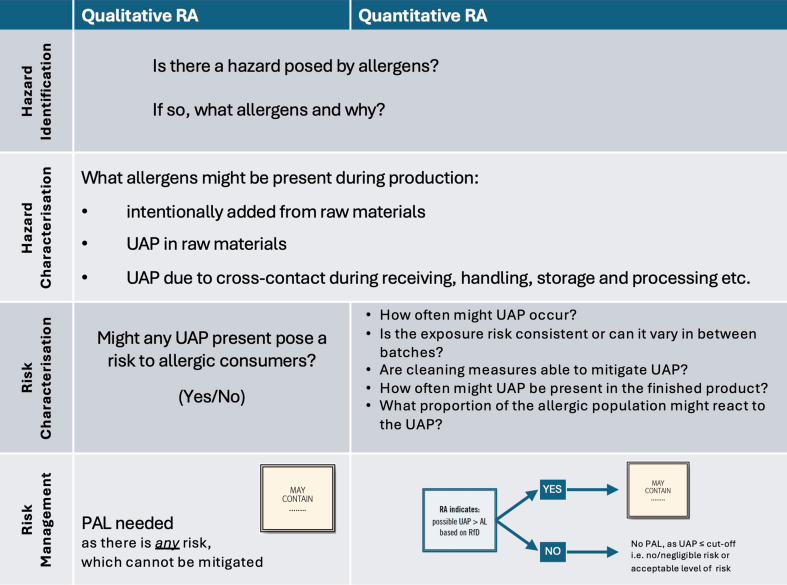
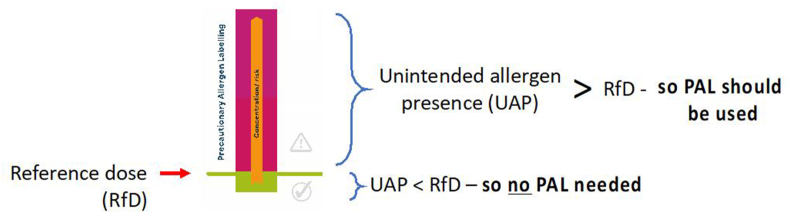
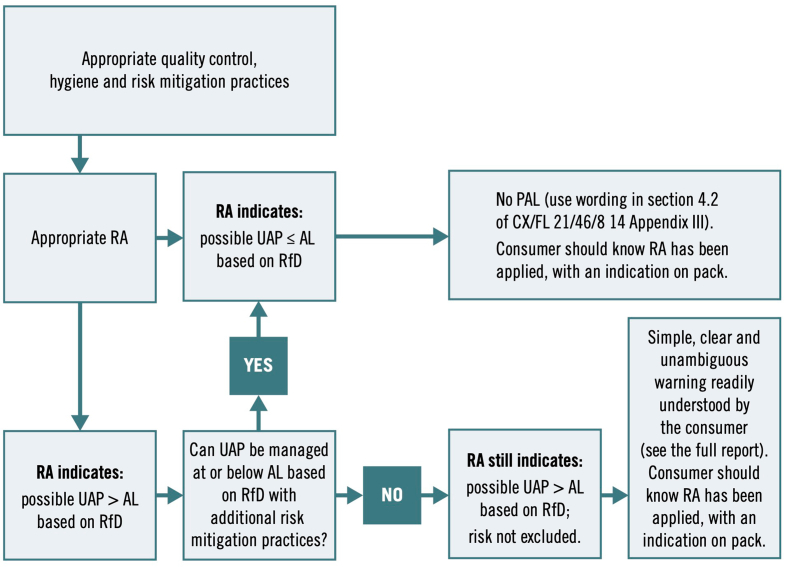
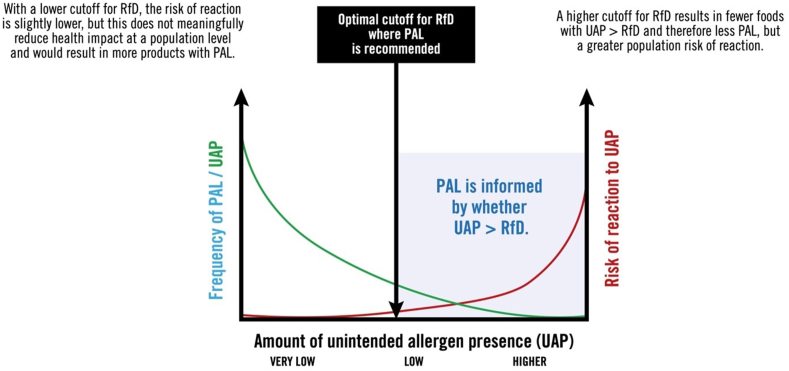
Precautionary Allergen ("may contain") Labelling (PAL) is used by industry to communicate potential risk to food-allergic individuals posed by unintended allergen presence (UAP). In 2014, the World Allergy Organization (WAO) highlighted that PAL use was increasing, but often applied inconsistently and without regulation - which reduces its usefulness to consumers with food allergy and those purchasing food for them. WAO proposed the need for a regulated, international framework to underpin application of PAL. In 2019, the World Health Organization (WHO) and the Food and Agriculture Organization (FAO) of the United Nations convened an expert consultation to address the issue of PAL, the outputs of which are now being considered by the Codex Committee on Food Labelling (CCFL).
To summarise the latest data to inform the application of PAL in a more systematic way, for implementation into global food standards.
A non-systematic review of issues surrounding precautionary labelling and food allergens in pre-packaged products.
Approximately, 100 countries around the world have legislation on the declaration of allergenic ingredients. Just a few have legislation on UAP. Given the risks that UAP entails, non-regulated PAL creates inconvenience in real life due to its unequal, difficult interpretation by patients. The attempts made so far to rationalize PAL present lights and shadows.
At a time when CCFL is considering the results of the FAO/WHO Expert Consultation 2020-2023, we summarise the prospects to develop an effective and homogeneous legislation at a global level, and the areas of uncertainty that might hinder international agreement on a regulated framework for PAL of food allergens.
行业使用预防性过敏原(“可能含有”)标签(PAL)来告知食物过敏个体非故意存在的过敏原(UAP)所带来的潜在风险。2014年,世界过敏组织(WAO)强调PAL的使用正在增加,但往往应用不一致且缺乏监管——这降低了其对食物过敏消费者以及为他们购买食物的人的有用性。WAO提议需要一个有监管的国际框架来支持PAL的应用。2019年,世界卫生组织(WHO)和联合国粮食及农业组织(FAO)召开了一次专家磋商会来解决PAL问题,食品标签法典委员会(CCFL)目前正在审议磋商会的成果。
总结最新数据,以便更系统地应用PAL,从而纳入全球食品标准。
对预包装产品中预防性标签和食物过敏原相关问题进行非系统性综述。
全球约有100个国家制定了关于致敏成分声明的法规。只有少数国家有关于UAP的法规。鉴于UAP带来的风险,无监管的PAL在现实生活中造成不便,因为患者对其解读不平等且困难。迄今为止使PAL合理化的尝试有亮点也有不足。
在CCFL审议2020 - 2023年粮农组织/世卫组织专家磋商会结果之际,我们总结了在全球层面制定有效且统一法规的前景,以及可能阻碍就食物过敏原PAL监管框架达成国际协议的不确定领域。