Xiao Guoqing, Zhang Xiang, Duan Alin, Li Jian, Chen Jialei
Sports Medicine Center, Department of Orthopedic Surgery, West China Hospital, Sichuan University, Chengdu, Sichuan, China.
Department of Orthopedic Surgery, The Second Affiliated Hospital of Chengdu Medical College, China National Nuclear Corporation 416 Hospital, Chengdu, Sichuan, China.
Front Bioeng Biotechnol. 2024 Sep 25;12:1463047. doi: 10.3389/fbioe.2024.1463047. eCollection 2024.
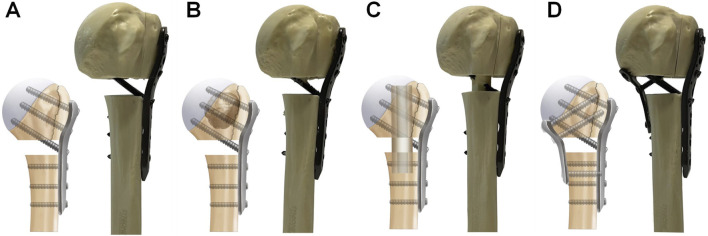
Low bone density and lack of medial support are the two most important factors affecting the stability of locking plate fixation for osteoporotic proximal humeral fractures (PHFs). This study aimed to compare the biomechanical characteristics of PHILOS locking plates combined with calcar screws, bone cement, fibular allografts, and medial locking plate support strategies for treating osteoporotic PHFs with medial column instability.
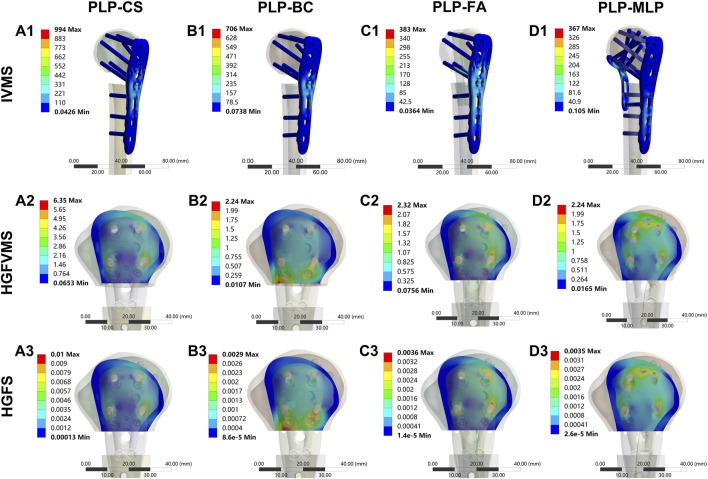
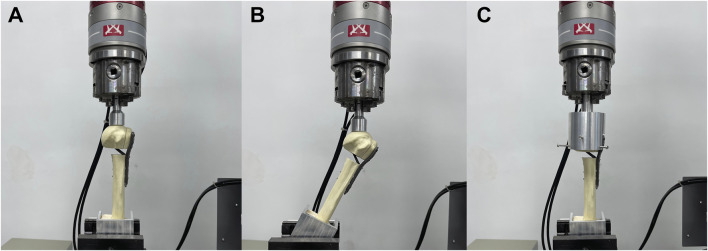
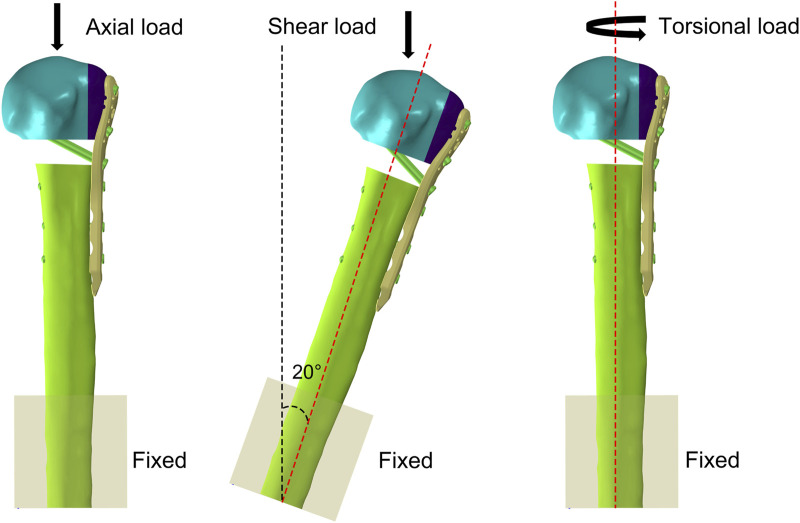
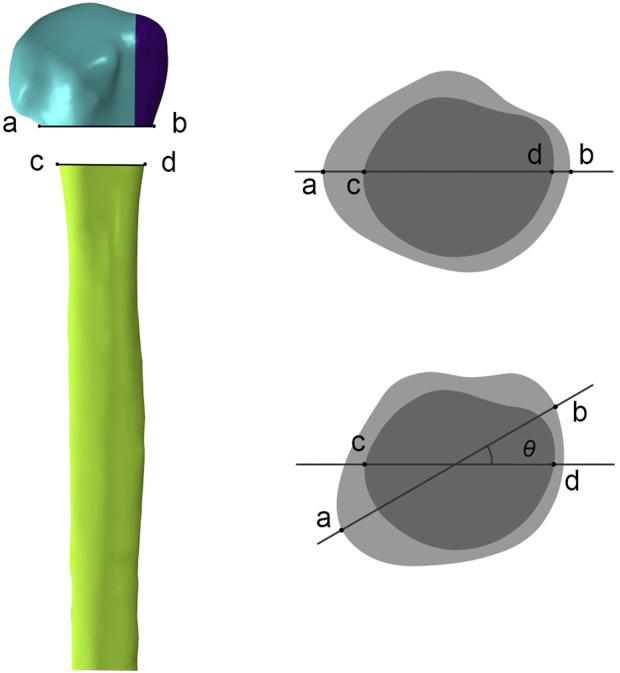
A three-part osteoporotic PHF (AO 11-B3.2) model with metaphyseal loss was generated using 40 synthetic humeri and fixed via four distinct medial support strategies. All models were mechanically tested to quantify the mechanical characteristics. Subsequently, finite element models were created for each biomechanical test case. The stress distribution and displacement of the four different fixation structures were analyzed using finite element analysis.
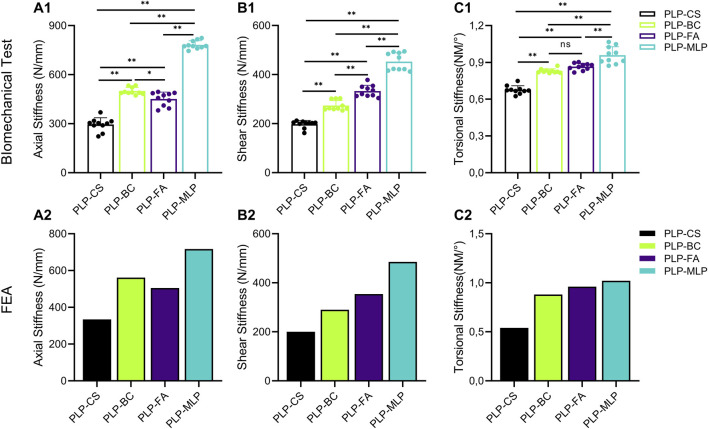
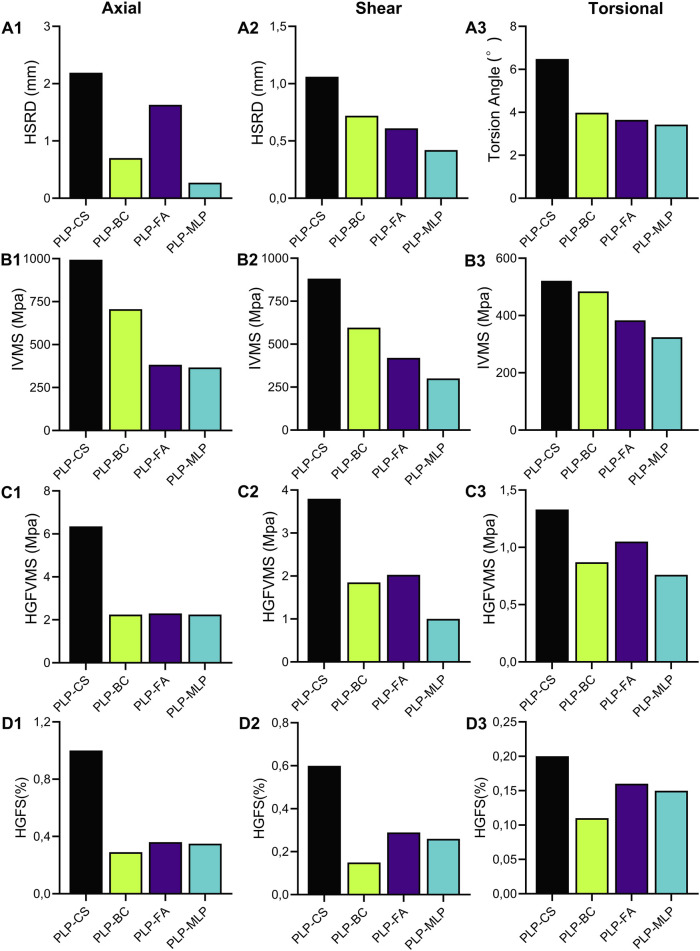
The results demonstrated that the PHILOS locking plate combined with the medial locking plate, exhibited the greatest stability when subjected to axial, shear, and torsional loading. Furthermore, the PHILOS locking plate combined with bone cement showed structural stability similar to that of the PHILOS locking plate combined with fibular allograft but with lower stress levels on the fracture surface.
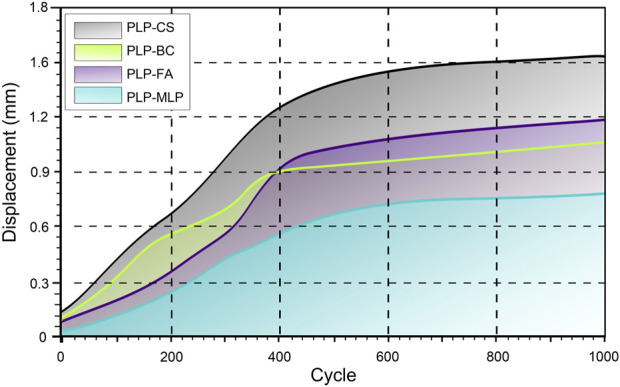
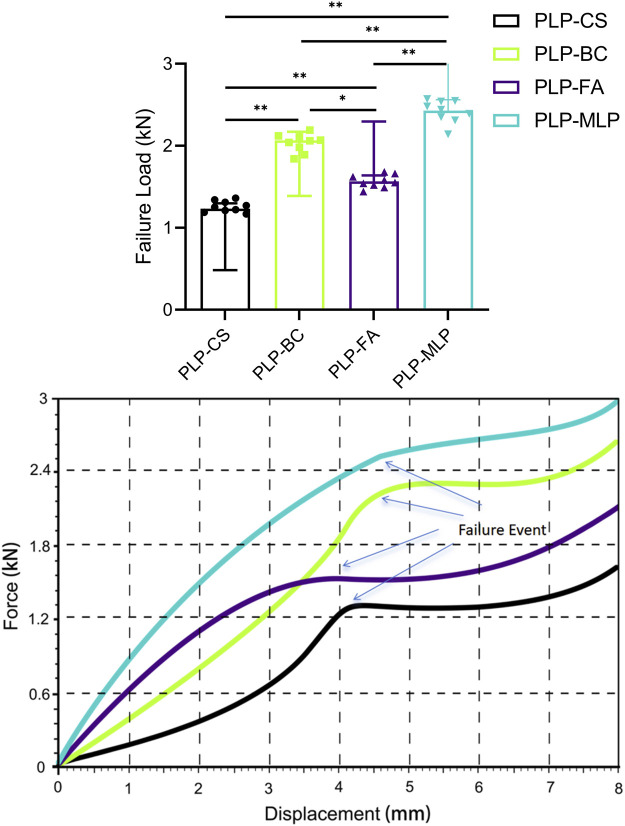
In conclusion, the PLP-MLP fixation structure showed superior biomechanical properties under axial, shear, and torsional loading compared to other medial support methods. Repairing the medial support when treating osteoporotic PHFs with medial column instability can enhance the mechanical stability of the fracture end in both the short and long term.
骨密度低和缺乏内侧支撑是影响骨质疏松性肱骨近端骨折(PHF)锁定钢板固定稳定性的两个最重要因素。本研究旨在比较PHILOS锁定钢板联合距骨螺钉、骨水泥、腓骨异体骨以及内侧锁定钢板支撑策略治疗伴有内侧柱不稳定的骨质疏松性PHF的生物力学特性。
使用40个合成肱骨构建一个伴有干骺端骨量丢失的三部分骨质疏松性PHF(AO 11-B3.2)模型,并通过四种不同的内侧支撑策略进行固定。对所有模型进行力学测试以量化力学特性。随后,为每个生物力学测试案例创建有限元模型。使用有限元分析来分析四种不同固定结构的应力分布和位移。
结果表明,PHILOS锁定钢板联合内侧锁定钢板在承受轴向、剪切和扭转载荷时表现出最大的稳定性。此外,PHILOS锁定钢板联合骨水泥显示出与PHILOS锁定钢板联合腓骨异体骨相似的结构稳定性,但骨折面上的应力水平较低。
总之,与其他内侧支撑方法相比,PLP-MLP固定结构在轴向、剪切和扭转载荷下表现出更好的生物力学性能。在治疗伴有内侧柱不稳定的骨质疏松性PHF时修复内侧支撑可以在短期和长期内增强骨折端的力学稳定性。