Department of Nephrology, Hiroshima University Hospital, 1-2-3 Kasumi, Minami-ku, Hiroshima, 734-8551, Japan.
Sci Rep. 2024 Oct 11;14(1):23816. doi: 10.1038/s41598-024-74340-5.
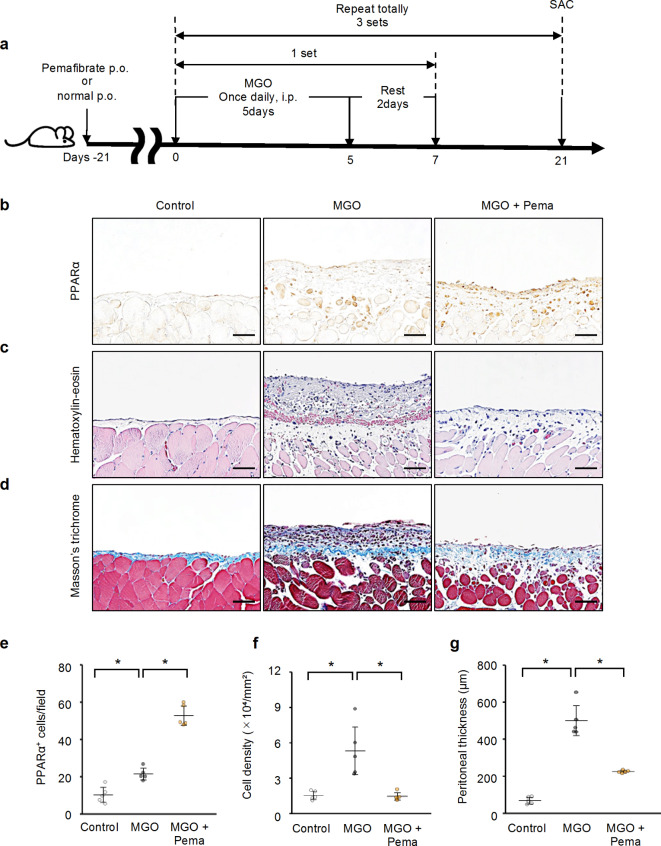
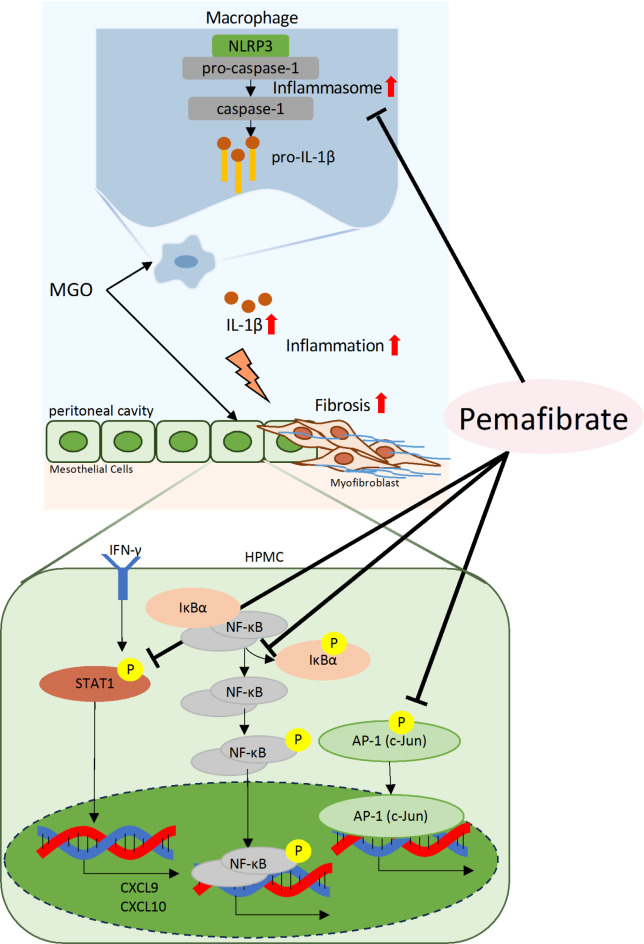
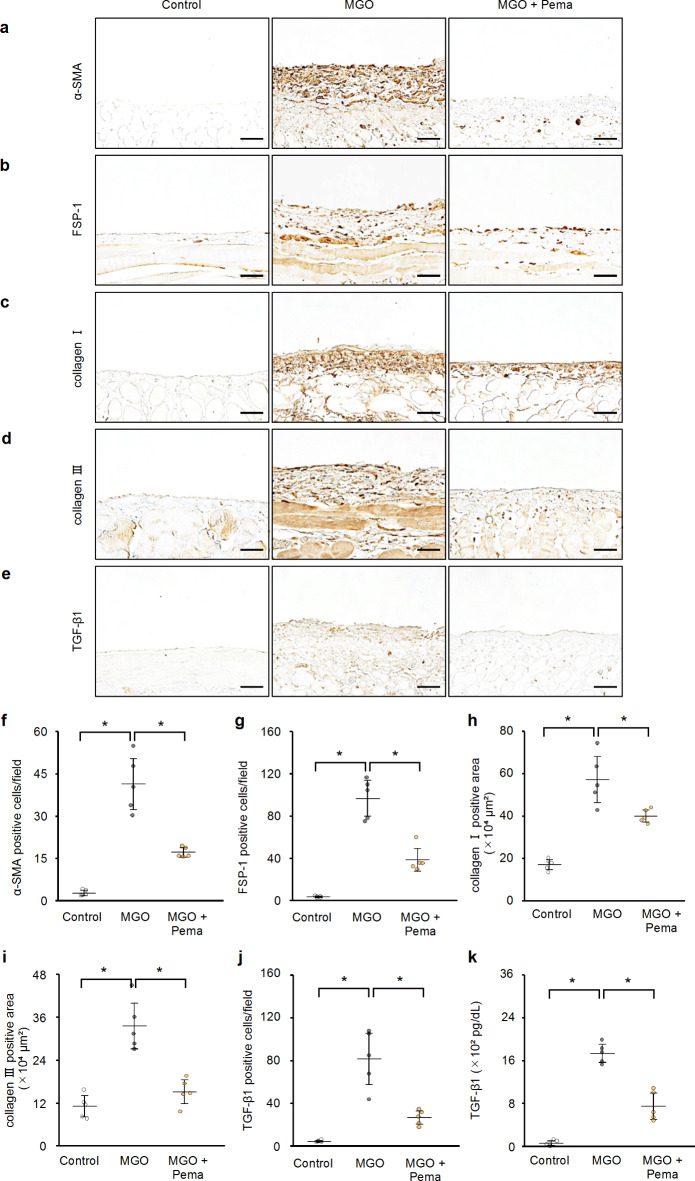
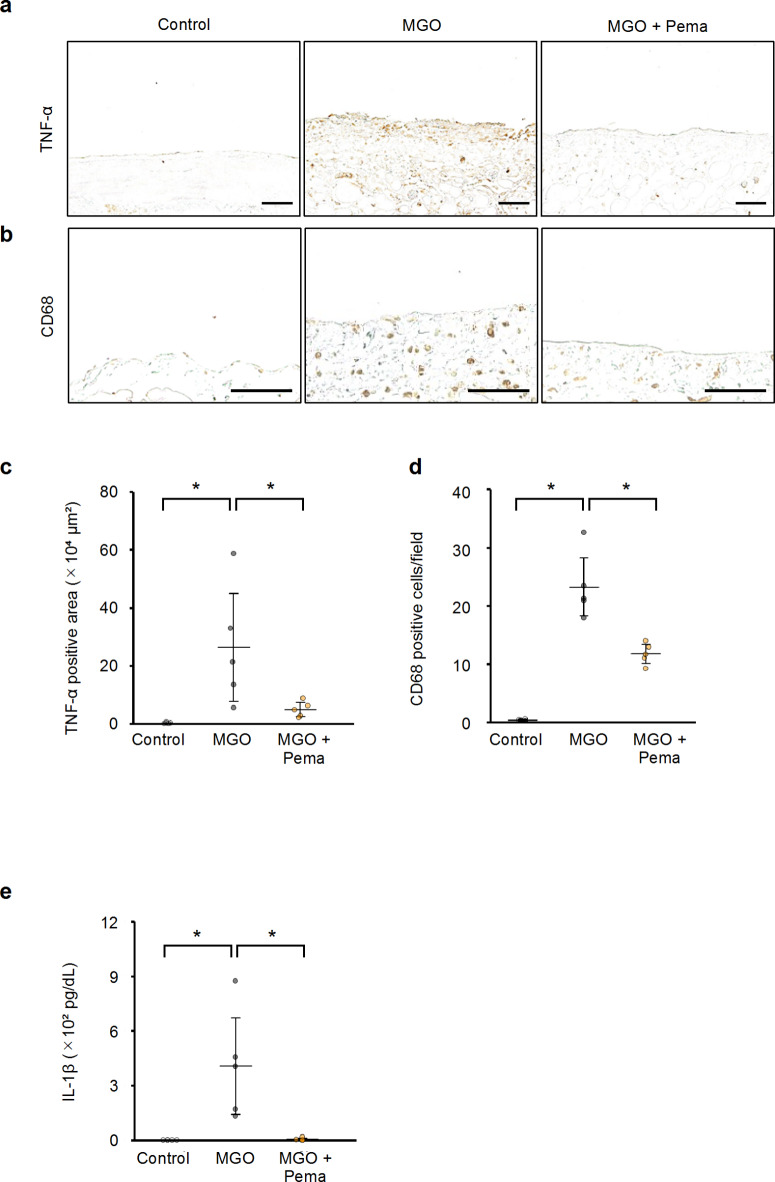
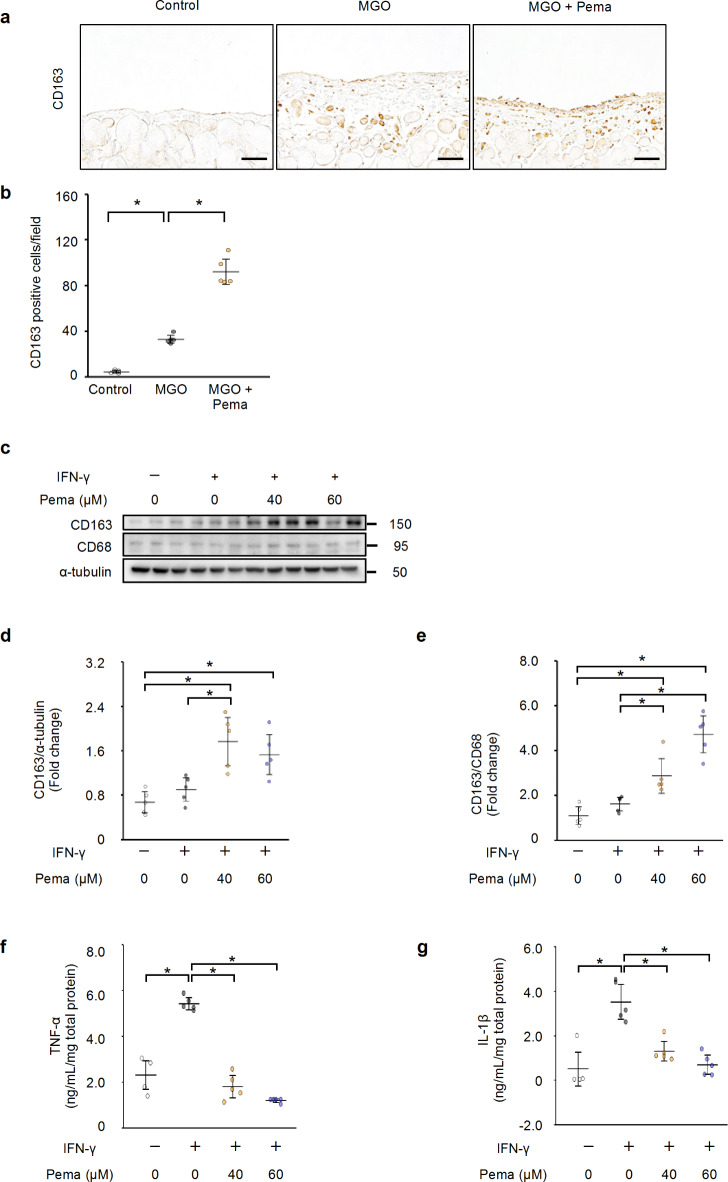
Peritoneal inflammation and fibrosis remain major challenges to the long-term maintenance of peritoneal dialysis. Pemafibrate, a selective peroxisome proliferator-activated receptor α (PPARα) modulator, has been implicated in the management of fibrosis-related disorders. We investigated whether pemafibrate ameliorates peritoneal inflammation and fibrosis and explored the underlying mechanisms in mice with methylglyoxal (MGO)-induced peritoneal fibrosis (MGO mice). MGO mice exhibited peritoneal fibrosis with increased expression of mesenchymal markers, transforming growth factor-β1 (TGF-β1), and substantial deposition of extracellular matrix (ECM) proteins. Additionally, MGO mice exhibited peritoneal inflammation as indicated by elevated tumor necrosis factor-α expression and macrophage infiltration in peritoneal tissue. These effects were mitigated by pemafibrate treatment, which also restored peritoneal membrane function. Furthermore, pemafibrate promoted anti-inflammatory macrophage polarization in both mice and THP-1 cells. In human peritoneal mesothelial cells (HPMCs), pemafibrate effectively inhibited interferon-γ-induced production of TGF-β1 and ECM while suppressing the proinflammatory cytokines nuclear factor-κB (NF-κB) and activator protein 1. The NF-κB inhibitory effect of pemafibrate involved stabilization of the NF-κB inhibitory protein IkBα. Notably, pemafibrate hindered activation of the NLR family pyrin domain containing 3/caspase-1 axis in interferon-γ-stimulated THP-1 cells. These findings suggest that pemafibrate ameliorates peritoneal inflammation and fibrosis, making it a promising candidate for peritoneal fibrosis therapy.
腹膜炎症和纤维化仍然是腹膜透析长期维持的主要挑战。Pemafibrate 是一种选择性过氧化物酶体增殖物激活受体α(PPARα)调节剂,与纤维化相关疾病的治疗有关。我们研究了 Pemafibrate 是否能改善腹膜炎症和纤维化,并在甲基乙二醛(MGO)诱导的腹膜纤维化(MGO 小鼠)中探讨了潜在机制。MGO 小鼠表现出腹膜纤维化,间质标志物、转化生长因子-β1(TGF-β1)表达增加,细胞外基质(ECM)蛋白大量沉积。此外,MGO 小鼠的腹膜炎症表现为肿瘤坏死因子-α表达升高和腹膜组织中巨噬细胞浸润。Pemafibrate 治疗减轻了这些影响,同时恢复了腹膜膜功能。此外,Pemafibrate 促进了在小鼠和 THP-1 细胞中抗炎型巨噬细胞的极化。在人腹膜间皮细胞(HPMCs)中,Pemafibrate 有效抑制干扰素-γ诱导的 TGF-β1 和 ECM 产生,同时抑制促炎细胞因子核因子-κB(NF-κB)和激活蛋白 1。Pemafibrate 对 NF-κB 的抑制作用涉及 NF-κB 抑制蛋白 IkBα的稳定化。值得注意的是,Pemafibrate 阻碍了干扰素-γ刺激的 THP-1 细胞中 NLR 家族包含吡啶结构域的 3/半胱天冬酶-1 轴的激活。这些发现表明,Pemafibrate 可改善腹膜炎症和纤维化,使其成为腹膜纤维化治疗的有前途的候选药物。