Unit of Translational Immunology, Department of Experimental Oncology, Fondazione IRCCS, Istituto Nazionale dei Tumori di Milano, Milan, Italy
School of Medicine and Surgery, University of Milano Bicocca, Monza, Italy.
J Immunother Cancer. 2024 Oct 12;12(10):e009720. doi: 10.1136/jitc-2024-009720.
Colorectal cancer (CRC) remains a significant healthcare burden worldwide, characterized by a complex interplay between obesity and chronic inflammation. While the relationship between CRC, obesity and altered lipid metabolism is not fully understood, there are evidences suggesting a link between them. In this study, we hypothesized that dysregulated lipid metabolism contributes to local accumulation of foam cells (FC) in CRC, which in turn disrupts antitumor immunosurveillance.
Tumor infiltrating FC and CD8 were quantified by digital pathology in patients affected by T2-T4 CRC with any N stage undergoing radical upfront surgery (n=65) and correlated with patients' clinical outcomes. Multiparametric high-resolution flow cytometry analysis and bulk RNAseq of CRC tissue were conducted to evaluate the phenotype and transcriptomic program of immune cell infiltrate in relation to FC accumulation. The immunosuppressive effects of FC and mechanistic studies on FC-associated transforming growth factor-beta (TGF-β) and anti-PD-L1 inhibition were explored using an in-vitro human model of lipid-engulfed macrophages.
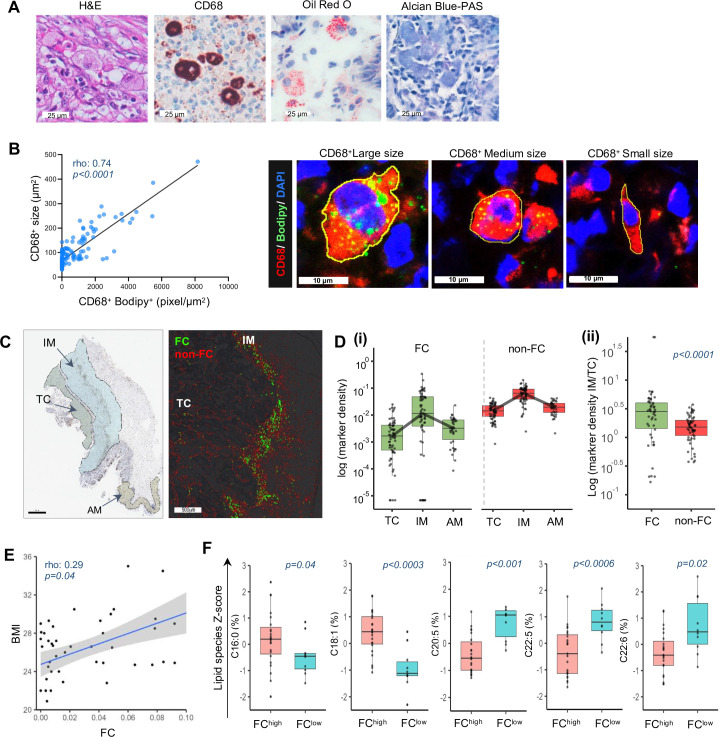
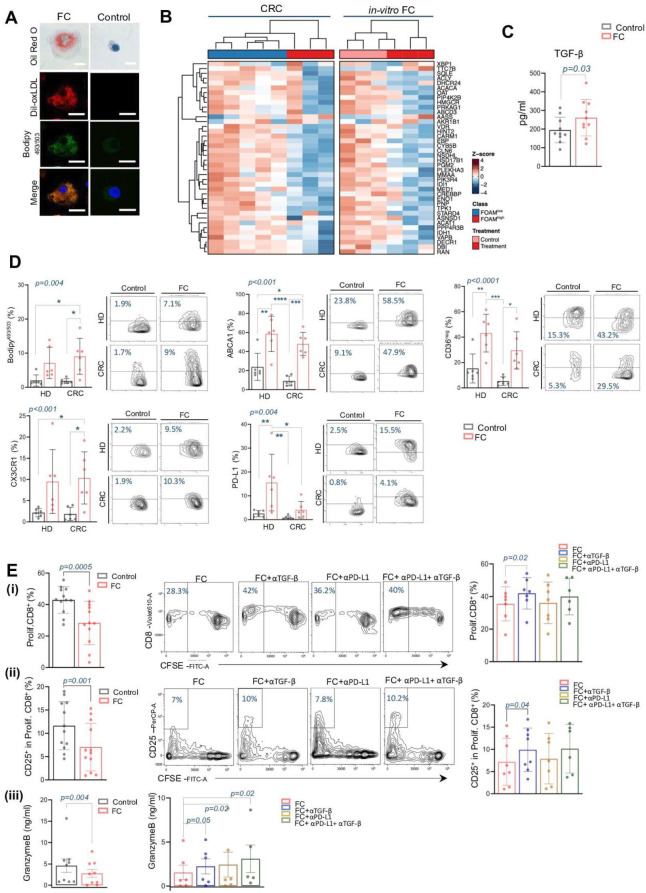
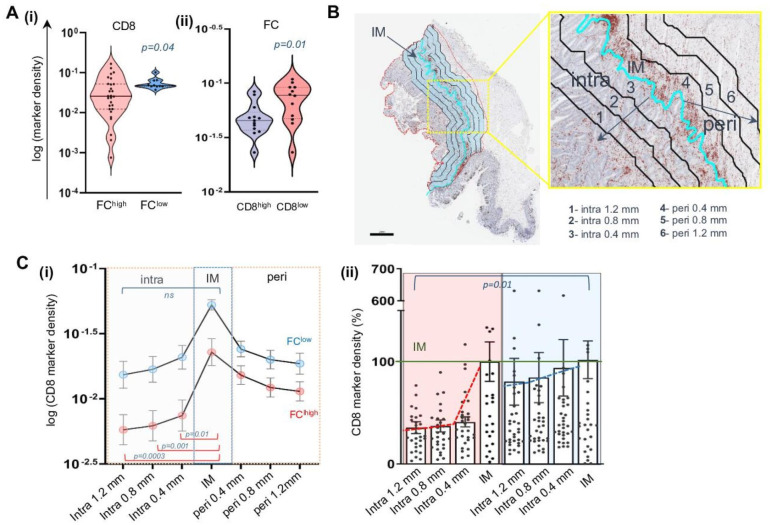
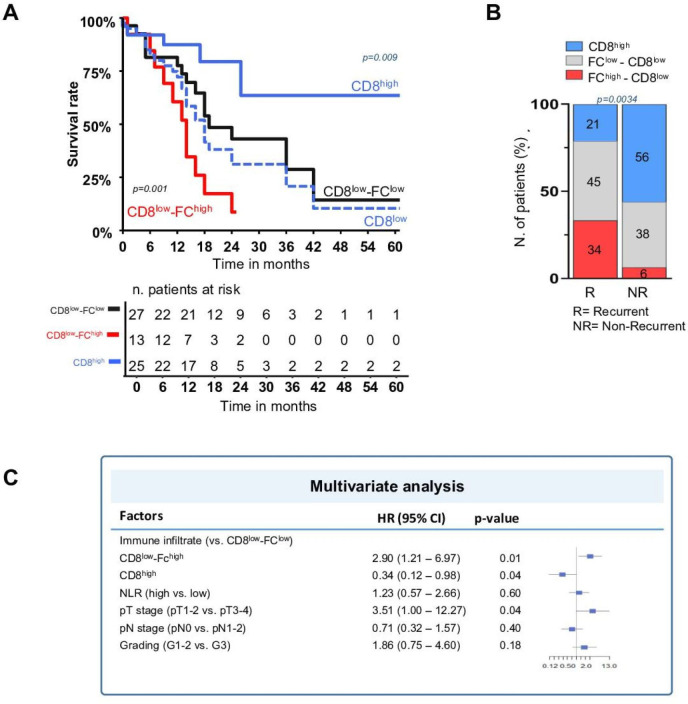
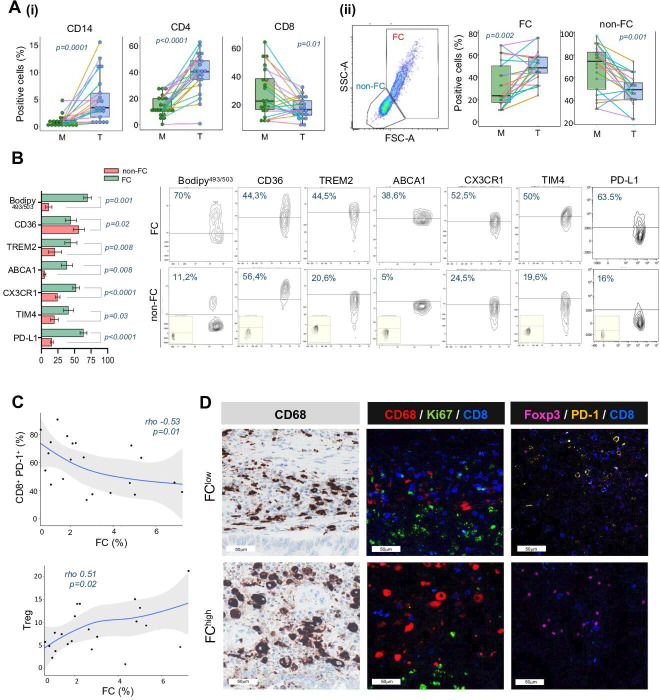
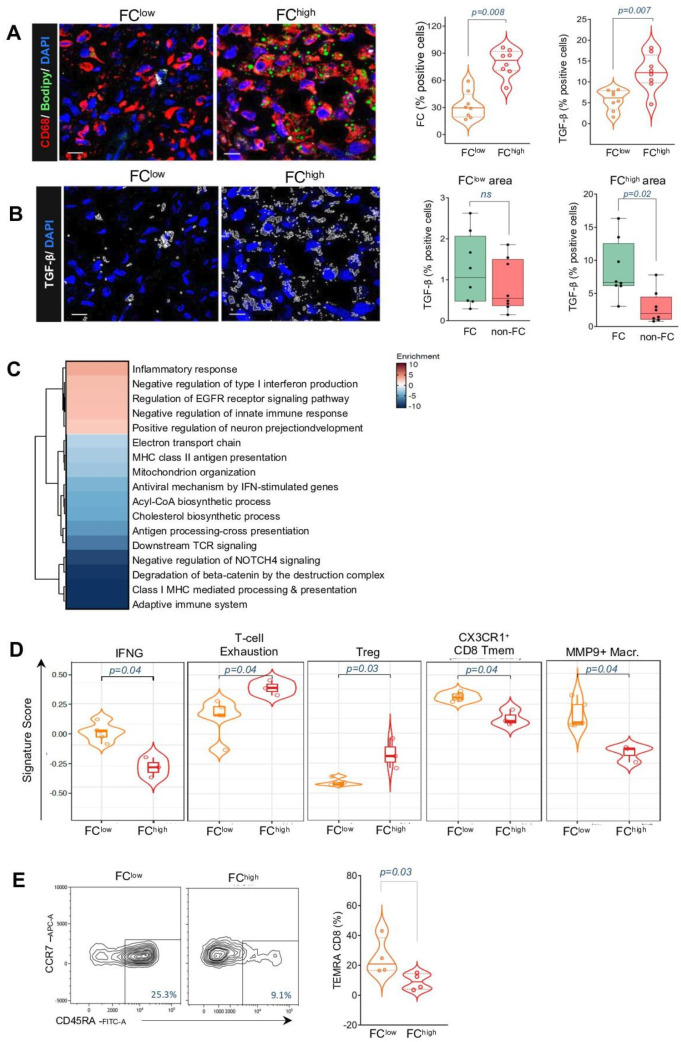
FC (large CD68 Bodipy macrophages) accumulated at the tumor margin in CRC samples. FC tumors exhibited reduced CD8 T cells and increased regulatory T cells (Tregs). Functional transcriptional profiling depicted an immunosuppressed milieu characterized by reduced interferon gamma, memory CD8 T cells, and activated macrophages mirrored by increased T-cell exhaustion and Treg enrichment. Furthermore, FC tumor phenotype was independent of standard clinical factors but correlated with high body mass index (BMI) and plasma saturated fatty acid levels. In CD8 tumors, the FC phenotype was associated with a 3-year disease-free survival rate of 8.6% compared with 28.7% of FC (p=0.001). In-vitro studies demonstrated that FC significantly impact on CD8 proliferation in TFG-β dependent manner, while inhibition of TGF-β FC-related factors restored antitumor immunity.
FC exert immunosuppressive activity through a TGF-β-related pathway, resulting in a CD8-excluded microenvironment and identifying immunosuppressed tumors with worse prognosis in patients with primary CRC. FC association with patient BMI and dyslipidemia might explain the link of CRC with obesity, and offers novel therapeutic and preventive perspectives in this specific clinical setting.
结直肠癌(CRC)仍然是全球范围内的重大医疗负担,其特征是肥胖症和慢性炎症之间存在复杂的相互作用。虽然 CRC、肥胖症和脂质代谢改变之间的关系尚未完全阐明,但有证据表明它们之间存在联系。在这项研究中,我们假设脂质代谢失调导致 CRC 中泡沫细胞(FC)的局部积累,进而破坏抗肿瘤免疫监视。
在接受根治性 upfront 手术的 T2-T4 CRC 患者中(n=65),通过数字病理学量化肿瘤浸润 FC 和 CD8,并将其与患者的临床结果相关联。对 CRC 组织进行多参数高分辨率流式细胞术分析和批量 RNAseq,以评估与 FC 积累相关的免疫细胞浸润的表型和转录组程序。使用体外脂质吞噬巨噬细胞模型探索 FC 的免疫抑制作用以及与 FC 相关的转化生长因子-β(TGF-β)和抗 PD-L1 抑制的机制研究。
CRC 样本中在肿瘤边缘处积累了 FC(大 CD68 Bodipy 巨噬细胞)。FC 肿瘤表现出减少的 CD8 T 细胞和增加的调节性 T 细胞(Tregs)。功能转录谱描述了一种免疫抑制环境,其特征是减少干扰素 γ、记忆性 CD8 T 细胞和激活的巨噬细胞,同时 T 细胞耗竭和 Treg 富集增加。此外,FC 肿瘤表型独立于标准临床因素,但与高体重指数(BMI)和血浆饱和脂肪酸水平相关。在 CD8 肿瘤中,与 FC 肿瘤相比,FC 表型与 3 年无病生存率为 8.6%相关,而 FC 表型为 28.7%(p=0.001)。体外研究表明,FC 通过 TGF-β 依赖性途径显著影响 CD8 增殖,而抑制 TGF-β FC 相关因子可恢复抗肿瘤免疫。
FC 通过 TGF-β 相关途径发挥免疫抑制活性,导致 CD8 排除的微环境,并在原发性 CRC 患者中确定预后较差的免疫抑制肿瘤。FC 与患者 BMI 和血脂异常的关联可能解释了 CRC 与肥胖症的联系,并为这一特定临床环境提供了新的治疗和预防视角。