Department of Geriatric Medicine, Center of Coronary Circulation, Xiangya Hospital, Central South University, Xiangya Road 87#, Changsha, 410008, China.
Hengyang Medical College, University of South China, Hengyang, 421000, China.
BMC Public Health. 2024 Oct 14;24(1):2805. doi: 10.1186/s12889-024-20317-y.
Weight control has consistently been regarded as a significant preventive measure against diabetic nephropathy. however, the potential impact of substantial fluctuations in body fat during this process on the risk of diabetic nephropathy remains uncertain. This study aimed to investigate the association between body fat variation rate and diabetic nephropathy incident in American patients with type 2 diabetes.
The study used data from the Action to Control Cardiovascular Risk in diabetes (ACCORD) trial to calculate body fat variation rates over two years and divided participants into Low and High groups. The hazard ratio and 95% confidence interval were estimated using a Cox proportional hazards model, and confounding variables were addressed using propensity score matching.
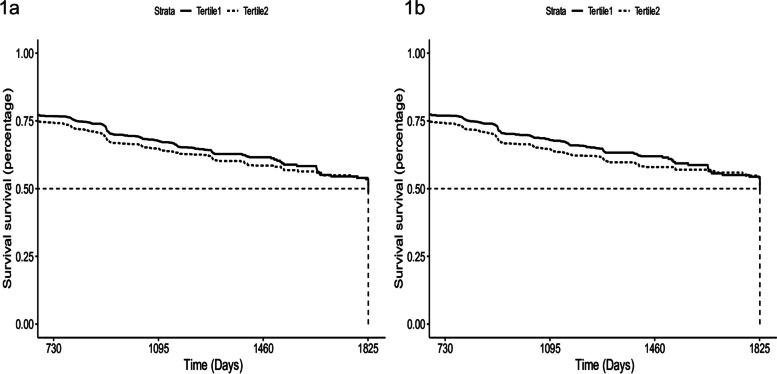
Four thousand six hundred nine participants with type 2 diabetes were studied, with 1,511 cases of diabetic nephropathy observed over 5 years. High body fat variation rate was linked to a higher risk of diabetic nephropathy compared to low body fat variation rate (HR 1.13, 95% CI 1.01-1.26). Statistically significant interaction was observed between body fat variation rate and BMI (P interaction = 0.008), and high level of body fat variation rate was only associated with increased risk of diabetic nephropathy in participants with BMI > 30 (HR 1.34 and 95% CI 1.08-1.66).
Among participants with Type 2 Diabetes Mellitus, body fat variation rate was associated with increased risk of diabetic nephropathy. Furthermore, the association was modified by BMI, and positive association was demonstrated in obese but not non-obese individuals. Consequently, for obese patients with diabetes, a more gradual weight loss strategy is recommended to prevent drastic fluctuations in body fat.
Clinical Trials. gov, no. NCT000000620 (Registration Date 199909).
体重控制一直被视为预防糖尿病肾病的重要措施。然而,在此过程中体脂大量波动对糖尿病肾病风险的潜在影响仍不确定。本研究旨在探讨美国 2 型糖尿病患者体脂变化率与糖尿病肾病发病的关系。
本研究使用 ACTION TO CONTROL CARDIOVASCULAR RISK IN DIABETES (ACCORD) 试验的数据来计算两年内体脂变化率,并将参与者分为低和高两组。使用 Cox 比例风险模型估计风险比和 95%置信区间,并使用倾向评分匹配解决混杂变量。
共纳入 4609 例 2 型糖尿病患者,5 年内观察到 1511 例糖尿病肾病。与低体脂变化率相比,高体脂变化率与糖尿病肾病的风险增加相关(HR 1.13,95%CI 1.01-1.26)。体脂变化率与 BMI 之间存在显著的交互作用(P 交互=0.008),仅在 BMI>30 的参与者中,高水平的体脂变化率与糖尿病肾病风险增加相关(HR 1.34,95%CI 1.08-1.66)。
在 2 型糖尿病患者中,体脂变化率与糖尿病肾病风险增加相关。此外,该关联受 BMI 调节,在肥胖而非非肥胖个体中存在正相关。因此,对于肥胖的糖尿病患者,建议采用更渐进的减肥策略,以防止体脂剧烈波动。
ClinicalTrials.gov,编号 NCT000000620(注册日期 199909)。