Mosegaard Signe, Twayana Krishna S, Denis Simone W, Kroon Jeffrey, Schomakers Bauke V, van Weeghel Michel, Houtkooper Riekelt H, Olsen Rikke K J, Holm Christian K
Research Unit for Molecular Medicine, Department of Clinical Medicine Aarhus University and Aarhus University Hospital Aarhus Denmark.
Laboratory Genetic Metabolic Diseases, Amsterdam UMC University of Amsterdam Amsterdam The Netherlands.
FASEB Bioadv. 2024 Aug 19;6(9):337-350. doi: 10.1096/fba.2024-00060. eCollection 2024 Sep.
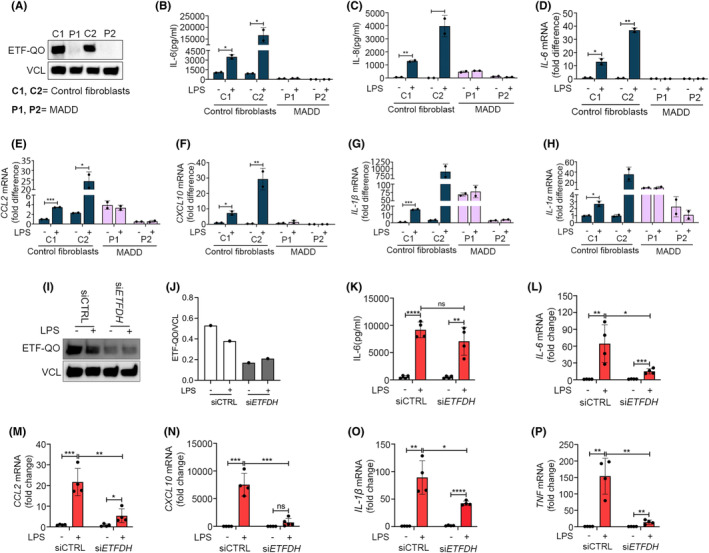
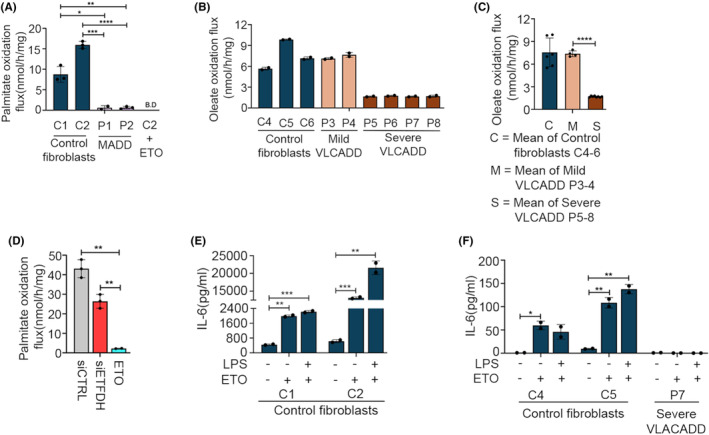
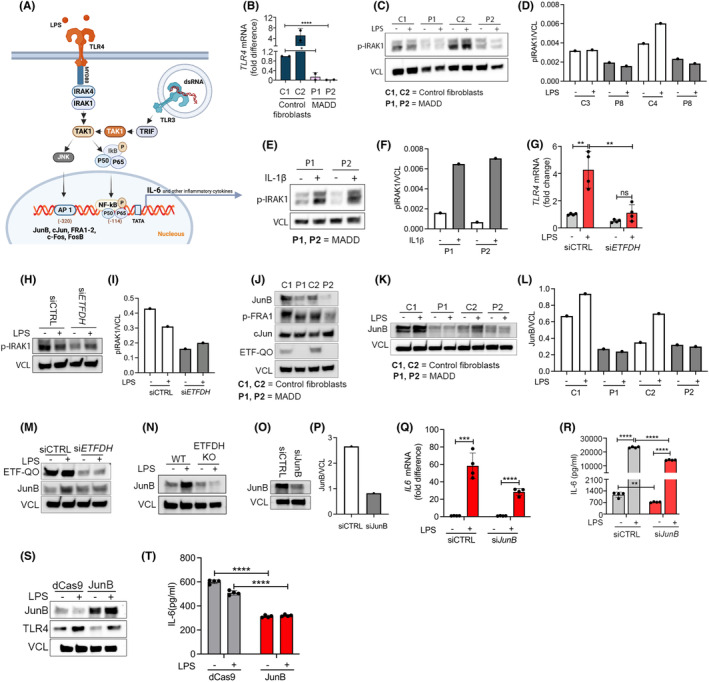
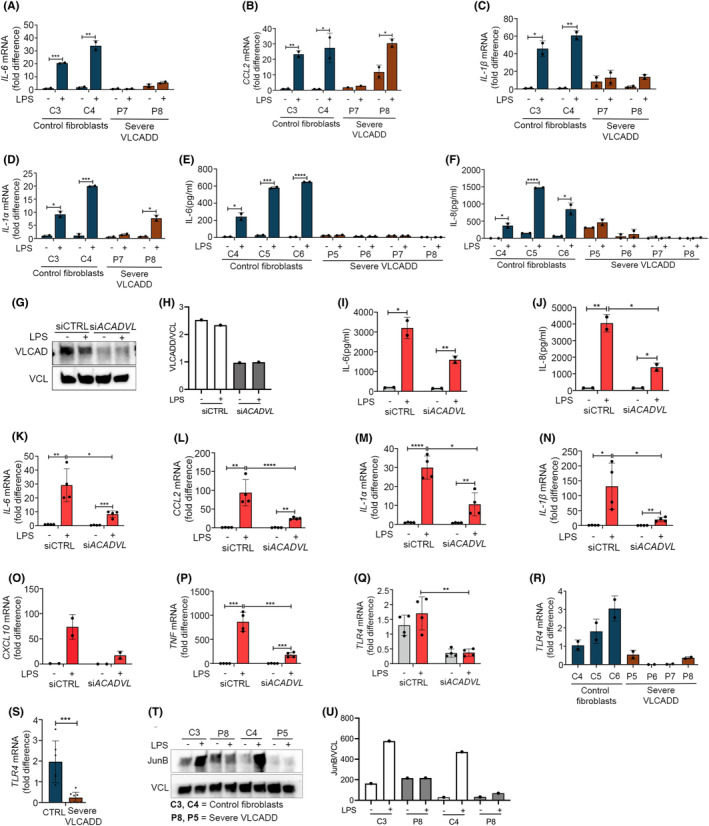
Stimulation of mammalian cells with inflammatory inducers such as lipopolysaccharide (LPS) leads to alterations in activity of central cellular metabolic pathways. Interestingly, these metabolic changes seem to be important for subsequent release of pro-inflammatory cytokines. This has become particularly clear for enzymes of tricarboxylic acid (TCA) cycle such as succinate dehydrogenase (). LPS leads to inhibition of SDH activity and accumulation of succinate to enhance the LPS-induced formation of IL-1β. If enzymes involved in beta-oxidation of fatty acids are important for sufficient responses to LPS is currently not clear. Using cells from various patients with inborn long-chain fatty acid oxidation disorders (lcFAOD), we report that disease-causing deleterious variants of Electron Transfer Flavoprotein Dehydrogenase () and of Very Long Chain Acyl-CoA Dehydrogenase (), both cause insufficient inflammatory responses to stimulation with LPS. The insufficiencies included reduced TLR4 expression levels, impaired TLR4 signaling, and reduced or absent induction of pro-inflammatory cytokines such as IL-6. The insufficient responses to LPS were reproduced in cells from healthy controls by targeted loss-of-function of either or supporting that the deleterious and variants cause the attenuated responses to LPS. and encode two distinct enzymes both involved in fatty acid beta-oxidation, and patients with these deficiencies cannot sufficiently metabolize long-chain fatty acids. We report that genes important for beta-oxidation of long-chain fatty acids are also important for inflammatory responses to an acute immunogen trigger like LPS, which may have important implications for understanding infection and other metabolic stress induced disease pathology in lcFAODs.
用脂多糖(LPS)等炎症诱导剂刺激哺乳动物细胞会导致细胞中央代谢途径活性发生改变。有趣的是,这些代谢变化似乎对随后促炎细胞因子的释放很重要。对于三羧酸(TCA)循环中的酶,如琥珀酸脱氢酶()来说,这一点尤为明显。LPS会导致SDH活性受到抑制以及琥珀酸积累,从而增强LPS诱导的IL-1β形成。目前尚不清楚参与脂肪酸β氧化的酶对LPS的充分反应是否重要。我们使用来自各种患有先天性长链脂肪酸氧化障碍(lcFAOD)患者的细胞,报告了电子传递黄素蛋白脱氢酶()和极长链酰基辅酶A脱氢酶()的致病有害变体均导致对LPS刺激的炎症反应不足。这些不足包括TLR4表达水平降低、TLR4信号传导受损以及促炎细胞因子如IL-6的诱导减少或缺失。通过对或进行靶向功能丧失,在健康对照者的细胞中重现了对LPS的不足反应,这支持了有害的和变体导致对LPS反应减弱的观点。和编码两种不同的酶,它们都参与脂肪酸β氧化,患有这些缺陷的患者不能充分代谢长链脂肪酸。我们报告,对长链脂肪酸β氧化重要的基因对像LPS这样的急性免疫原触发的炎症反应也很重要,这可能对理解lcFAODs中的感染和其他代谢应激诱导的疾病病理具有重要意义。