School of Nursing, Shanghai University of Traditional Chinese Medicine, Shanghai, China.
School of Acupuncture-Moxibustion and Tuina, Shanghai University of Traditional Chinese Medicine, Shanghai, China.
Brain Behav. 2024 Oct;14(10):e70075. doi: 10.1002/brb3.70075.
To investigate the impact of acupuncture on post-stroke cognitive impairment (PSCI).
PSCI is a major barrier to stroke patients' rehabilitation, and acupuncture is one of the treatments. However, the benefit of acupuncture on PSCI is unclear.
A meta-analysis and systematic review of randomized controlled trials (RCTs).
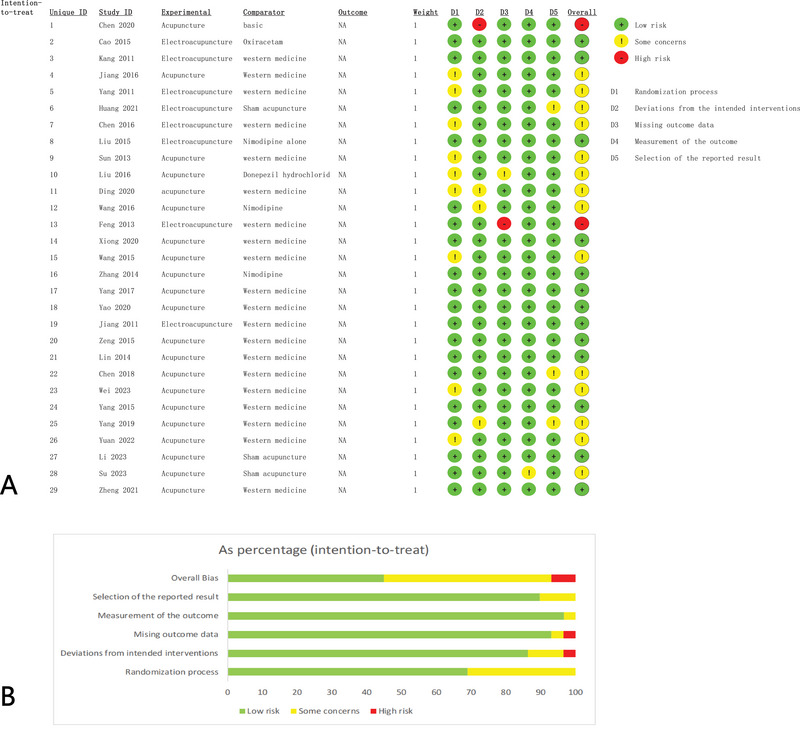
Up to February 1, 2024, databases in PubMed, MEDLINE, Scopus, Embase, Web of Science, Cochrane Library, China National Knowledge Infrastructure, VIP, and Wanfang Data were searched. The risk of bias was investigated using the Cochrane Handbook for systematic reviews of treatments. Random-effect and fix-effect models were used to report the effects.
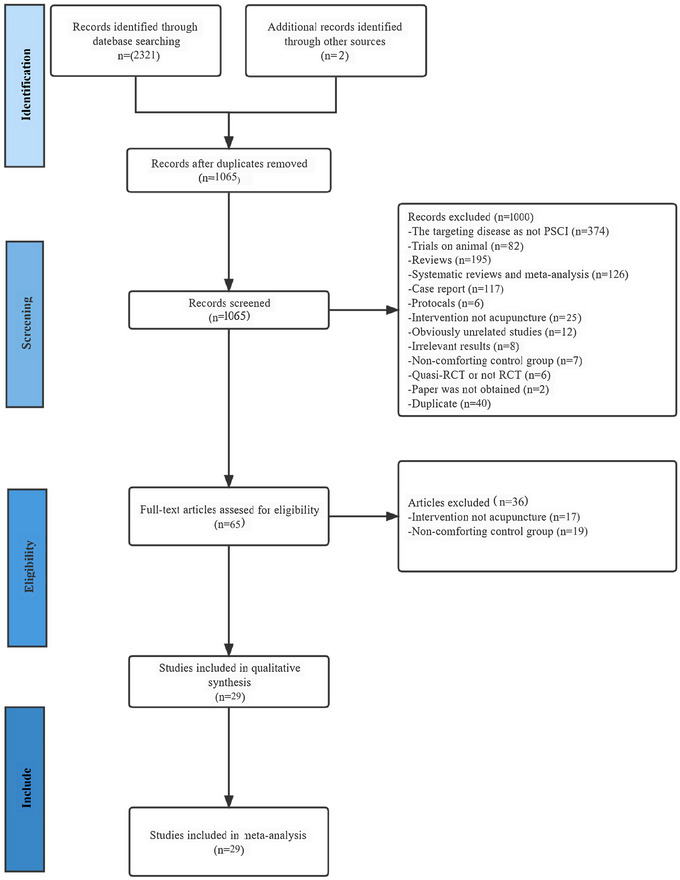
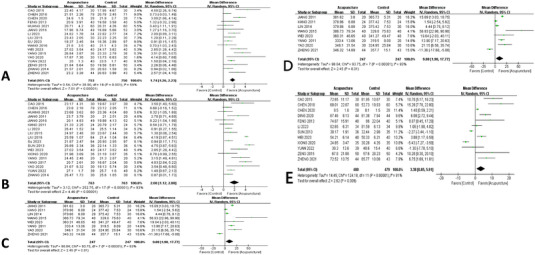
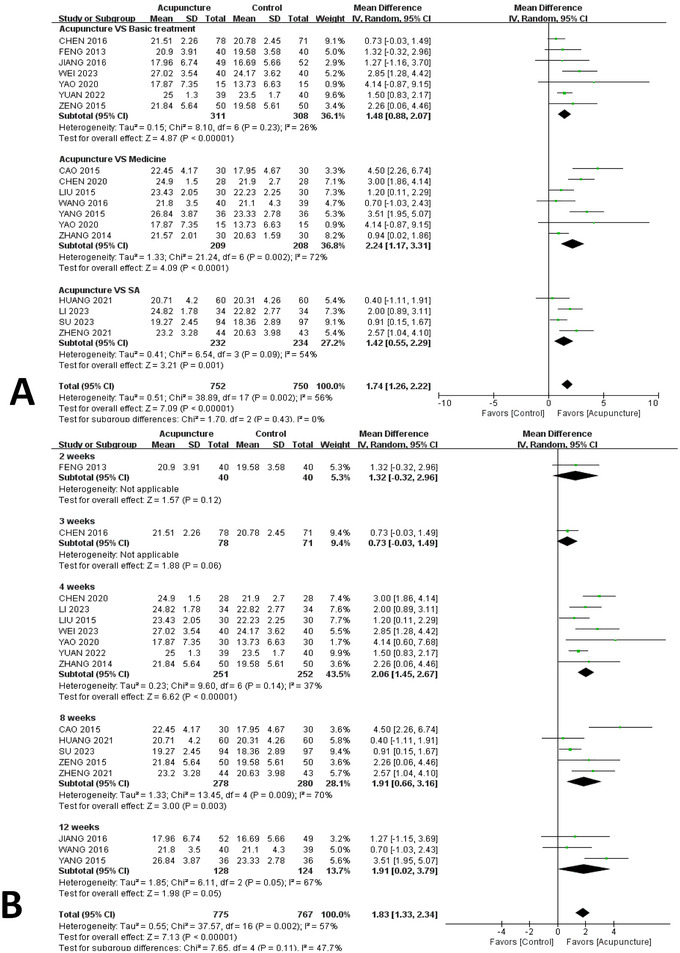
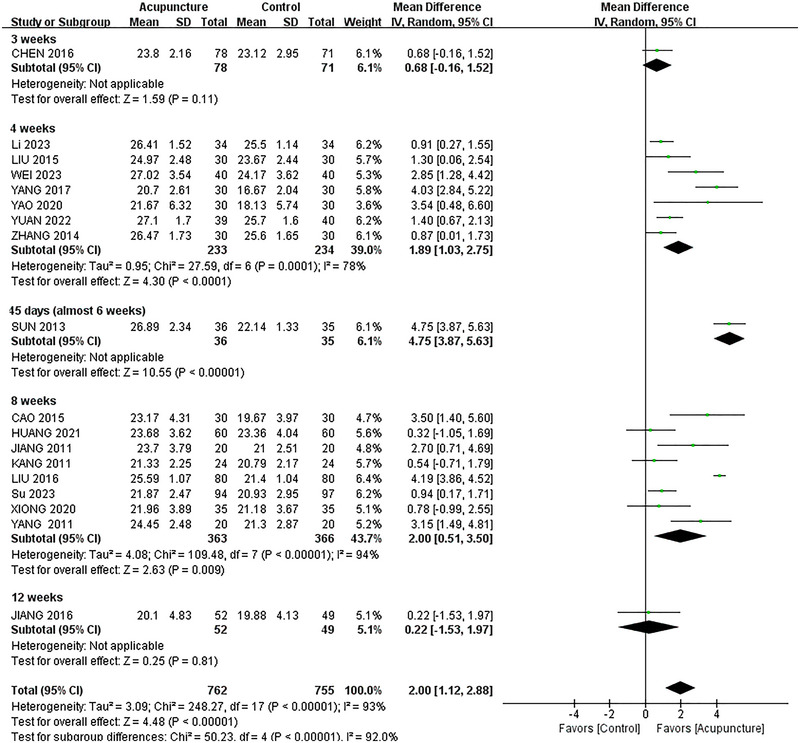
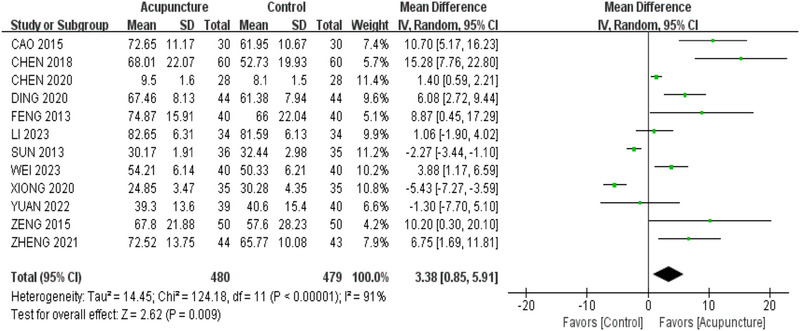
There were 29 randomized clinical trials with 2477 participants included. The findings demonstrated that the Mini-Mental State Examination (MMSE) and the Montreal Cognitive Assessment (MoCA) scores were higher in the acupuncture group than medicine group (mean difference [MD] = 1.74, 95% confidence interval (CI) CI [1.26, 2.23], I = 59%, p < 0.01). Compared to medicine group, the Loewenstein Occupational Therapy Cognitive Assessment (LOTCA) score exhibited a significant decrease and demonstrated improvement in the acupuncture group. Statistically significant outcomes were observed in the Barthel Index scores and P300 event-related potential (ERP). According to subgroup analysis, acupuncture was superior to conventional therapy for improving cognitive function in PSCI patients at 4 weeks after treatment.
Acupuncture therapy has shown promise in ameliorating cognitive deficits and enhancing daily functional abilities in individuals diagnosed with PSCI. But future research should focus on the duration and implement large sample, high-quality RCTs.
Clinical workers in practical clinical work can select appropriate acupoints according to the actual conditions of patients, as well as confirm the treatment course of PSCI patients, while paying attention to observing and evaluating the therapeutic efficacy of acupuncture, to improve the health outcomes of patients in a patient-centered way.
研究针刺对中风后认知障碍(PSCI)的影响。
PSCI 是中风患者康复的主要障碍,针刺是治疗方法之一。然而,针刺对 PSCI 的益处尚不清楚。
对随机对照试验(RCT)的荟萃分析和系统评价。
截至 2024 年 2 月 1 日,检索了 PubMed、MEDLINE、Scopus、Embase、Web of Science、Cochrane 图书馆、中国知网、维普和万方数据等数据库。使用 Cochrane 治疗系统评价手册评估偏倚风险。使用随机效应和固定效应模型报告效果。
共纳入 29 项 RCT,涉及 2477 名参与者。研究结果表明,针刺组的简易精神状态检查(MMSE)和蒙特利尔认知评估(MoCA)评分高于药物组(均数差 [MD] = 1.74,95%置信区间 [CI] CI [1.26, 2.23],I = 59%,p < 0.01)。与药物组相比,针刺组的洛文斯顿作业疗法认知评估(LOTCA)评分显著降低,认知功能改善。Barthel 指数评分和 P300 事件相关电位(ERP)也观察到了统计学显著的结果。根据亚组分析,针刺在治疗 4 周后改善 PSCI 患者的认知功能方面优于常规治疗。
针刺疗法在改善 PSCI 患者认知功能缺陷和提高日常生活功能能力方面显示出了一定的前景。但未来的研究应注重治疗时间,并开展大样本、高质量的 RCT。
临床工作者在实际临床工作中,可以根据患者的实际情况选择合适的穴位,并确定 PSCI 患者的治疗疗程,同时注意观察和评估针刺的疗效,以患者为中心,提高患者的健康结局。