European Centre for Environment and Human Health, Environment and Sustainability Institute, University of Exeter Medical School, Faculty of Health and Life Sciences, Penryn Campus, Cornwall, UK.
Faculty of Environment, Science and Economy, University of Exeter, Penryn Campus, Cornwall, TR10 9FE, UK.
Microbiology (Reading). 2024 Oct;170(10). doi: 10.1099/mic.0.001506.
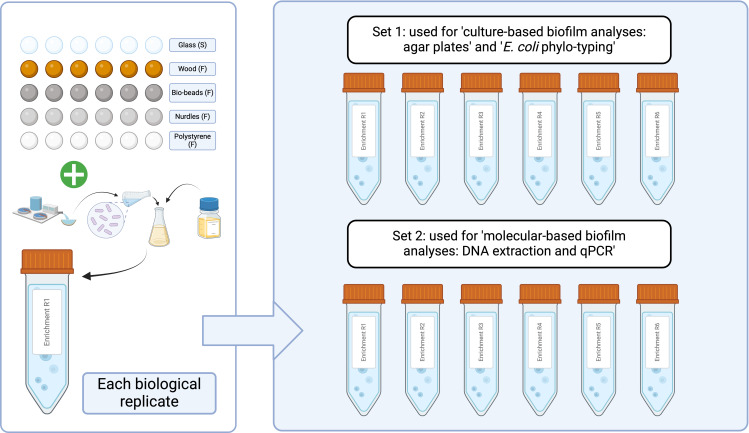
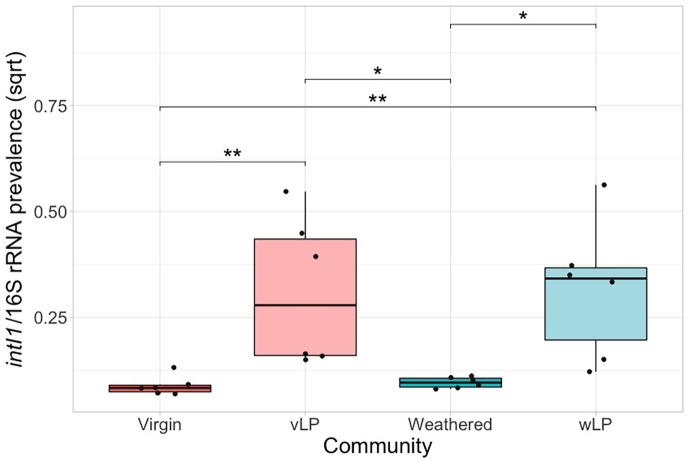
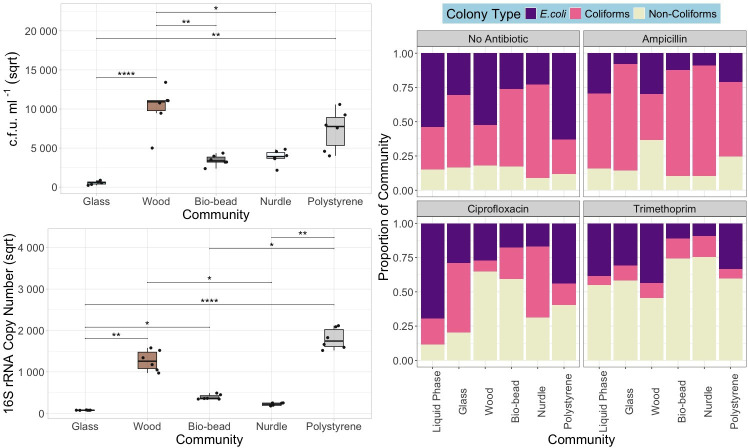
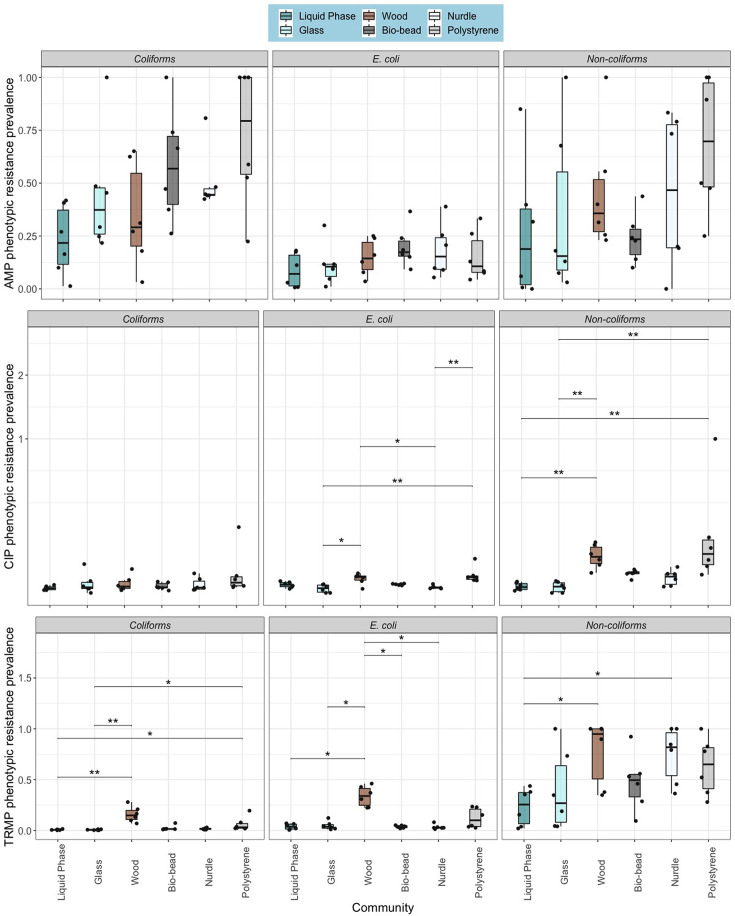
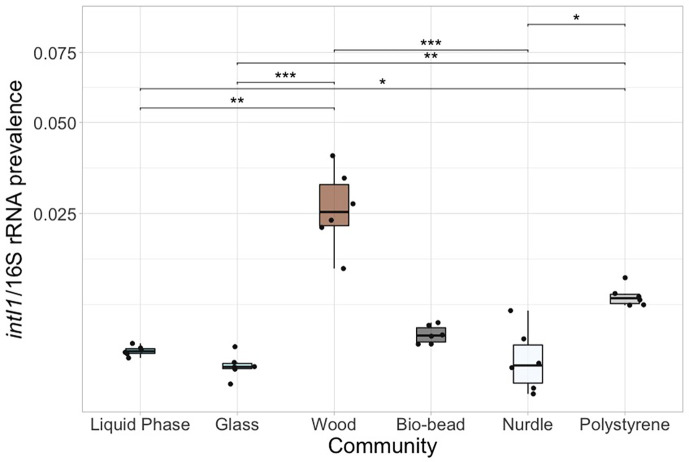
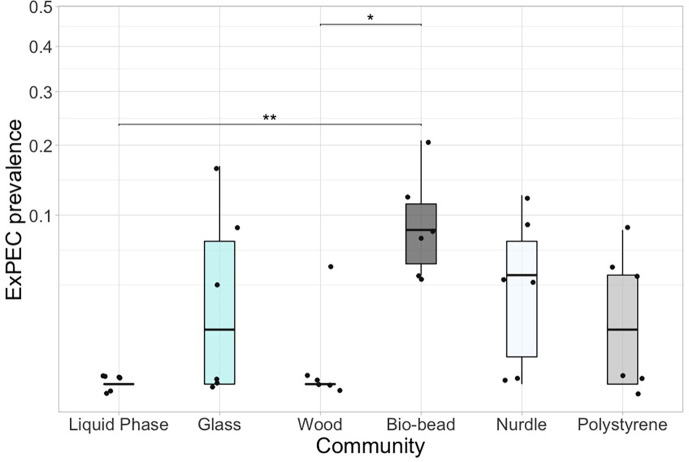
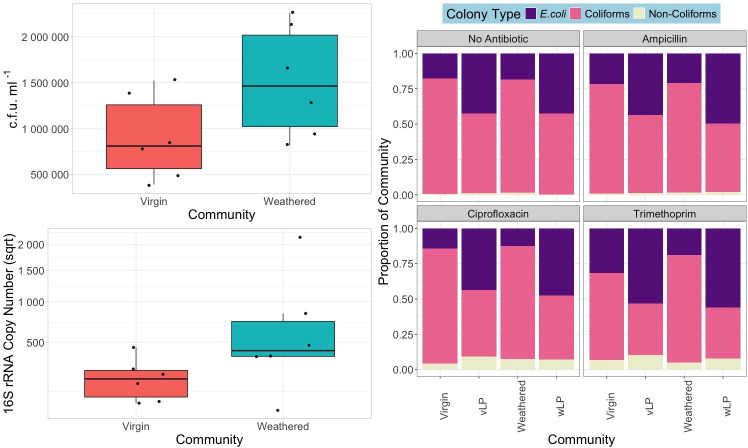
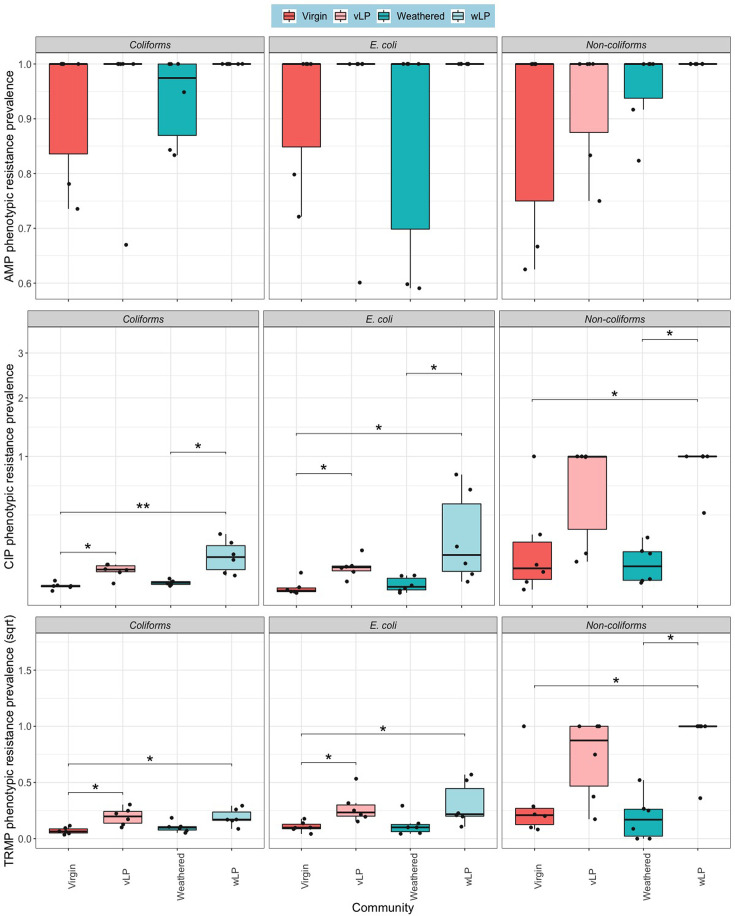
The Plastisphere is a novel niche whereby microbial communities attach to plastic debris, including microplastics. These communities can be distinct from those found in the surrounding environment or those attached to natural substrates and may serve as a reservoir of both pathogenic and antimicrobial-resistant (AMR) bacteria. Owing to the frequent omission of appropriate comparator particles (e.g. natural substrates) in previous studies, there is a lack of empirical evidence supporting the unique risks posed by microplastics in terms of enrichment and spread of AMR pathogens. This study investigated selective colonization by a sewage community on environmentally sampled microplastics with three different polymers, sources and morphologies, alongside natural substrate (wood), inert substrate (glass) and free-living/planktonic community controls. Culture and molecular methods (quantitative polymerase chain reaction (qPCR)) were used to ascertain phenotypic and genotypic AMR prevalence, respectively, and multiplex colony PCR was used to identify extra-intestinal pathogenic (ExPECs). From this, polystyrene and wood particles were found to significantly enrich AMR bacteria, whereas sewage-sourced bio-beads significantly enriched ExPECs. Polystyrene and wood were the least smooth particles, and so the importance of particle roughness on AMR prevalence was then directly investigated by comparing the colonization of virgin vs artificially weathered polyethylene particles. Surface weathering did not have a significant effect on the AMR prevalence of colonized particles. Our results suggest that the colonization of plastic and non-plastic particles by AMR and pathogenic bacteria may be enhanced by substrate-specific traits.
塑料菌席是微生物群落附着在塑料碎片(包括微塑料)上的一个新栖息地。这些群落可能与周围环境中的群落或附着在天然基质上的群落不同,并且可能是致病和抗微生物药物耐药(AMR)细菌的储存库。由于以前的研究中经常省略适当的对照颗粒(例如天然基质),因此缺乏支持微塑料在 AMR 病原体的富集和传播方面具有独特风险的经验证据。本研究调查了环境采样的三种不同聚合物、来源和形态的微塑料上的污水群落的选择性定植,以及天然基质(木材)、惰性基质(玻璃)和自由生活/浮游生物群落对照。培养和分子方法(定量聚合酶链反应(qPCR))分别用于确定表型和基因型 AMR 的流行率,多重菌落 PCR 用于鉴定肠外致病性(ExPEC)。结果表明,聚苯乙烯和木材颗粒显著富集 AMR 细菌,而污水来源的生物珠显著富集 ExPEC。聚苯乙烯和木材是最不光滑的颗粒,因此通过比较原始和人工风化的聚乙烯颗粒的定植情况,直接研究了颗粒粗糙度对 AMR 流行率的重要性。表面风化对定植颗粒的 AMR 流行率没有显著影响。我们的结果表明,AMR 和致病菌对塑料和非塑料颗粒的定植可能会受到基质特异性特征的增强。