The First Affiliated Hospital of Xi'an Jiaotong University, Center for Precision Cancer Medicine, MED-X Institute, 710000, Xi'an, China.
The First Affiliated Hospital, Jiangxi Medical College, Nanchang University, Center for Molecular Diagnosis and Precision Medicine, 1519 Dongyue Dadao, 330209, Nanchang, China.
Cell Death Dis. 2024 Oct 15;15(10):749. doi: 10.1038/s41419-024-07136-0.
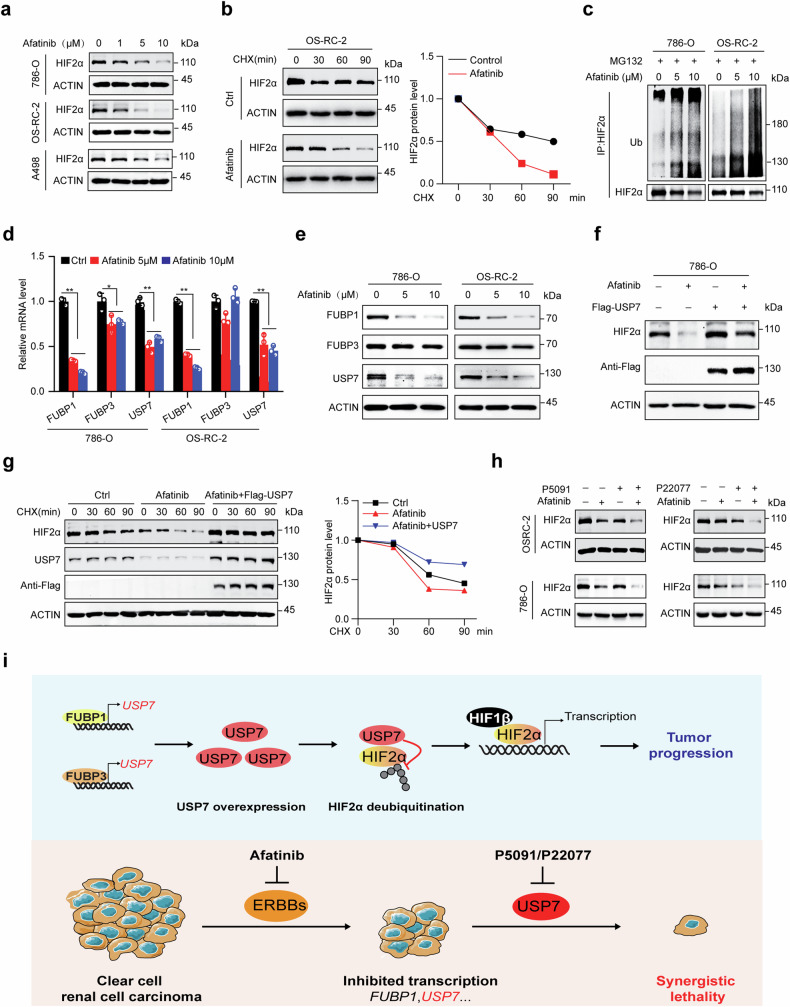
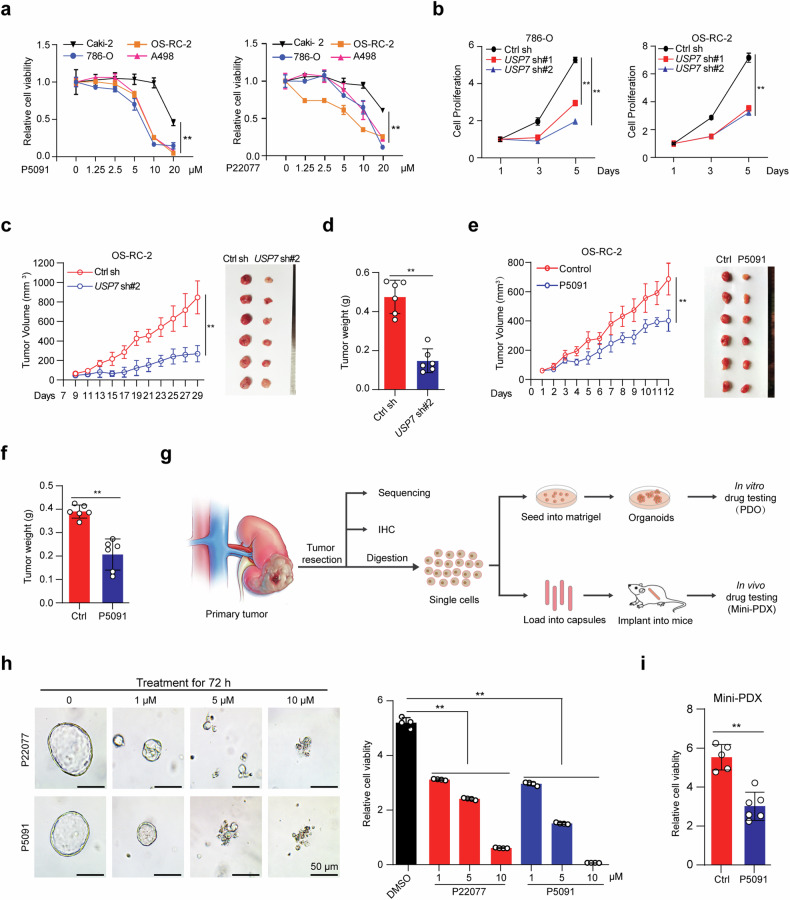
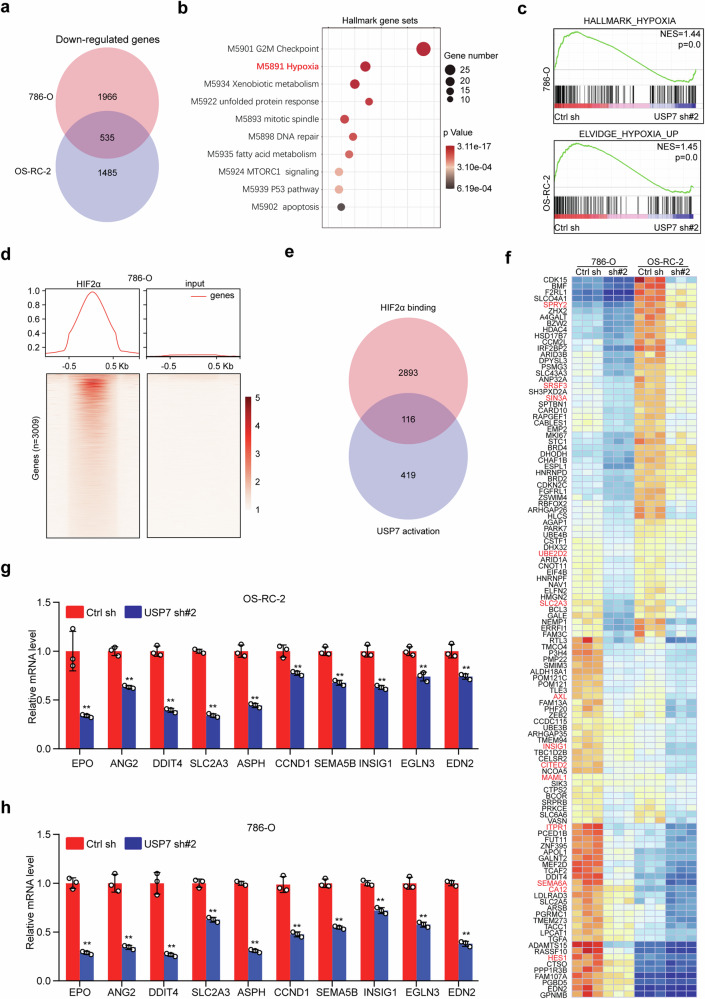
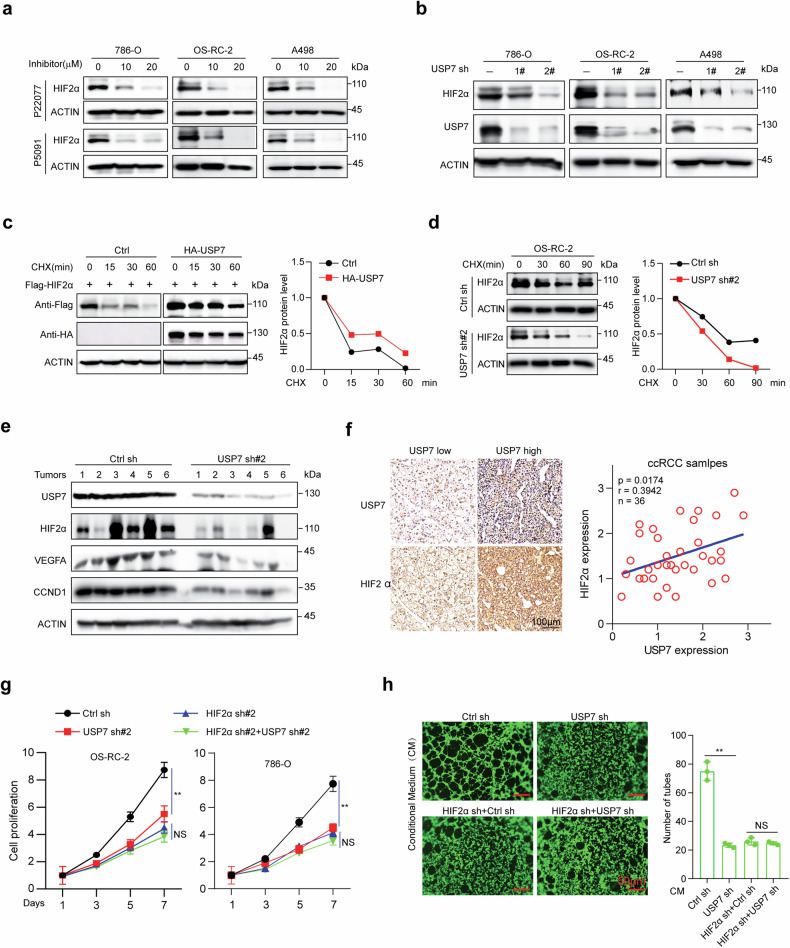
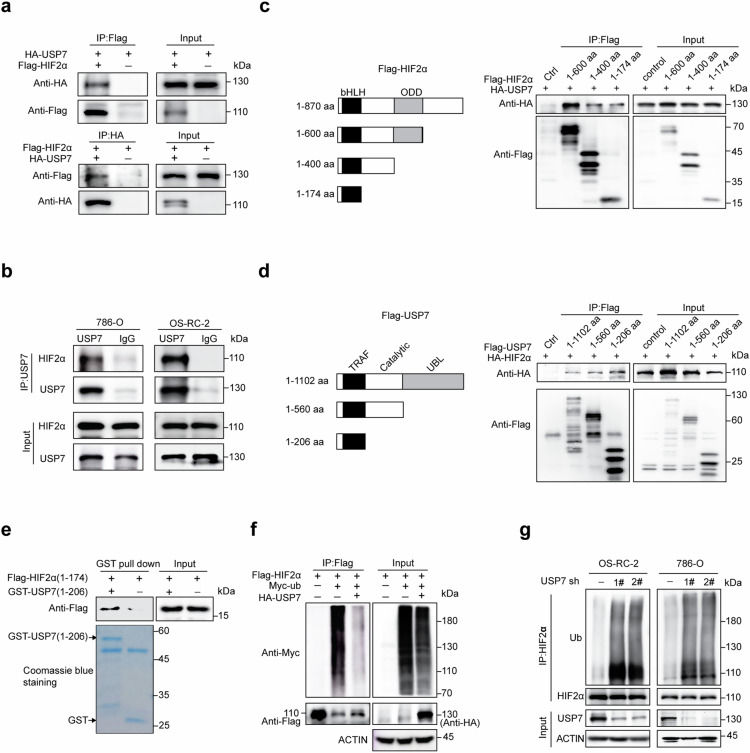
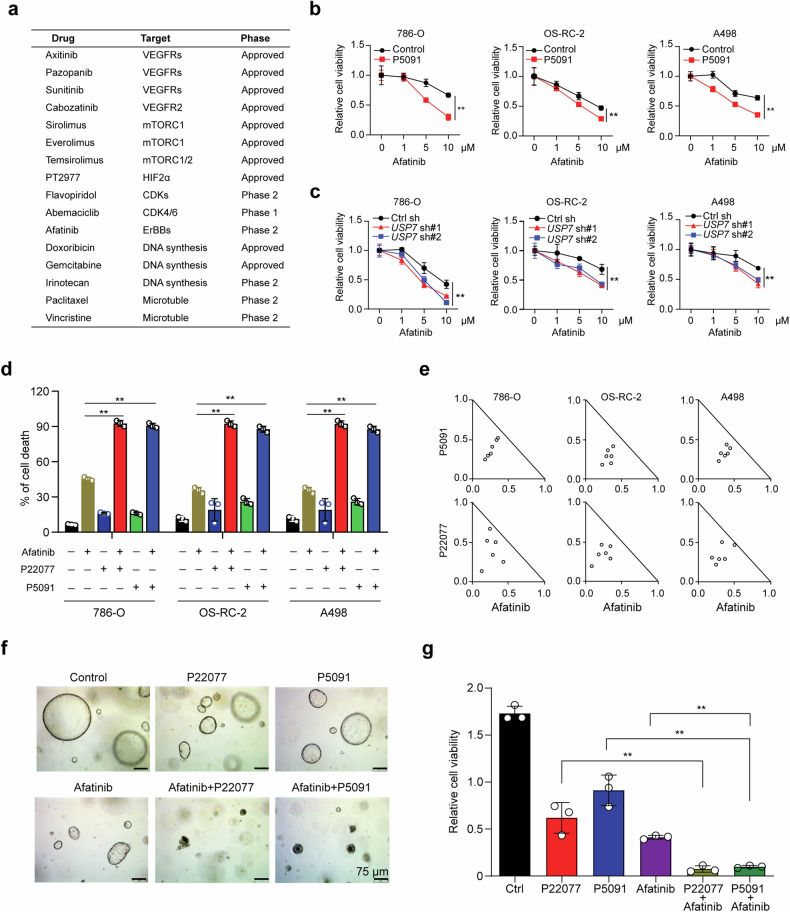
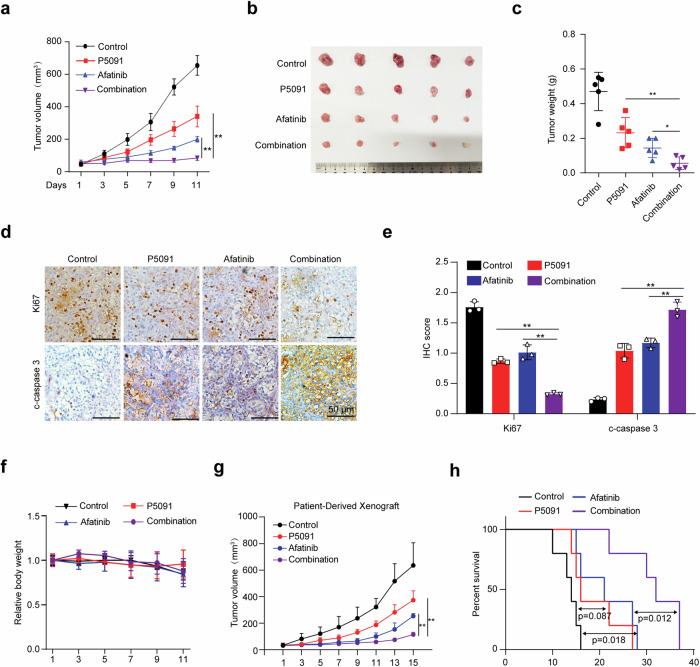
Clear cell renal cell carcinoma (ccRCC) is characterized by Von Hippel Lindau (VHL) gene loss of function mutation, which leads to the accumulation of hypoxia-inducible factor 2α (HIF2α). HIF2α has been well-established as one of the major oncogenic drivers of ccRCC, however, its therapeutic targeting remains a challenge. Through an analysis of proteomic data from ccRCCs and adjacent non-tumor tissues, we herein revealed that Ubiquitin-Specific Peptidase 7 (USP7) was upregulated in tumor tissues, and its depletion by inhibitors or shRNAs caused significant suppression of tumor progression in vitro and in vivo. Mechanistically, USP7 expression is activated by the transcription factors FUBP1 and FUBP3, and it promotes tumor progression mainly by deubiquitinating and stabilizing HIF2α. Moreover, the combination of USP7 inhibitors and afatinib (an ERBB family inhibitor) coordinately induce cell death and tumor suppression. In mechanism, afatinib indirectly inhibits USP7 transcription and accelerates the degradation of HIF2α protein, and the combination of them caused a more profound suppression of HIF2α abundance. These findings reveal a FUBPs-USP7-HIF2α regulatory axis that underlies the progression of ccRCC and provides a rationale for therapeutic targeting of oncogenic HIF2α via combinational treatment of USP7 inhibitor and afatinib.
透明细胞肾细胞癌(ccRCC)的特征是 Von Hippel Lindau(VHL)基因功能丧失突变,导致缺氧诱导因子 2α(HIF2α)的积累。HIF2α 已被证实是 ccRCC 的主要致癌驱动因素之一,然而,其治疗靶点仍然是一个挑战。通过对 ccRCC 及相邻非肿瘤组织的蛋白质组学数据进行分析,我们在此揭示了泛素特异性肽酶 7(USP7)在肿瘤组织中上调,其通过抑制剂或 shRNA 的耗竭会导致体外和体内肿瘤进展的显著抑制。在机制上,USP7 的表达被转录因子 FUBP1 和 FUBP3 激活,它主要通过去泛素化和稳定 HIF2α 来促进肿瘤进展。此外,USP7 抑制剂与 afatinib(一种 ERBB 家族抑制剂)的联合使用可以协同诱导细胞死亡和肿瘤抑制。在机制上,afatinib 间接抑制 USP7 的转录并加速 HIF2α 蛋白的降解,两者的联合使用导致 HIF2α 丰度的更深度抑制。这些发现揭示了一个 FUBPs-USP7-HIF2α 调节轴,该轴是 ccRCC 进展的基础,并为通过联合使用 USP7 抑制剂和 afatinib 对致癌性 HIF2α 进行治疗靶向提供了依据。