Department of Medical Genetics, University Hospital of Bordeaux and INSERM U1211, University of Bordeaux, Bordeaux, France.
Bordeaux Bioinformatic Center CBiB, University of Bordeaux, Bordeaux, France.
Commun Biol. 2024 Oct 15;7(1):1331. doi: 10.1038/s42003-024-06939-3.
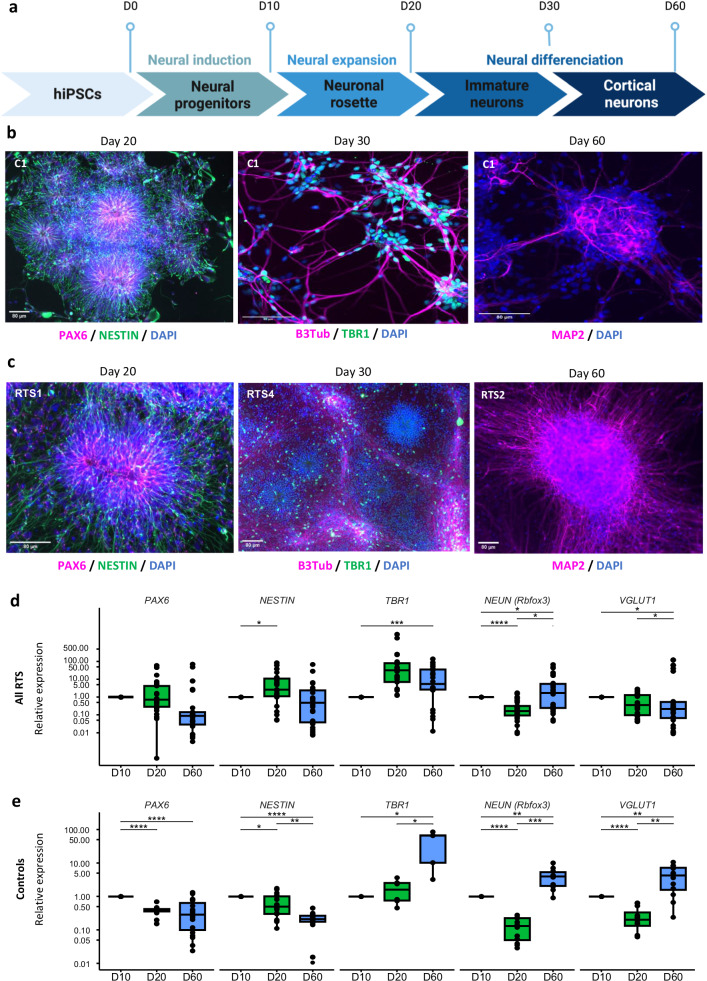
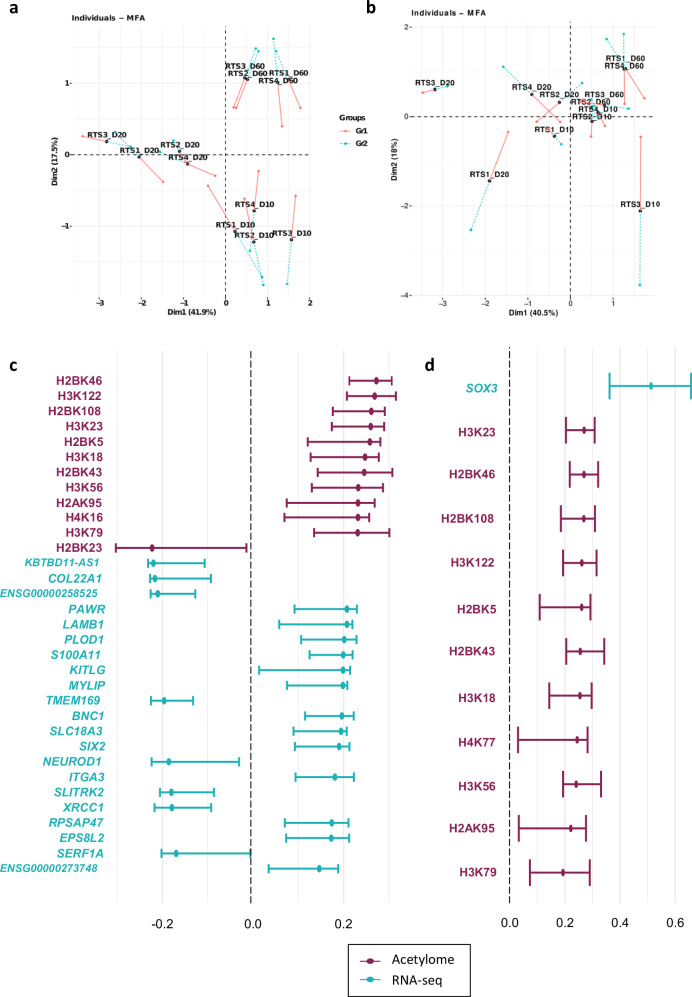
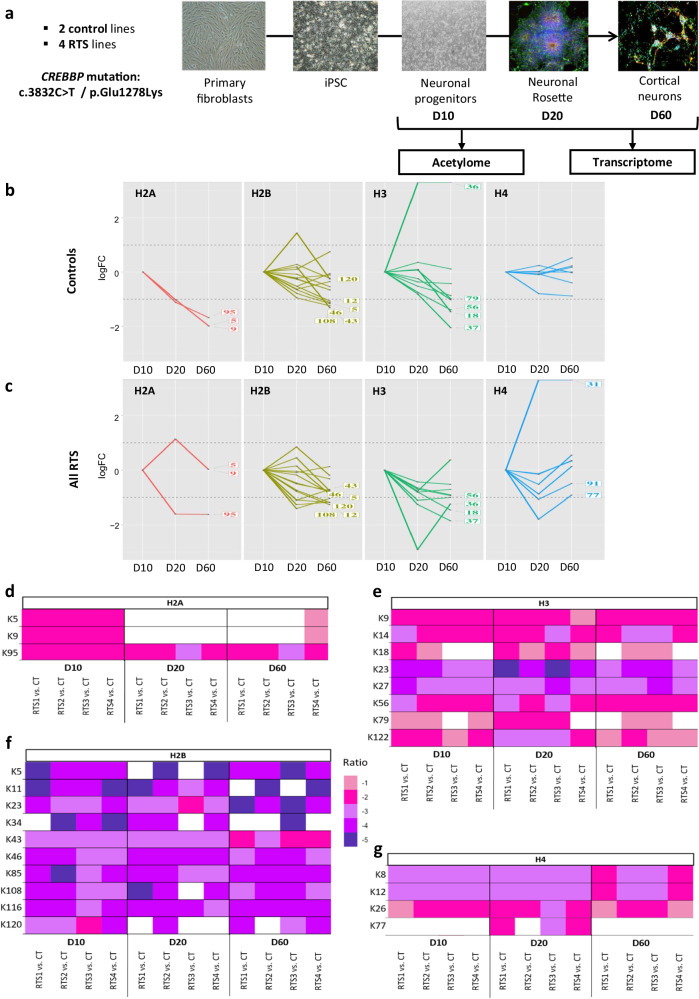
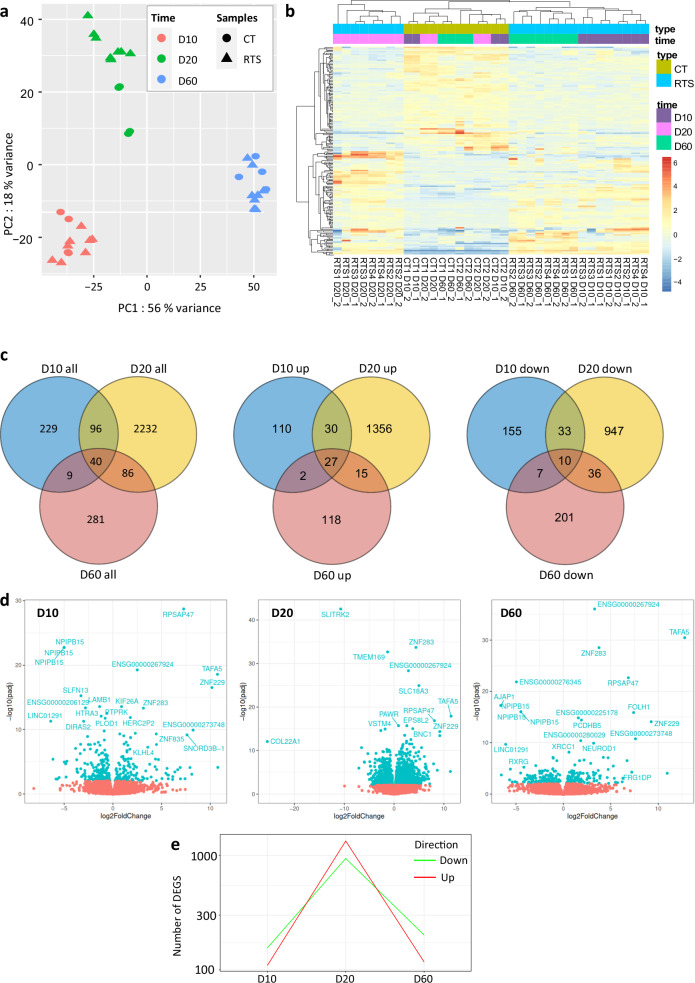
Rubinstein-Taybi syndrome (RTS) is a rare and severe genetic developmental disorder characterized by multiple congenital anomalies and intellectual disability. CREBBP and EP300, the two genes known to cause RTS encode transcriptional coactivators with a catalytic lysine acetyltransferase (KAT) activity. Loss of CBP or p300 function results in a deficit in protein acetylation, in particular at histones. In RTS, nothing is known on the consequences of the loss of histone acetylation on the transcriptomic profiles during neuronal differentiation. To address this question, we differentiated induced pluripotent stem cells from RTS patients carrying a recurrent CREBBP mutation that inactivates the KAT domain into cortical and pyramidal neurons. By comparing their acetylome and their transcriptome at different neuronal differentiation time points, we identified 25 specific acetylated histone residues altered in RTS. We also identified the transition between neural progenitors and immature neurons as a critical step of the differentiation process, with a delayed neuronal maturation in RTS. Overall, this study opens new perspectives in the definition of epigenetic biomarkers for RTS, whose methodology could be extended to other chromatinopathies.
鲁宾斯坦-泰比综合征(RTS)是一种罕见且严重的遗传性发育障碍,其特征为多种先天性异常和智力障碍。已知导致 RTS 的两个基因 CREBBP 和 EP300 编码具有催化赖氨酸乙酰转移酶(KAT)活性的转录共激活因子。CBP 或 p300 功能的丧失导致蛋白质乙酰化不足,特别是组蛋白。在 RTS 中,对于神经元分化过程中组蛋白乙酰化缺失对转录组谱的影响还一无所知。为了解决这个问题,我们将携带 CREBBP 突变(使 KAT 结构域失活)的 RTS 患者的诱导多能干细胞分化为皮质和锥体神经元。通过比较它们在不同神经元分化时间点的乙酰组和转录组,我们在 RTS 中鉴定出 25 个特异性乙酰化组蛋白残基发生改变。我们还发现,从神经前体细胞到未成熟神经元的转变是分化过程中的一个关键步骤,在 RTS 中神经元成熟延迟。总体而言,这项研究为 RTS 的表观遗传生物标志物的定义开辟了新的视角,其方法学可以扩展到其他染色质疾病。