• 文献检索
  • 文档翻译
  • 深度研究
  • 学术资讯
  • Suppr Zotero 插件Zotero 插件
  • 邀请有礼
  • 套餐&价格
  • 历史记录
应用&插件
Suppr Zotero 插件Zotero 插件浏览器插件Mac 客户端Windows 客户端微信小程序
定价
高级版会员购买积分包购买API积分包
服务
文献检索文档翻译深度研究API 文档MCP 服务
关于我们
关于 Suppr公司介绍联系我们用户协议隐私条款
关注我们

Suppr 超能文献

核心技术专利:CN118964589B侵权必究
粤ICP备2023148730 号-1Suppr @ 2026

文献检索

告别复杂PubMed语法,用中文像聊天一样搜索,搜遍4000万医学文献。AI智能推荐,让科研检索更轻松。

立即免费搜索

文件翻译

保留排版,准确专业,支持PDF/Word/PPT等文件格式,支持 12+语言互译。

免费翻译文档

深度研究

AI帮你快速写综述,25分钟生成高质量综述,智能提取关键信息,辅助科研写作。

立即免费体验

在葡萄园农业生态系统中蚂蚁化学识别信号的变化。

Variation in Ants' Chemical Recognition Signals across Vineyard Agroecosystems.

机构信息

Department of Life Sciences and Systems Biology, University of Turin, Via Accademia Albertina 13, 10123 Turin, Italy.

Laboratory of Experimental and Comparative Ethology (LEEC), UR4443, University Sorbonne Paris Nord, 93430 Villetaneuse, France.

出版信息

Int J Mol Sci. 2024 Sep 27;25(19):10407. doi: 10.3390/ijms251910407.

DOI:10.3390/ijms251910407
PMID:39408736
原文链接:https://pmc.ncbi.nlm.nih.gov/articles/PMC11477430/
Abstract

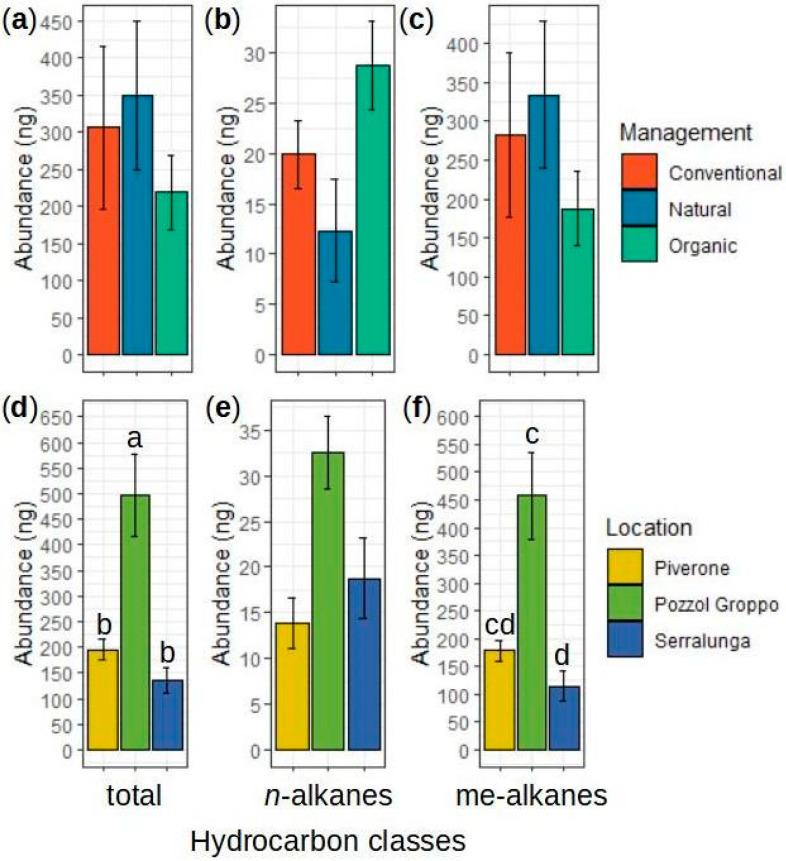
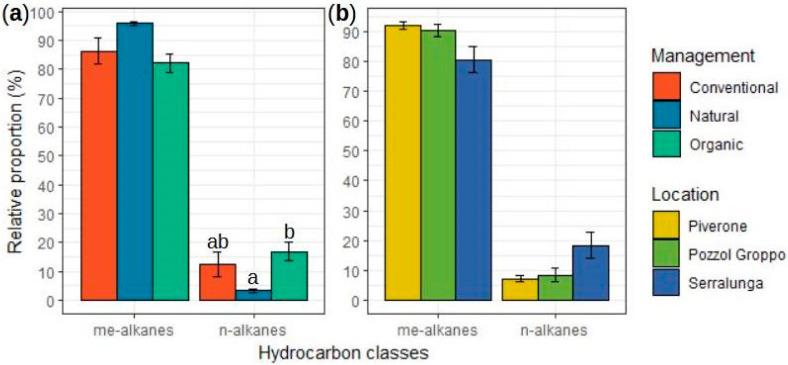
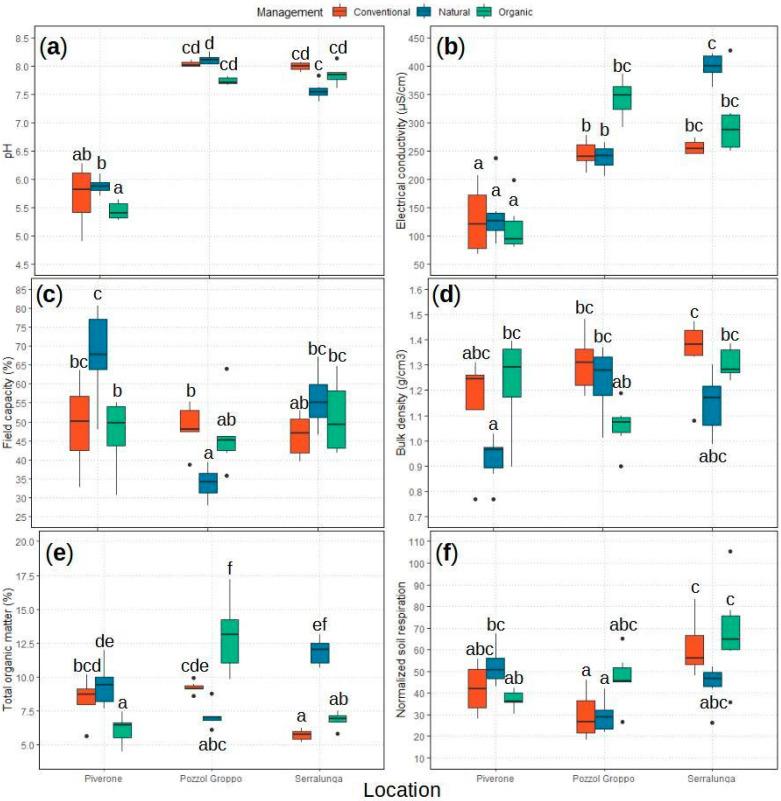
Ant evolutionary success depends mainly on the coordination of colony members, who recognize nestmates based on the cuticular hydrocarbon (CHC) profile of their epicuticle. While several studies have examined variations in this crucial factor for colony identity, few have investigated the anthropic impact on CHC profiles, and none have focused on . Here, we surveyed the changes in CHC assemblages across agroecosystems and assessed whether different vineyard management influences these profiles. Soil sampling within ant nests and in close surroundings was performed to measure microhabitat variations. Our results show that the cuticular chemical composition of is mainly affected by the differences between areas, with an existing but unclear anthropic influence on them. Normalized soil respiration partially explains these interarea variations. Irrespective of the conventional or organic management, human activities in agroecosystems mostly impacted linear alkanes, a specific class of CHCs known to play a major role against dehydration, but also affected the abundance of compounds that can be pivotal for maintaining the colony identity. Our findings suggest that vineyard practices primarily affect features of the ant cuticle, potentially enhancing microclimate adaptations. Still, the potential effects as disruptive factors need further investigation through the implementation of behavioral bioassays.

摘要

蚂蚁的进化成功主要取决于蚁群成员的协调,它们根据表皮的角质层烃 (CHC) 图谱来识别同巢个体。虽然有几项研究调查了蚁群身份的这一关键因素的变化,但很少有研究调查人为因素对 CHC 图谱的影响,也没有研究关注 。在这里,我们调查了农业生态系统中 CHC 组合的变化,并评估了不同的葡萄园管理是否会影响这些图谱。在蚁巢及其周围环境中进行土壤采样以测量微生境变化。我们的结果表明, 的表皮化学成分主要受到地区差异的影响,尽管存在但不清楚的人为影响。归一化土壤呼吸部分解释了这些地区间的变化。无论采用传统管理还是有机管理,农业生态系统中的人类活动主要影响线性烷烃,这是一类已知在对抗脱水方面发挥重要作用的 CHC,但也影响了可能对维持蚁群身份至关重要的化合物的丰度。我们的研究结果表明,葡萄园的做法主要影响蚂蚁的表皮特征,可能增强了微气候的适应能力。然而,作为破坏因素的潜在影响需要通过实施行为生物测定进一步研究。

https://cdn.ncbi.nlm.nih.gov/pmc/blobs/4284/11477430/4034e9c65480/ijms-25-10407-g004.jpg
https://cdn.ncbi.nlm.nih.gov/pmc/blobs/4284/11477430/6d08452a69f1/ijms-25-10407-g001.jpg
https://cdn.ncbi.nlm.nih.gov/pmc/blobs/4284/11477430/2ad1c759ce58/ijms-25-10407-g002.jpg
https://cdn.ncbi.nlm.nih.gov/pmc/blobs/4284/11477430/04848b88f80f/ijms-25-10407-g003.jpg
https://cdn.ncbi.nlm.nih.gov/pmc/blobs/4284/11477430/4034e9c65480/ijms-25-10407-g004.jpg
https://cdn.ncbi.nlm.nih.gov/pmc/blobs/4284/11477430/6d08452a69f1/ijms-25-10407-g001.jpg
https://cdn.ncbi.nlm.nih.gov/pmc/blobs/4284/11477430/2ad1c759ce58/ijms-25-10407-g002.jpg
https://cdn.ncbi.nlm.nih.gov/pmc/blobs/4284/11477430/04848b88f80f/ijms-25-10407-g003.jpg
https://cdn.ncbi.nlm.nih.gov/pmc/blobs/4284/11477430/4034e9c65480/ijms-25-10407-g004.jpg

相似文献

1
Variation in Ants' Chemical Recognition Signals across Vineyard Agroecosystems.在葡萄园农业生态系统中蚂蚁化学识别信号的变化。
Int J Mol Sci. 2024 Sep 27;25(19):10407. doi: 10.3390/ijms251910407.
2
Desiccation Resistance and Micro-Climate Adaptation: Cuticular Hydrocarbon Signatures of Different Argentine Ant Supercolonies Across California.抗干燥能力与微气候适应性:加利福尼亚不同阿根廷蚂蚁超级群落的表皮碳氢化合物特征
J Chem Ecol. 2018 Dec;44(12):1101-1114. doi: 10.1007/s10886-018-1029-y. Epub 2018 Nov 15.
3
What are the Mechanisms Behind a Parasite-Induced Decline in Nestmate Recognition in Ants?寄生虫导致蚂蚁对同巢伙伴识别能力下降的背后机制是什么?
J Chem Ecol. 2017 Sep;43(9):869-880. doi: 10.1007/s10886-017-0880-6. Epub 2017 Aug 25.
4
Hydrocarbons in the ant Lasius niger: from the cuticle to the nest and home range marking.黑褐林蚁体内的碳氢化合物:从外骨骼到蚁巢和巢穴范围标记。
J Chem Ecol. 2009 Aug;35(8):913-21. doi: 10.1007/s10886-009-9669-6. Epub 2009 Jul 25.
5
Aphids harbouring different endosymbionts exhibit differences in cuticular hydrocarbon profiles that can be recognized by ant mutualists.携带不同内共生体的蚜虫在表皮碳氢化合物图谱上表现出差异,这些差异可以被蚂蚁共生体识别。
Sci Rep. 2021 Oct 1;11(1):19559. doi: 10.1038/s41598-021-98098-2.
6
Colony-specific cuticular hydrocarbon profile in Formica argentea ants.银蚁属蚂蚁的种特异性表皮碳氢化合物图谱。
J Chem Ecol. 2013 Jan;39(1):59-66. doi: 10.1007/s10886-012-0227-2. Epub 2013 Jan 9.
7
Why do ants differ in acclimatory ability? Biophysical mechanisms behind cuticular hydrocarbon acclimation across species.为什么蚂蚁在适应能力上有所不同?跨物种的表皮碳氢化合物适应背后的生物物理机制。
J Exp Biol. 2022 Aug 15;225(16). doi: 10.1242/jeb.243847. Epub 2022 Aug 16.
8
How to escape from the host nest: imperfect chemical mimicry in eucharitid parasitoids and exploitation of the ants' hygienic behavior.如何逃离宿主巢穴:恩蚜小蜂科寄生蜂的不完美化学拟态与对蚂蚁卫生行为的利用
J Insect Physiol. 2015 Apr;75:63-72. doi: 10.1016/j.jinsphys.2015.03.003. Epub 2015 Mar 11.
9
Are variations in cuticular hydrocarbons of queens and workers a reliable signal of fertility in the ant Harpegnathos saltator?蚁后和工蚁表皮碳氢化合物的差异是跳镰猛蚁繁殖力的可靠信号吗?
Proc Natl Acad Sci U S A. 2000 Apr 11;97(8):4124-31. doi: 10.1073/pnas.97.8.4124.
10
Coping with the climate: cuticular hydrocarbon acclimation of ants under constant and fluctuating conditions.应对气候变化:恒温与变温条件下蚂蚁表皮碳氢化合物的适应。
J Exp Biol. 2018 May 11;221(Pt 9):jeb171488. doi: 10.1242/jeb.171488.

引用本文的文献

1
Cuticular Hydrocarbons of Six Geographic Populations of in Northeastern China: Similarities and Evolutionary Hints.中国东北地区六个地理种群的表皮碳氢化合物:相似性与进化线索
Insects. 2025 Apr 3;16(4):384. doi: 10.3390/insects16040384.

本文引用的文献

1
Long-term evolution of shrub prescribed burning effects on topsoil organic matter and biological activity in the Central Pyrenees (NE-Spain).灌木林火烧对西班牙东北部比利牛斯山西部地区表土有机质和生物活性的长期影响。
Sci Total Environ. 2023 Aug 25;888:163994. doi: 10.1016/j.scitotenv.2023.163994. Epub 2023 May 16.
2
Desiccation resistance differences in species can be largely explained by variations in cuticular hydrocarbons.种间的干燥抗性差异可以很大程度上用角质层烃的变化来解释。
Elife. 2022 Dec 6;11:e80859. doi: 10.7554/eLife.80859.
3
Rapid Changes in Composition and Contents of Cuticular Hydrocarbons in Sitobion avenae (Hemiptera: Aphididae) Clones Adapting to Desiccation Stress.
取食胁迫下适应干旱的麦长管蚜无性系表皮碳氢化合物组成和含量的快速变化
J Econ Entomol. 2022 Apr 13;115(2):508-518. doi: 10.1093/jee/toab240.
4
Ant Communities and Ecosystem Services in Organic Versus Conventional Agriculture in the U.S. Corn Belt.美国玉米带有机农业与常规农业中的蚂蚁群落与生态系统服务。
Environ Entomol. 2021 Dec 17;50(6):1276-1285. doi: 10.1093/ee/nvab105.
5
Colonization by the Red Imported Fire Ant, Solenopsis invicta, Modifies Soil Bacterial Communities.红火蚁入侵会改变土壤细菌群落。
Microb Ecol. 2022 Jul;84(1):240-256. doi: 10.1007/s00248-021-01826-4. Epub 2021 Aug 9.
6
Discrimination of conspecifics from heterospecifics in a hybrid zone: Behavioral and chemical cues in ants.同域杂交种中同种与异种的区分:蚂蚁的行为和化学线索。
Insect Sci. 2022 Feb;29(1):276-288. doi: 10.1111/1744-7917.12915. Epub 2021 Apr 28.
7
Communication versus waterproofing: the physics of insect cuticular hydrocarbons.通讯与防水:昆虫表皮碳氢化合物的物理性质。
J Exp Biol. 2019 Dec 4;222(Pt 23):jeb210807. doi: 10.1242/jeb.210807.
8
Role of cuticle hydrocarbons composition in the salinity tolerance of aquatic beetles.表皮碳氢化合物组成在水生甲虫耐盐性中的作用。
J Insect Physiol. 2019 Aug-Sep;117:103899. doi: 10.1016/j.jinsphys.2019.103899. Epub 2019 Jun 13.
9
The Microbiome of the Maculinea-Myrmica Host-Parasite Interaction.介壳虫与蚂蚁共生的微生物组。
Sci Rep. 2019 May 29;9(1):8048. doi: 10.1038/s41598-019-44514-7.
10
Effect of temperature on survival and cuticular composition of three different ant species.温度对三种不同蚂蚁物种的存活及表皮成分的影响。
J Therm Biol. 2019 Feb;80:178-189. doi: 10.1016/j.jtherbio.2019.02.005. Epub 2019 Feb 2.