Department of Pediatrics (Rheumatology), University of Pittsburgh, Pittsburgh, PA 15224, USA.
Division of Rheumatology and Clinical Immunology, University of Pittsburgh, Pittsburgh, PA 15261, USA.
Int J Mol Sci. 2024 Sep 28;25(19):10473. doi: 10.3390/ijms251910473.
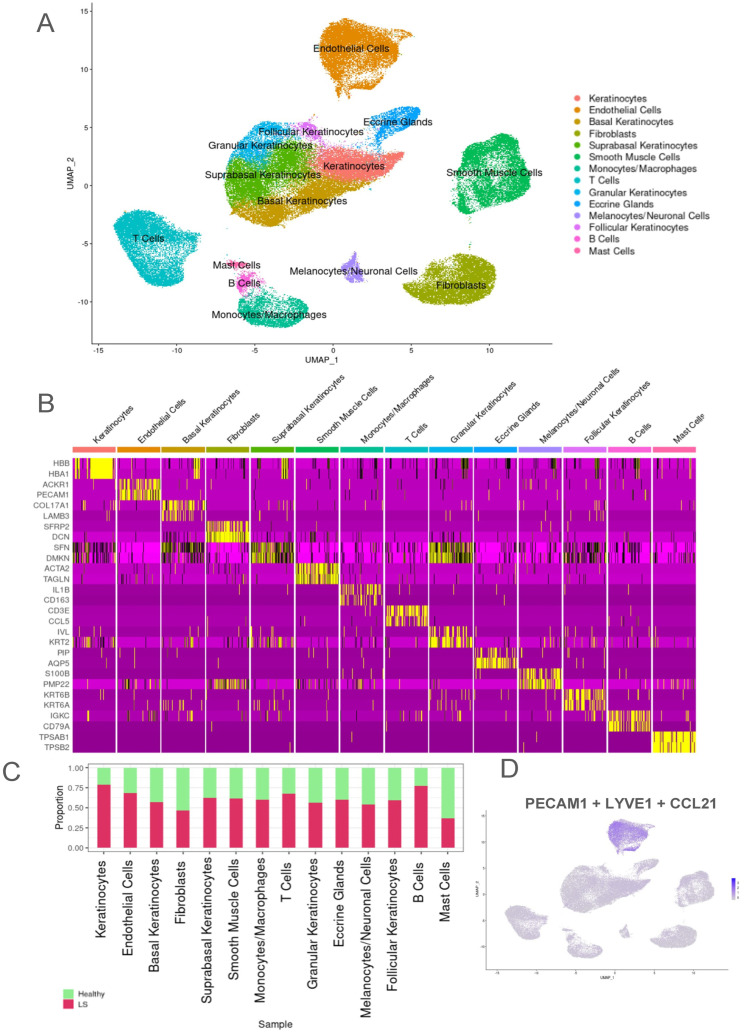
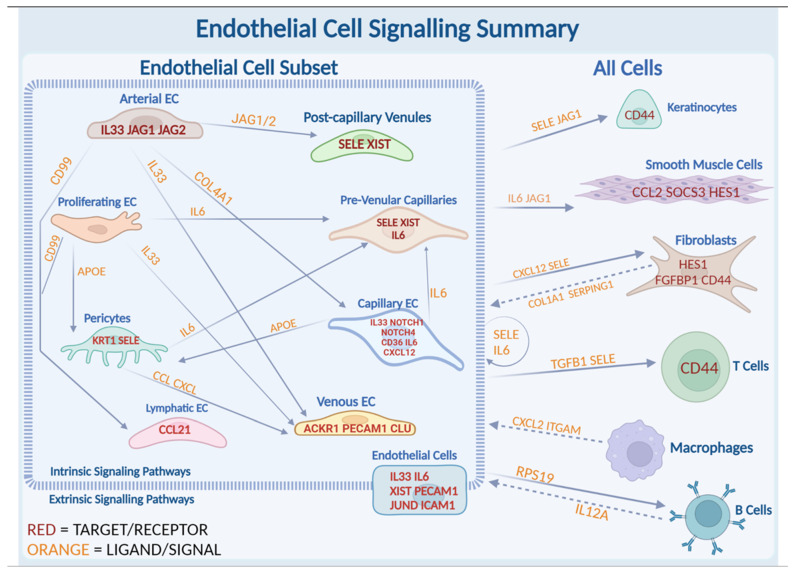
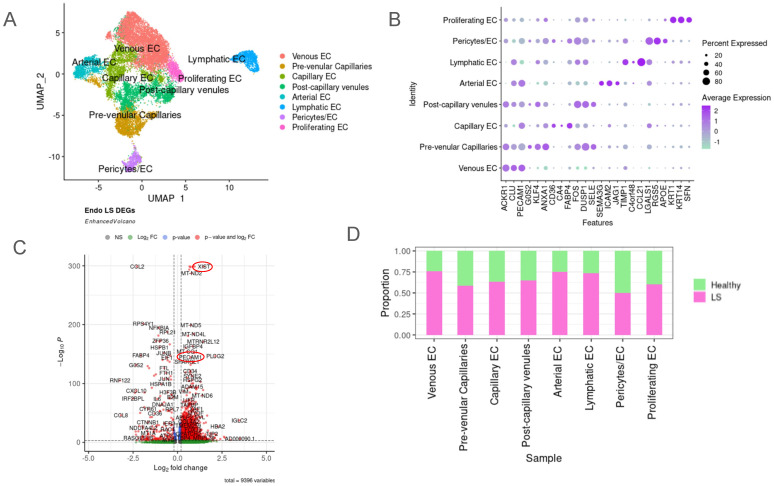
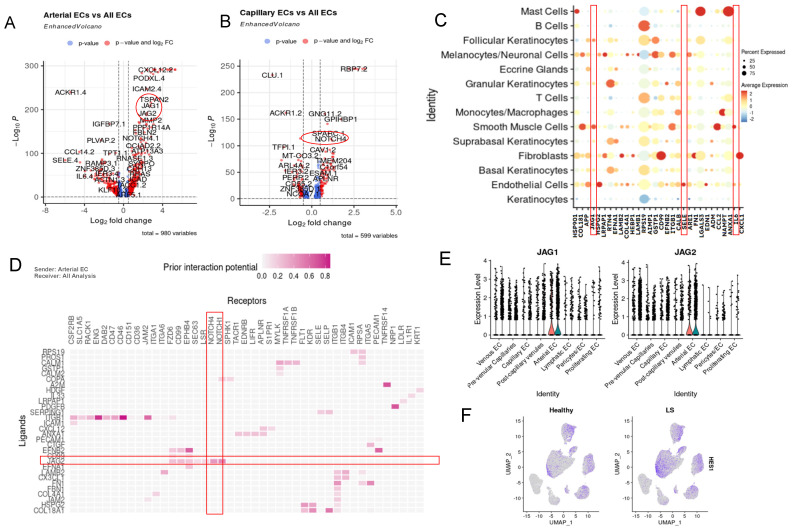
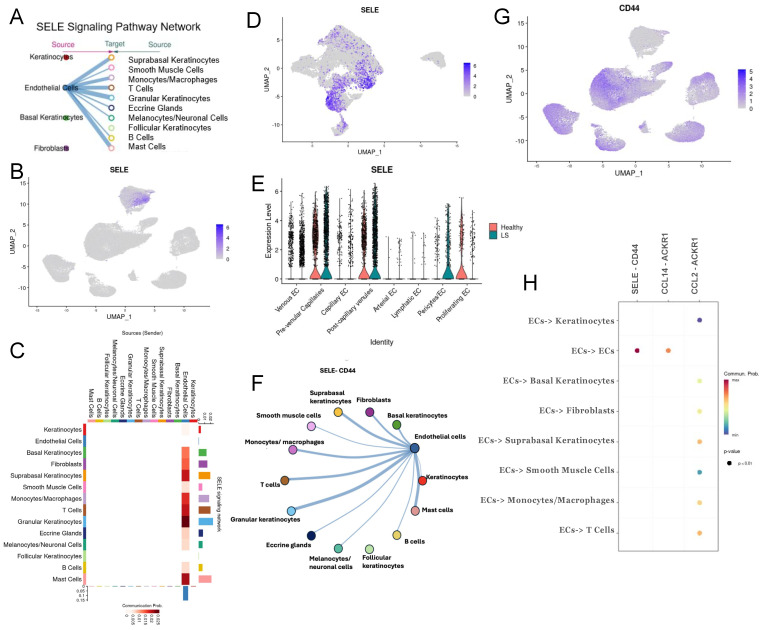
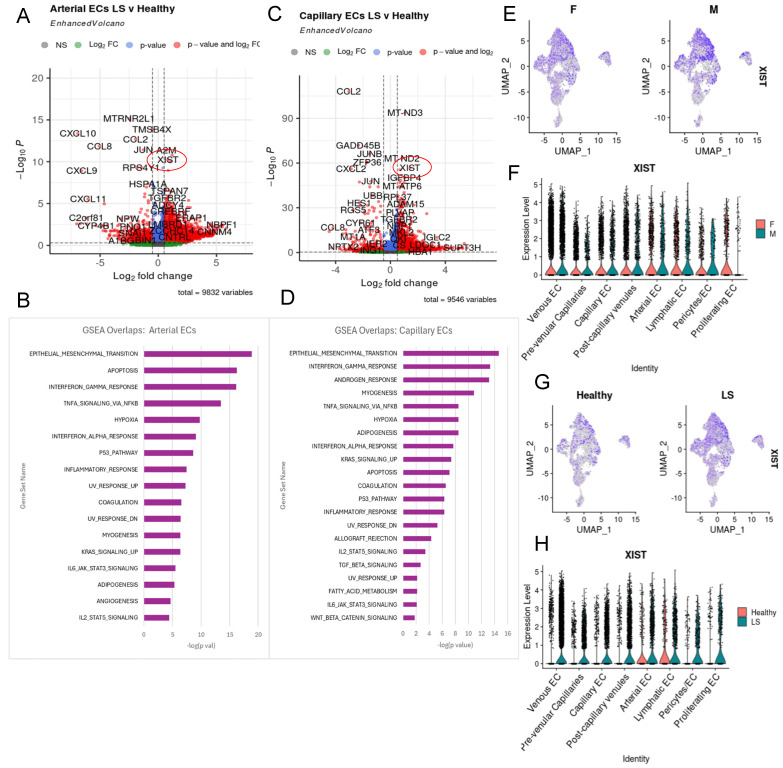
Localized scleroderma (LS) is an autoimmune disease characterized by inflammation and fibrosis, leading to severe cutaneous manifestations such as skin hardening, tightness, discoloration, and other textural changes that may result in disability. While LS shares similar histopathologic features and immune-fibroblast interactions with systemic sclerosis (SSc), its molecular mechanisms remain understudied. Endothelial cells (EC) are known to play a crucial role in SSc but have not been investigated in LS. Single-cell RNA sequencing (scRNA-seq) now allows for detailed examination of this cell type in the primary organ of interest for scleroderma, the skin. In this study, we analyzed skin-isolated cells from 27 LS patients (pediatric and adult) and 17 healthy controls using scRNA-seq. Given the known role of EC damage as an initial event in SSc and the histologic and clinical skin similarities to LS, we focused primarily on endothelial cells. Our analysis identified eight endothelial subclusters within the dataset, encompassing both disease and healthy samples. Interaction analysis revealed that signaling from diseased endothelial cells was predicted to promote fibrosis through interaction with and other target genes. We also observed high levels of in arterial endothelial cells and in capillary endothelial cells, indicating the activation of a signaling pathway potentially responsible for epidermal abnormalities and contributing to LS pathogenesis. In summary, our scRNA-seq analysis identified potential disease-propagating endothelial cell clusters with upregulated pathways in LS skin, highlighting their importance in disease progression.
局限性硬皮病(LS)是一种自身免疫性疾病,其特征为炎症和纤维化,导致严重的皮肤表现,如皮肤硬化、紧绷、变色和其他质地改变,可能导致残疾。虽然 LS 与系统性硬皮病(SSc)具有相似的组织病理学特征和免疫成纤维细胞相互作用,但它的分子机制仍未得到充分研究。已知内皮细胞(EC)在 SSc 中起着至关重要的作用,但在 LS 中尚未进行研究。单细胞 RNA 测序(scRNA-seq)现在允许在硬皮病的主要靶器官皮肤中对这种细胞类型进行详细检查。在这项研究中,我们使用 scRNA-seq 分析了 27 名 LS 患者(儿童和成人)和 17 名健康对照者的皮肤分离细胞。鉴于 EC 损伤作为 SSc 的初始事件的已知作用以及 LS 在组织学和临床皮肤方面的相似性,我们主要关注内皮细胞。我们的分析在数据集内确定了八个内皮亚群,包括疾病和健康样本。相互作用分析表明,来自患病内皮细胞的信号通过与 和其他靶基因的相互作用,被预测会促进纤维化。我们还观察到动脉内皮细胞中 水平升高和毛细血管内皮细胞中 水平升高,表明潜在负责表皮异常并导致 LS 发病机制的信号通路被激活。总之,我们的 scRNA-seq 分析确定了 LS 皮肤中具有上调途径的潜在传播疾病的内皮细胞簇,突出了它们在疾病进展中的重要性。