Department of Pharmacology, Faculty of Pharmacy, Ankara University, Ankara 06560, Türkiye.
Department of Pharmacology, Faculty of Pharmacy, Gazi University, Ankara 06330, Türkiye.
Int J Mol Sci. 2024 Oct 2;25(19):10617. doi: 10.3390/ijms251910617.
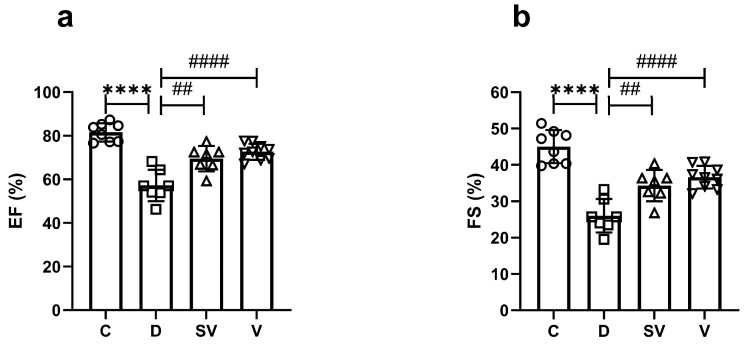
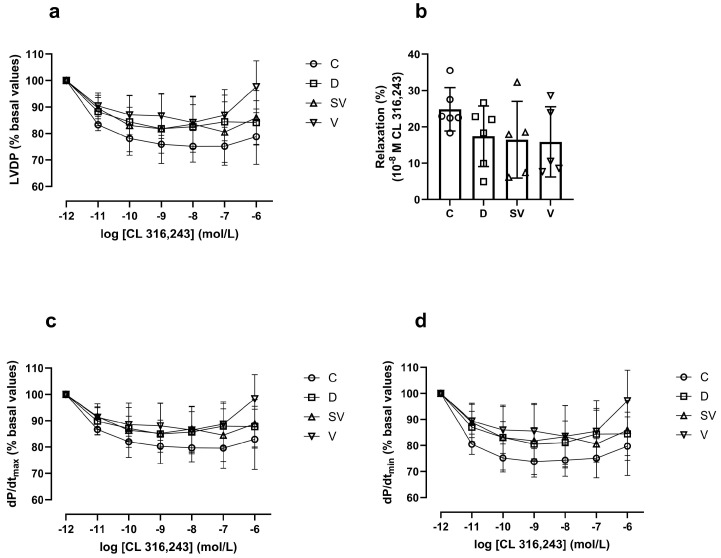
Cardiovascular complications are the major cause of diabetes mellitus-related morbidity and mortality. Increased renin-angiotensin-aldosterone system activity and decreased β-adrenergic receptor (β-AR) responsiveness contribute to diabetic cardiac dysfunction. We evaluated the effect of sacubitril/valsartan (neprilysin inhibitor plus angiotensin receptor antagonist combination) and valsartan treatments on the diabetic cardiac function through β-AR responsiveness and on protein expression of diastolic components. Six-week-old male Sprague Dawley rats were divided into control, diabetic, sacubitril/valsartan (68 mg/kg)-, and valsartan-treated (31 mg/kg) diabetic groups. Diabetes was induced by a high-fat diet plus low-dose streptozotocin (30 mg/kg, intraperitoneal). After 10 weeks of diabetes, rats were treated for 4 weeks. Systolic/diastolic function was assessed by in vivo echocardiography and pressure-volume loop analysis. β-AR-mediated responsiveness was assessed by in vitro papillary muscle and Langendorff heart experiments. Protein expression of sarcoplasmic reticulum calcium ATPase2a, phospholamban, and phosphorylated phospholamban was determined by Western blot. Sacubitril/valsartan improved ejection fraction and fractional shortening to a similar extent as valsartan alone. None of the treatments affected in vivo diastolic parameters or the expression of related proteins. β-/β-AR-mediated responsiveness was partially restored in treated animals. β-AR-mediated cardiac relaxation (an indicator of diastolic function) responses were comparable among groups. The beneficial effect of sacubitril/valsartan on systolic function may be attributed to improved β-/β-AR responsiveness.
心血管并发症是糖尿病相关发病率和死亡率的主要原因。肾素-血管紧张素-醛固酮系统活性增加和β-肾上腺素能受体(β-AR)反应性降低导致糖尿病性心脏功能障碍。我们通过β-AR 反应性和舒张成分的蛋白表达评估了 sacubitril/valsartan(肾素抑制剂加血管紧张素受体拮抗剂联合)和缬沙坦治疗对糖尿病心脏功能的影响。将 6 周龄雄性 Sprague Dawley 大鼠分为对照组、糖尿病组、 sacubitril/valsartan(68mg/kg)治疗组和缬沙坦治疗(31mg/kg)糖尿病组。糖尿病通过高脂肪饮食加小剂量链脲佐菌素(30mg/kg,腹腔内)诱导。糖尿病 10 周后,大鼠接受 4 周治疗。通过体内超声心动图和压力-容积环分析评估收缩/舒张功能。通过体外乳头肌和 Langendorff 心脏实验评估 β-AR 介导的反应性。通过 Western blot 测定肌浆网钙 ATP 酶 2a、磷酸化肌球蛋白轻链和磷酸化肌球蛋白轻链的蛋白表达。Sacubitril/valsartan 改善射血分数和缩短分数的程度与缬沙坦单独治疗相似。这些治疗均未影响体内舒张参数或相关蛋白的表达。β-/β-AR 介导的反应性在治疗动物中部分恢复。β-AR 介导的心脏舒张(舒张功能的指标)反应在各组之间相当。Sacubitril/valsartan 对收缩功能的有益作用可能归因于改善了 β-/β-AR 反应性。