Department of Mechanical & Aerospace Engineering, Monash University, Clayton, VIC 3800, Australia.
Department of Medicine, School of Clinical Sciences, Monash University, Clayton, VIC 3800, Australia.
Sensors (Basel). 2024 Oct 6;24(19):6453. doi: 10.3390/s24196453.
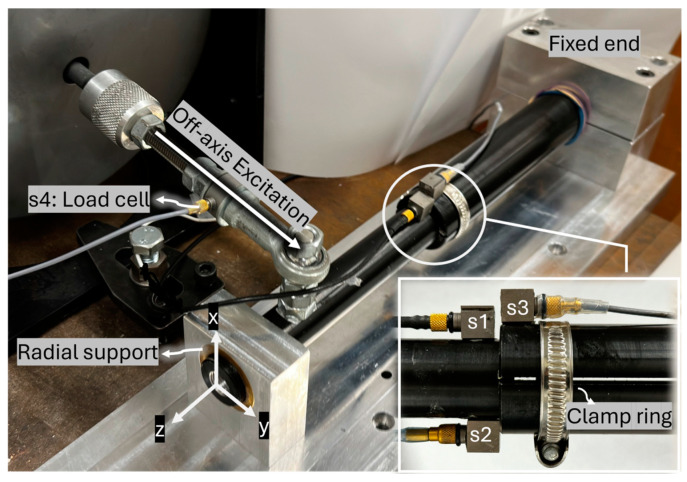
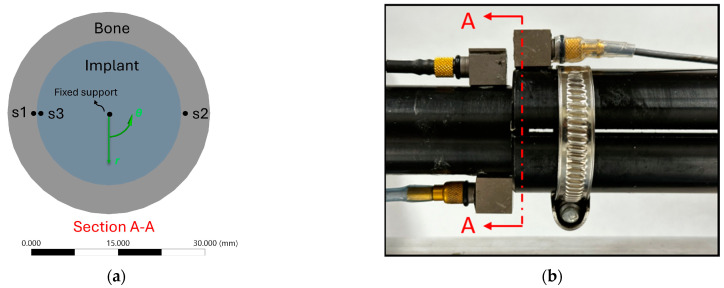
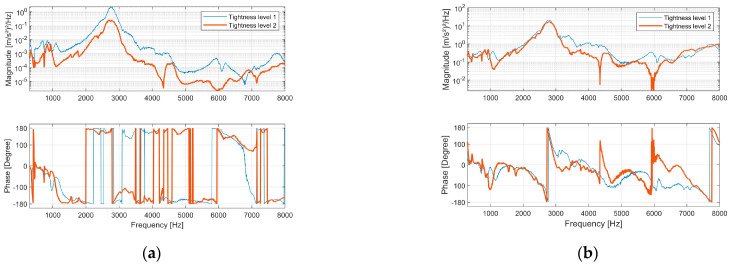
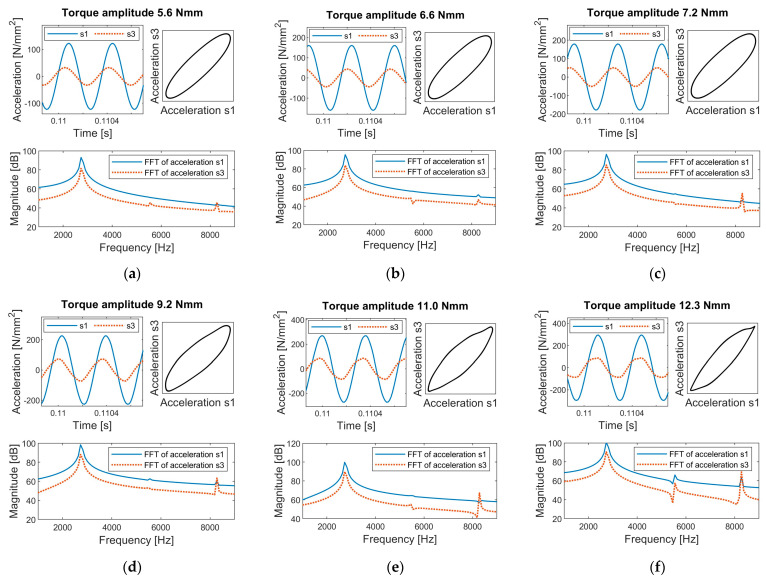
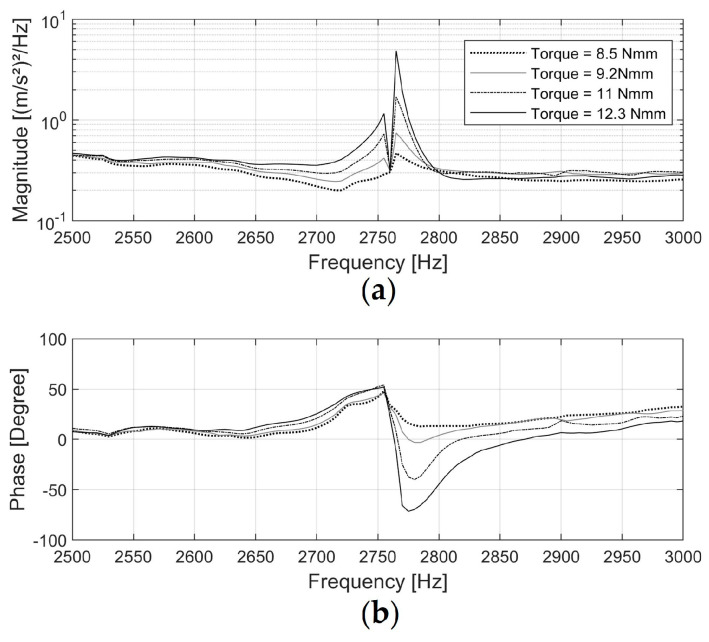
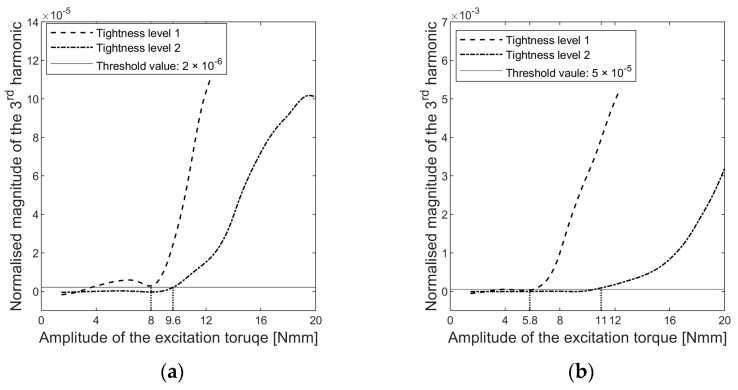
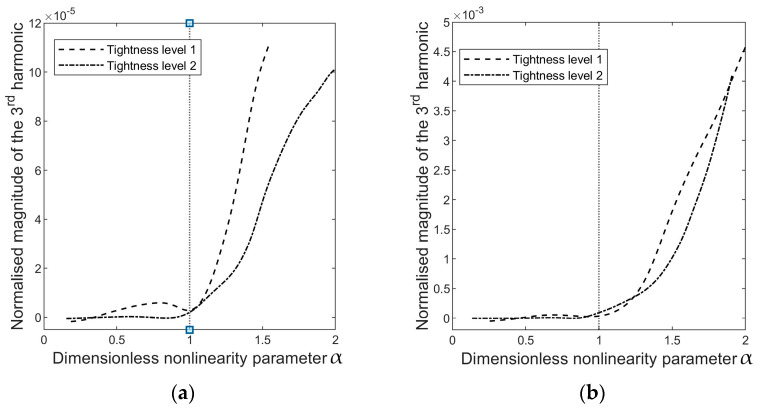
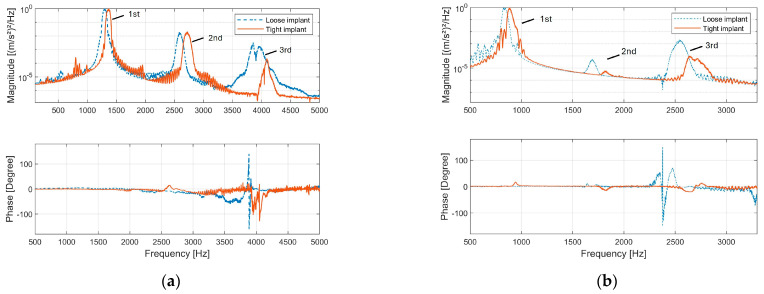
A simplified axisymmetric model of a transfemoral osseointegration implant was used to investigate the influence of the contact condition at the bone-implant interface on the vibrational response. The experimental setup allowed the degree of implant tightness to be controlled using a circumferential compression device affixed to the bone. Diametrically placed sensors allowed torsional modes to be distinguished from flexural modes. The results showed that the structural resonant frequencies did not shift significantly with tightness levels. The first torsional mode of vibration was found to be particularly sensitive to interface loosening. Harmonics in the vibrational response became prominent when the amplitude of the applied torque increased beyond a critical level. The torque level at which the third harmonic begins to rise correlated with implant criticality, suggesting a potential strategy for early detection of implant loosening based on monitoring the amplitude of the third harmonic of the torsional mode.
采用简化的股骨贯通式骨整合植入物轴对称模型研究了骨-植入物界面接触条件对振动响应的影响。实验装置允许使用附在骨头上的圆周压缩装置来控制植入物的紧固程度。对置的传感器允许区分扭转模式和弯曲模式。结果表明,结构共振频率随紧固程度的变化不明显。振动响应中的谐波在施加扭矩的幅度超过临界水平时变得突出。当施加的扭矩幅度增加到超过临界水平时,第三次谐波开始上升,这表明基于监测扭转模式的第三次谐波幅度,可能有一个用于早期检测植入物松动的策略。