Nader Noor E, Frederico Stephen C, Miller Tracy, Huq Sakibul, Zhang Xiaoran, Kohanbash Gary, Hadjipanayis Constantinos G
School of Medicine, University of Pittsburgh, Pittsburgh, PA 15213, USA.
Harvard Medical School, Boston, MA 02115, USA.
Cancers (Basel). 2024 Sep 26;16(19):3273. doi: 10.3390/cancers16193273.
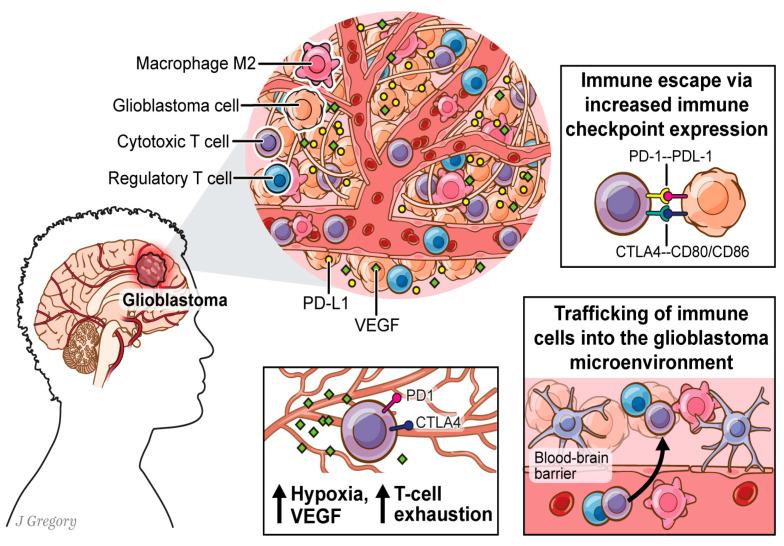
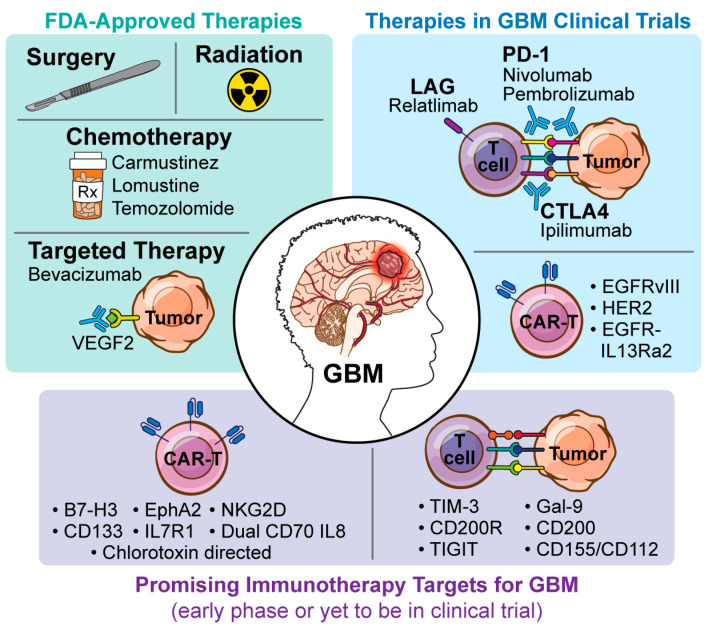
Glioblastoma (GBM) is an aggressive primary brain tumor depicted by a cold tumor microenvironment, low immunogenicity, and limited effective therapeutic interventions. Its location in the brain, a highly immune-selective organ, acts as a barrier, limiting immune access and promoting GBM dissemination, despite therapeutic interventions. Currently, chemotherapy and radiation combined with surgical resection are the standard of care for GBM treatment. Although immune checkpoint blockade has revolutionized the treatment of solid tumors, its observed success in extracranial tumors has not translated into a significant survival benefit for GBM patients. To develop effective immunotherapies for GBM, it is vital to tailor treatments to overcome the numerous immunosuppressive barriers that inhibit T cell responses to these tumors. In this review, we address the unique physical and immunological barriers that make GBM challenging to treat. Additionally, we explore potential therapeutic mechanisms, studied in central nervous system (CNS) and non-CNS cancers, that may overcome these barriers. Furthermore, we examine current and promising immunotherapy clinical trials and immunotherapeutic interventions for GBM. By highlighting the array of challenges T cell-based therapies face in GBM, we hope this review can guide investigators as they develop future immunotherapies for this highly aggressive malignancy.
胶质母细胞瘤(GBM)是一种侵袭性原发性脑肿瘤,其特征为冷肿瘤微环境、低免疫原性以及有效的治疗干预措施有限。尽管有治疗干预,但它位于大脑这一高度免疫选择性器官中,会形成一道屏障,限制免疫细胞的进入并促进GBM扩散。目前,化疗、放疗联合手术切除是GBM治疗的标准方案。尽管免疫检查点阻断疗法彻底改变了实体瘤的治疗方式,但在颅外肿瘤中观察到的成功并未给GBM患者带来显著的生存获益。为了开发针对GBM的有效免疫疗法,至关重要的是量身定制治疗方案,以克服众多抑制T细胞对这些肿瘤作出反应的免疫抑制障碍。在本综述中,我们阐述了使GBM治疗具有挑战性的独特物理和免疫屏障。此外,我们探讨了在中枢神经系统(CNS)和非CNS癌症中研究的可能克服这些屏障的潜在治疗机制。此外,我们研究了GBM当前的和有前景的免疫疗法临床试验以及免疫治疗干预措施。通过强调基于T细胞的疗法在GBM中面临的一系列挑战,我们希望本综述能够在研究人员为这种高度侵袭性恶性肿瘤开发未来免疫疗法时为他们提供指导。