Jia Min, Li Gui-Zhou, Chen Jiang, Tang Xiao-Hui, Zang Yan-Yu, Yang Guo-Lin, Shi Yun Stone, Ma Daqing, Ji Mu-Huo, Yang Jian-Jun
Department of Anaesthesiology, Pain and Perioperative Medicine, The First Affiliated Hospital of Zhengzhou University, Zhengzhou, China.
Minister of Education Key Laboratory of Model Animal for Disease Study, Model Animal Research Center, Nanjing University, Nanjing, China.
Aging Cell. 2025 Jan;24(1):e14366. doi: 10.1111/acel.14366. Epub 2024 Oct 16.
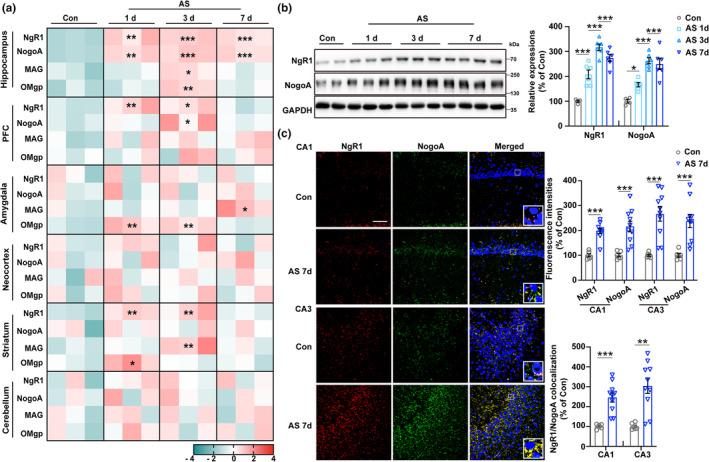
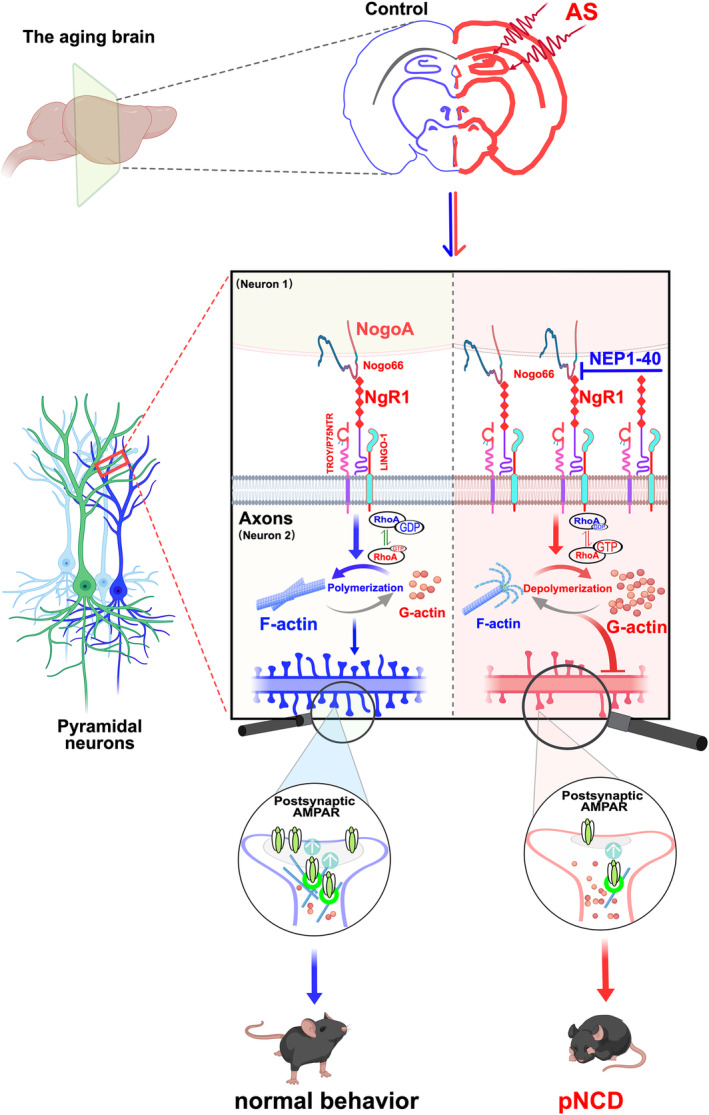
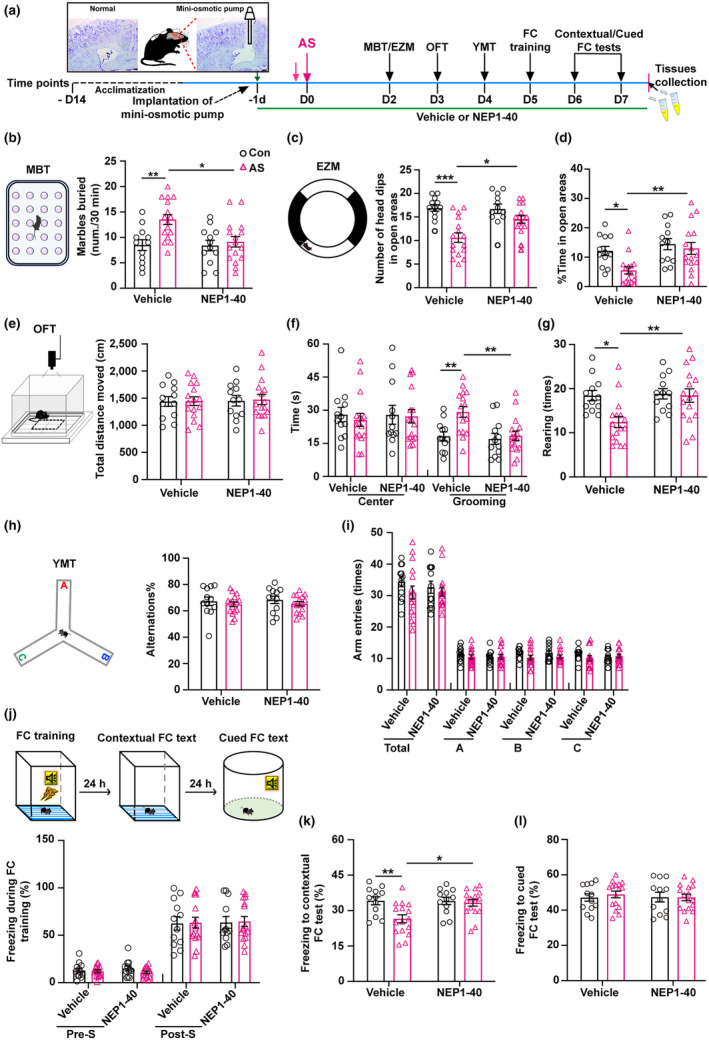
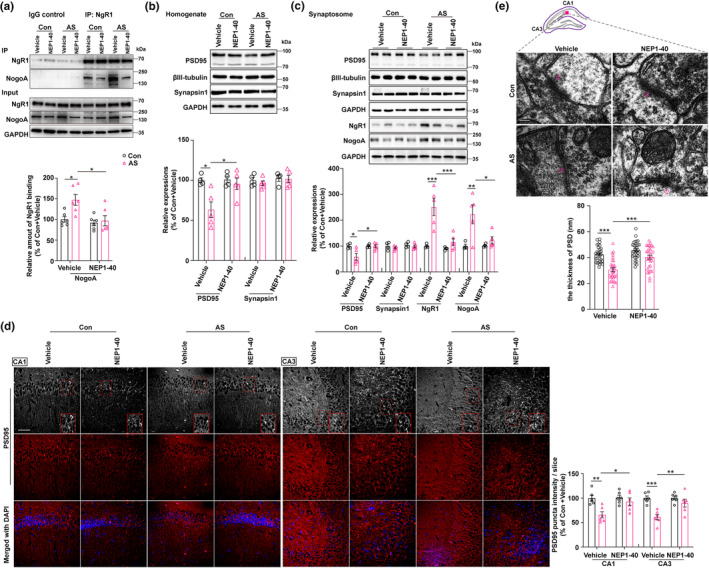
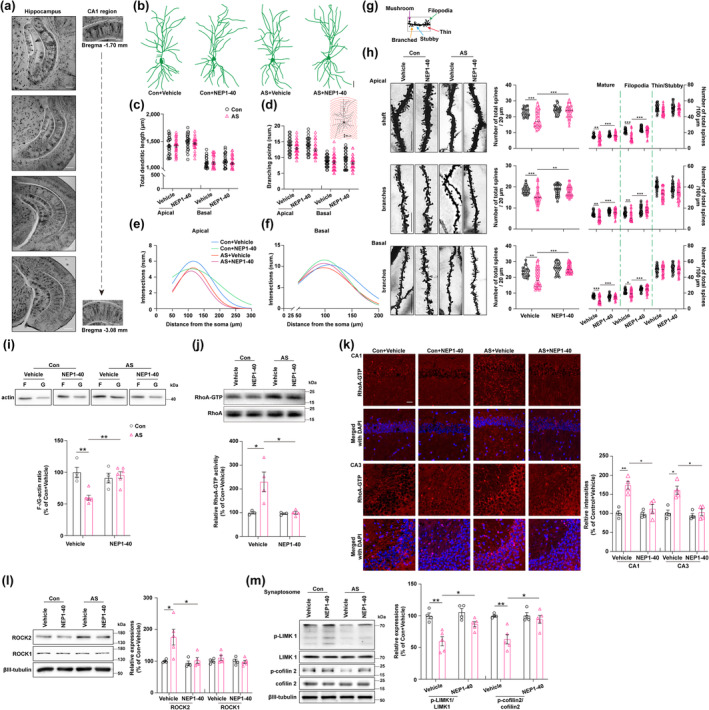
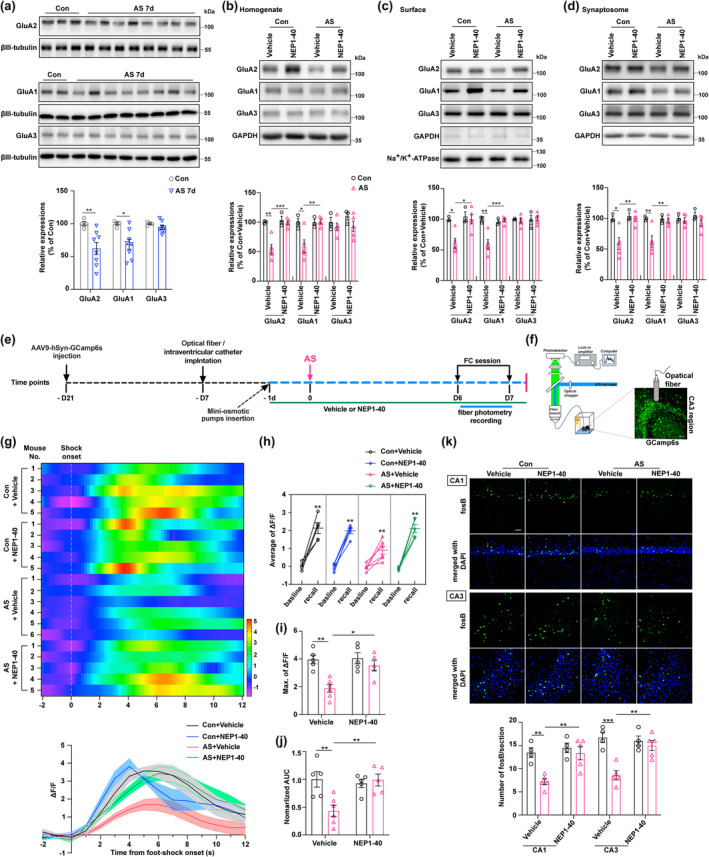
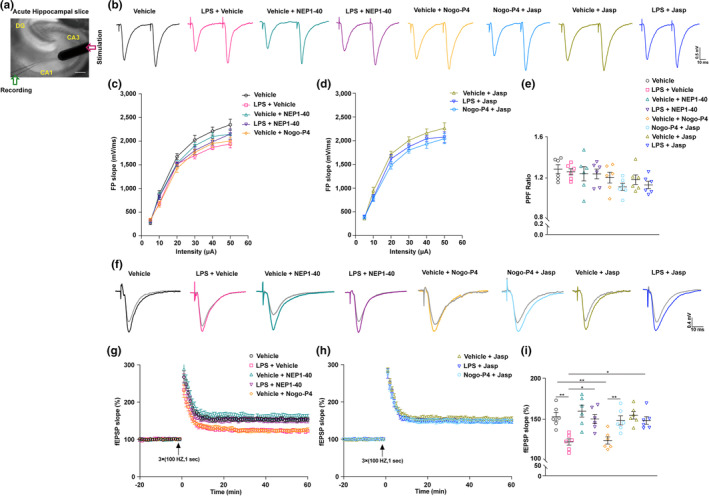
Postoperative neurocognitive disorders (pNCD) are a common neurological complication, especially in elderly following anesthesia and surgery. Yet, the underlying mechanisms of pNCD remain elusive. This study aimed to investigate the molecular mechanisms that compromise synaptic metaplasticity in pNCD development with a focus on the involvement of Nogo-66 receptor 1 (NgR1) in the pathogenesis of pNCD in aged mice. Aged mice subjected to anesthesia and laparotomy surgery exhibited anxiety-like behavior and contextual fear memory impairment. Moreover, the procedure significantly increased NogoA and NgR1 expressions, particularly in the hippocampal CA1 and CA3 regions. This increase led to the depolymerization of F-actin, attributed to the activation of the RhoA-GTPase, resulting in a reduction of dendritic spines and changes in their morphology. Additionally, these changes hindered the efficient postsynaptic delivery of the subunit GluA1 and GluA2 of AMPA receptors (AMPARs), consequently diminishing excitatory neurotransmission in the hippocampus. Importantly, administering the competitive NgR1 antagonist peptide NEP1-40 (Nogo-A extracellular peptide residues 1-40 amino acids of Nogo-66) and Fasudil (a Rho-kinase inhibitor) effectively mitigated synaptic impairments and reversed neurocognitive deficits in aged mice following anesthesia and surgery. Our work indicates that high hippocampal Nogo66-NgR1 signaling disrupts postsynaptic AMPA receptor surface delivery due to F-actin depolymerization in the pathophysiology of pNCD.
术后神经认知障碍(pNCD)是一种常见的神经并发症,尤其是在老年患者麻醉和手术后。然而,pNCD的潜在机制仍然难以捉摸。本研究旨在探讨在pNCD发生发展过程中损害突触可塑性的分子机制,重点关注Nogo-66受体1(NgR1)在老年小鼠pNCD发病机制中的作用。接受麻醉和剖腹手术的老年小鼠表现出焦虑样行为和情境恐惧记忆障碍。此外,该手术显著增加了NogoA和NgR1的表达,特别是在海马CA1和CA3区域。这种增加导致F-肌动蛋白解聚,这归因于RhoA-GTP酶的激活,导致树突棘减少及其形态改变。此外,这些变化阻碍了AMPA受体(AMPARs)亚基GluA1和GluA2在突触后的有效传递,从而减少了海马中的兴奋性神经传递。重要的是,给予竞争性NgR1拮抗剂肽NEP1-40(Nogo-A细胞外肽,Nogo-66的1-40个氨基酸残基)和法舒地尔(一种Rho激酶抑制剂)可有效减轻老年小鼠麻醉和手术后的突触损伤并逆转神经认知缺陷。我们的研究表明,在pNCD的病理生理学中,高海马Nogo66-NgR1信号由于F-肌动蛋白解聚而破坏了突触后AMPA受体的表面传递。