Tongji University School of Medicine, Shanghai, China.
Department of Anesthesiology, Yangzhi Rehabilitation Hospital Affiliated to Tongji University, School of Medicine, Tongji University, 2209 Guangxing Road, Songjiang District, Shanghai, China.
J Mol Neurosci. 2024 Oct 17;74(4):98. doi: 10.1007/s12031-024-02276-6.
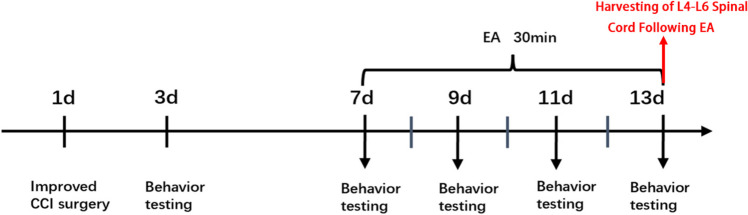
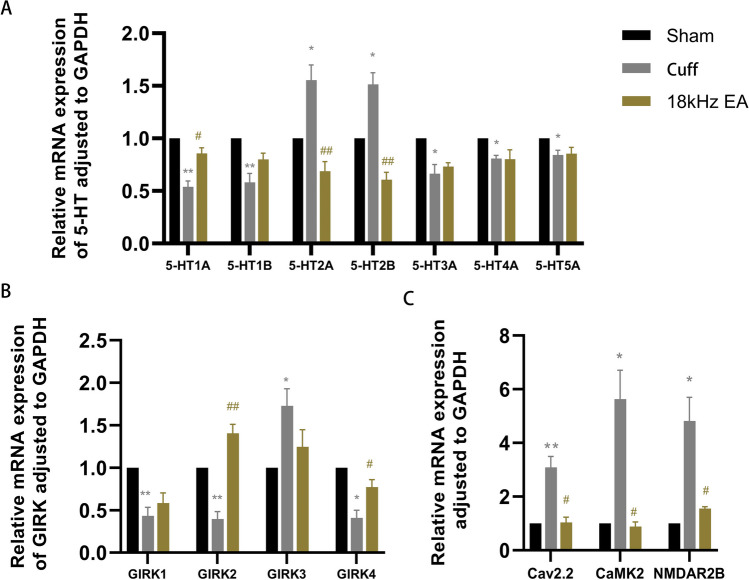
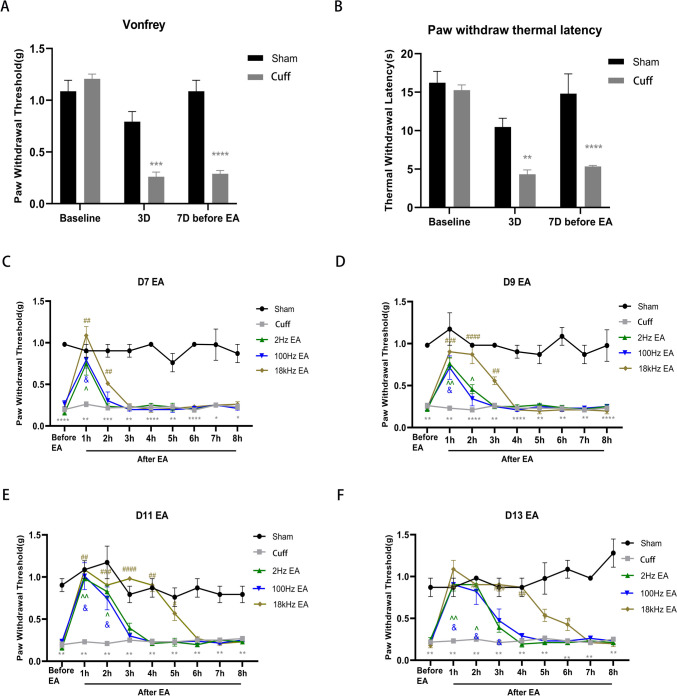
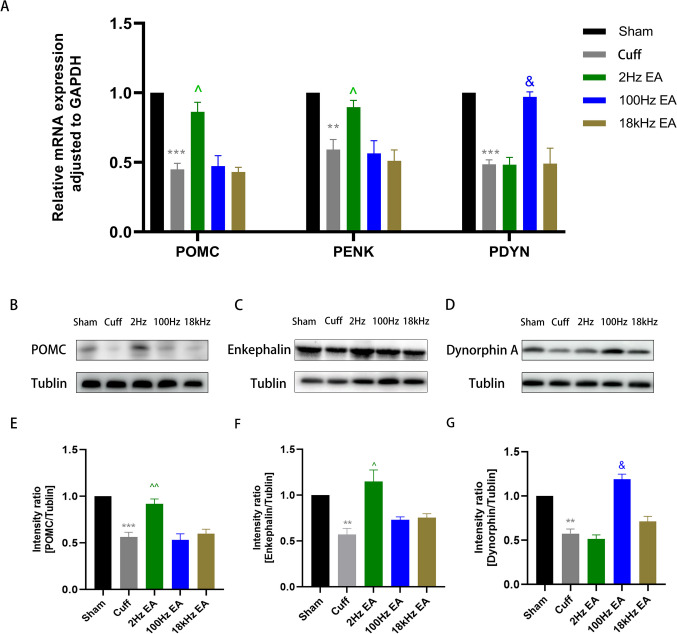
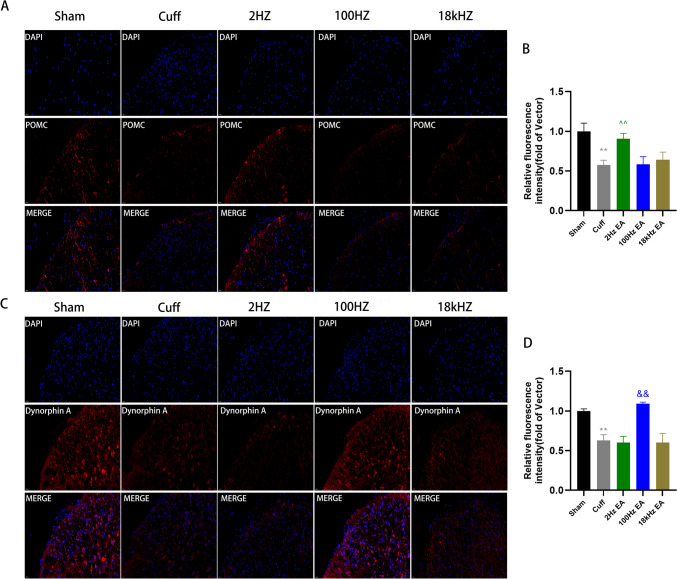
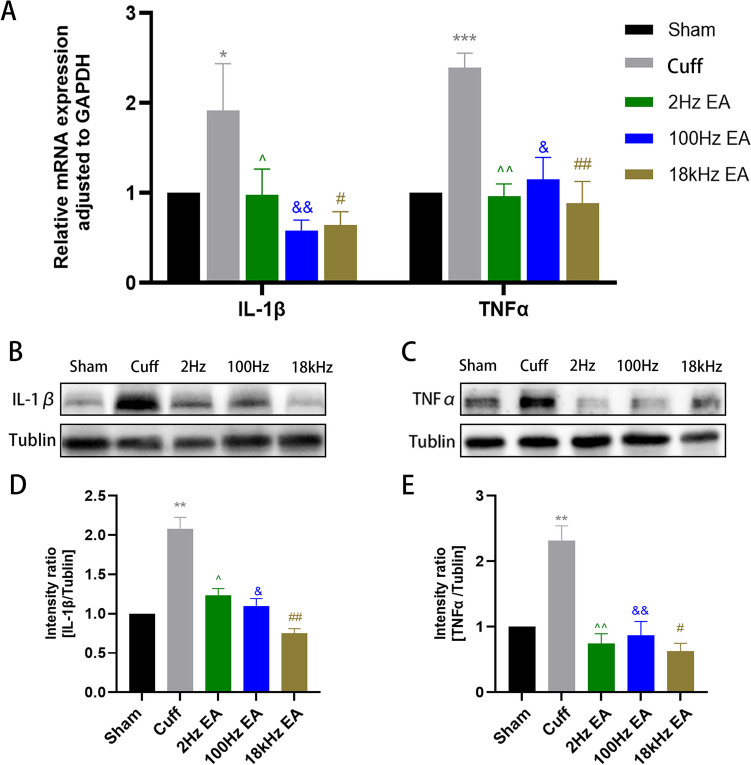
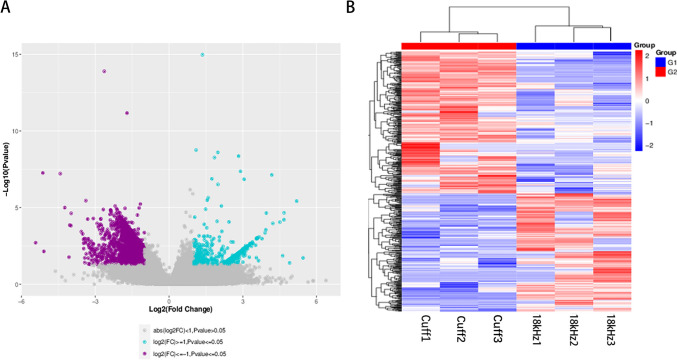
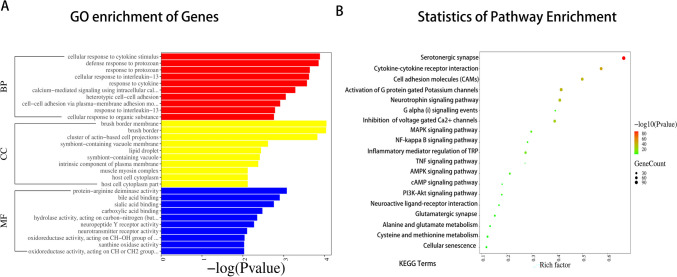
Addressing the intricate challenge of chronic neuropathic pain has significant implications for the physical and psychological well-being of patients, given its enduring nature. In contrast to opioids, electroacupuncture (EA) may potentially provide a safer and more efficacious therapeutic alternative. Our objective is to investigate the distinct analgesic effects and potential mechanisms of EA at frequencies of 2 Hz, 100 Hz, and 18 kHz in order to establish more precise frequency selection criteria for clinical interventions. Analgesic efficacy was evaluated through the measurement of mice's mechanical and thermal pain thresholds. Spinal cord inflammatory cytokines and neuropeptides were quantified via Quantitative Real-time PCR (qRT-PCR), Western blot, and immunofluorescence. Additionally, RNA sequencing (RNA-Seq) was conducted on the spinal cord from mice in the 18 kHz EA group for comprehensive transcriptomic analysis. The analgesic effect of EA on neuropathic pain in mice was frequency-dependent. Stimulation at 18 kHz provided superior and prolonged relief compared to 2 Hz and 100 Hz. Our research suggests that EA at frequencies of 2 Hz, 100 Hz, and 18 kHz significantly reduce the release of inflammatory cytokines. The analgesic effects of 2 Hz and 100 Hz stimulation are due to frequency-dependent regulation of opioid release in the spinal cord. Furthermore, 18 kHz stimulation has been shown to reduce spinal neuronal excitability by modulating the serotonergic pathway and downstream receptors in the spinal cord to alleviate neuropathic pain.
解决慢性神经病理性疼痛这一复杂问题对于患者的身心健康具有重要意义,因为这种疼痛具有持久的特点。与阿片类药物相比,电针(EA)可能提供一种更安全、更有效的治疗选择。我们的目的是研究 2 Hz、100 Hz 和 18 kHz 三种频率的 EA 的不同镇痛效果和潜在机制,以便为临床干预建立更精确的频率选择标准。通过测量小鼠的机械和热痛阈值来评估镇痛效果。通过定量实时 PCR(qRT-PCR)、Western blot 和免疫荧光定量脊髓炎性细胞因子和神经肽。此外,对 18 kHz EA 组小鼠的脊髓进行 RNA 测序(RNA-Seq),进行全面转录组分析。EA 对小鼠神经病理性疼痛的镇痛作用具有频率依赖性。与 2 Hz 和 100 Hz 相比,18 kHz 刺激提供了更好和更持久的缓解。我们的研究表明,2 Hz、100 Hz 和 18 kHz 的 EA 显著减少了炎性细胞因子的释放。2 Hz 和 100 Hz 刺激的镇痛作用是由于脊髓内阿片类物质释放的频率依赖性调节。此外,18 kHz 刺激通过调节脊髓中的 5-羟色胺能通路和下游受体来降低脊髓神经元的兴奋性,从而缓解神经病理性疼痛。