Institute of Experimental Diabetes Research, Hannover Medical School, 30625, Hannover, Germany.
Institute of Clinical Biochemistry, Hannover Medical School, Hannover, Germany.
J Mol Med (Berl). 2024 Dec;102(12):1451-1455. doi: 10.1007/s00109-024-02494-w. Epub 2024 Oct 18.
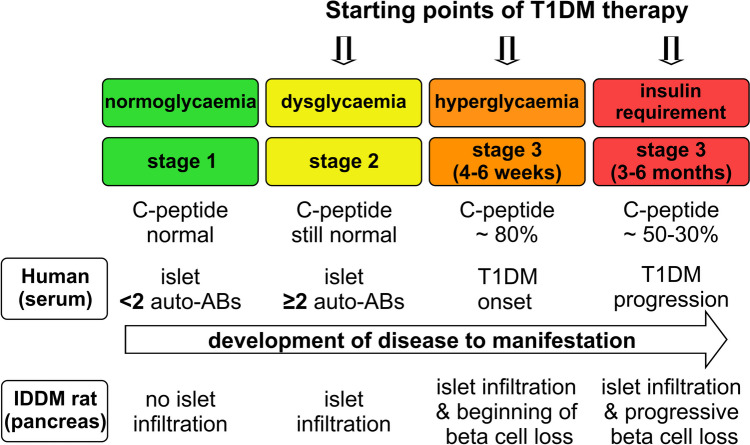
For many autoimmune diseases, including type 1 diabetes mellitus (T1DM), efforts have been made to modify the disease process through pharmacotherapy. The ultimate goal must be to develop therapies with curative potential by achieving an organ without signs of parenchymal cell destruction and without signs of immune cell infiltration. In the case of the pancreas, this means regenerated and well-preserved beta cells in the islets without activated infiltrating immune cells. Recent research has opened up the prospect of successful antibody combination therapy for autoimmune diabetes with curative potential. This goal cannot be achieved with monotherapies. The requirements for the implementation of such a therapy with curative potential for the benefit of patients with T1DM and LADA (latent autoimmune diabetes in adults) are considered.
对于许多自身免疫性疾病,包括 1 型糖尿病(T1DM),人们已经努力通过药物治疗来改变疾病进程。最终目标必须是通过实现器官没有实质细胞破坏的迹象和没有免疫细胞浸润的迹象来开发具有治愈潜力的疗法。就胰腺而言,这意味着胰岛中再生和保存良好的β细胞,没有激活的浸润免疫细胞。最近的研究为成功实现具有治愈潜力的自身免疫性糖尿病抗体联合治疗开辟了前景。这一目标不能通过单一疗法来实现。考虑了为 T1DM 和 LADA(成人隐匿性自身免疫性糖尿病)患者带来益处而实施这种具有治愈潜力的治疗的要求。