Mechanobiology Institute, National University of Singapore (NUS), Singapore, Singapore.
Institute of Molecular and Cell Biology, Agency for Science, Technology and Research (A*STAR), Singapore, Singapore.
Nat Commun. 2024 Oct 19;15(1):9026. doi: 10.1038/s41467-024-52706-7.
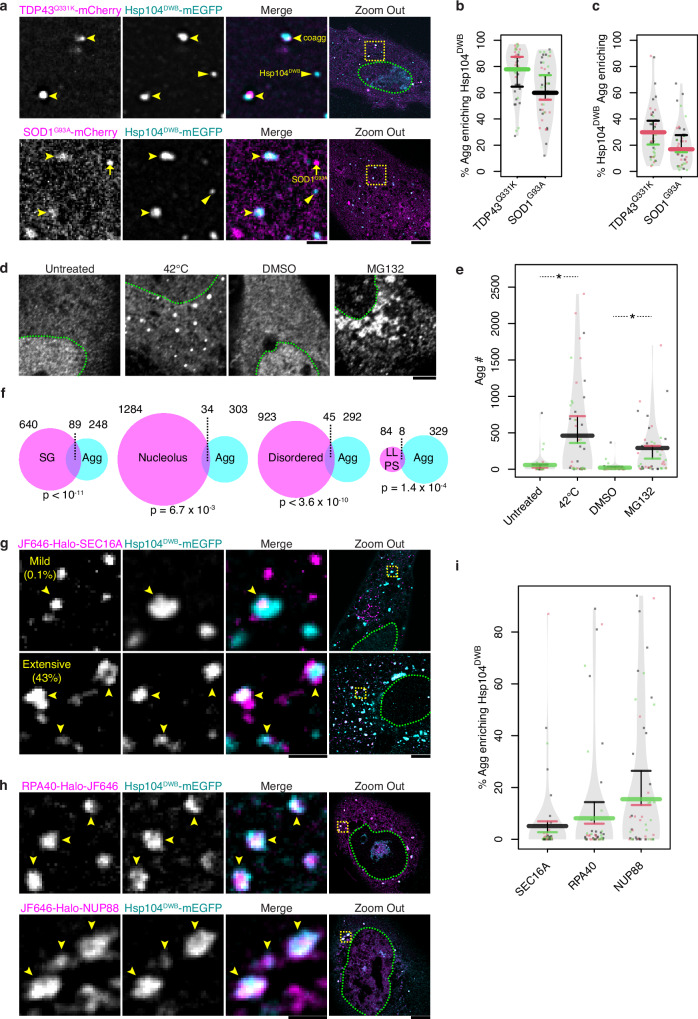
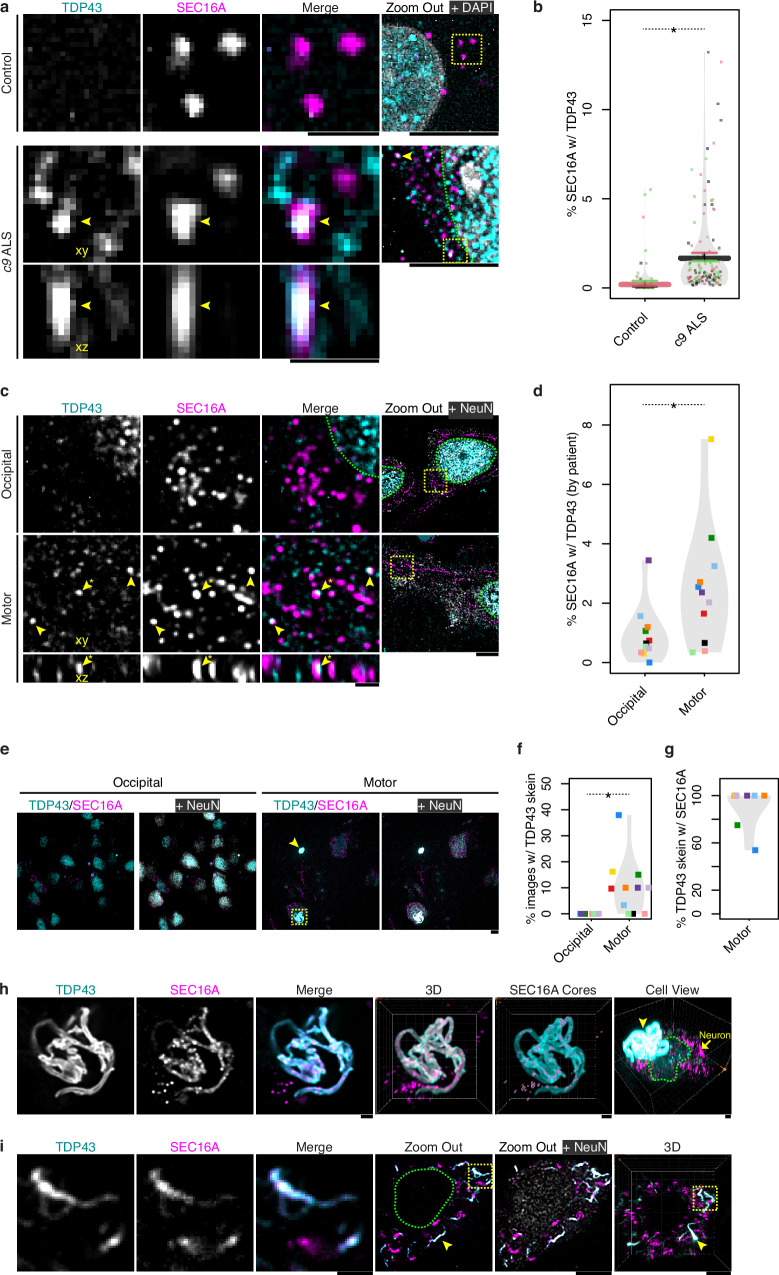
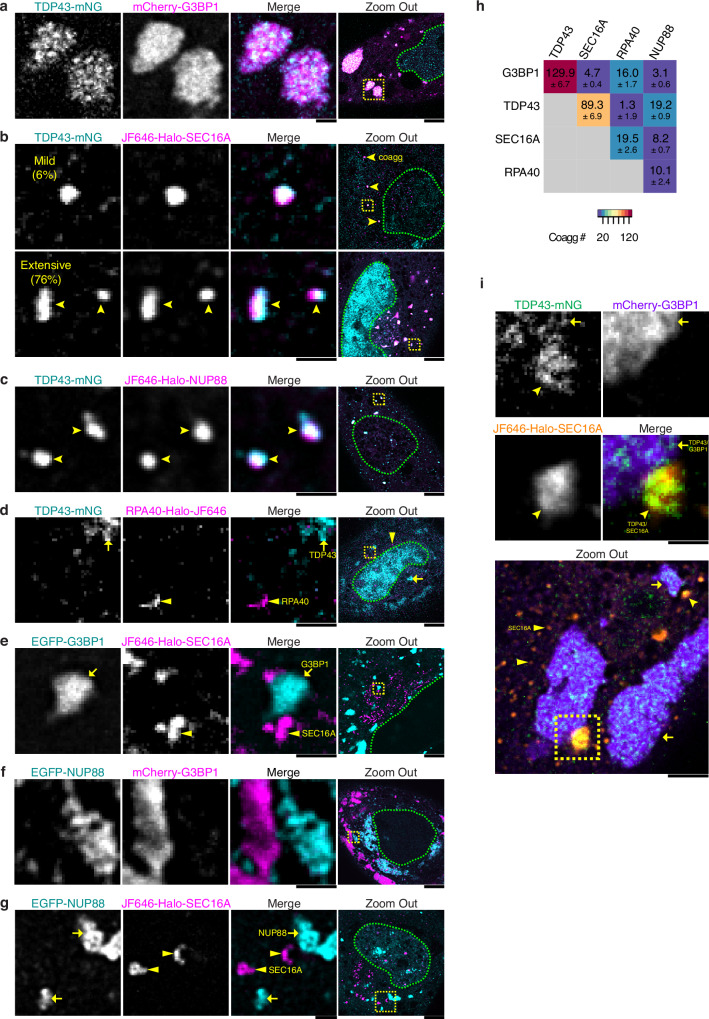
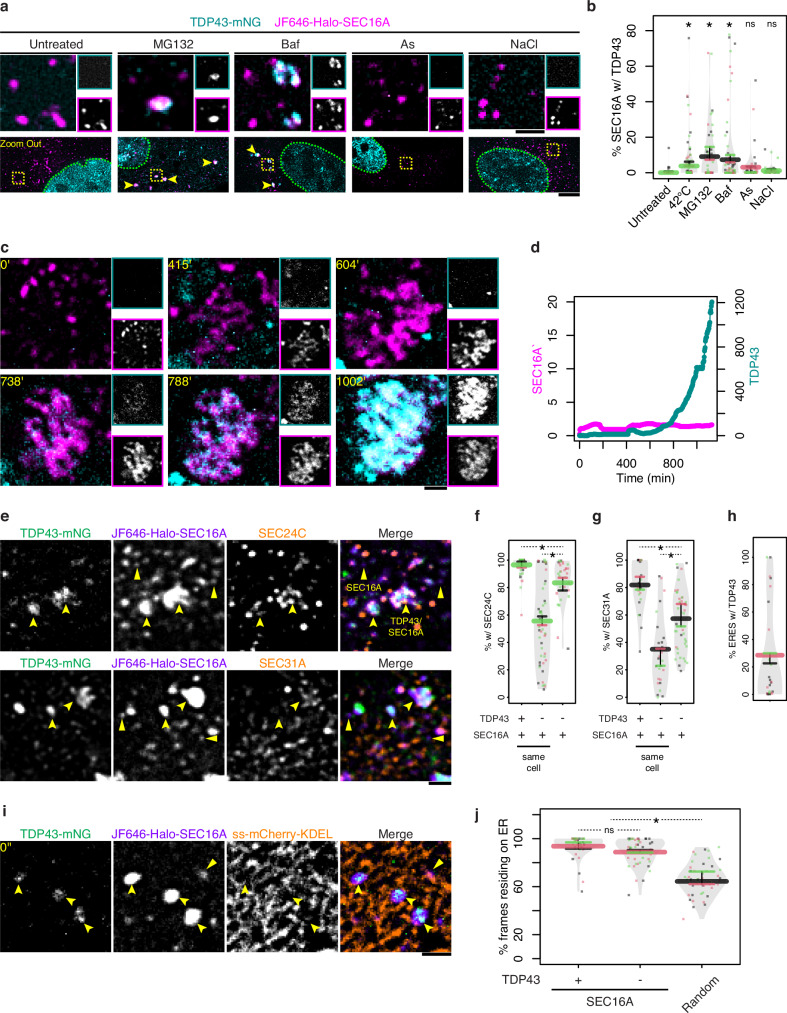
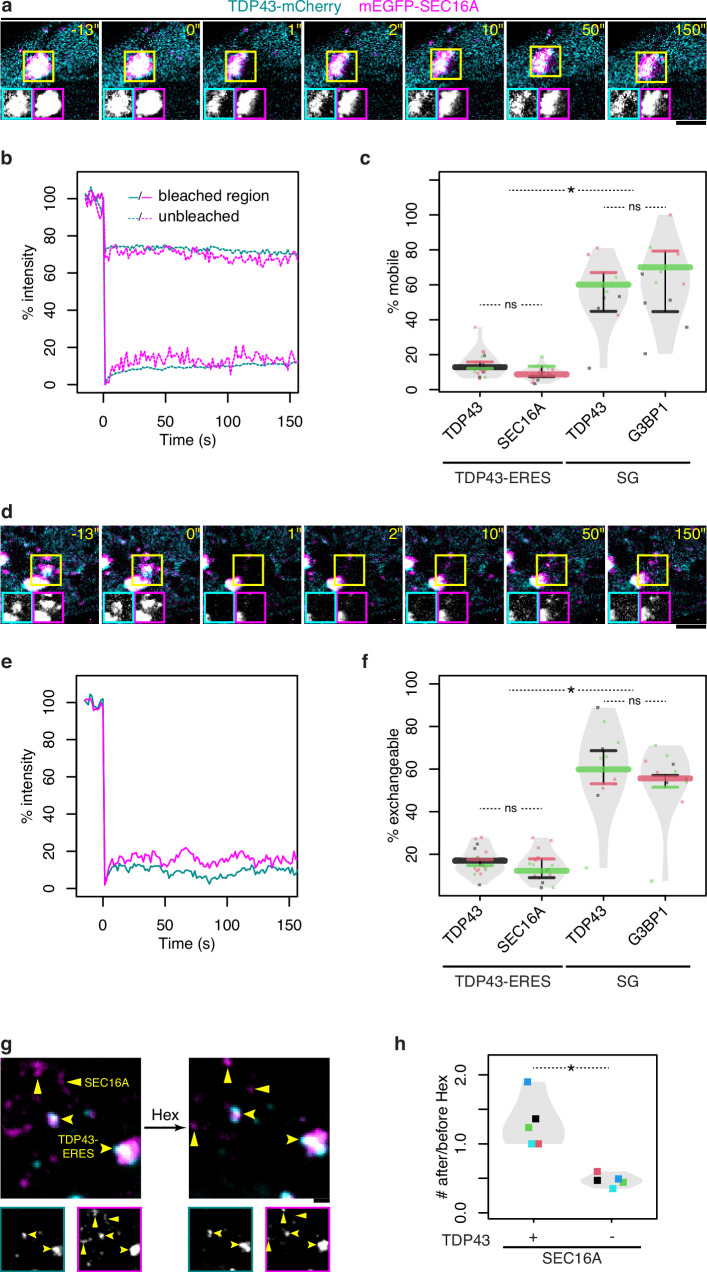
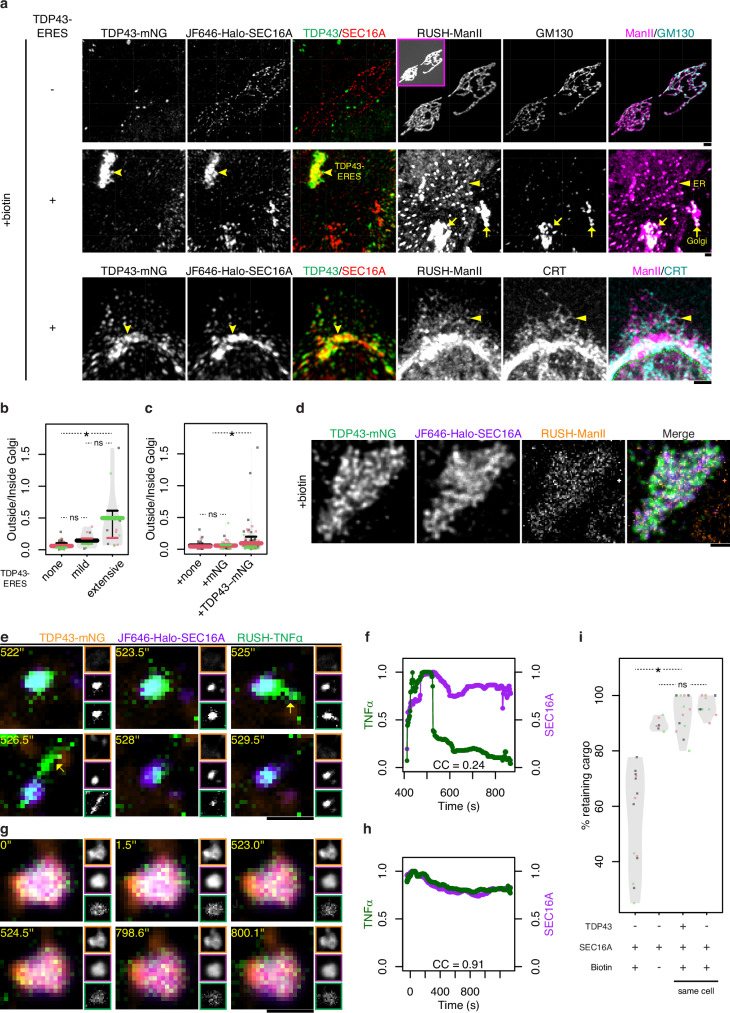
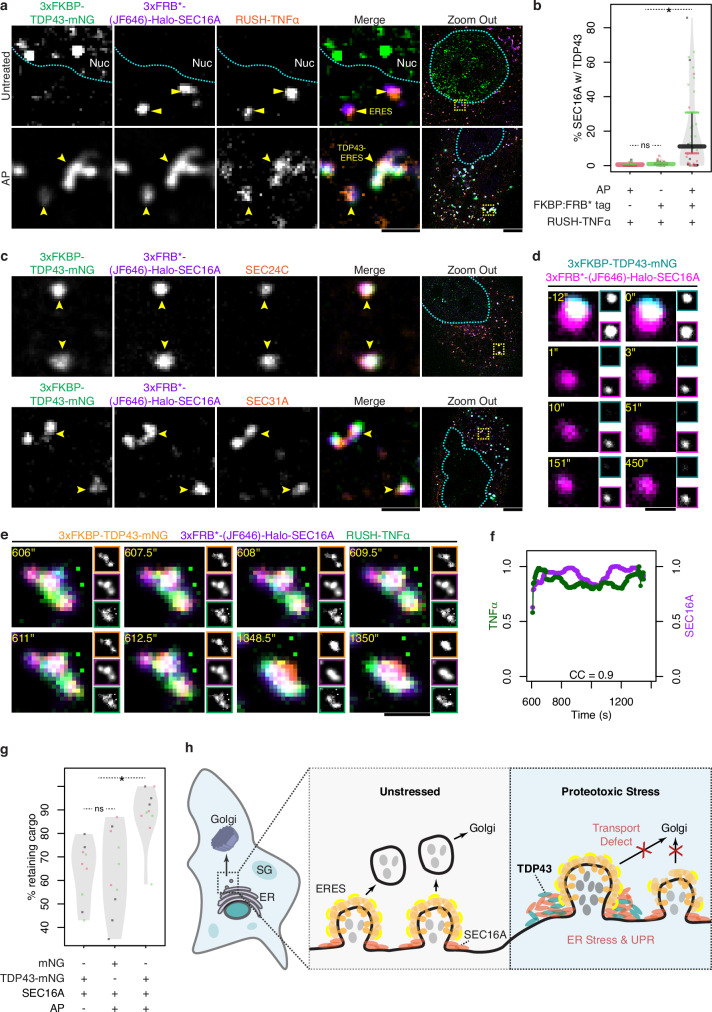
Protein aggregation plays key roles in age-related degenerative diseases, but how different proteins coalesce to form inclusions that vary in composition, morphology, molecular dynamics and confer physiological consequences is poorly understood. Here we employ a general reporter based on mutant Hsp104 to identify proteins forming aggregates in human cells under common proteotoxic stress. We identify over 300 proteins that form different inclusions containing subsets of aggregating proteins. In particular, TDP43, implicated in Amyotrophic Lateral Sclerosis (ALS), partitions dynamically between two distinct types of aggregates: stress granule and a previously unknown non-dynamic (solid-like) inclusion at the ER exit sites (ERES). TDP43-ERES co-aggregation is induced by diverse proteotoxic stresses and observed in the motor neurons of ALS patients. Such aggregation causes retention of secretory cargos at ERES and therefore delays ER-to-Golgi transport, providing a link between TDP43 aggregation and compromised cellular function in ALS patients.
蛋白质聚集在与年龄相关的退行性疾病中起着关键作用,但不同的蛋白质如何凝聚形成组成、形态、分子动力学不同的包含物,并带来生理后果,目前还知之甚少。在这里,我们采用了一种基于突变 Hsp104 的通用报告基因,来鉴定在常见的蛋白毒性应激下,在人细胞中形成聚集体的蛋白质。我们鉴定了超过 300 种蛋白质,它们形成了含有聚集蛋白质亚群的不同包含物。特别是,TDP43 与肌萎缩侧索硬化症(ALS)有关,它在两种不同类型的聚集体之间动态分配:应激颗粒和先前未知的非动态(固态样)内质网出口位点(ERES)包含物。TDP43-ERES 的共聚集是由多种蛋白毒性应激诱导的,并在 ALS 患者的运动神经元中观察到。这种聚集导致 ERES 处分泌货物的滞留,从而延迟了 ER 到高尔基体的运输,为 TDP43 聚集与 ALS 患者细胞功能受损之间建立了联系。