Abbasi Nimrah, Backley Sami, Ryan Greg, Johnson Anthony
Ontario Fetal Centre & Fetal Medicine Unit, Department of Obstetrics & Gynaecology, Mount Sinai Hospital PLM, University of Toronto, Toronto, Ontario, Canada.
Division of Fetal Intervention, Department of Obstetrics, Gynceology and Reproductive Sciences, The University of Texas Health Science Center at Houston, Houston, Texas, USA.
World J Pediatr Surg. 2024 Oct 16;7(4):e000892. doi: 10.1136/wjps-2024-000892. eCollection 2024.
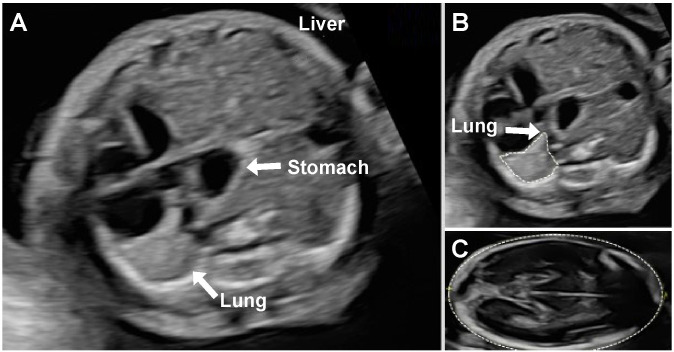
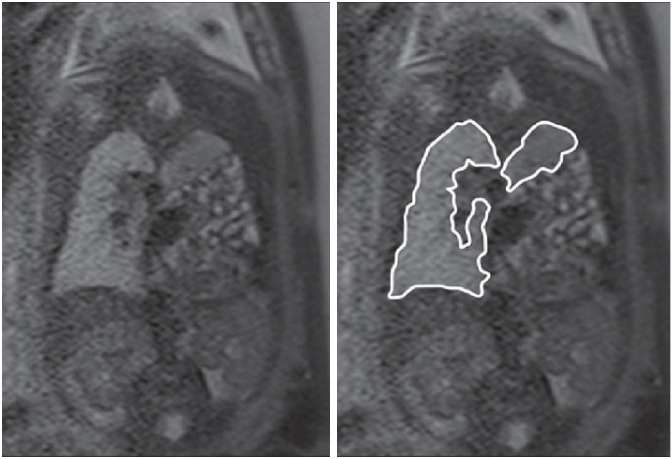
Congenital diaphragmatic hernia (CDH) is a rare heterogenous disorder with varying degrees of severity. Infant survival rates in high-income countries are approaching 80% in isolated CDH; however, over 50% will have long-term morbidities. Advanced antenatal imaging, including ultrasound and magnetic resonance imaging, has made it possible to prognosticate severity of CDH and to stratify risk when counseling expectant parents. Risk stratification can also better prepare healthcare teams to enable optimal neonatal management, and provide options for fetal intervention or, where legally permitted, pregnancy termination. Factors that may affect the immediate and long-term prognosis for CDH include prenatal diagnosis, gestational age at detection and delivery, side of the defect, presence of additional structural or genetic abnormalities, defect size, estimation of fetal lung volume, the extent of visceral herniation, and the delivery center's experience in caring for neonates with CDH. Optimizing the outcome for families and infants begins with an early prenatal diagnosis followed by referral to a diverse and inclusive multidisciplinary center with CDH expertise. Prediction of disease severity is supported by accurate fetal imaging and comprehensive genetic testing, and allows the care team to provide realistic outcome expectations during the counseling of expectant parents of all racial and ethnic backgrounds.
先天性膈疝(CDH)是一种罕见的异质性疾病,严重程度各不相同。在高收入国家,单纯性CDH患儿的存活率接近80%;然而,超过50%的患儿会有长期并发症。先进的产前影像学检查,包括超声和磁共振成像,使得在为准父母提供咨询时能够预测CDH的严重程度并进行风险分层。风险分层还可以让医疗团队更好地做好准备,以实现最佳的新生儿管理,并提供胎儿干预选项,或者在法律允许的情况下提供终止妊娠的选项。可能影响CDH近期和远期预后的因素包括产前诊断、检测和分娩时的孕周、缺损部位、是否存在其他结构或基因异常、缺损大小、胎儿肺容积估计、内脏疝入程度以及分娩中心照顾CDH新生儿的经验。为家庭和婴儿优化治疗结果始于早期产前诊断,随后转诊至具备CDH专业知识的多元化和包容性多学科中心。准确的胎儿影像学检查和全面的基因检测有助于预测疾病严重程度,使护理团队能够在为所有种族和族裔背景的准父母提供咨询时给出符合实际的预后预期。