Hu Min, Zhang Yaorong, Xue Huijun, Lv Hao, Han Shipeng
Department of Medical Electronics, School of Biomedical Engineering, Air Force Medical University, Xi'an 710032, China.
School of Information and Control Engineering, Xi'an University of Architecture and Technology, Xi'an 710055, China.
Bioengineering (Basel). 2024 Oct 20;11(10):1047. doi: 10.3390/bioengineering11101047.
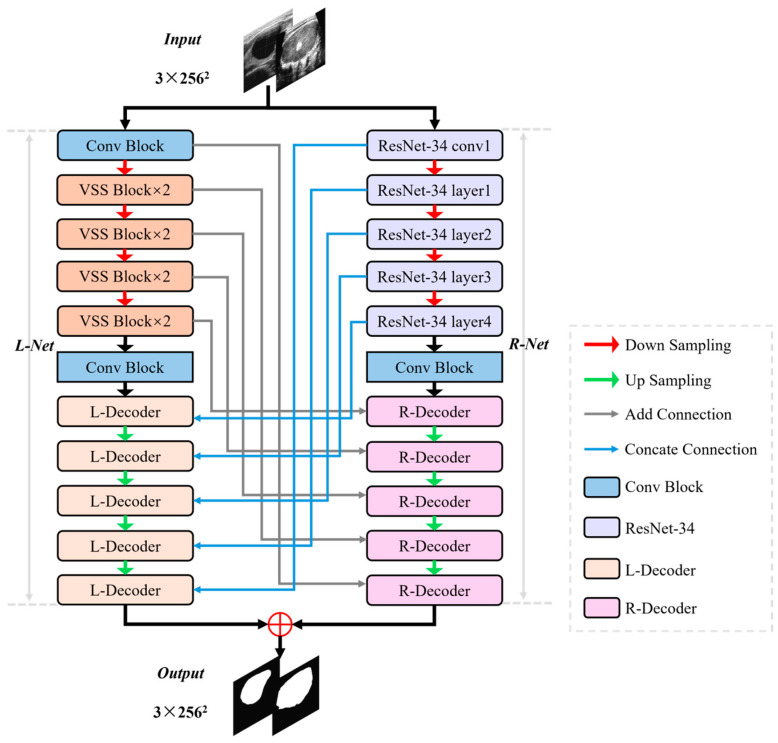
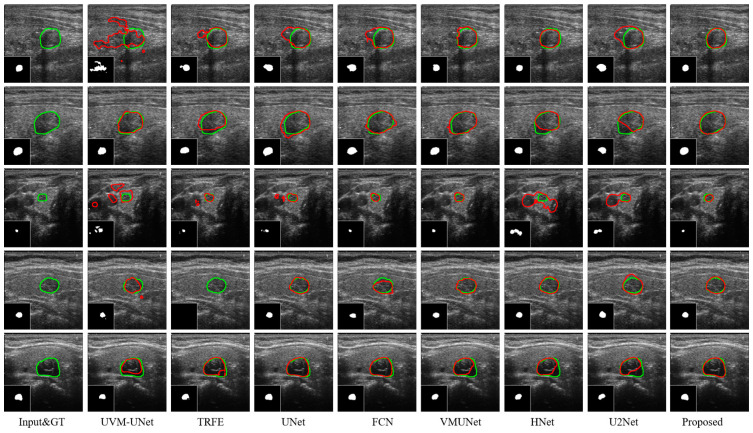
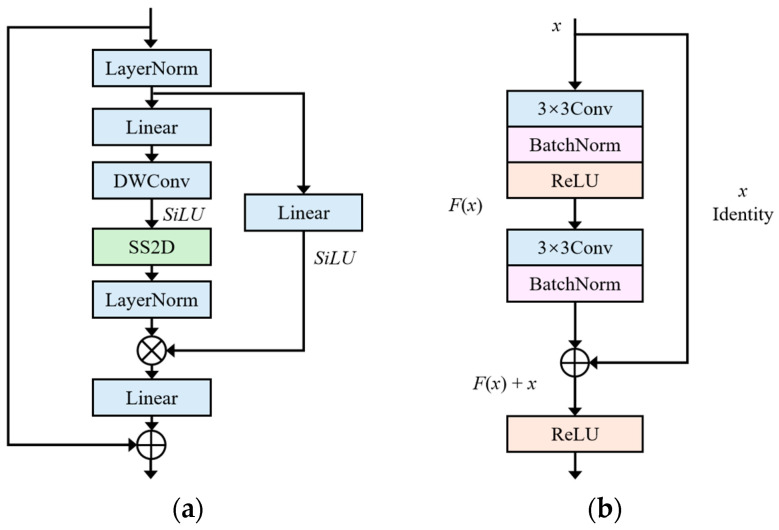
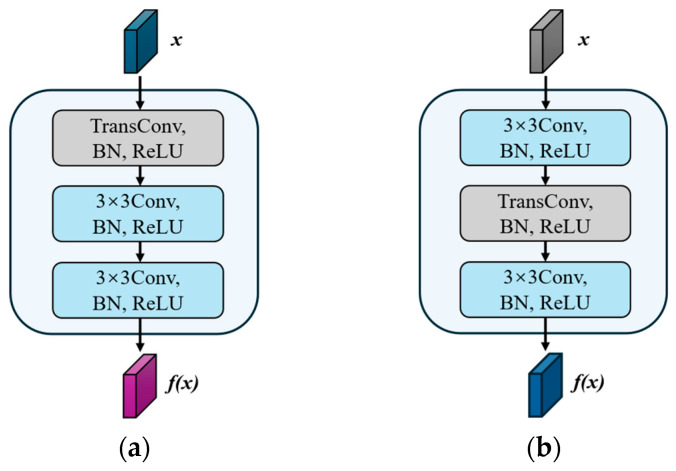
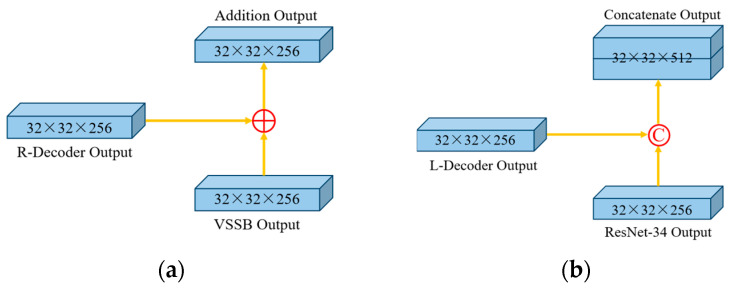
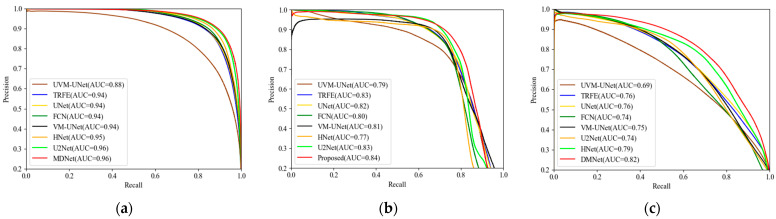
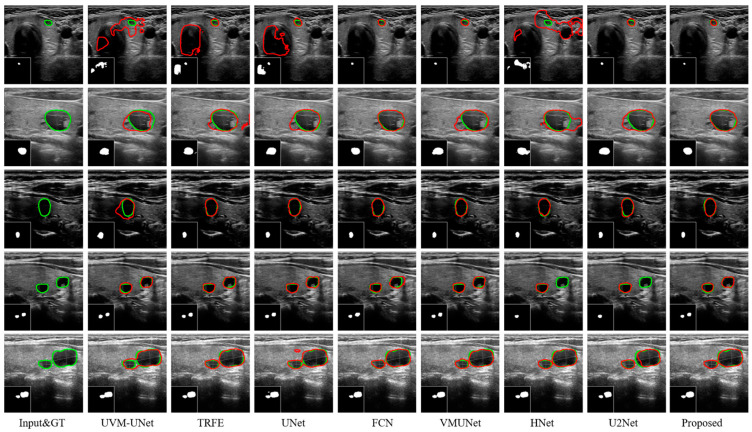
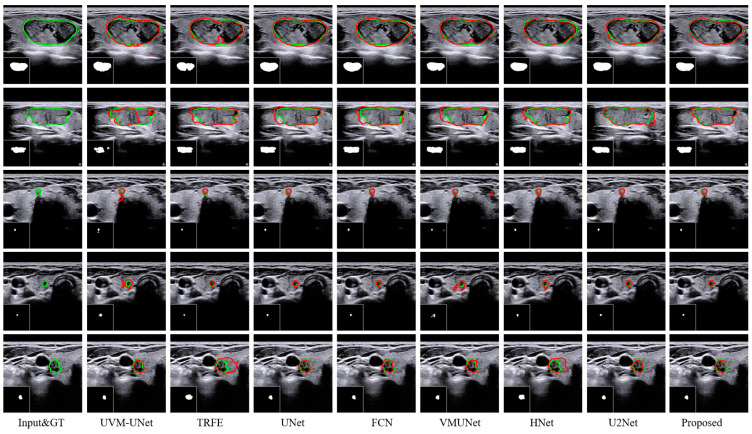
Accurate segmentation of thyroid nodules in ultrasound images is crucial for the diagnosis of thyroid cancer and preoperative planning. However, the segmentation of thyroid nodules is challenging due to their irregular shape, blurred boundary, and uneven echo texture. To address these challenges, a novel Mamba- and ResNet-based dual-branch network (MRDB) is proposed. Specifically, the visual state space block (VSSB) from Mamba and ResNet-34 are utilized to construct a dual encoder for extracting global semantics and local details, and establishing multi-dimensional feature connections. Meanwhile, an upsampling-convolution strategy is employed in the left decoder focusing on image size and detail reconstruction. A convolution-upsampling strategy is used in the right decoder to emphasize gradual feature refinement and recovery. To facilitate the interaction between local details and global context within the encoder and decoder, cross-skip connection is introduced. Additionally, a novel hybrid loss function is proposed to improve the boundary segmentation performance of thyroid nodules. Experimental results show that MRDB outperforms the state-of-the-art approaches with DSC of 90.02% and 80.6% on two public thyroid nodule datasets, TN3K and TNUI-2021, respectively. Furthermore, experiments on a third external dataset, DDTI, demonstrate that our method improves the DSC by 10.8% compared to baseline and exhibits good generalization to clinical small-scale thyroid nodule datasets. The proposed MRDB can effectively improve thyroid nodule segmentation accuracy and has great potential for clinical applications.
在超声图像中准确分割甲状腺结节对于甲状腺癌的诊断和术前规划至关重要。然而,由于甲状腺结节形状不规则、边界模糊以及回声纹理不均匀,其分割具有挑战性。为应对这些挑战,提出了一种基于曼巴(Mamba)和残差网络(ResNet)的新型双分支网络(MRDB)。具体而言,利用来自曼巴的视觉状态空间块(VSSB)和ResNet-34构建双编码器,用于提取全局语义和局部细节,并建立多维特征连接。同时,左解码器采用上采样 - 卷积策略,专注于图像尺寸和细节重建。右解码器使用卷积 - 上采样策略,以强调特征的逐步细化和恢复。为促进编码器和解码器内局部细节与全局上下文之间的交互,引入了交叉跳跃连接。此外,还提出了一种新型混合损失函数,以提高甲状腺结节的边界分割性能。实验结果表明,在两个公共甲状腺结节数据集TN3K和TNUI - 2021上,MRDB分别以90.02%和80.6%的DSC优于现有最先进方法。此外,在第三个外部数据集DDTI上的实验表明,与基线相比,我们的方法将DSC提高了10.8%,并且对临床小规模甲状腺结节数据集具有良好的泛化能力。所提出的MRDB能够有效提高甲状腺结节分割精度,具有很大的临床应用潜力。