Pacific Biosciences Research Center, University of Hawaii at Manoa, Honolulu, HI 96822, USA.
Department of Biology, University of Utah, Salt Lake City, UT 84115, USA.
Toxins (Basel). 2024 Oct 17;16(10):447. doi: 10.3390/toxins16100447.
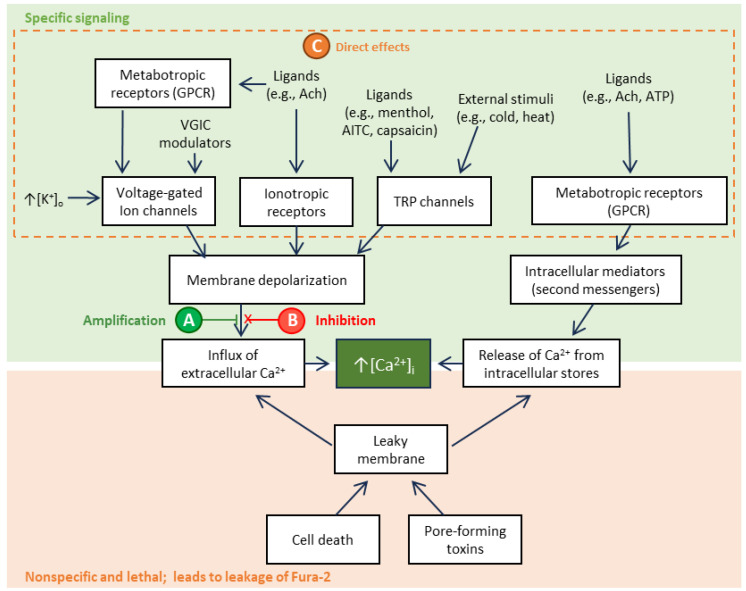
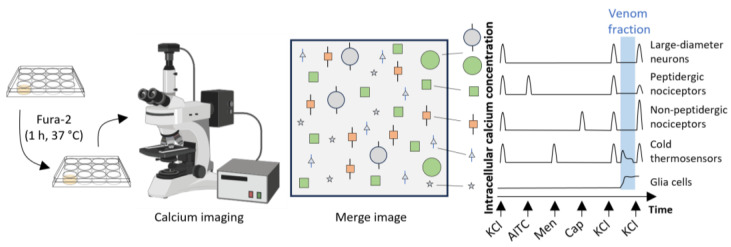
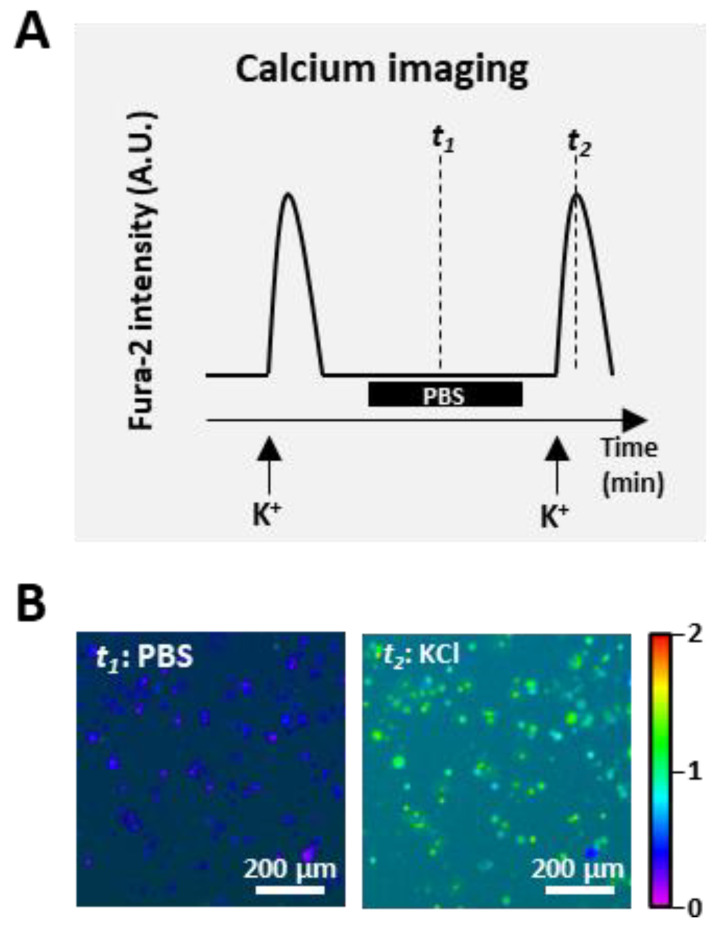
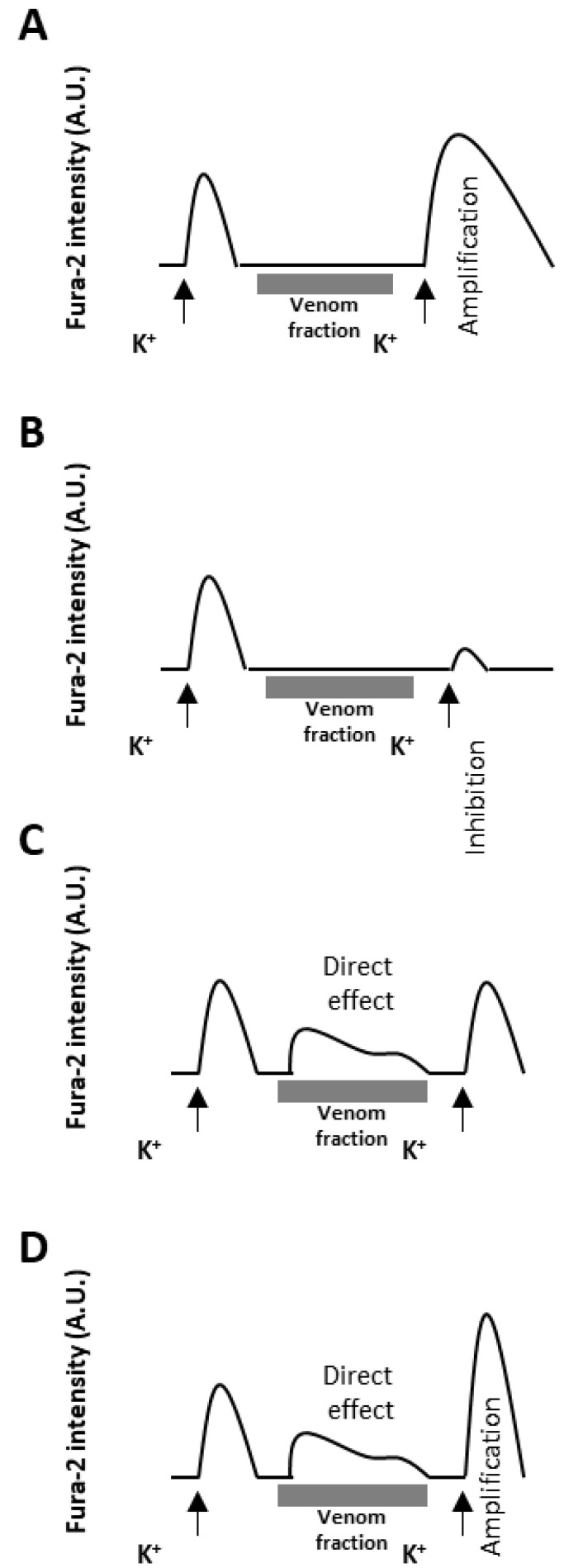
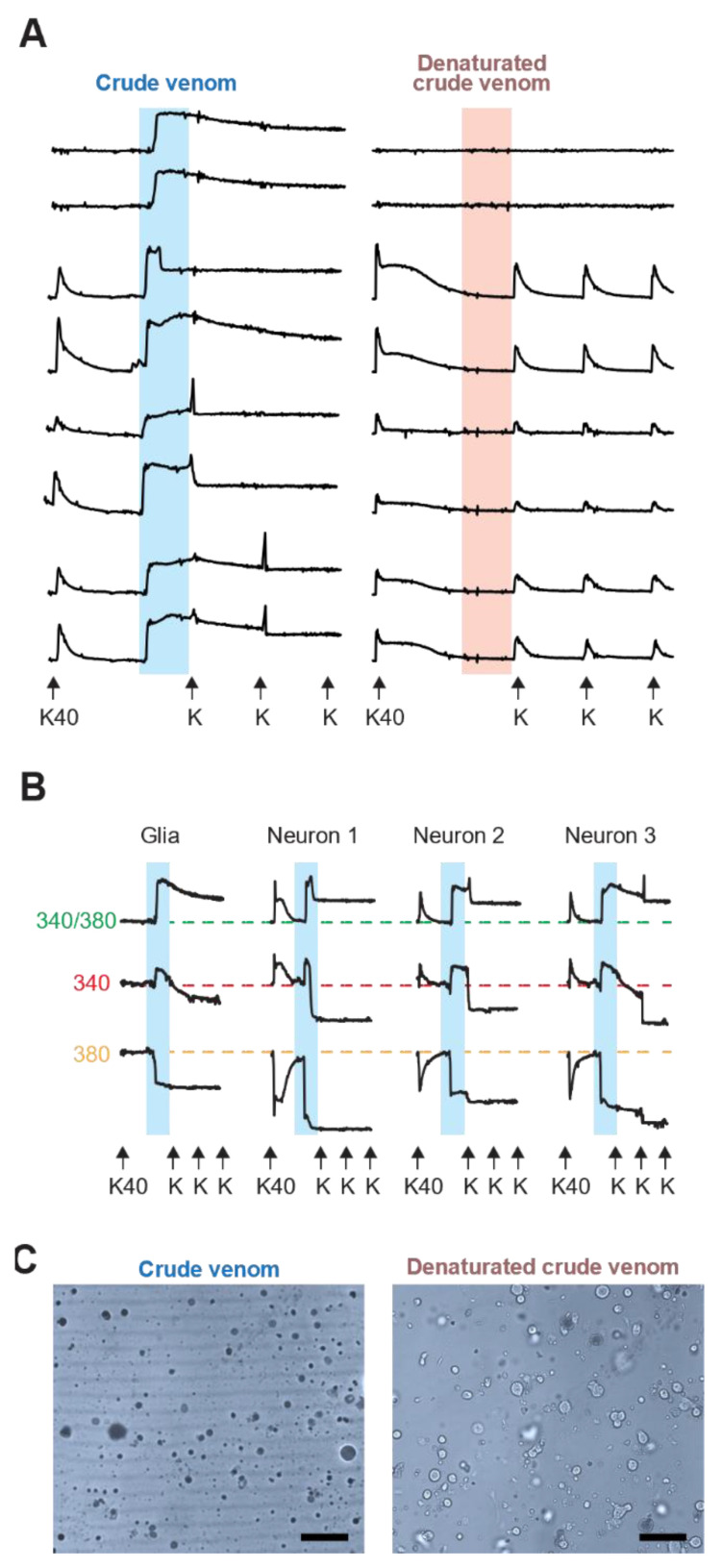
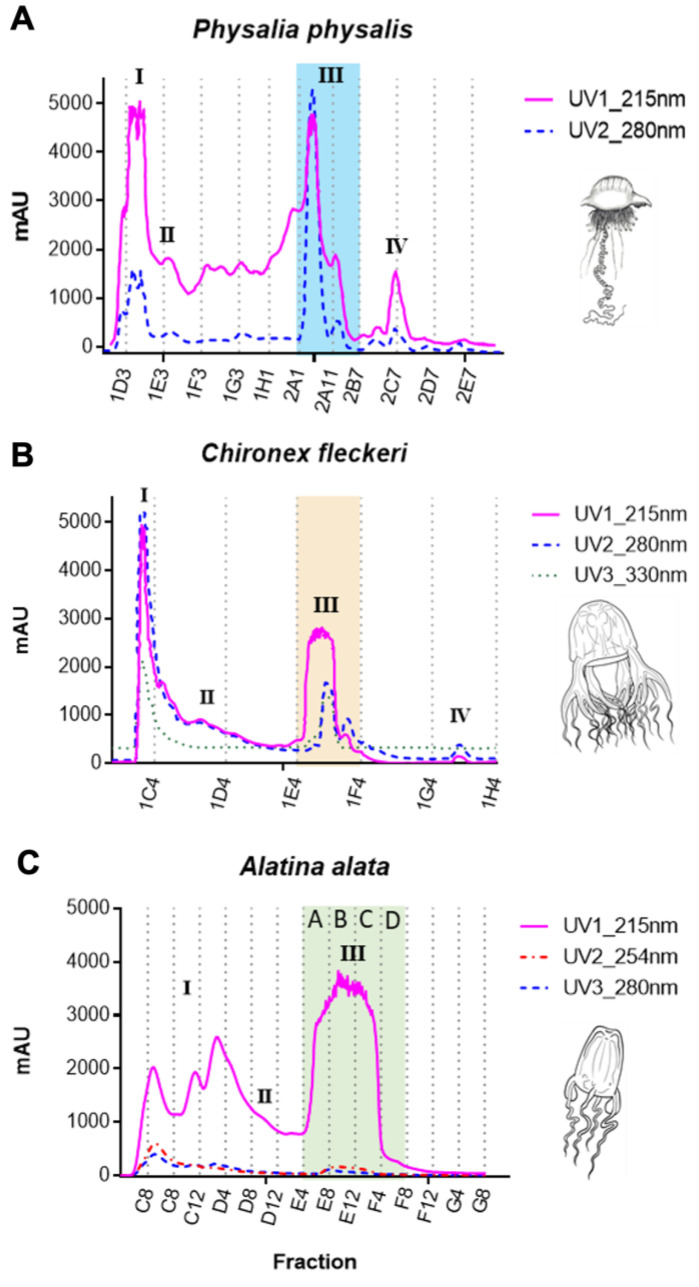
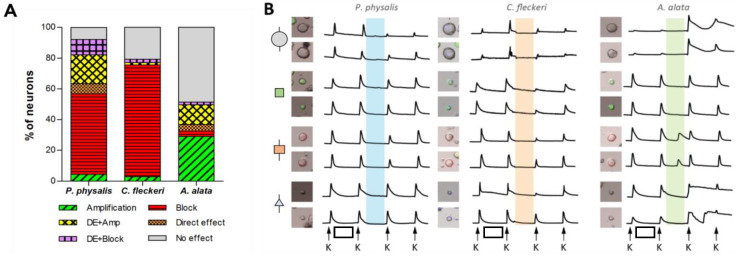
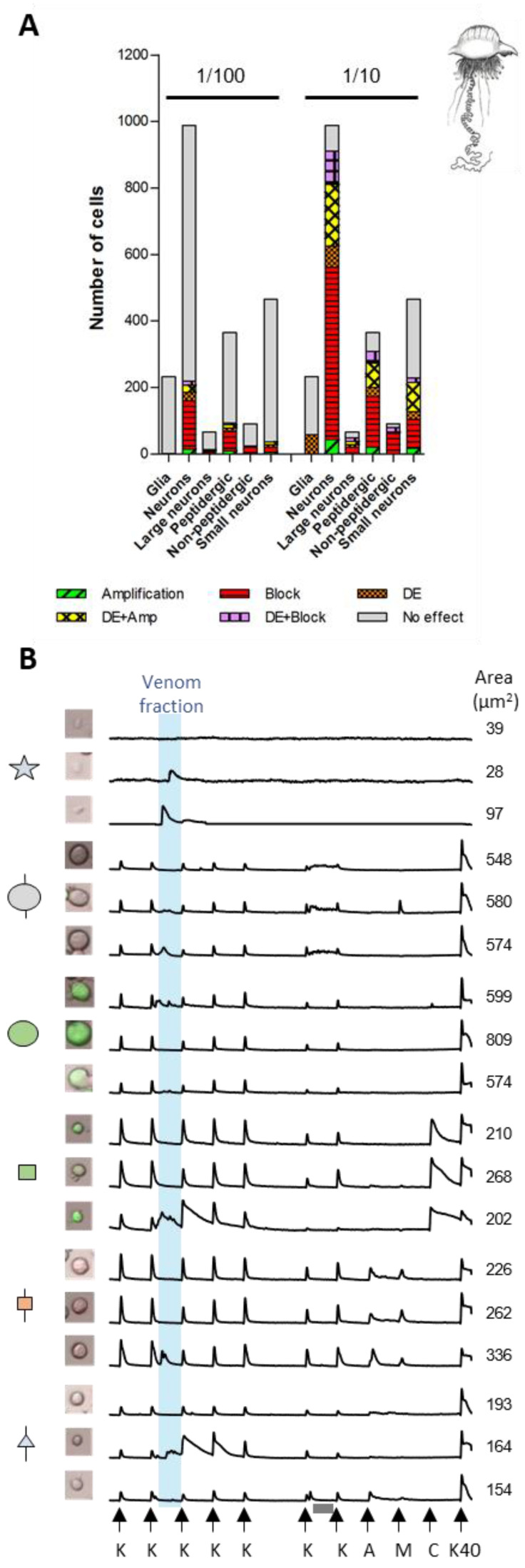
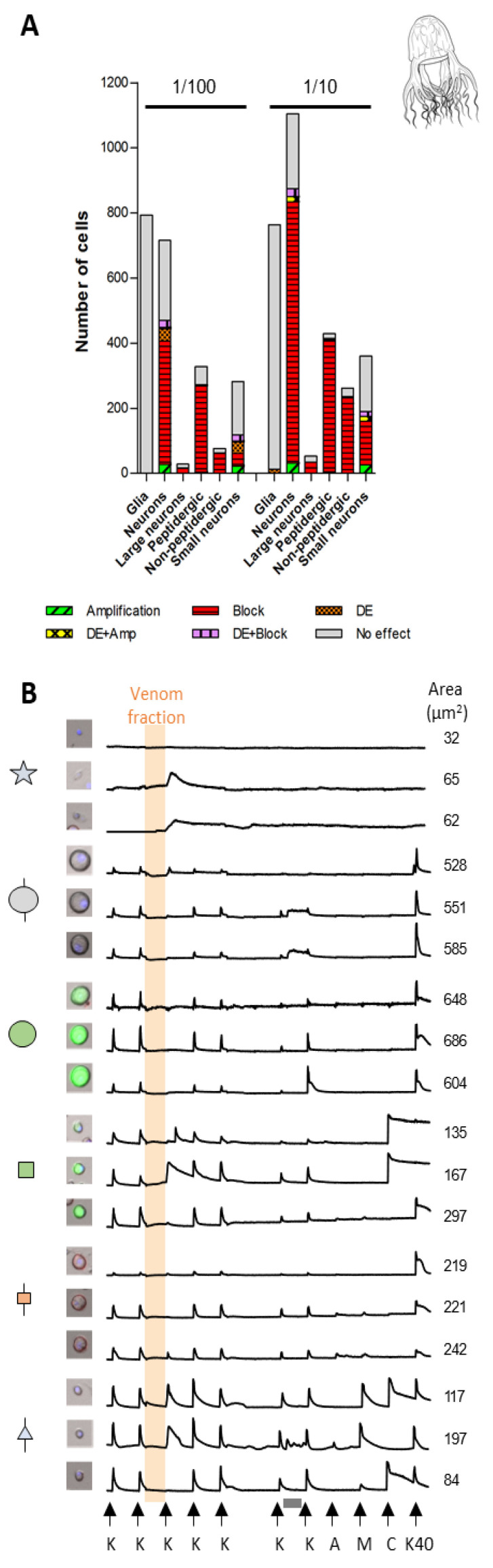
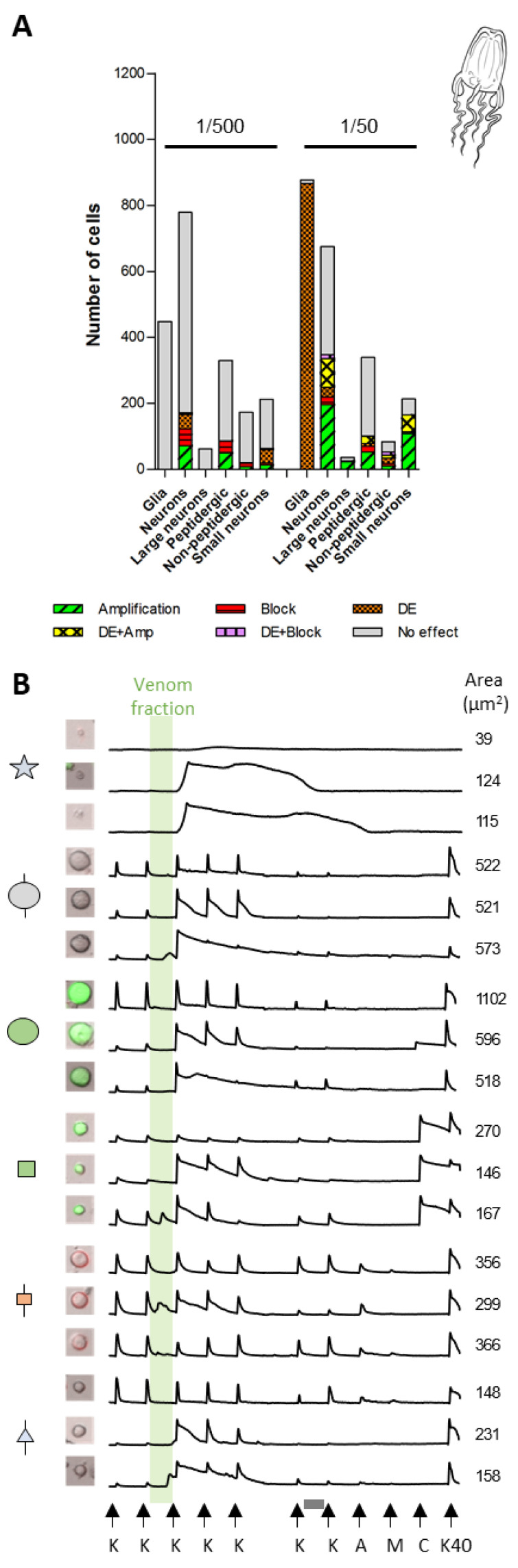
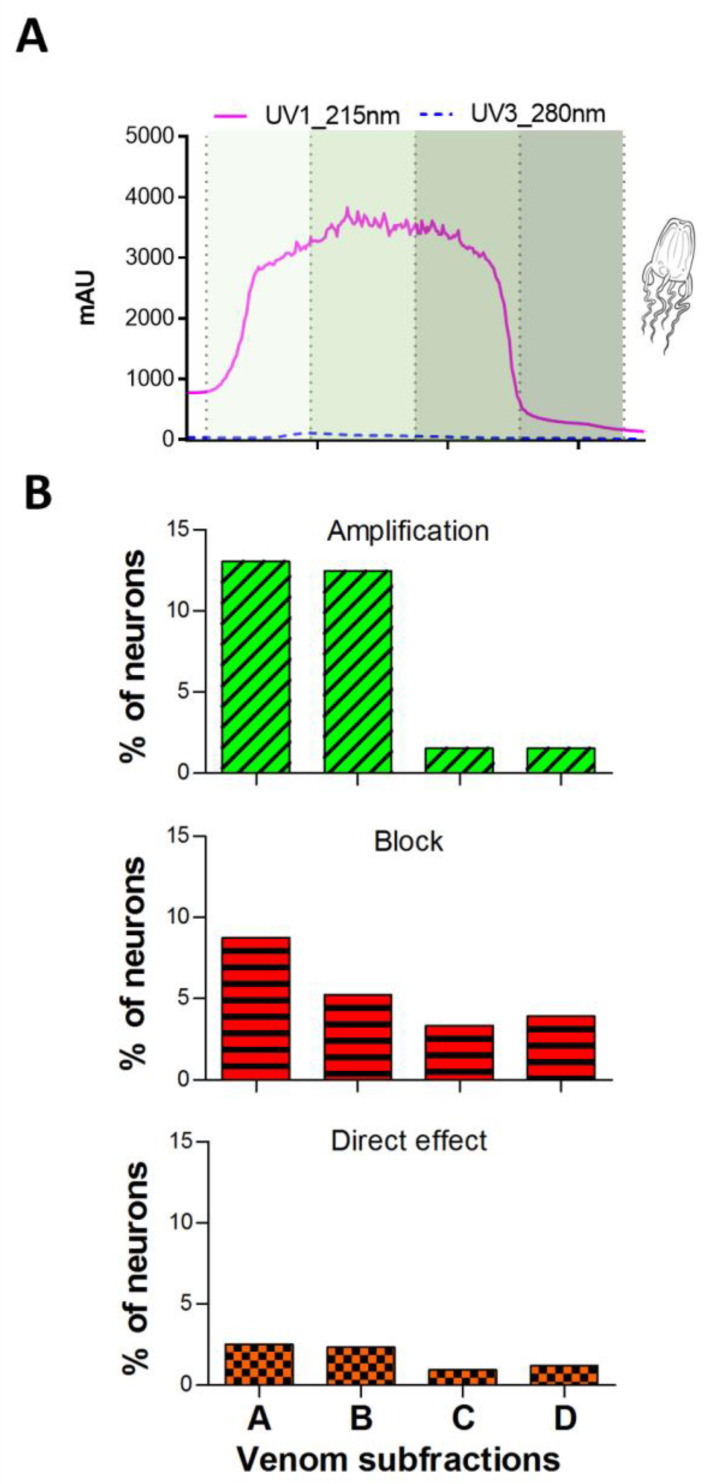
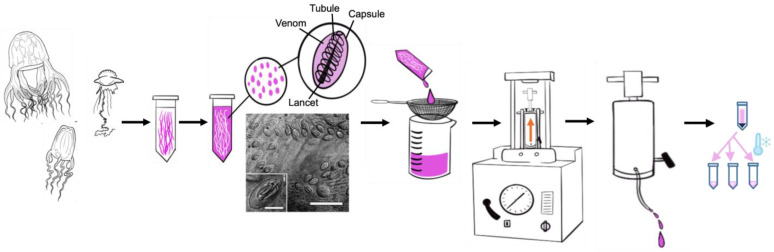
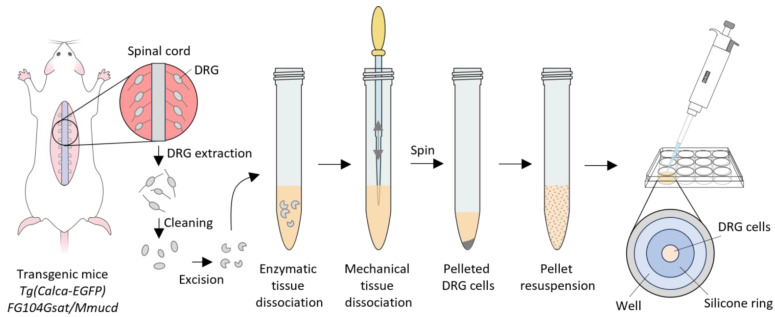
Within the phylum Cnidaria, sea anemones (class Anthozoa) express a rich diversity of ion-channel peptide modulators with biomedical applications, but corollary discoveries from jellyfish (subphylum Medusozoa) are lacking. To bridge this gap, bioactivities of previously unexplored proteinaceous and small molecular weight (~15 kDa to 5 kDa) venom components were assessed in a mouse dorsal root ganglia (DRG) high-content calcium-imaging assay, known as constellation pharmacology. While the addition of crude venom led to nonspecific cell death and Fura-2 signal leakage due to pore-forming activity, purified small molecular weight fractions of venom demonstrated three main, concentration-dependent and reversible effects on defined heterogeneous cell types found in the primary cultures of mouse DRG. These three phenotypic responses are herein referred to as phenotype A, B and C: excitatory amplification (A) or inhibition (B) of KCl-induced calcium signals, and test compound-induced disturbances to baseline calcium levels (C). Most notably, certain venom fractions showed phenotype A effects in all DRG neurons; and fractions predominantly showed phenotype B effects in small- and medium-diameter neurons. Finally, specific and venom components induced direct excitatory responses (phenotype C) in glial cells. These findings demonstrate a diversity of neuroactive compounds in jellyfish venom potentially targeting a constellation of ion channels and ligand-gated receptors with broad physiological implications.
在刺胞动物门中,海葵(类珊瑚纲)表达了丰富多样的具有生物医学应用的离子通道肽调节剂,但水母(亚门 Medusozoa)的相关发现却很少。为了弥补这一差距,我们在一种用于检测钙离子成像的小鼠背根神经节(DRG)高内涵细胞 assay 中评估了以前未被探索的蛋白质和小分子(~15 kDa 至 5 kDa)毒液成分的生物活性,这种 assay 被称为星座药理学。虽然粗毒液的添加由于形成孔的活性导致非特异性细胞死亡和 Fura-2 信号泄漏,但毒液的纯小分子分数在对从小鼠 DRG 原代培养物中发现的定义异质细胞类型的反应中表现出三种主要的、浓度依赖性和可逆的作用。这三种表型反应在此被称为表型 A、B 和 C:KCl 诱导的钙信号的兴奋放大(A)或抑制(B),以及测试化合物对基线钙水平的干扰(C)。值得注意的是,某些毒液部分在所有 DRG 神经元中均表现出表型 A 效应;而 和 部分在小和中直径神经元中主要表现出表型 B 效应。最后,特定的 和 毒液成分在神经胶质细胞中诱导直接兴奋反应(表型 C)。这些发现表明水母毒液中存在多种神经活性化合物,可能针对一组离子通道和配体门控受体,具有广泛的生理意义。