Tumor Virus RNA Biology Section, The HIV Dynamics and Replication Program, NCI, NIH, Frederick, Maryland, United States of America.
The Jake Gittlen Laboratories for Cancer Research, Department of Pathology and Laboratory Medicine, Pennsylvania State University College of Medicine, Hershey, Pennsylvania, United States of America.
PLoS Pathog. 2024 Oct 25;20(10):e1012649. doi: 10.1371/journal.ppat.1012649. eCollection 2024 Oct.
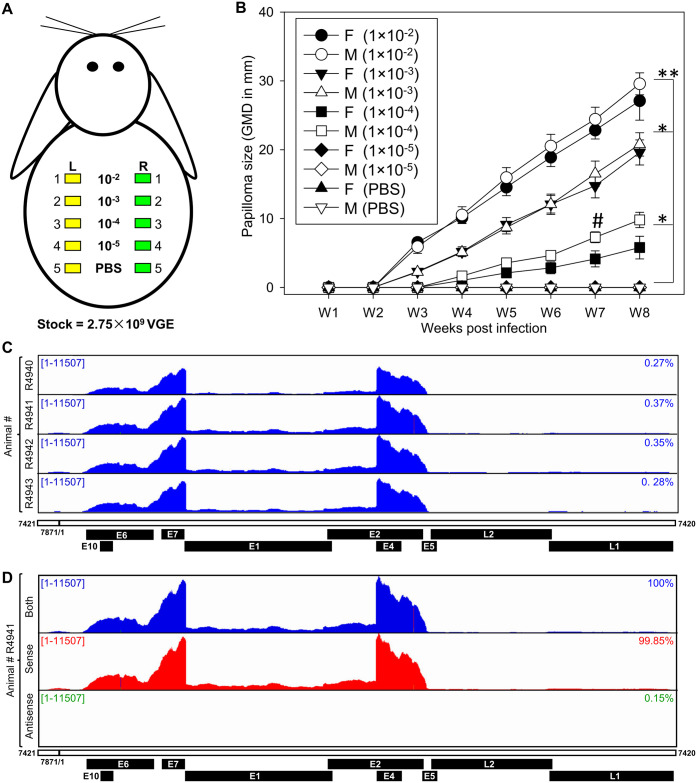
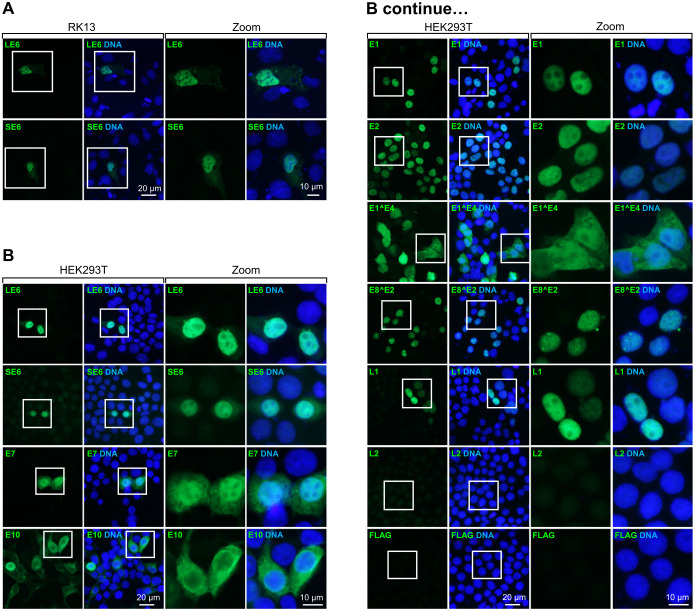
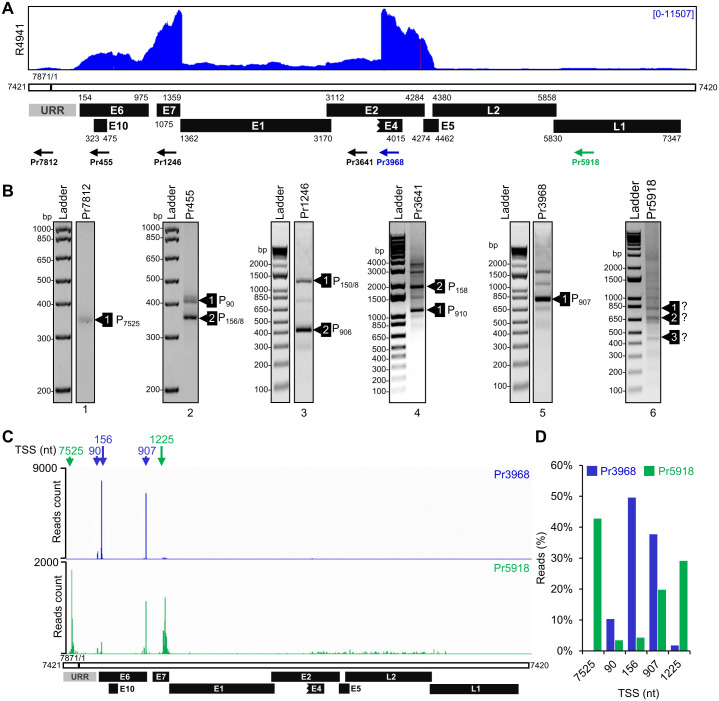
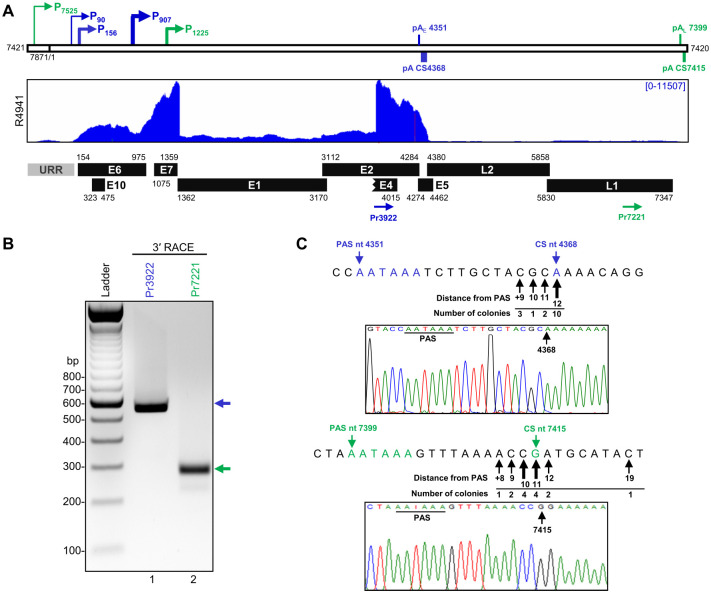
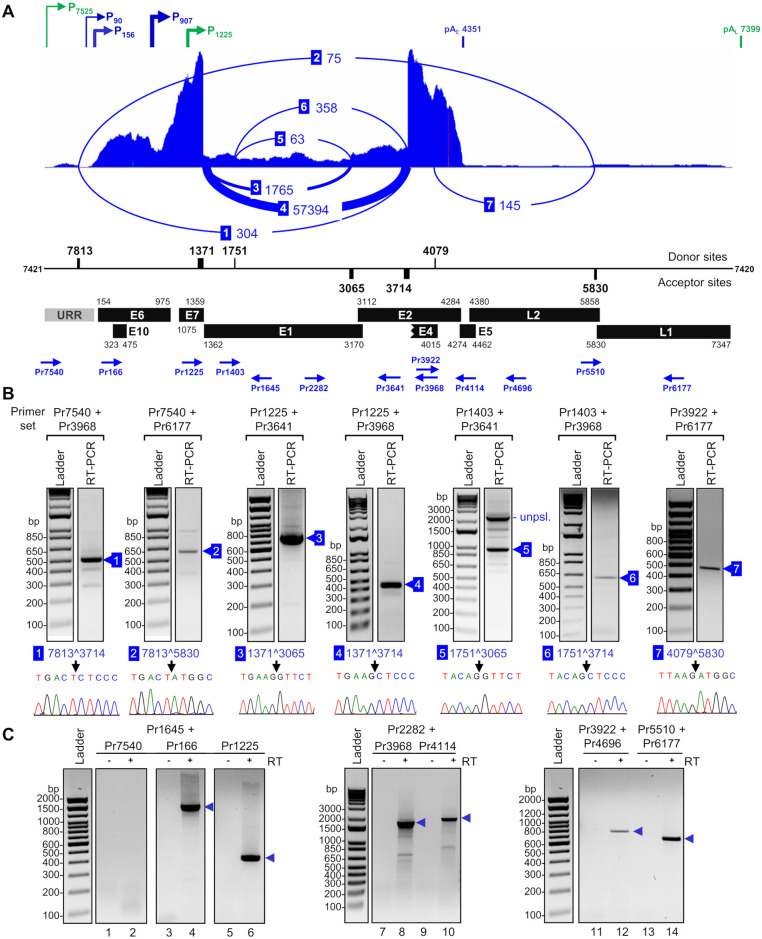
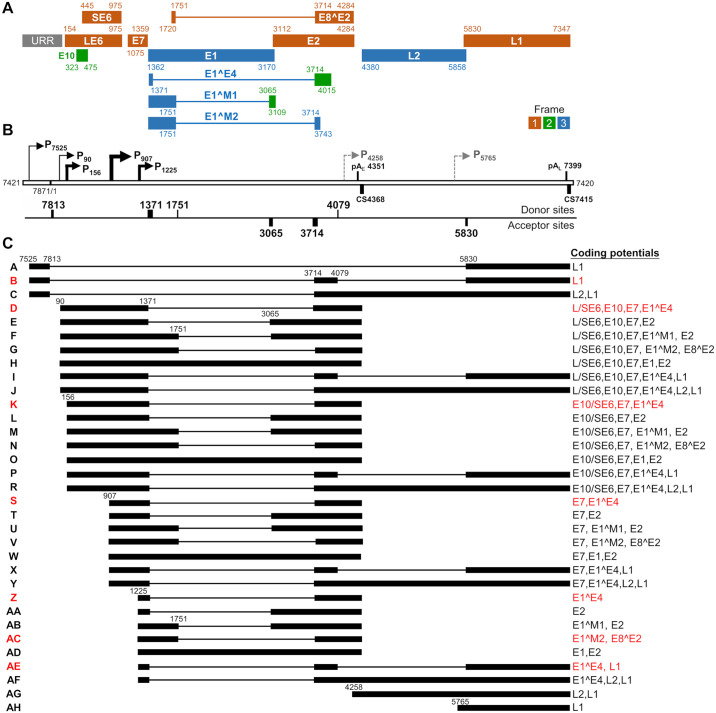
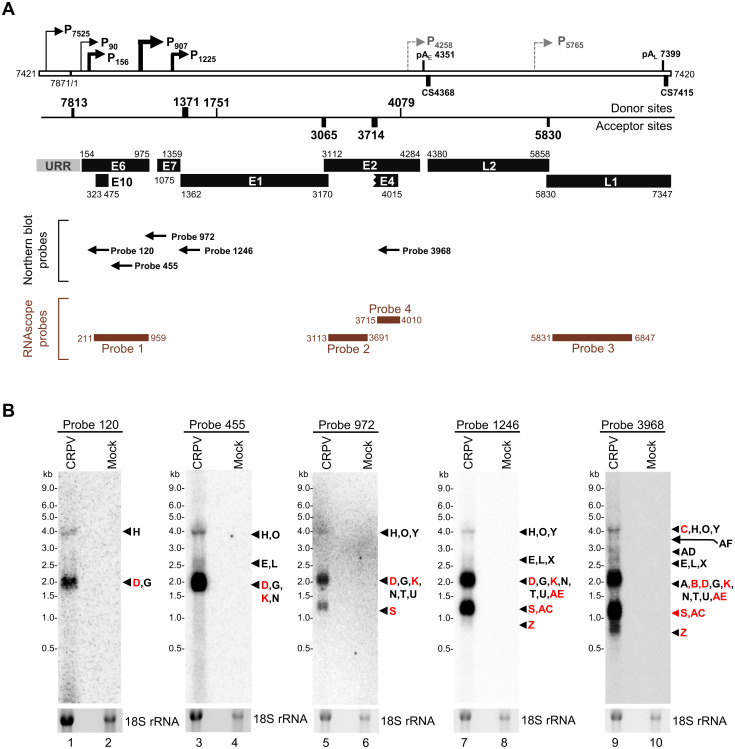
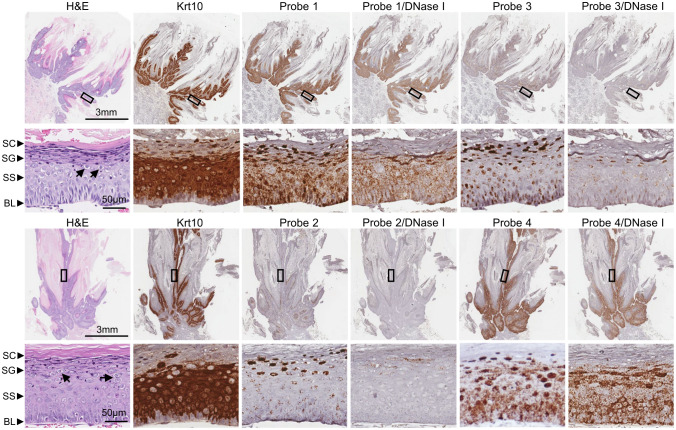
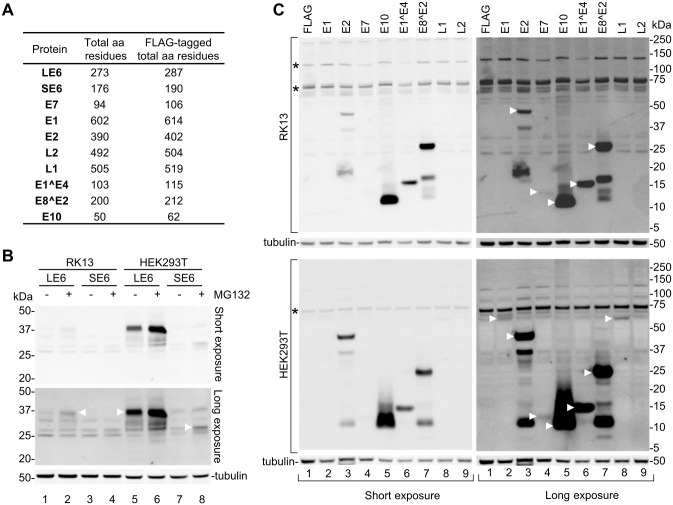
Cottontail rabbit papillomavirus (CRPV), the first papillomavirus associated with tumor development, has been used as a powerful model to study papillomavirus pathogenesis for more than 90 years. However, lack of a comprehensive analysis of the CRPV transcriptome has impeded the understanding of CRPV biology and molecular pathogenesis. Here, we report the construction of a complete CRPV transcription map from Hershey CRPV-induced skin tumor tissues. By using RNA-seq in combination with long-reads PacBio Iso-seq, 5' and 3' RACE, primer-walking RT-PCR, Northern blot, and RNA in situ hybridization, we demonstrated that the CRPV genome transcribes its early and late RNA transcripts unidirectionally from at least five distinct major promoters (P) and polyadenylates its transcripts at two major polyadenylation (pA) sites. The viral early transcripts are primarily transcribed from three "early" promoters, P90, P156, and P907 and polyadenylated at nt 4368 by using an early polyadenylation signal (PAS) at nt 4351. Like other low-risk human papillomaviruses and animal papillomaviruses, CRPV E6 and E7 transcripts are transcribed from three separate early promoters. Transcripts from two "late" promoters, P7525, and P1225, utilize either an early PAS for E1^E4 or a late PAS at 7399 for L2 and L1 RNA polyadenylation at nt 7415 to express capsid L2 and L1 proteins respectively. By using the mapped four 5' splice sites and three 3' splice sites, CRPV RNA transcripts undergo extensive alternative splicing to produce more than 33 viral RNA isoforms for production of at least 12 viral proteins, some of which without codon optimization are expressible in rabbit RK13 and human HEK293T cells. The constructed full CRPV transcription map in this study for the first time will enhance our understanding of the structures and expressions of CRPV genes and their contribution to molecular pathogenesis and tumorigenesis.
棉尾兔乳头瘤病毒 (CRPV) 是首个与肿瘤发展相关的乳头瘤病毒,已被用作研究乳头瘤病毒发病机制的强大模型超过 90 年。然而,缺乏对 CRPV 转录组的全面分析阻碍了对 CRPV 生物学和分子发病机制的理解。在这里,我们报告了从 Hershey CRPV 诱导的皮肤肿瘤组织中构建完整的 CRPV 转录图谱。通过使用 RNA-seq 结合长读长 PacBio Iso-seq、5' 和 3' RACE、引物行走 RT-PCR、Northern blot 和 RNA 原位杂交,我们证明了 CRPV 基因组从至少五个不同的主要启动子 (P) 单向转录其早期和晚期 RNA 转录物,并在两个主要聚腺苷酸化 (pA) 位点聚腺苷酸化其转录物。病毒早期转录物主要由三个“早期”启动子 P90、P156 和 P907 转录,并在 nt 4351 处使用早期聚腺苷酸化信号 (PAS) 在 nt 4368 处聚腺苷酸化。与其他低风险人乳头瘤病毒和动物乳头瘤病毒一样,CRPV E6 和 E7 转录物由三个独立的早期启动子转录。来自两个“晚期”启动子 P7525 和 P1225 的转录物分别使用早期 PAS 或在 7399 处的晚期 PAS 对 E1^E4 或 L2 和 L1 RNA 进行聚腺苷酸化,以分别在 nt 7415 处表达衣壳蛋白 L2 和 L1。通过使用映射的四个 5' 剪接位点和三个 3' 剪接位点,CRPV RNA 转录物经历广泛的选择性剪接,产生超过 33 种病毒 RNA 异构体,用于产生至少 12 种病毒蛋白,其中一些没有密码子优化,可在兔 RK13 和人 HEK293T 细胞中表达。本研究构建的完整 CRPV 转录图谱首次增强了我们对 CRPV 基因结构和表达的理解,以及它们对分子发病机制和肿瘤发生的贡献。