Laboratory for Chemical and Biological Crystallography, Division of Physical Chemistry, Ruđer Bošković Institute, Bijenička Cesta 54, 10000 Zagreb, Croatia.
Laboratory for Biomolecular Interactions and Spectroscopy, Division of Organic Chemistry and Biochemistry, Ruđer Bošković Institute, Bijenička Cesta 54, 10000 Zagreb, Croatia.
Int J Mol Sci. 2024 Oct 21;25(20):11314. doi: 10.3390/ijms252011314.
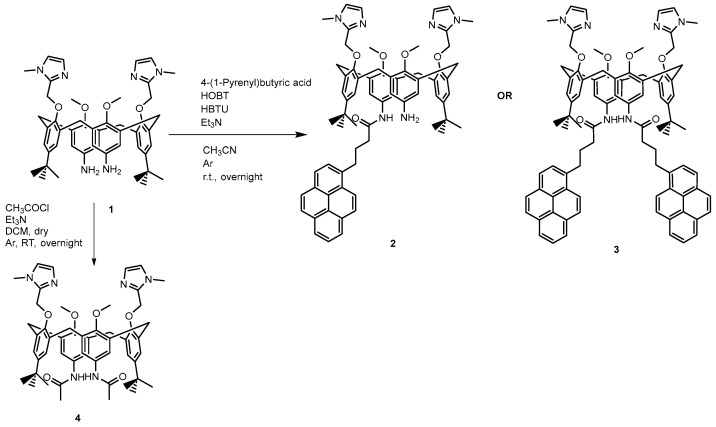
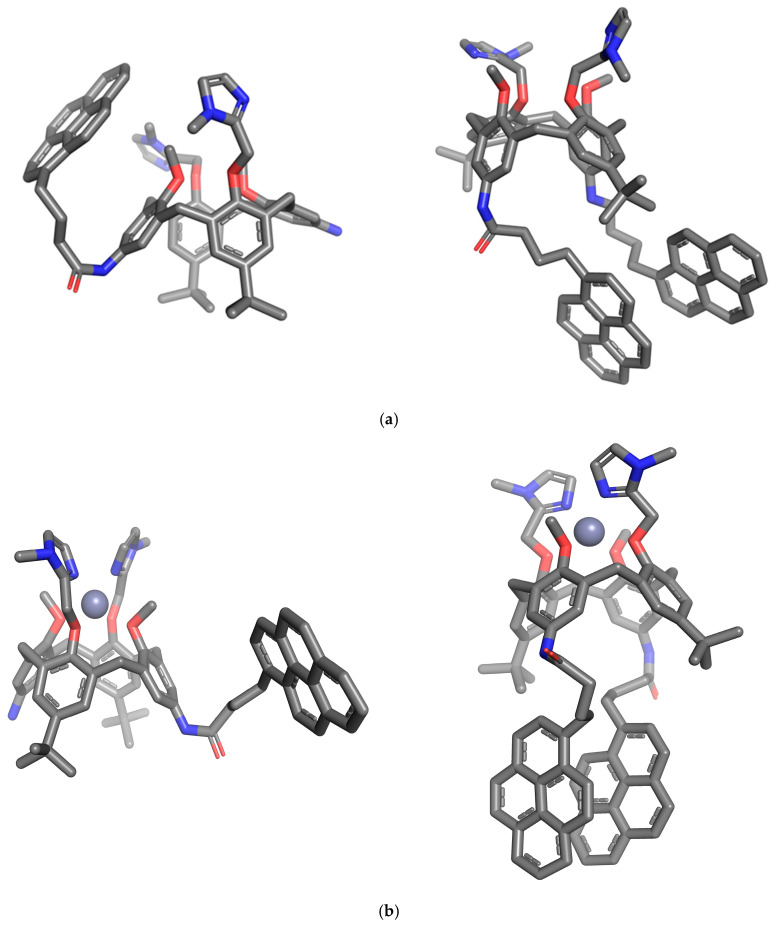
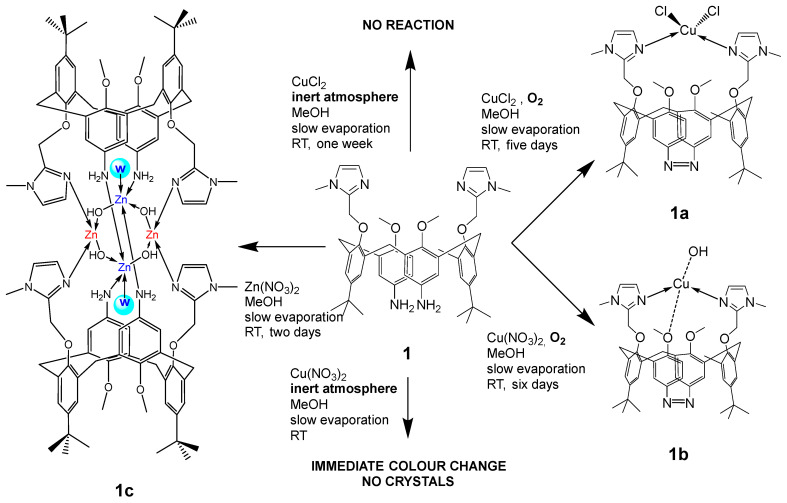
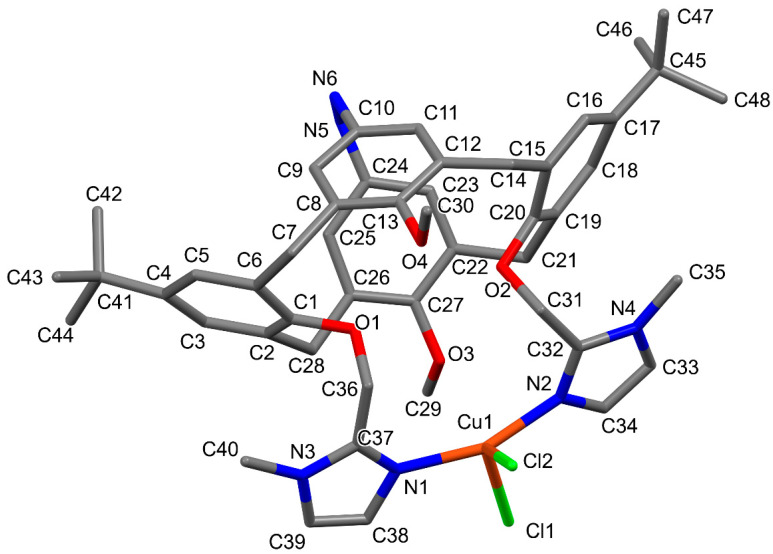
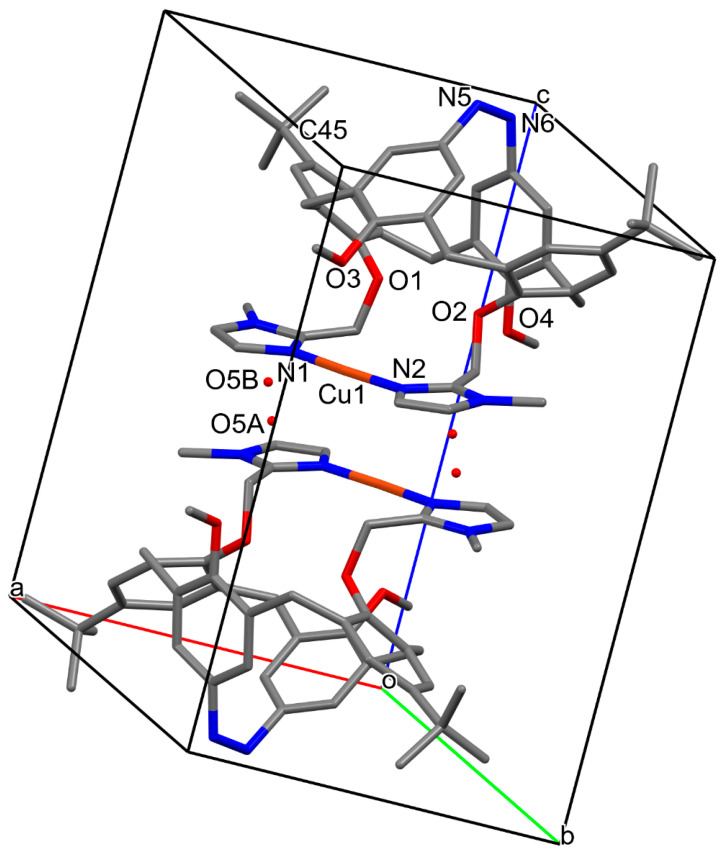
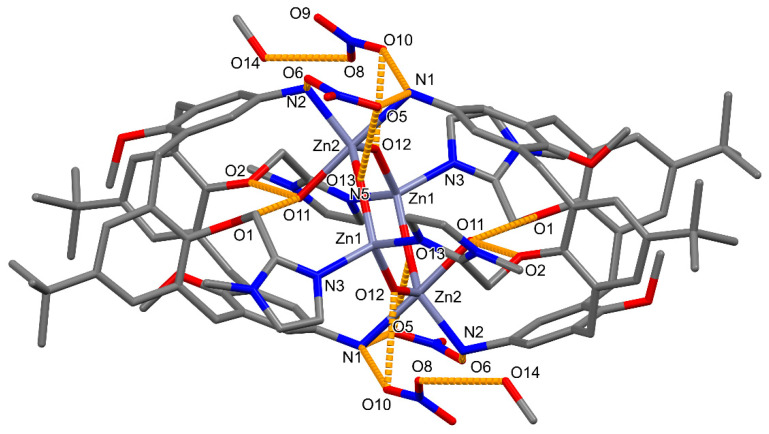
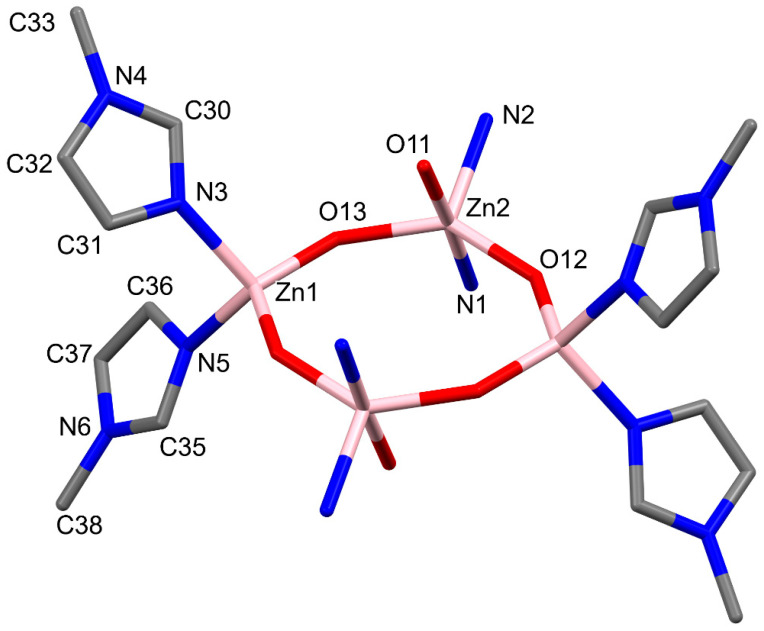
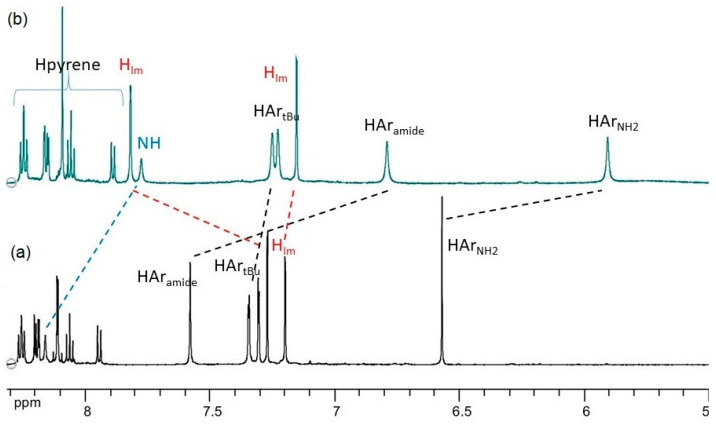
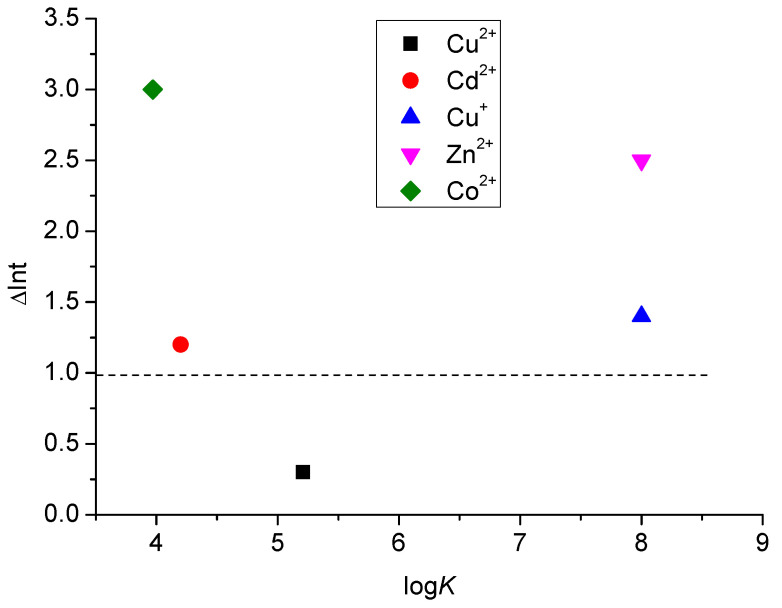
Herein, the presented results show that previously studied DNA/RNA-interacting bis-imidazole-calix[4]arene systems can, in aqueous solutions, efficiently bind a series of biorelevant transition metal cations by coordination with the two imidazole arms at the small rim of their macrocyclic basket. The SCXRD and NMR results structurally characterised the complexes formed by referent bis-imidazole-calix[4]arene with Cu and Zn. In solid-state (crystal), the bis-anilino derivative/Cu complex, only upon exposure to the air, undergoes intramolecular dehydrogenative coupling of two neighbouring aniline units, yielding an azo bridge at the large rim of the calix[4]arene basket. In the biorelevant aqueous solution, the comparison of fluorometric titrations of referent calix[4]arene, with its analogues having one or two pyrene units grafted at the opposite (large) rim, revealed moderate-to-strong affinity towards transition metal cations, and, more importantly, a strong impact of pyrene on the binding affinity towards some cations. The pyrene arm(s) significantly diminished the affinity of the calix[4]arene-imidazole ligand towards Cu and strongly increased the affinity towards divalent Co and Cd cations. Moreover, the fluorometric response of some studied derivatives was strappingly sensitive to cation type. Since the counter-anion plays only a marginal role, such a change in selectivity is attributed to the intramolecular interaction of pyrene(s) with the calix[4]arene-imidazole system, sterically controlling the metal cation binding site.
在此,所呈现的结果表明,以前研究过的 DNA/RNA 相互作用的双咪唑-杯[4]芳烃系统可以在水溶液中通过与大环篮的小边缘上的两个咪唑臂配位,有效地结合一系列生物相关的过渡金属阳离子。SCXRD 和 NMR 结果从结构上表征了参考双咪唑-杯[4]芳烃与 Cu 和 Zn 形成的配合物。在固态(晶体)中,只有在暴露于空气中时,双苯胺衍生物/Cu 配合物才会在杯[4]芳烃篮的大边缘发生两个相邻苯胺单元的分子内脱氢偶联,生成偶氮桥。在生物相关的水溶液中,参考杯[4]芳烃及其在相反(大)边缘接枝有一个或两个芘单元的类似物的荧光滴定比较表明,它们对过渡金属阳离子具有中等至强的亲和力,更重要的是,芘对某些阳离子的结合亲和力有很大影响。芘臂显著降低了杯[4]芳烃-咪唑配体对 Cu 的亲和力,并强烈增加了对二价 Co 和 Cd 阳离子的亲和力。此外,一些研究衍生物的荧光响应对阳离子类型具有很强的敏感性。由于抗衡阴离子仅起次要作用,因此这种选择性的变化归因于芘(s)与杯[4]芳烃-咪唑体系的分子内相互作用,空间控制金属阳离子结合位点。