Lenda Bartosz, Żebrowska-Nawrocka Marta, Balcerczak Ewa
Department of Pharmaceutical Biochemistry and Molecular Diagnostics, Medical University of Lodz, Muszynskiego 1, 90-151 Lodz, Poland.
Biomedicines. 2024 Oct 1;12(10):2236. doi: 10.3390/biomedicines12102236.
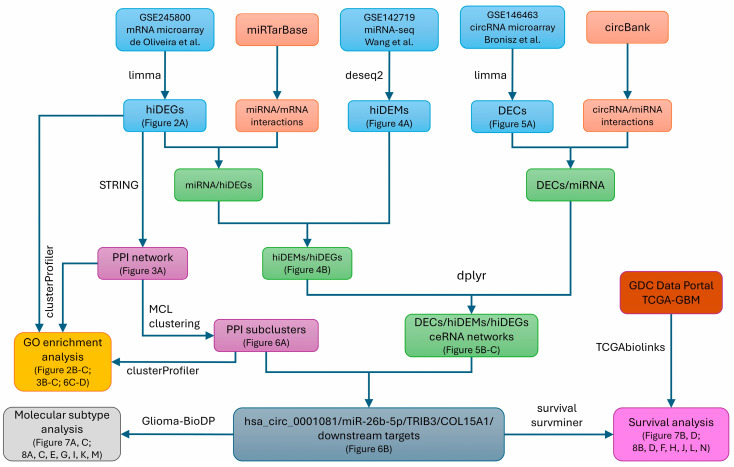
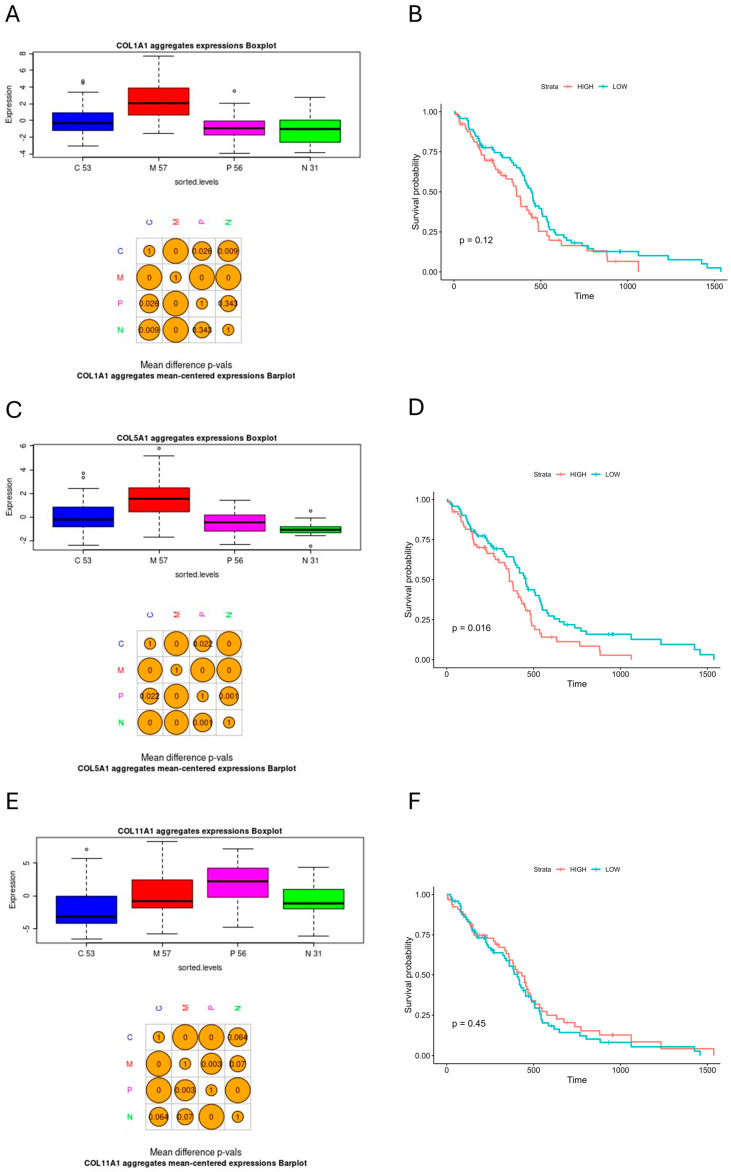
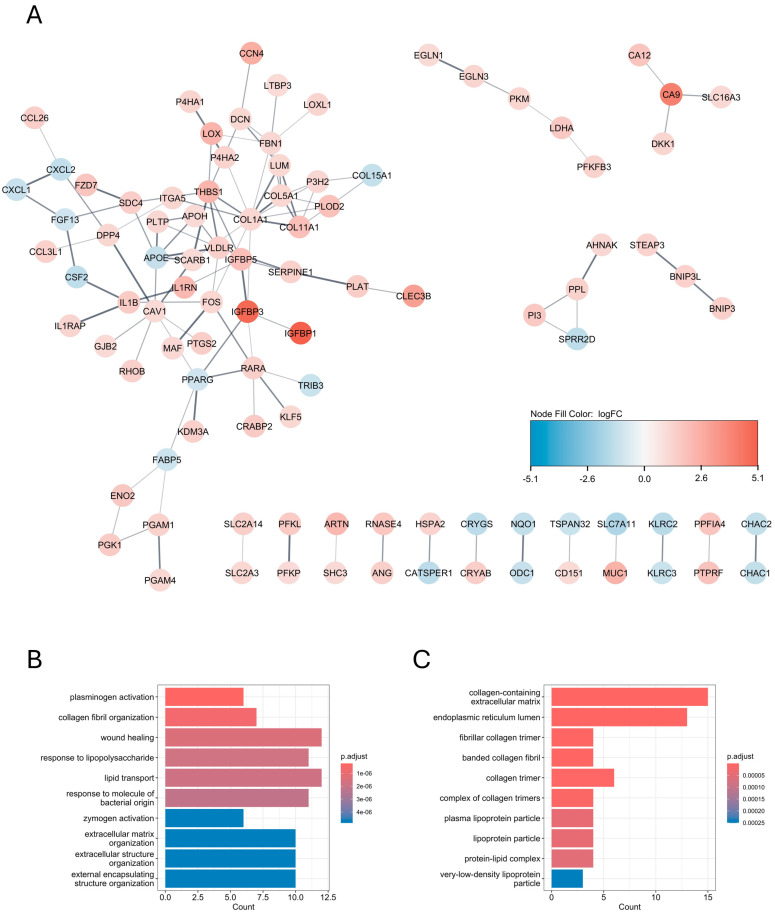
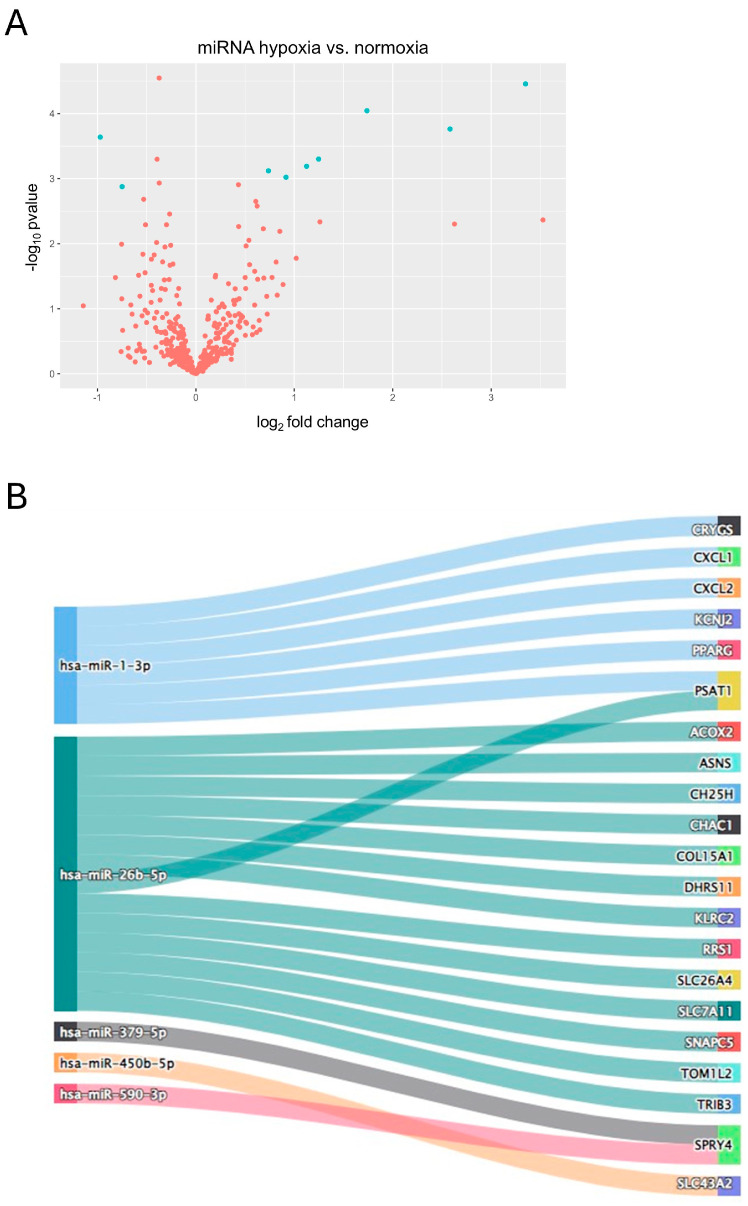
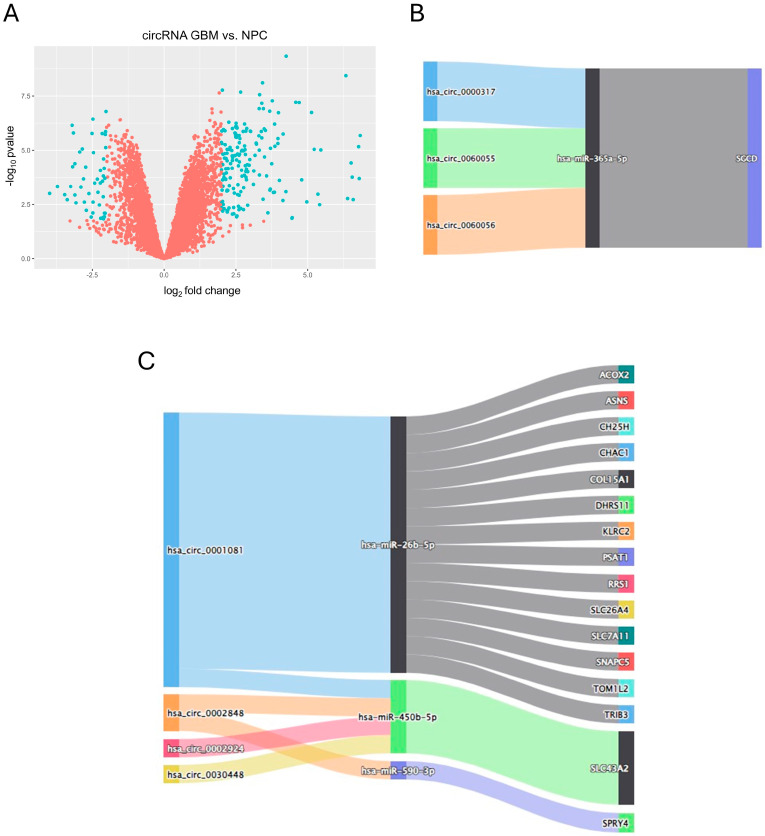
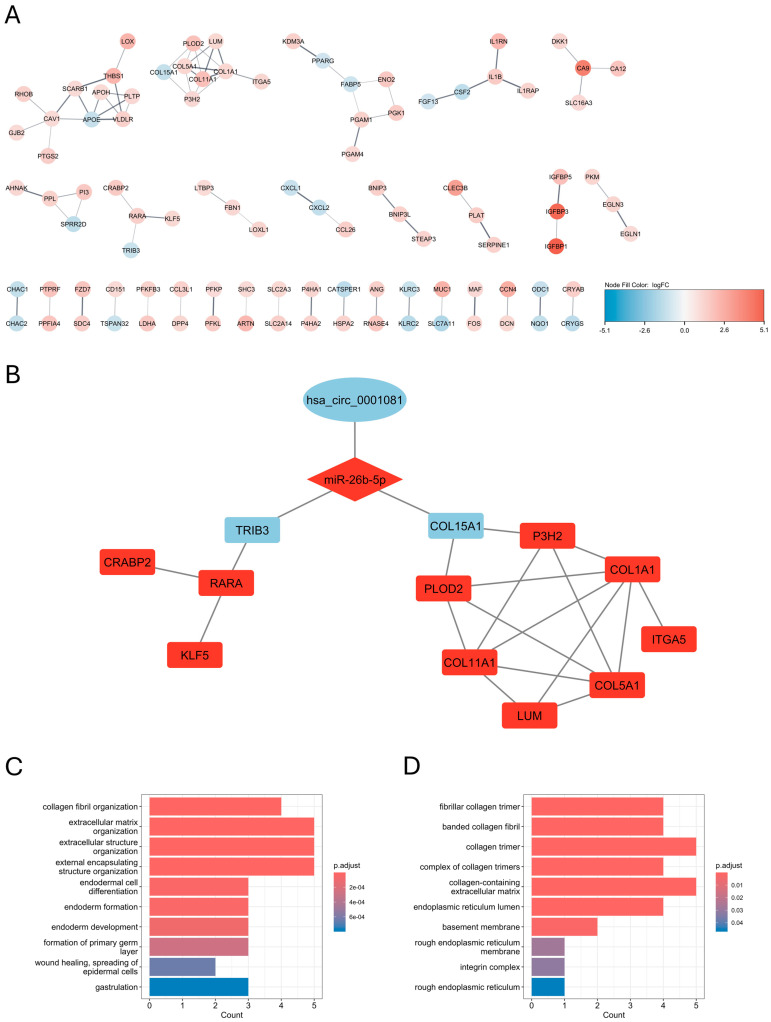
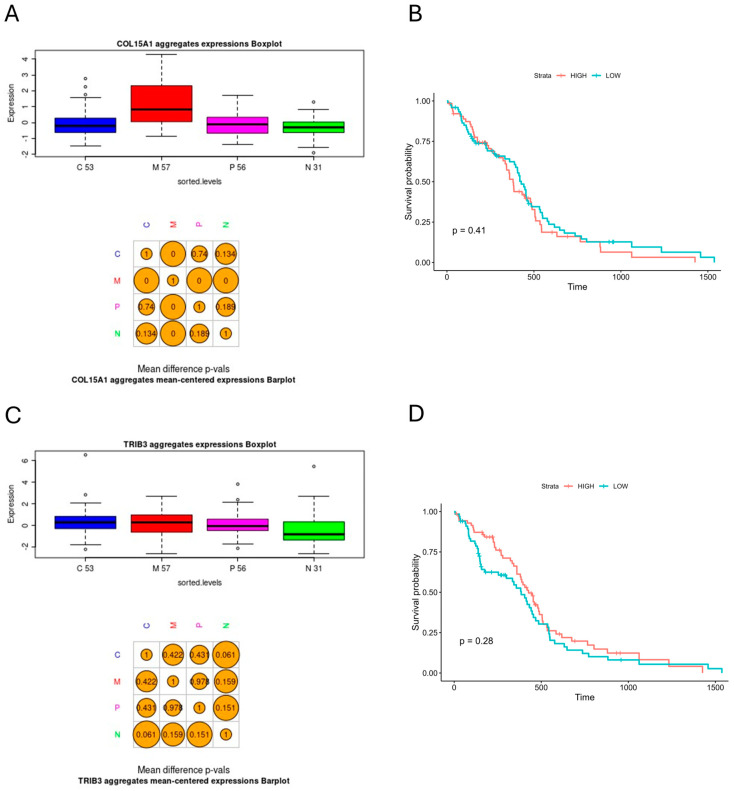
The intrinsic molecular heterogeneity of glioblastoma (GBM) is one of the main reasons for its resistance to conventional treatment. Mesenchymal GBM niches are associated with hypoxic signatures and a negative influence on patients' prognosis. To date, competing endogenous RNA (ceRNA) networks have been shown to have a broad impact on the progression of various cancers. In this study, we decided to construct hypoxia-specific microRNA/ messengerRNA (miRNA/mRNA) networks with a putative circular RNA (circRNA) regulatory component using available bioinformatics tools. For ceRNA network construction, we combined publicly available data deposited in the Gene Expression Omnibus (GEO) and interaction pairs obtained from miRTarBase and circBank; a differential expression analysis of GBM cells was performed with limma and deseq2. For the gene ontology (GO) enrichment analysis, we utilized clusterProfiler; GBM molecular subtype analysis was performed in the Glioma Bio Discovery Portal (Glioma-BioDP). We observed that miR-26b-5p, generally considered a tumor suppressor, was upregulated under hypoxic conditions in U-87 MG cells. Moreover, miR-26b-5p could potentially inhibit , a gene associated with tumor proliferation. Protein-protein interaction (PPI) network and GO enrichment analyses identified a hypoxia-specific subcluster enriched in collagen-associated terms, with six genes highly expressed in the mesenchymal glioma group. This subcluster included hsa_circ_0001081/miR-26b-5p-affected , a gene downregulated in hypoxic U-87 MG cells yet highly expressed in the mesenchymal GBM subtype. The interplay between miR-26b-5p, , and suggests a complex regulatory mechanism that may influence the extracellular matrix composition and the mesenchymal transformation in GBM. However, the precise impact of the hsa_circ_0001081/miR-26b-5p axis on collagen-associated processes in hypoxia-induced GBM cells remains unclear and warrants further investigation.
胶质母细胞瘤(GBM)内在的分子异质性是其对传统治疗产生抗性的主要原因之一。间充质GBM微环境与缺氧特征以及对患者预后的负面影响相关。迄今为止,竞争性内源RNA(ceRNA)网络已被证明对各种癌症的进展具有广泛影响。在本研究中,我们决定使用可用的生物信息学工具构建具有假定环状RNA(circRNA)调控成分的缺氧特异性微小RNA/信使RNA(miRNA/mRNA)网络。对于ceRNA网络构建,我们整合了存于基因表达综合数据库(GEO)中的公开可用数据以及从miRTarBase和circBank获得的相互作用对;使用limma和deseq2对GBM细胞进行差异表达分析。对于基因本体(GO)富集分析,我们使用了clusterProfiler;在胶质瘤生物发现门户(Glioma - BioDP)中进行GBM分子亚型分析。我们观察到,通常被认为是肿瘤抑制因子的miR - 26b - 5p在U - 87 MG细胞的缺氧条件下上调。此外,miR - 26b - 5p可能潜在抑制 ,一个与肿瘤增殖相关的基因。蛋白质 - 蛋白质相互作用(PPI)网络和GO富集分析确定了一个富含胶原蛋白相关术语的缺氧特异性亚簇,在间充质胶质瘤组中有六个基因高表达。该亚簇包括hsa_circ_0001081/miR - 26b - 5p影响的 ,一个在缺氧的U - 87 MG细胞中下调但在间充质GBM亚型中高表达的基因。miR - 26b - 5p、 和 之间的相互作用表明了一种复杂的调控机制,可能影响GBM中的细胞外基质组成和间充质转化。然而,hsa_circ_0001081/miR - 26b - 5p轴对缺氧诱导的GBM细胞中胶原蛋白相关过程的确切影响仍不清楚,值得进一步研究。