Jiang Bixuan, Li Xiangyi, Li Mo, Zhou Wei, Zhao Mingzhe, Wu Hao, Zhang Na, Shen Lu, Wan Chunling, He Lin, Huai Cong, Qin Shengying
Bio-X Institutes, Key Laboratory for the Genetics of Developmental and Neuropsychiatric Disorders (Ministry of Education), Shanghai Jiao Tong University, Shanghai 200030, China.
Department of Cardiology of The Second Affiliated Hospital, School of Medicine, Zhejiang University, Hangzhou 310009, China.
Biomedicines. 2024 Oct 10;12(10):2298. doi: 10.3390/biomedicines12102298.
Myocardial Infarction (MI) and severe mental disorders (SMDs) are two types of highly prevalent and complex disorders and seem to have a relatively high possibility of mortality. However, the contributions of common and rare genetic variants to their comorbidity arestill unclear.
We conducted a combined genome-wide association study (GWAS) and exome-wide association study (EWAS) approach.
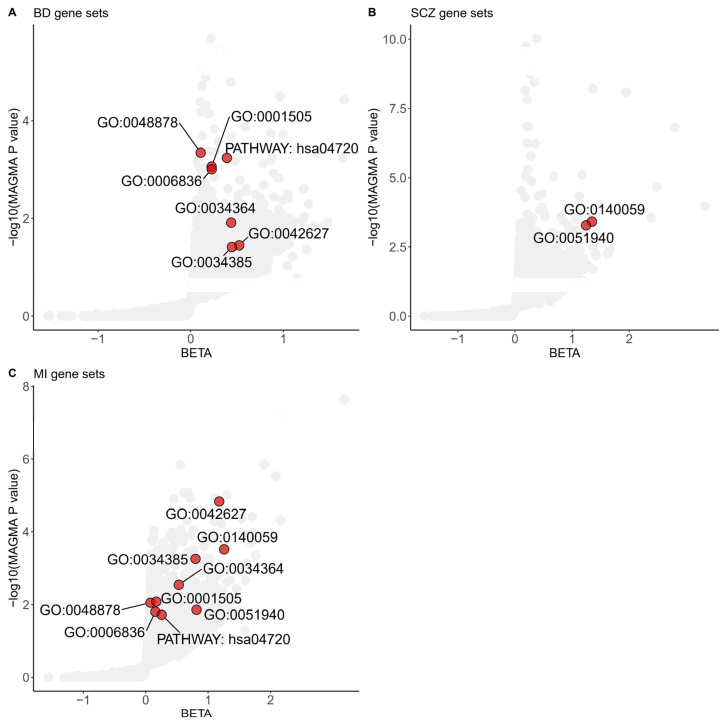
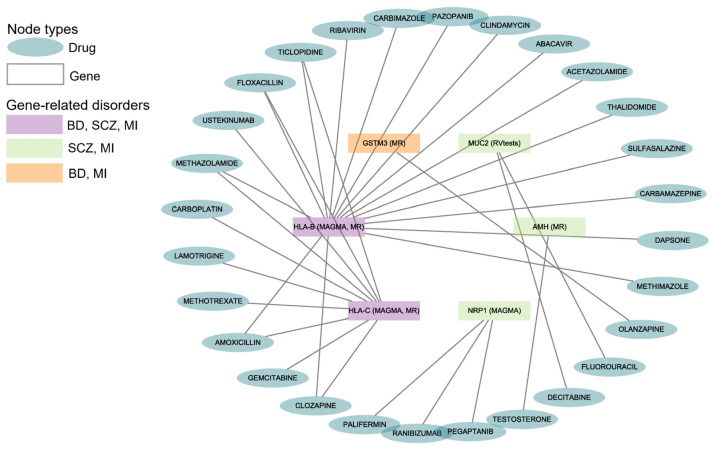
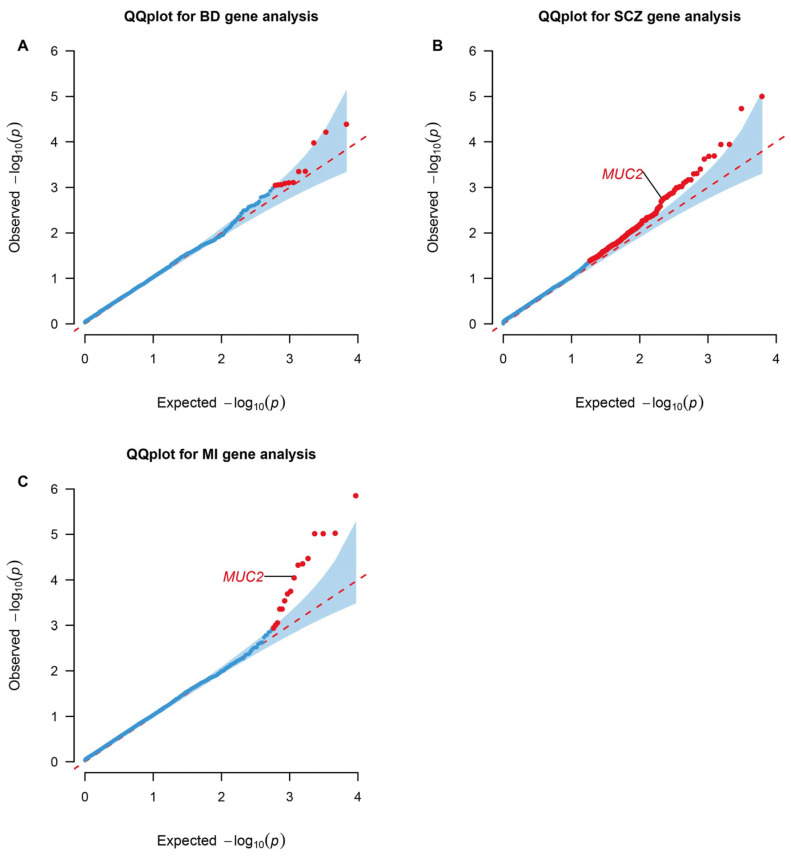
Using gene-based and gene-set association analyses based on the results of GWAS, we found the common genetic underpinnings of nine genes (, , , , , , , , and ) and nine pathways significantly shared between MI and SMDs. Through Mendelian randomization analysis, we found that twenty-seven genes were potential causal genes for SMDs and MI. Based on the exome sequencing data of MI and SMDs patients from the UK Biobank, we found that was exome-wide significant in the two diseases. The gene-set analyses of the exome-wide association study indicated that pathways related to insulin processing androgen catabolic process and angiotensin receptor binding may be involved in the comorbidity between SMDs and MI. We also found that six candidate genes were reported to interact with known therapeutic drugs based on the drug-gene interaction information in DGIdb.
Altogether, this study revealed the overlap of common and rare genetic underpinning between SMDs and MI and may provide useful insights for their mechanism study and therapeutic investigations.
心肌梗死(MI)和严重精神障碍(SMD)是两种高度流行且复杂的疾病类型,似乎具有相对较高的死亡可能性。然而,常见和罕见基因变异对它们共病的影响仍不清楚。
我们采用了全基因组关联研究(GWAS)和外显子组关联研究(EWAS)相结合的方法。
基于GWAS结果进行基于基因和基因集的关联分析,我们发现了MI和SMD之间九个基因(、、、、、、、、和)以及九条通路的共同遗传基础。通过孟德尔随机化分析,我们发现27个基因是SMD和MI的潜在因果基因。基于英国生物银行中MI和SMD患者的外显子组测序数据,我们发现该基因在这两种疾病中具有全外显子组显著性。外显子组关联研究的基因集分析表明,与胰岛素加工、雄激素分解代谢过程和血管紧张素受体结合相关的通路可能参与了SMD和MI之间的共病。我们还发现,根据DGIdb中的药物-基因相互作用信息,有六个候选基因被报道与已知治疗药物相互作用。
总之,本研究揭示了SMD和MI之间常见和罕见遗传基础的重叠,可能为它们的机制研究和治疗研究提供有用的见解。