Cao Lei, Du Tao, Wang Hao, Cheng Zhen-Yu, Wang Yi-Song, Zhou Li-Feng
State Environmental Protection Key Laboratory of Eco-Industry, School of Metallurgy, Northeastern University, Shenyang 110819, China.
Engineering Research Center of Frontier Technologies for Low-Carbon Steelmaking (Ministry of Education), School of Metallurgy, Northeastern University, Shenyang 110819, China.
Molecules. 2024 Oct 18;29(20):4929. doi: 10.3390/molecules29204929.
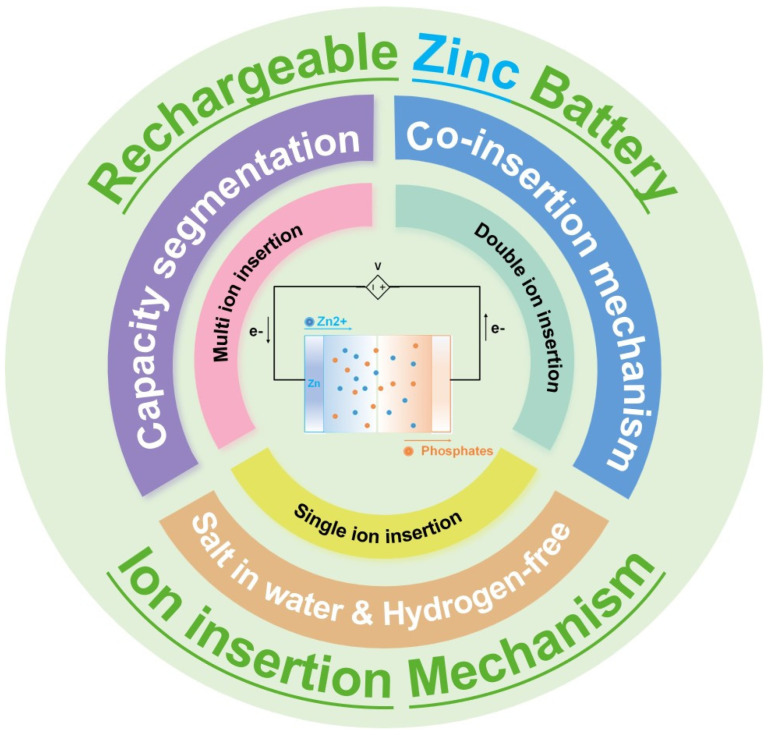
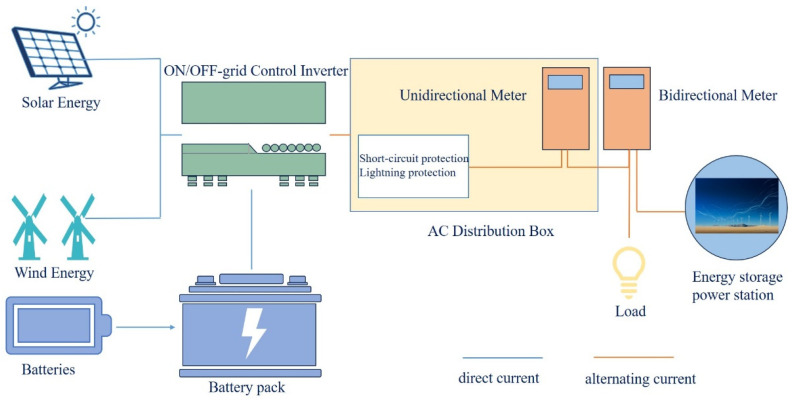
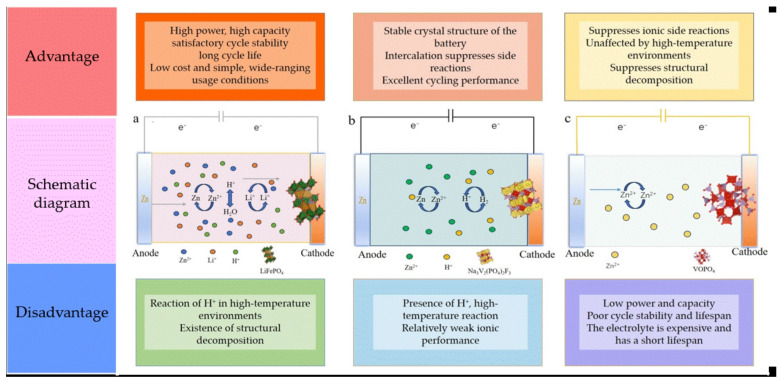
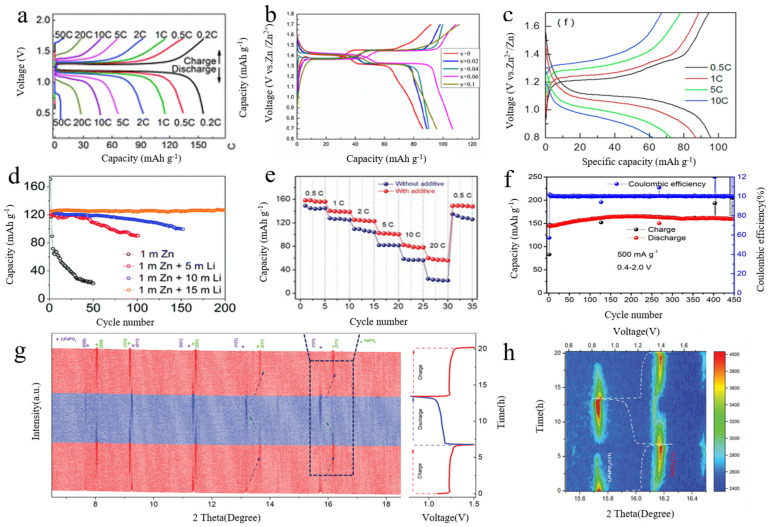
With the continuous development of science and technology, battery storage systems for clean energy have become crucial for global economic transformation. Among various rechargeable batteries, lithium-ion batteries are widely used, but face issues like limited resources, high costs, and safety concerns. In contrast, zinc-ion batteries, as a complement to lithium-ion batteries, are drawing increasing attention. In the exploration of zinc-ion batteries, especially of phosphate-based cathodes, the battery action mechanism has a profound impact on the battery performance. In this paper, we first review the interaction mechanism of multi-ion, dual-ion, and single-ion water zinc batteries. Then, the impact of the above mechanisms on battery performance was discussed. Finally, the application prospects of the effective use of multi-ion, dual-ion, and single-ion intercalation technology in zinc-ion batteries is reviewed, which has significance for guiding the development of rechargeable water zinc-ion batteries in the future.
随着科技的不断发展,用于清洁能源的电池存储系统对于全球经济转型至关重要。在各种可充电电池中,锂离子电池被广泛使用,但面临资源有限、成本高和安全等问题。相比之下,锌离子电池作为锂离子电池的补充,正受到越来越多的关注。在锌离子电池的探索中,特别是基于磷酸盐的阴极,电池作用机制对电池性能有深远影响。本文首先综述了多离子、双离子和单离子水系锌电池的相互作用机制。然后,讨论了上述机制对电池性能的影响。最后,综述了多离子、双离子和单离子插层技术在锌离子电池中有效应用的前景,这对指导未来可充电水系锌离子电池的发展具有重要意义。