Department of Biological Sciences, Sungkyunkwan University, Suwon, 16419, Republic of Korea.
Research Institute for Dok-do and Ulleung-do Island, Kyungpook National University, Daegu, 41566, Republic of Korea.
BMC Plant Biol. 2024 Oct 28;24(1):1016. doi: 10.1186/s12870-024-05711-3.
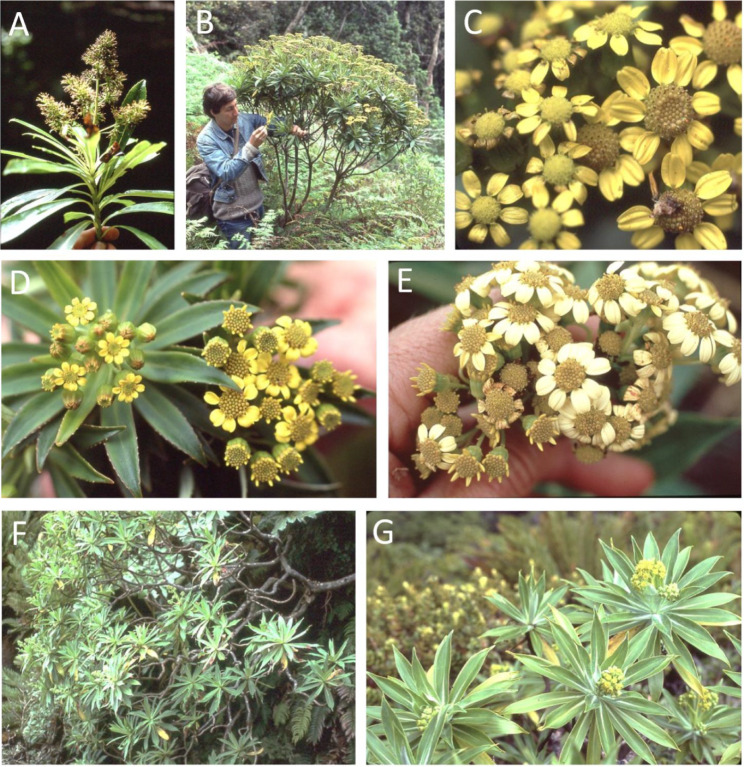
The genus Robinsonia DC. (tribe Senecioneae, Asteraceae) endemic to the Juan Fernández Islands in Chile is one of the most conspicuous insular plant groups in the world. Unlike typical herbaceous Asteraceae plants, these plants demonstrate spectacular and unusual rosette tree growth forms as shown by the alpine giant senecios (genus Dendrosenecio, tribe Senecioneae) endemic to the East African mountains. However, monophyly of the genus and phylogenetic relationships among species of Robinsonia as well as their plastome evolution remain elusive. This study aims to explore their phylogeny, species diversification, and molecular evolution based on the complete plastome sequences in the context of adaptive radiation on oceanic islands.
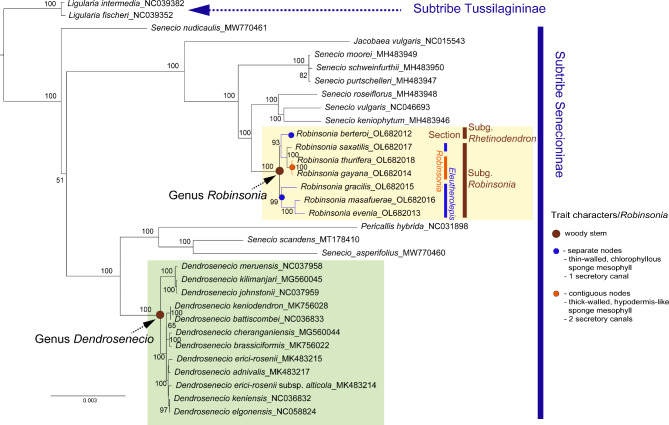
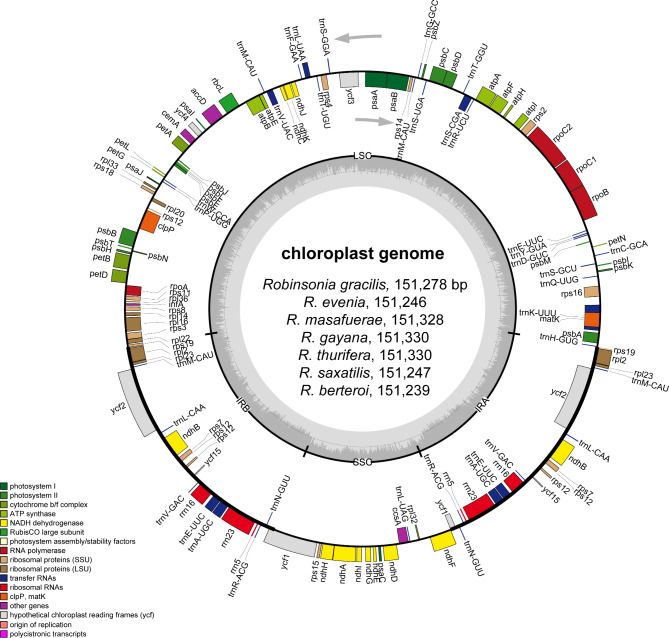
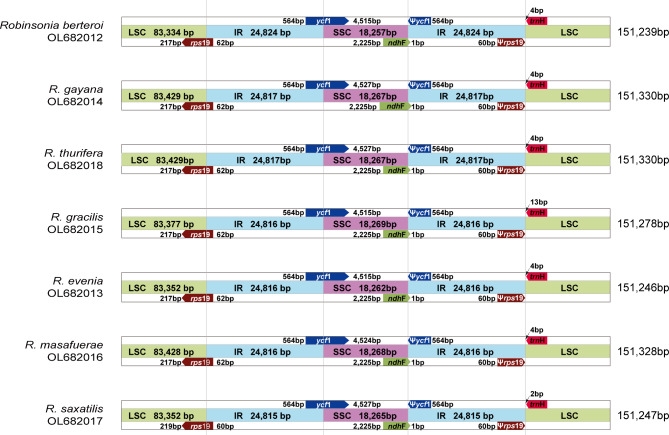
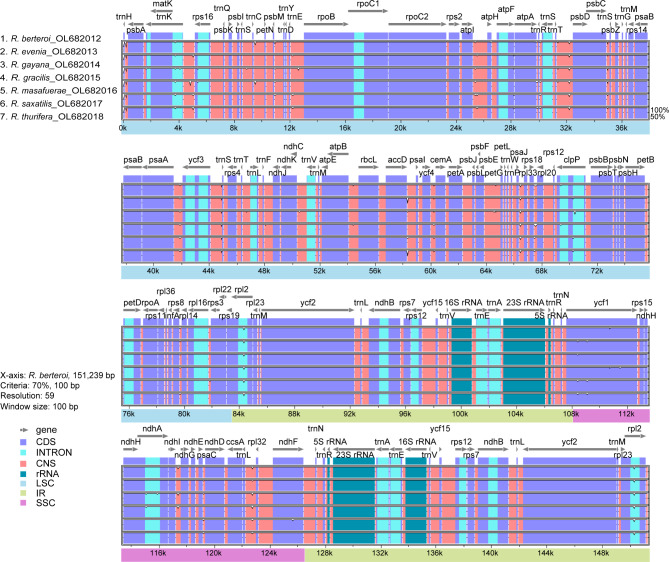
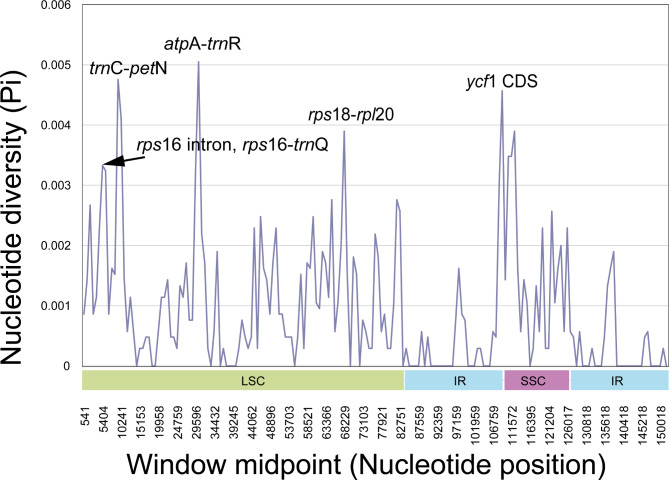
The insular Robinsonia plastomes are highly conserved in their structures and organization of contents. Five divergence hotspots as potential chloroplast markers and five positively selected coding genes (accD, ndhF, rpoA, ycf1, and ycf2) are identified. Robinsonia plastomes has an overall nucleotide diversity higher than that of the sky island Dendrosenecio, but much lower than herbaceous Senecio. Phylogenetic analysis demonstrates the monophyly of Robinsonia and identifies two major infrageneric lineages. Both Robinsonia and Dendrosenecio are deeply nested within large genus Senecio.
While plastid genomes of Robinsonia are highly conserved, their sequences strongly demonstrated the monophyly of the genus and inferred robust interspecific relationships, including herbaceous Senecio and woody Dendrosenecio. Different sets of positively selected chloroplast genes, five for Robinsonia and two for Dendrosenecio, may play an important role in the adaptation strategies of these fascinating woody species in insular and continental sky island habitats. Overall phylogenetic positions and sister lineages of Robinsonia and Dendrosenecio require additional study based on broader sampling of Senecio.
智利胡安·费尔南德斯群岛特有的罗比诺西亚属(菊科千里光族)是世界上最引人注目的岛屿植物群之一。与典型的草本菊科植物不同,这些植物表现出壮观而不寻常的树状莲座丛生长形式,如东非山脉特有的高山巨型千里光(Dendrosenecio 属,千里光族)。然而,罗比诺西亚属的单系性以及物种间的系统发育关系及其质体进化仍然难以捉摸。本研究旨在探讨它们的系统发育、物种多样化以及基于海洋岛屿适应性辐射的分子进化。
岛屿罗比诺西亚的质体基因组在结构和内容组织上高度保守。确定了五个潜在的叶绿体标记的分化热点和五个正选择编码基因(accD、ndhF、rpoA、ycf1 和 ycf2)。罗比诺西亚的质体基因组具有比天岛千里光更高的总体核苷酸多样性,但比草本千里光低得多。系统发育分析表明罗比诺西亚的单系性,并确定了两个主要的种下谱系。罗比诺西亚和天岛千里光都深深地嵌套在大属千里光中。
虽然罗比诺西亚的质体基因组高度保守,但它们的序列强烈表明了该属的单系性,并推断出稳健的种间关系,包括草本千里光和木本天岛千里光。不同的一组正选择的叶绿体基因,五个用于罗比诺西亚,两个用于天岛千里光,可能在这些迷人的木本物种在岛屿和大陆天岛栖息地的适应策略中发挥重要作用。罗比诺西亚和天岛千里光的总体系统发育位置和姐妹谱系需要基于对千里光更广泛采样的进一步研究。