Department of Internal Medicine, Keimyung University Dongsan Hospital, Keimyung University School of Medicine, Daegu, Republic of Korea.
Department of Biochemistry, School of Medicine, Catholic University of Daegu, Daegu, Republic of Korea.
Medicine (Baltimore). 2024 Oct 4;103(40):e39888. doi: 10.1097/MD.0000000000039888.
Renal tubular injury caused by oxidative stress and inflammation results in acute kidney injury. Recent research reported that antibiotics may protect renal tubules from progressive deterioration, but the underlying mechanism remains unclear. Therefore, we investigated the efficacy and mechanism of action of antibiotics against renal tubular injury.
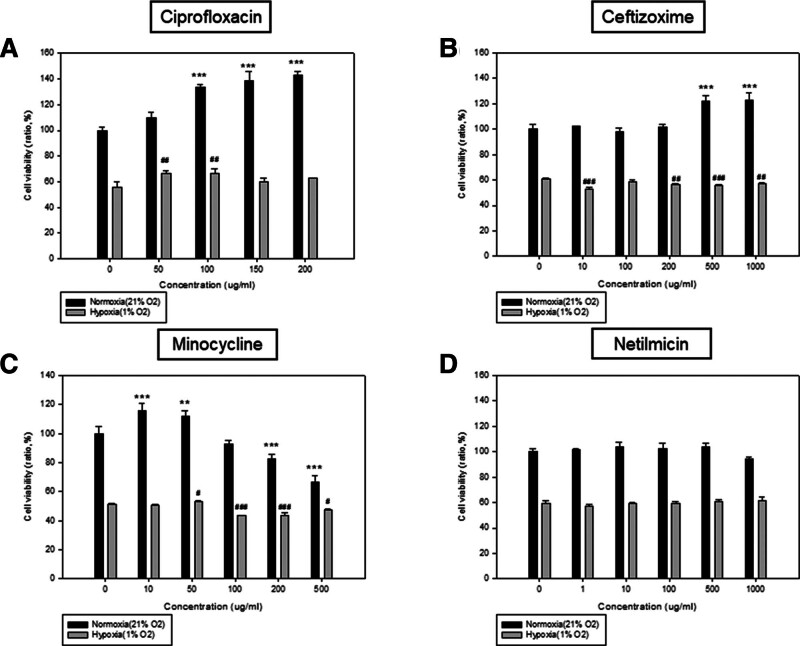
We screened ciprofloxacin, ceftizoxime, minocycline, and netilmicin and selected ciprofloxacin to examine further because of its low toxicity towards renal tubular cells. We evaluated the effect of ciprofloxacin on cell survival by analyzing apoptosis and autophagy.
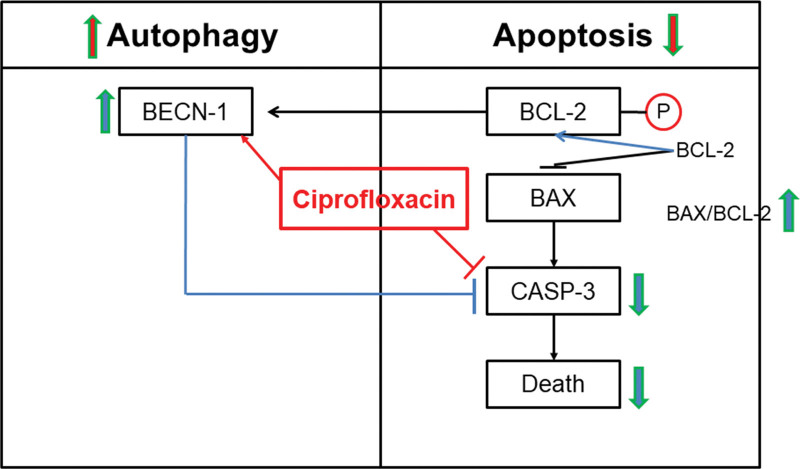
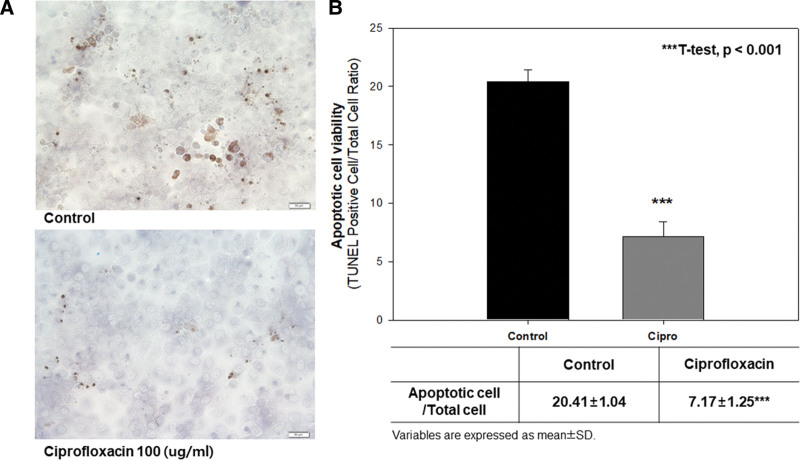
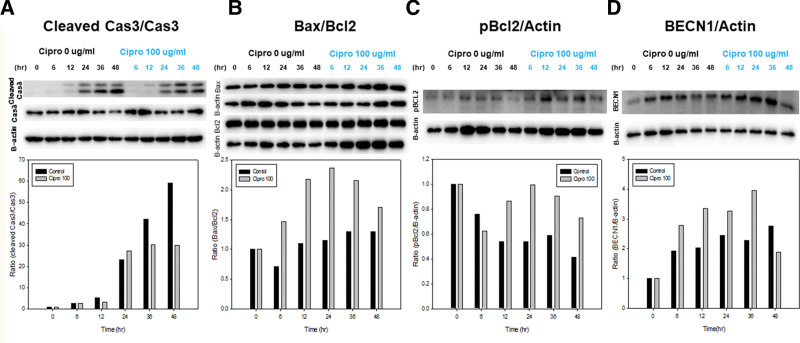
Terminal deoxynucleotidyl transferase-mediated d-UTP nick end labeling (TUNEL) assay results showed that the ciprofloxacin group had less apoptotic cells than the control group. The ratio of cleaved caspase 3 to caspase 3, the final effector in the apoptosis process, was decreased, but the ratio of B-cell lymphoma 2 (Bcl-2)-associated X protein (Bax) to Bcl-2 located upstream of caspase 3 was not decreased in the ciprofloxacin group. Therefore, apoptosis inhibition does not occur via Bax/Bcl-2. Conversely, the levels of phosphorylated Bcl-2, and Beclin-1, an autophagy marker, were increased, and that of caspase-3 was decreased in the ciprofloxacin group.
This indicates that ciprofloxacin enhances autophagy, increasing the amount of free Beclin-1 via phosphorylated Bcl-2, and inhibits caspase activity. Therefore, ciprofloxacin might protect against renal tubular injury through the activation of autophagy in the setting of acute kidney injury.
氧化应激和炎症引起的肾小管损伤导致急性肾损伤。最近的研究报告称,抗生素可能保护肾小管免受进行性恶化,但潜在机制尚不清楚。因此,我们研究了抗生素对肾小管损伤的疗效和作用机制。
我们筛选了环丙沙星、头孢唑肟、米诺环素和奈替米星,并选择了环丙沙星进一步研究,因为它对肾小管细胞的毒性较低。我们通过分析细胞凋亡和自噬来评估环丙沙星对细胞存活的影响。
末端脱氧核苷酸转移酶介导的 d-UTP 缺口末端标记(TUNEL)检测结果显示,环丙沙星组的凋亡细胞少于对照组。凋亡过程中的终末效应物裂解型半胱天冬酶 3(cleaved caspase 3)与 caspase 3 的比值降低,但位于 caspase 3 上游的 B 细胞淋巴瘤 2(Bcl-2)相关 X 蛋白(Bax)与 Bcl-2 的比值在环丙沙星组中并未降低。因此,凋亡抑制不是通过 Bax/Bcl-2 发生的。相反,环丙沙星组的磷酸化 Bcl-2 和自噬标志物 Beclin-1 水平升高,caspase-3 水平降低。
这表明环丙沙星增强了自噬,通过磷酸化 Bcl-2 增加了游离 Beclin-1 的量,并抑制了 caspase 活性。因此,环丙沙星可能通过在急性肾损伤中激活自噬来保护肾小管免受损伤。