Mansour Sherif, Hasebe Noriko, Abdelrahman Kamal, Fnais Mohammed S, Gharib Mohamed A, Habou Rabiou, Tamura Akihiro
Geology Department, Faculty of Science, Port Said University, Port Said, 42522, Egypt.
Institute of Nature and Environmental Technology, Kanazawa University, Kanazawa, 920-1192, Japan.
Geochem Trans. 2024 Oct 28;25(1):11. doi: 10.1186/s12932-024-00095-7.
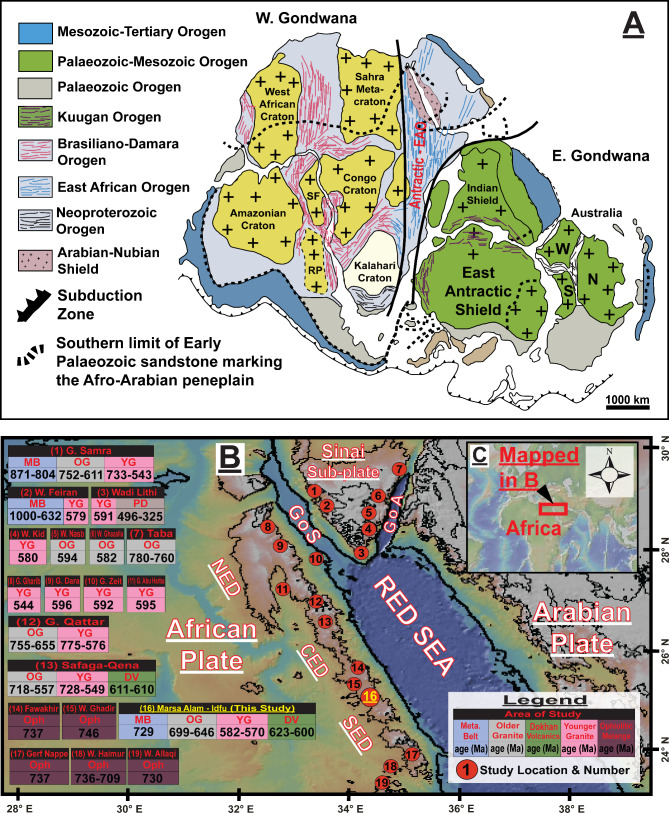
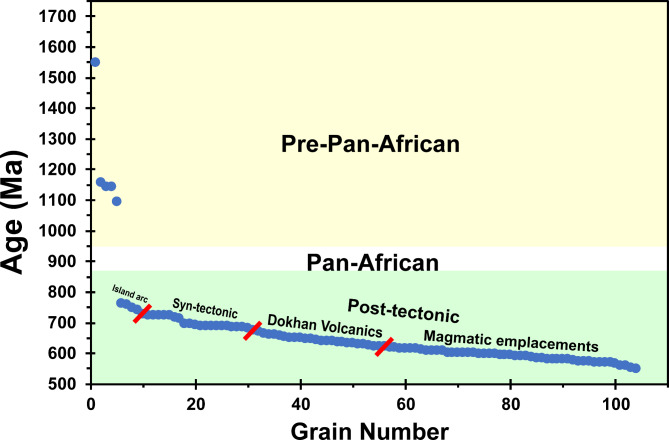
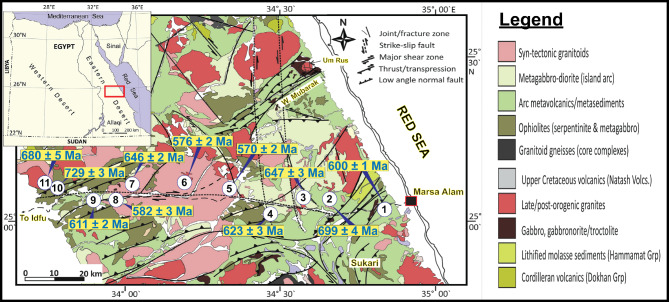
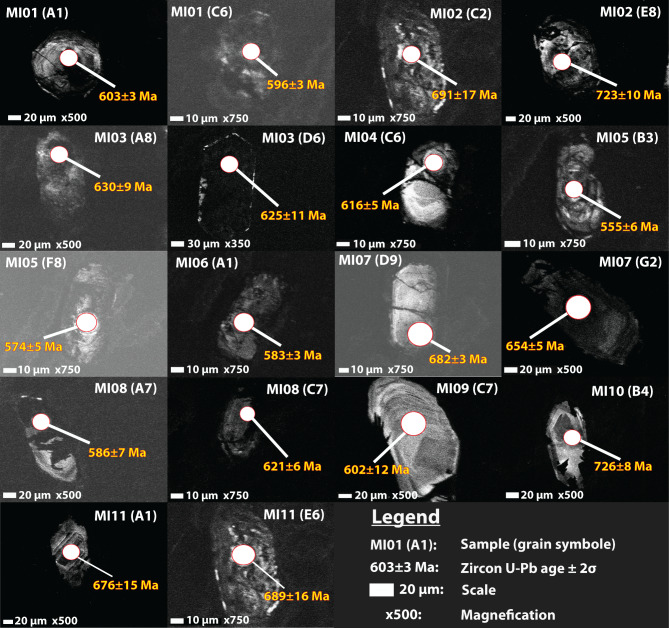
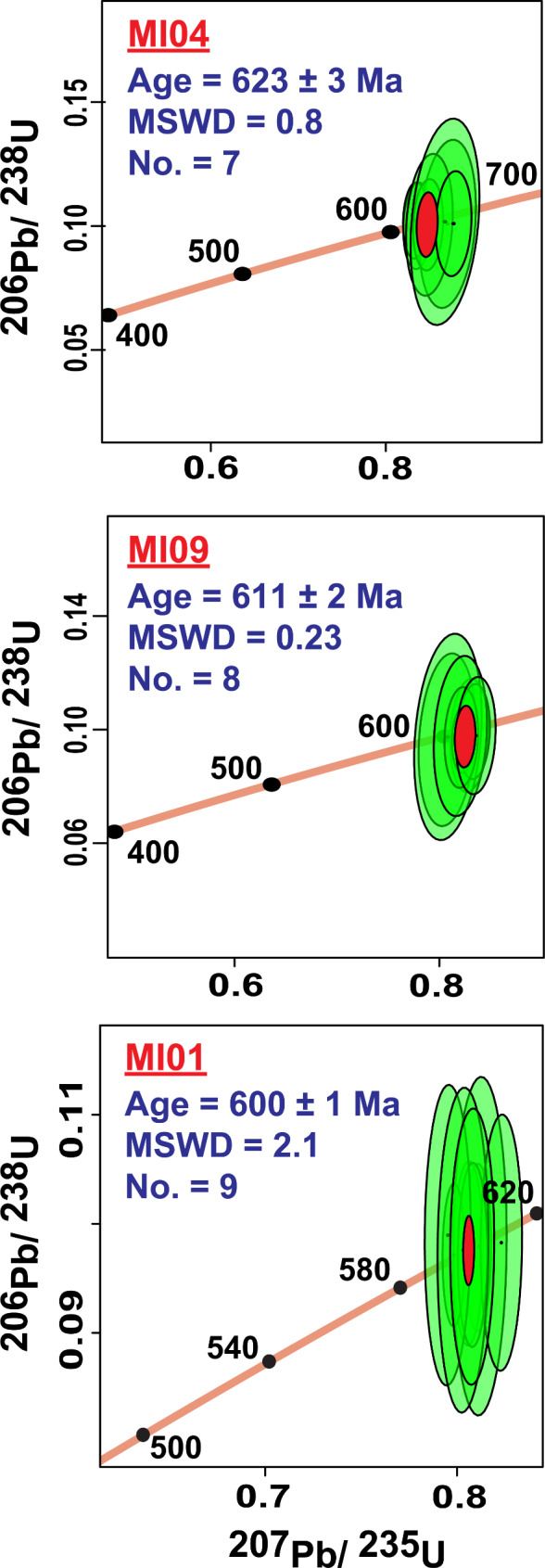
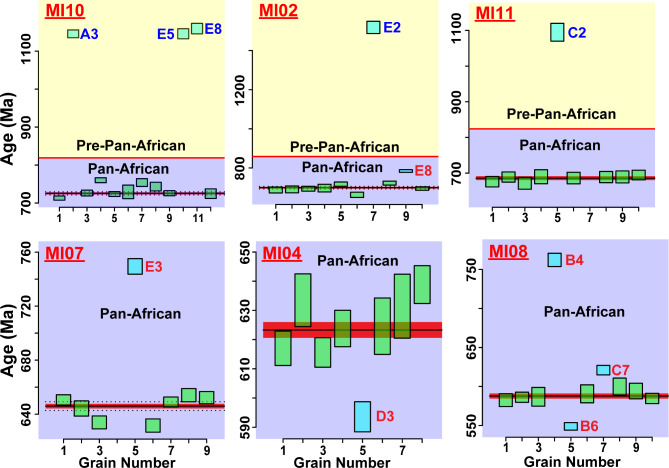
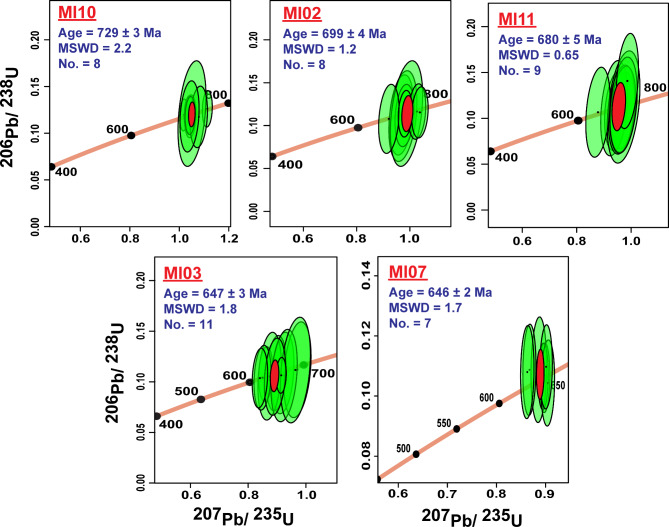
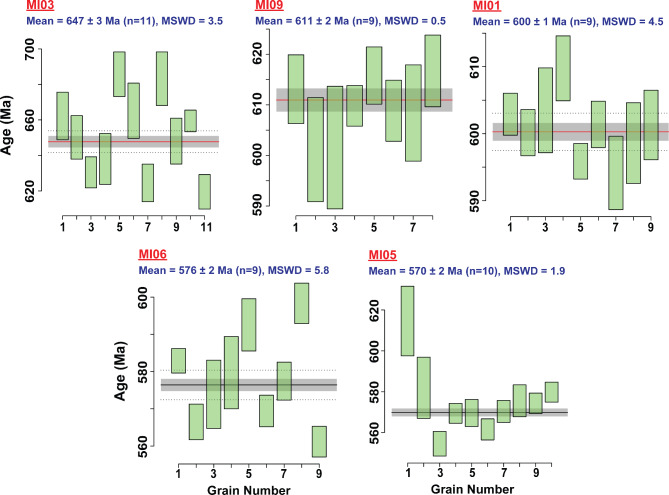
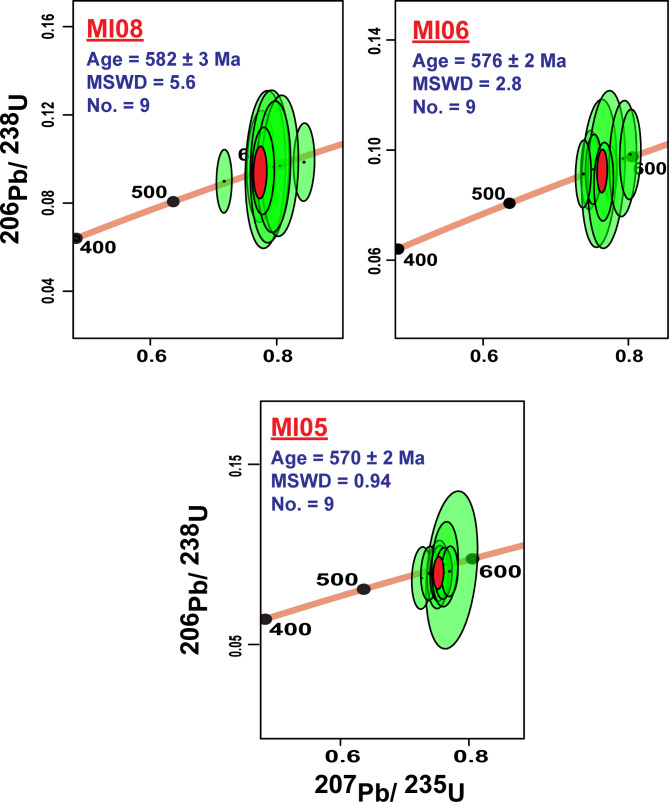
The magmatic complex along the Marsa Alam-Idfu transect, Central-Eastern Desert of Egypt, represents the northern segment of the Arabian-Nubian Shield (ANS), which developed within the framework of the East African Orogen. The basement rocks of the Arabian-Nubian Shield have been developed through three distinct phases of magmatic activity: the island-arc, the syn-orogenic, and the post-orogenic phases. Transitioning of the magmatic phases from the syn-orogenic to the post-orogenic, identifies changing the tectonic regime from a compressional to an extensional setting. The scarcity of comprehensive regional geochronological data that rely on precise isochron methods, such as the zircon U-Pb technique, could limit the comprehensive understanding of this region's geological and tectonic history. That would raise a number of uncertainties ranging from the timing of the different magmatic activities and timing of changes in the tectonic regime to the existence of the pre-Pan-African crust in the CED. Our study provides new insights into the aforementioned uncertainties through zircon U-Pb dating of different rock units along the Marsa Alam-Idfu transect, CED, Egypt. The resulting ages ranged from 729 ± 3 Ma to 570 ± 2 Ma, constraining the temporal evolution of the ANS in the studied region into (1) the island-arc phase, represented by a metamorphic sample with an age of 729 ± 3 Ma. (2) the syn-orogenic phase, represented by calc-alkaline and alkaline granitic samples with ages ranging from 699 ± 4 Ma to 646 ± 2 Ma. These two phases indicate initiation of the compressional subduction regime in the CED since 729 ± 3 Ma and being dominated till 646 ± 2 Ma. (3) the post-orogenic phase, represented by metavolcanics, volcanic rocks, and alkaline plutonic samples with ages ranging from 623 ± 3 Ma to 570 ± 2 Ma. This phase suggests dominance of the compressional-to-extensional tectonic transition setting from 623 ± 3 Ma to 600 ± 1 Ma along with the Dokhan volcanism and activation of post-collision tensional regime activated at 582 ± 3 Ma. Our findings discourage the proposed dominance of the island-arc and syn-orogenic phases in the CED and the classical restriction of older magmatic activity to calc-alkaline granitic rocks and younger magmatic activity to alkaline granitic rocks. Additionally, we identified evidence of local magmatic sources by dating five grains with Mesoproterozoic (pre-Arabian-Nubian Shield) xenocrysts with ages ranging from 1549 ± 4 to 1095 ± 25 Ma.
埃及中东部沙漠马萨阿拉姆-伊德富断面沿线的岩浆杂岩,代表了阿拉伯-努比亚地盾(ANS)的北段,该地区是在东非造山带的框架内形成的。阿拉伯-努比亚地盾的基底岩石是通过三个不同阶段的岩浆活动形成的:岛弧阶段、同造山阶段和造山后阶段。岩浆阶段从同造山阶段向造山后阶段的转变,标志着构造环境从挤压环境向伸展环境的转变。由于缺乏依赖精确等时线方法(如锆石U-Pb技术)的全面区域地质年代数据,可能会限制对该地区地质和构造历史的全面理解。这将引发一系列不确定性,从不同岩浆活动的时间、构造环境变化的时间到中东部沙漠中泛非前地壳的存在。我们的研究通过对埃及中东部沙漠马萨阿拉姆-伊德富断面沿线不同岩石单元进行锆石U-Pb测年,为上述不确定性提供了新的见解。所得年龄范围为729±3 Ma至570±2 Ma,将研究区域内阿拉伯-努比亚地盾的时间演化限定为:(1)岛弧阶段,以年龄为729±3 Ma的变质样品为代表。(2)同造山阶段,以年龄范围为699±4 Ma至646±2 Ma的钙碱性和碱性花岗岩样品为代表。这两个阶段表明,自729±3 Ma以来,中东部沙漠开始了挤压俯冲作用,并一直持续到646±2 Ma。(3)造山后阶段,以年龄范围为623±3 Ma至570±2 Ma的变质火山岩、火山岩和碱性深成岩样品为代表。该阶段表明,从623±3 Ma到600±1 Ma,挤压向伸展的构造转变占主导地位,同时伴随着多哈恩火山活动以及在582±3 Ma激活的碰撞后张性构造活动。我们的研究结果不支持中东部沙漠中岛弧阶段和同造山阶段占主导地位的观点,也不支持将较老的岩浆活动局限于钙碱性花岗岩、较年轻的岩浆活动局限于碱性花岗岩的传统观点。此外,我们通过对五个含有中元古代(阿拉伯-努比亚地盾之前)捕虏晶的颗粒进行测年,确定了年龄范围为1549±4至1095±25 Ma,从而找到了局部岩浆源的证据。