Department of Biological Chemistry, School of Medicine, University of California, Irvine, CA 92697.
Department of Microbiology and Molecular Genetics, School of Medicine, University of California, Irvine, CA 92697.
Proc Natl Acad Sci U S A. 2024 Nov 5;121(45):e2412725121. doi: 10.1073/pnas.2412725121. Epub 2024 Oct 30.
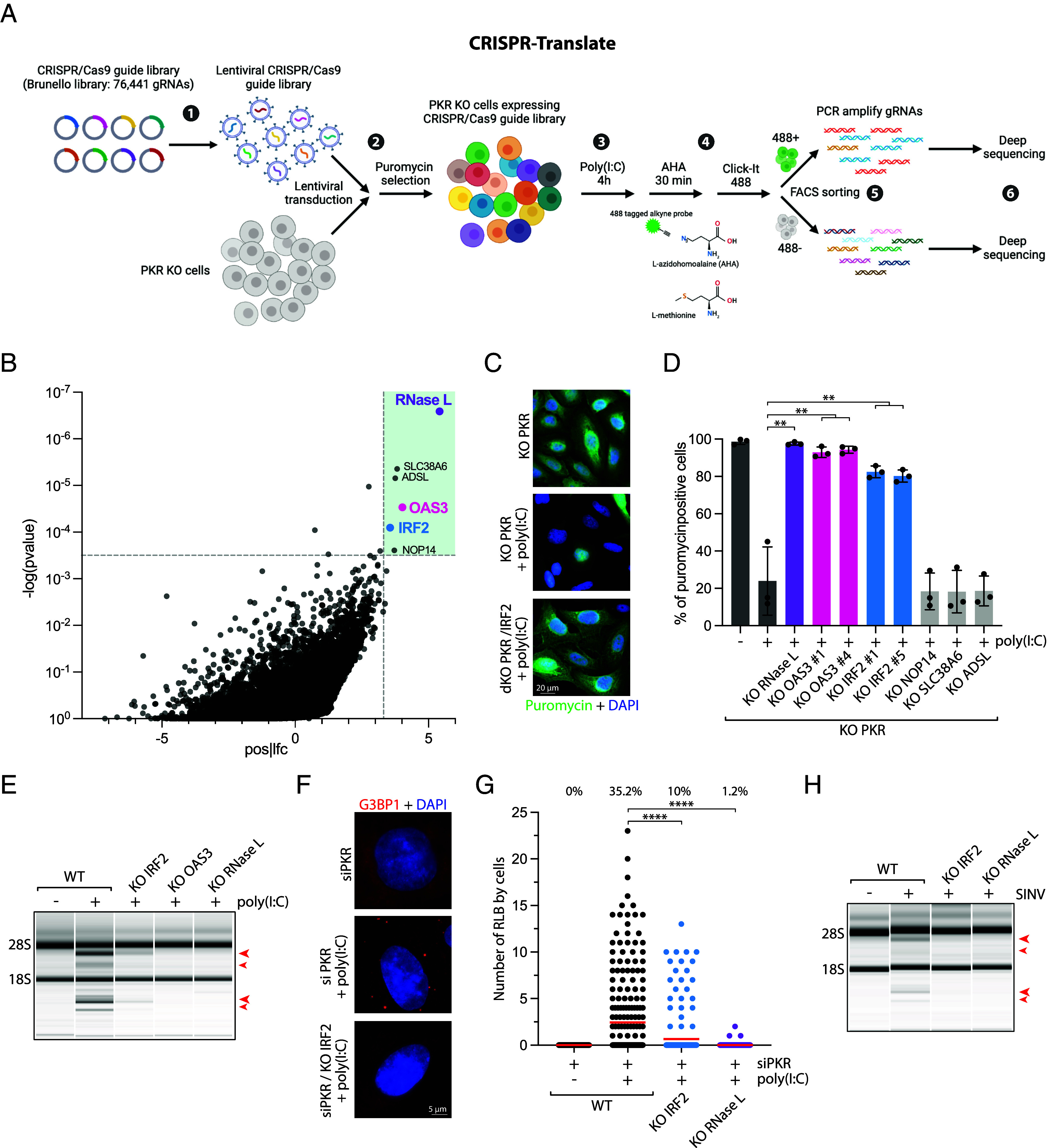
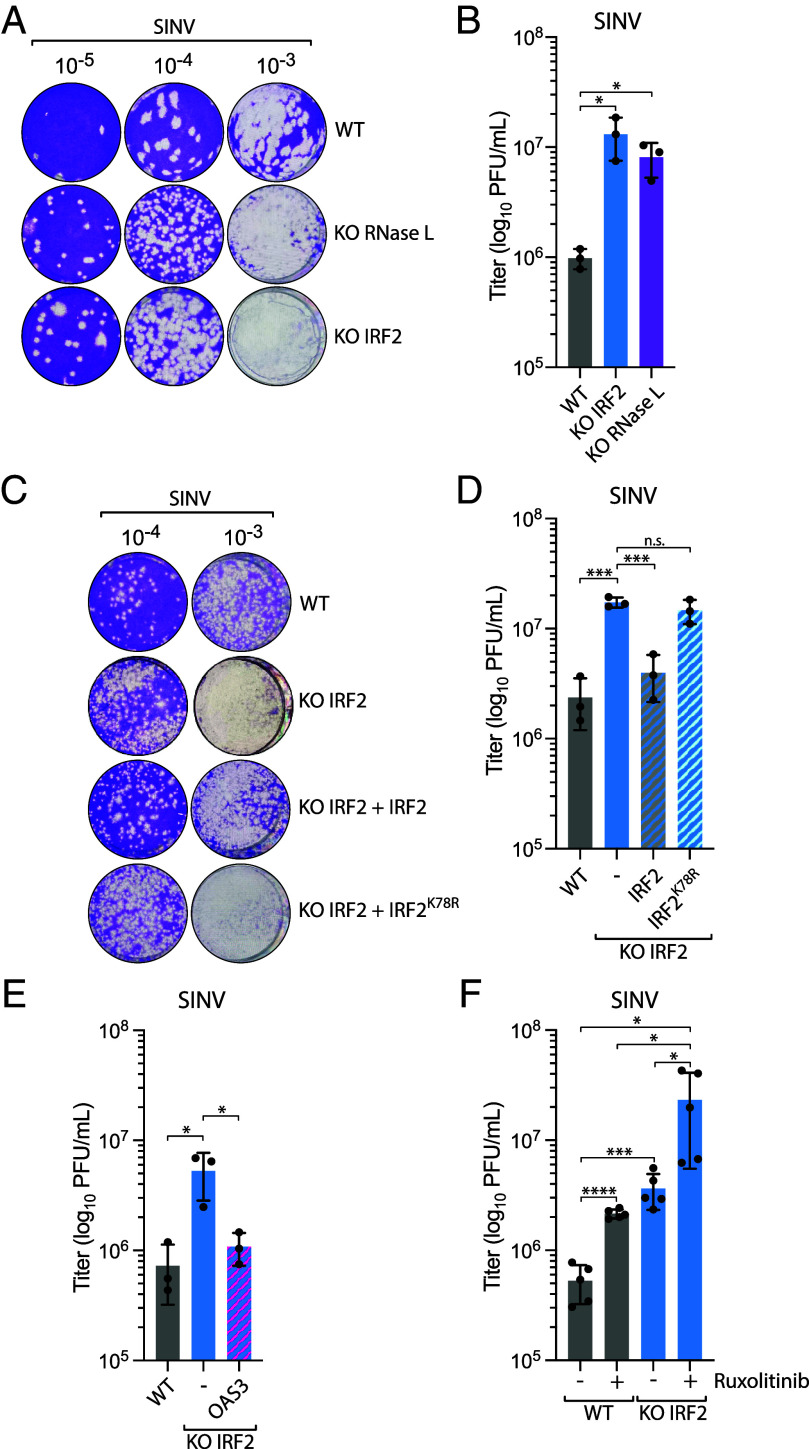
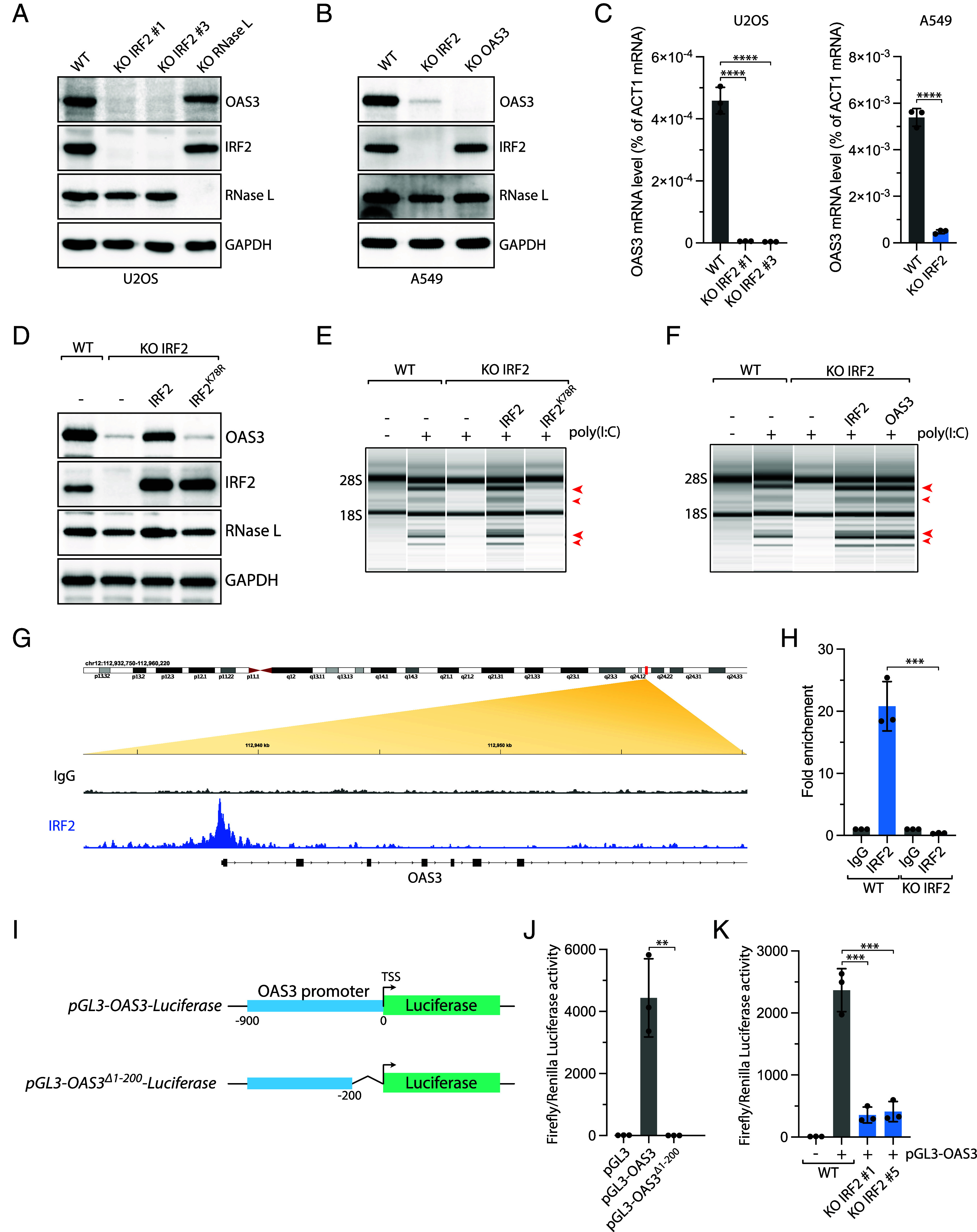
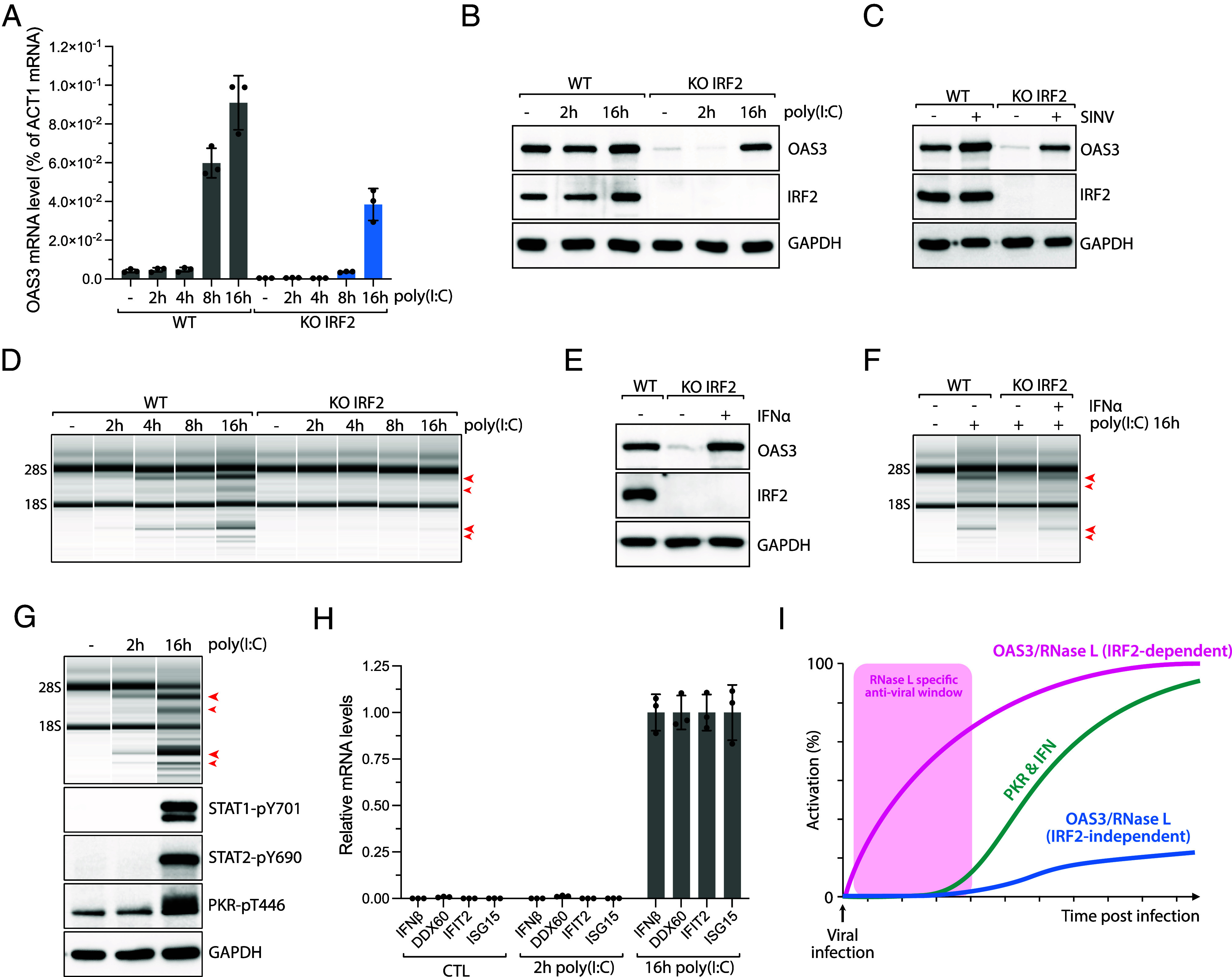
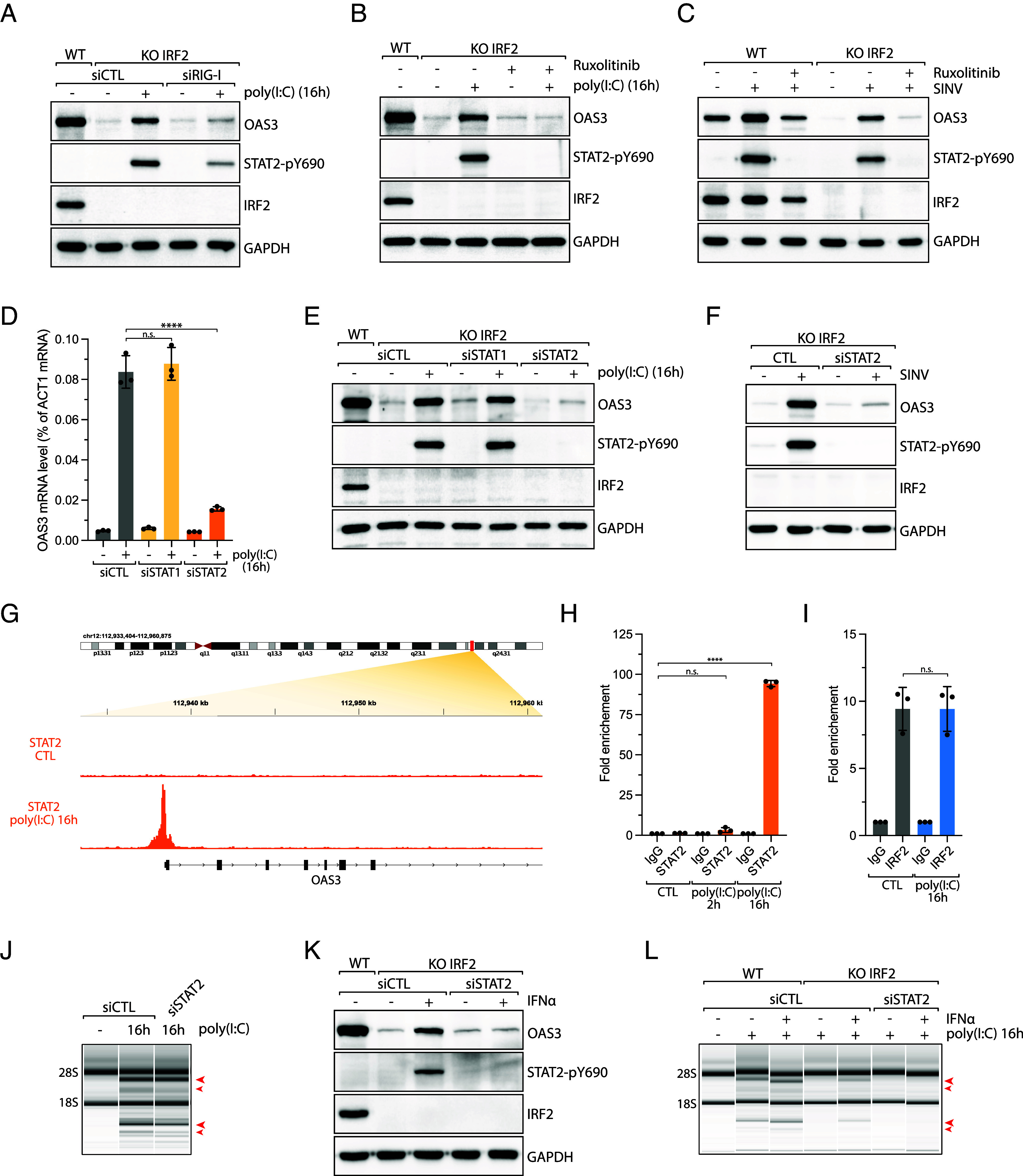
OAS-RNase L is a double-stranded RNA-induced antiviral pathway triggered in response to diverse viral infections. Upon activation, OAS-RNase L suppresses virus replication by promoting the decay of host and viral RNAs and inducing translational shutdown. However, whether OASs and RNase L are the only factors involved in this pathway remains unclear. Here, we develop CRISPR-Translate, a FACS-based genome-wide CRISPR-Cas9 knockout screening method that uses translation levels as a readout and identifies IRF2 as a key regulator of OAS3. Mechanistically, we demonstrate that IRF2 promotes basal expression of OAS3 in unstressed cells, allowing a rapid activation of RNase L following viral infection. Furthermore, IRF2 works in concert with the interferon response through STAT2 to further enhance OAS3 expression. We propose that IRF2-induced RNase L is critical in enabling cells to mount a rapid antiviral response immediately after viral infection, serving as the initial line of defense. This rapid response provides host cells the necessary time to activate additional antiviral signaling pathways, forming secondary defense waves.
OAS-RNase L 是一种双链 RNA 诱导的抗病毒途径,可响应多种病毒感染而被触发。激活后,OAS-RNase L 通过促进宿主和病毒 RNA 的降解以及诱导翻译关闭来抑制病毒复制。然而,OAS 和 RNase L 是否是该途径中唯一涉及的因素尚不清楚。在这里,我们开发了一种基于 FACS 的全基因组 CRISPR-Cas9 敲除筛选方法 CRISPR-Translate,该方法将翻译水平作为读出值,并鉴定出 IRF2 是 OAS3 的关键调节剂。在机制上,我们证明 IRF2 在未受应激的细胞中促进 OAS3 的基础表达,从而使病毒感染后 RNase L 能够快速激活。此外,IRF2 通过 STAT2 与干扰素反应协同作用,进一步增强 OAS3 的表达。我们提出,IRF2 诱导的 RNase L 对于使细胞在病毒感染后立即迅速启动抗病毒反应至关重要,它是第一道防线。这种快速反应为宿主细胞提供了激活其他抗病毒信号通路所需的时间,形成了二级防御波。