Ferreira Luan Oliveira, Padilha da Silveira Esther, Paz Clarissa A, Otake Hamoy Maria K, Barbosa Gabriela B, Santos Murilo F, Conceição Raína M, Amaral Anthony Lucas G, Resende Karina Dias, Favacho Lopes Dielly Catrina, Hamoy Moisés
Laboratory of Experimental Neuropathology, João de Barros Barreto University Hospital, Federal University of Pará, Belém, Brazil.
Department of Anesthesiology, João de Barros Barreto University Hospital, Federal University of Pará, Belém, Brazil.
Front Pharmacol. 2024 Oct 16;15:1456009. doi: 10.3389/fphar.2024.1456009. eCollection 2024.
Substance abuse is a major public health problem. In recent years, ketamine, which is a parenteral anesthetic, has been consumed increasingly as an illicit drug together with alcohol, although little is known of how this association alters brain activity. The present study investigated the influence of progressive doses of ketamine, associated with alcohol, on electrophysiological activity.
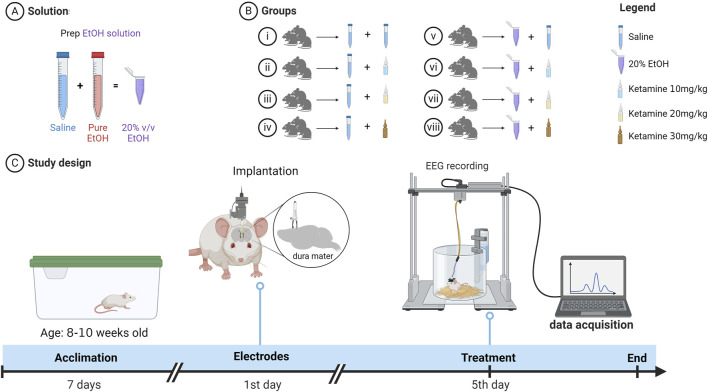
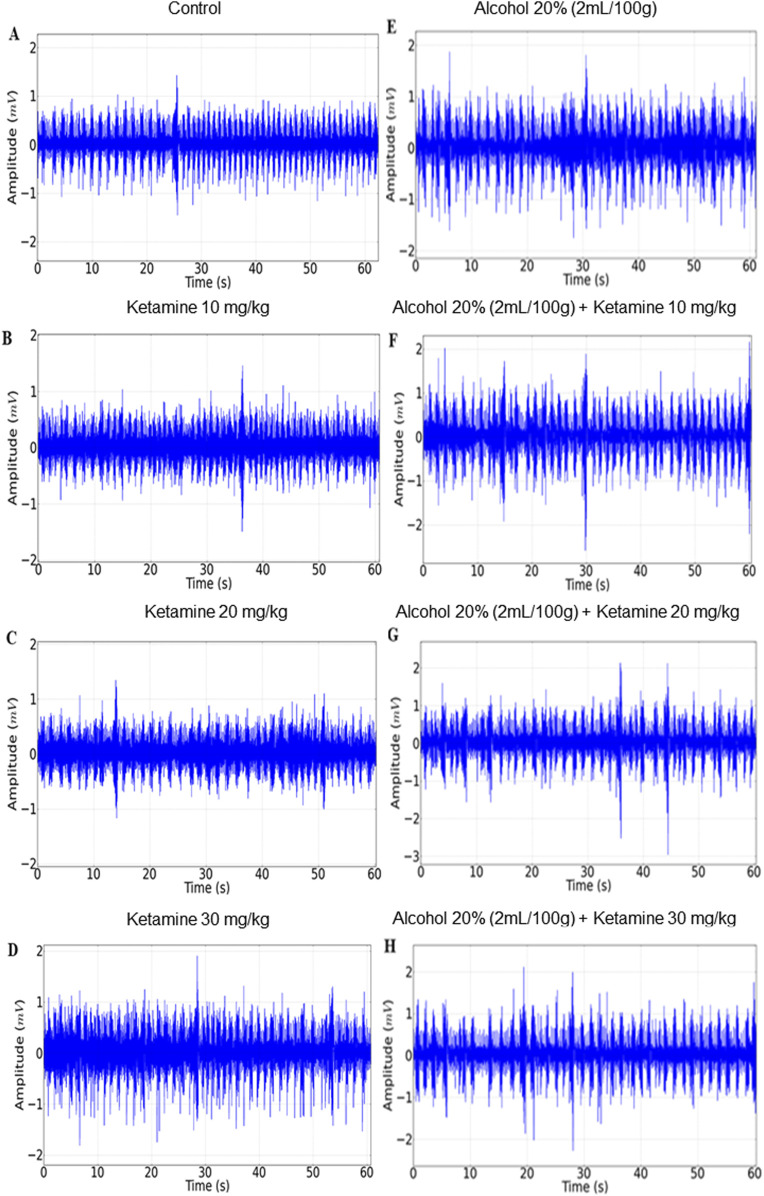
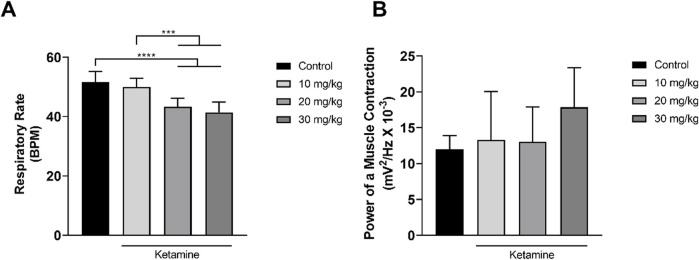
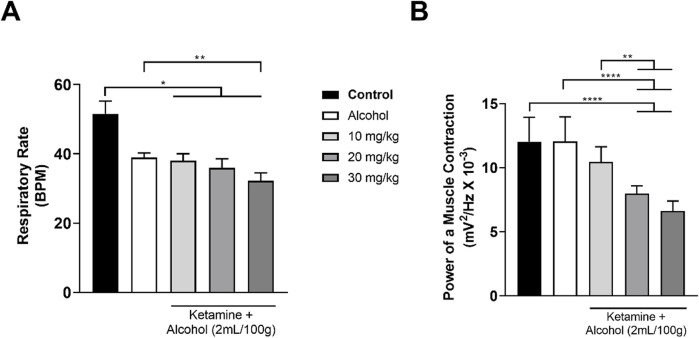
For this, 72 late-adolescent (8-10-week-old) male Wistar rats received either ketamine only, at low (10 mg/kg), intermediate (20 mg/kg) or high (30 mg/kg) doses via intraperitoneal injection, or alcohol (2 mL/100 g) via oral gavage followed by ketamine (at low, intermediate, and high doses). Electroencephalograms (EEG) and electromyographic recordings were obtained 5 min after the final application of the drug.
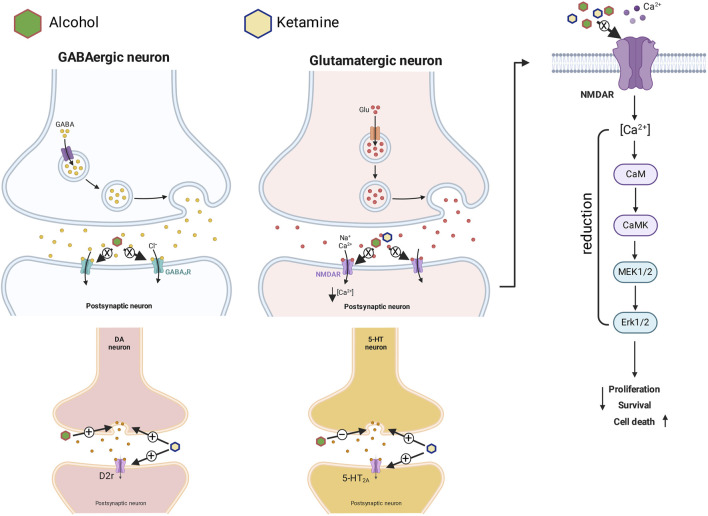
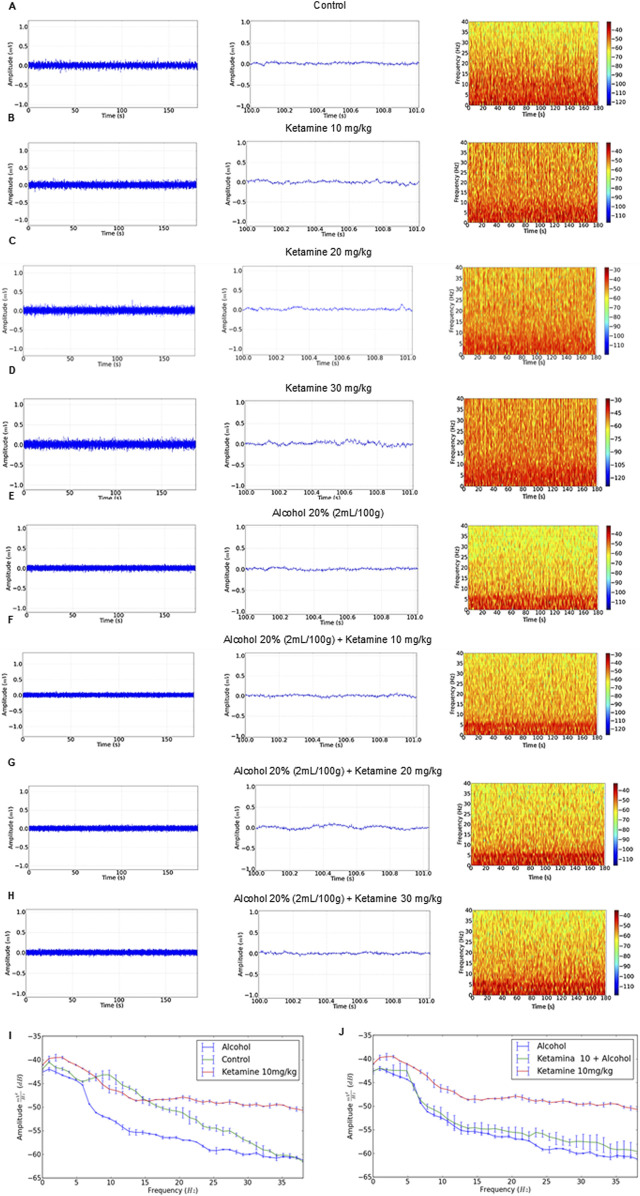
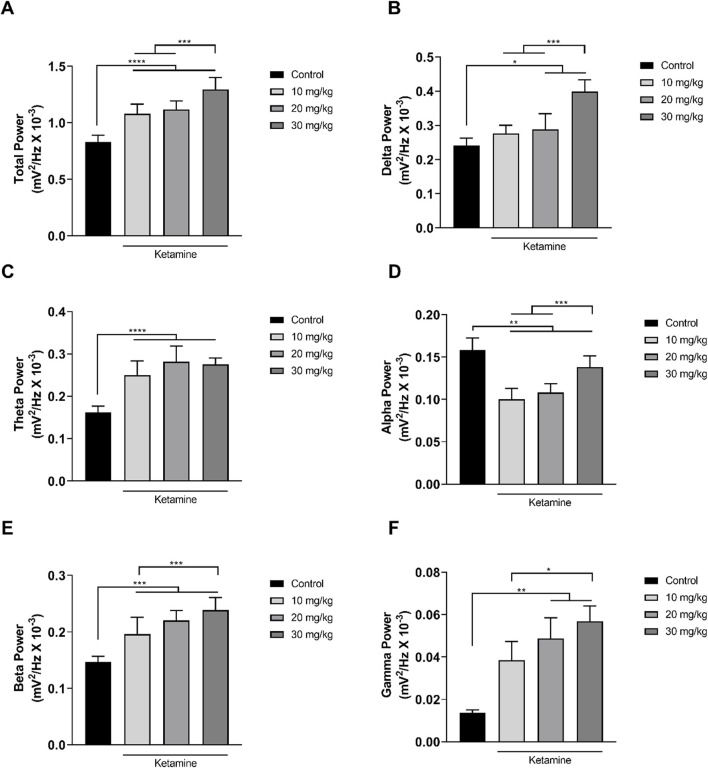
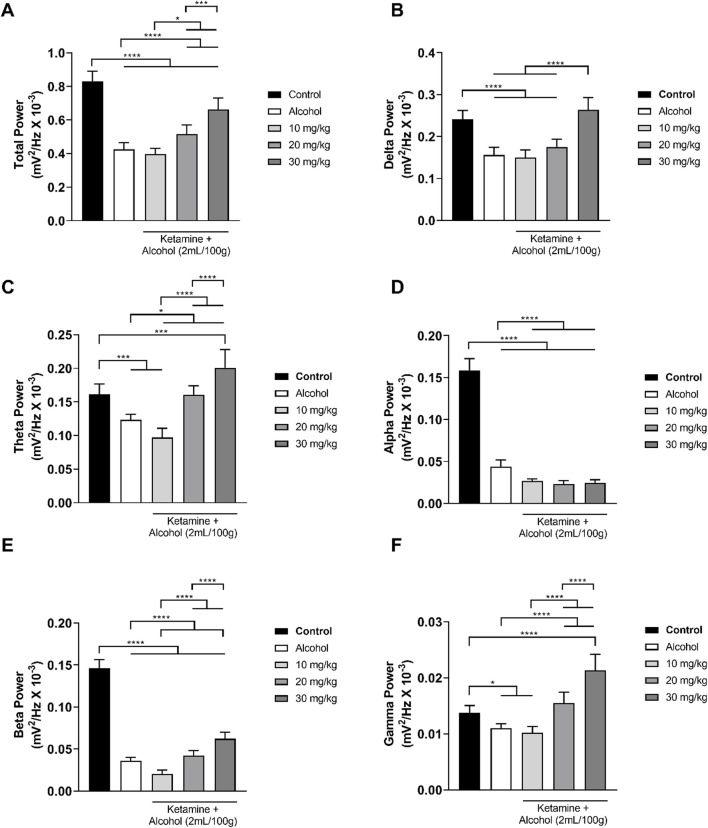
When administered alone, ketamine resulted in an increase in delta, theta, beta, and gamma brainwaves, with a more pronounced effect being detected at the highest dose (30 mg/kg) in the case of the delta, beta, and gamma waves. The amplitude of the alpha brainwaves was reduced at all doses of ketamine, but less intensively at the highest dose. When administered alone, alcohol reduced all the brainwaves, with the reduction in the alpha waves being exacerbated by ketamine at all doses, and that of the theta and beta waves being boosted at the lowest dose. The intermediate dose of ketamine (20 mg/kg) reverted the alcohol-induced reduction in the theta and gamma waves, whereas the high dose increased delta, theta, beta, and gamma bandpower.
Overall, then, while ketamine enhances the depressant effects of alcohol on the alpha brainwave at all doses, a low dose intensified this effect on the theta and beta 175 waves, whereas a high dose produces neuronal hyperexcitability in the theta and 176 gamma bandpower.
药物滥用是一个重大的公共卫生问题。近年来,作为一种非肠道麻醉剂的氯胺酮,已越来越多地与酒精一起被当作非法药物使用,尽管人们对这种关联如何改变大脑活动知之甚少。本研究调查了与酒精相关的递增剂量氯胺酮对电生理活动的影响。
为此,72只晚青春期(8至10周龄)雄性Wistar大鼠,通过腹腔注射分别接受低剂量(10毫克/千克)、中等剂量(20毫克/千克)或高剂量(30毫克/千克)的氯胺酮,或通过灌胃接受酒精(2毫升/100克),随后再接受低、中、高剂量的氯胺酮。在最后一次给药5分钟后记录脑电图(EEG)和肌电图。
单独使用氯胺酮时,会导致δ波、θ波、β波和γ波增加,在最高剂量(30毫克/千克)时,δ波、β波和γ波的影响更为明显。在所有剂量的氯胺酮作用下,α波的振幅均降低,但在最高剂量时降低程度较小。单独使用酒精时,会降低所有脑电波,所有剂量的氯胺酮都会加剧酒精对α波的降低作用,而最低剂量的氯胺酮会增强对θ波和β波的降低作用。中等剂量的氯胺酮(20毫克/千克)可逆转酒精引起的θ波和γ波降低,而高剂量则会增加δ波、θ波、β波和γ波频段功率。
总体而言,虽然氯胺酮在所有剂量下都会增强酒精对α脑电波的抑制作用,但低剂量会增强对θ波和β波的这种作用,而高剂量会在θ波和γ波频段功率上产生神经元过度兴奋。