Lu Yongliang, Chen Weihao, Xuan Yundong, Li Xiubin, Wu Shengpan, Wang Hanfeng, Guo Tao, Wang Chenfeng, Tian Shuo, Li Huaikang, Lai Dong, Zhao Wenlei, Huang Xing, Zhao Xupeng, Wang Baojun, Zhang Xu, Li Hongzhao, Huang Yan, Ma Xin
People's Liberation Army Postgraduate Medical School, Fuxing Road 28, Haidian District, Beijing, 100853, China.
State Key Laboratory of Kidney Diseases, Senior Department of Urology, The Third Medical Center of Chinese PLA General Hospital, Yongding Road 69, Haidian District, Beijing, 100039, China.
Discov Oncol. 2024 Oct 31;15(1):607. doi: 10.1007/s12672-024-01485-0.
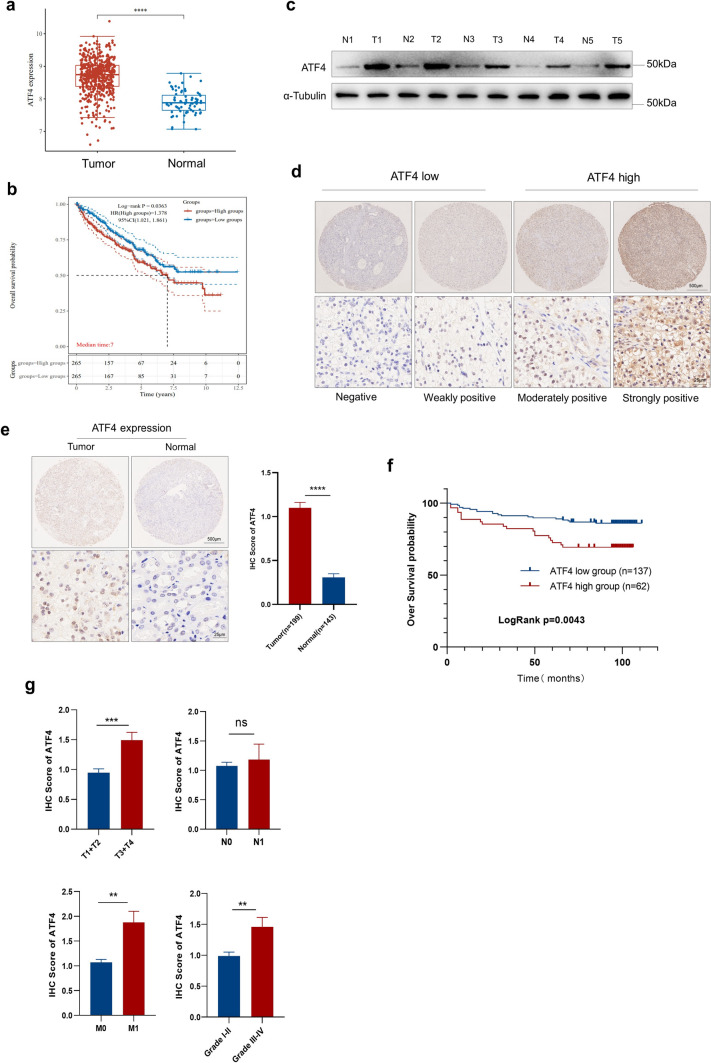
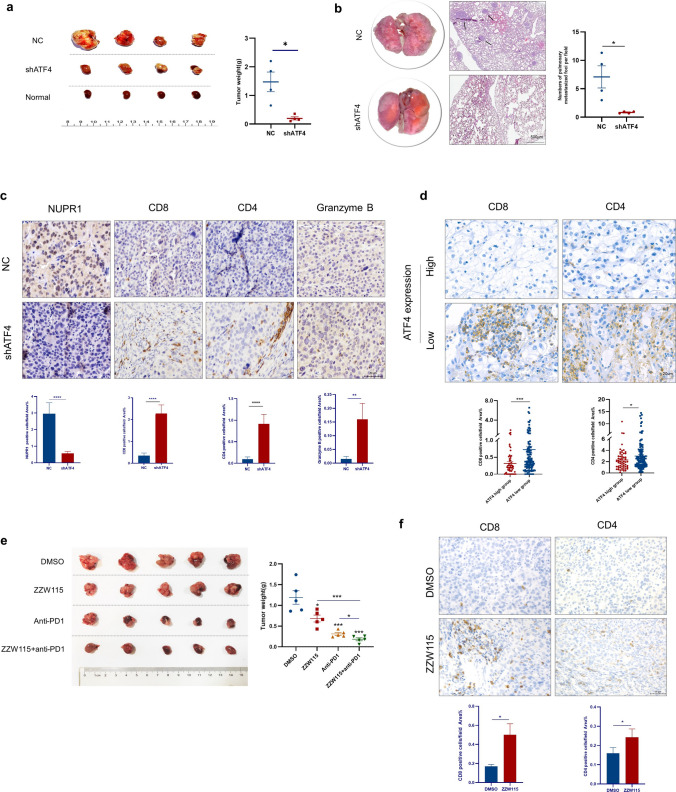
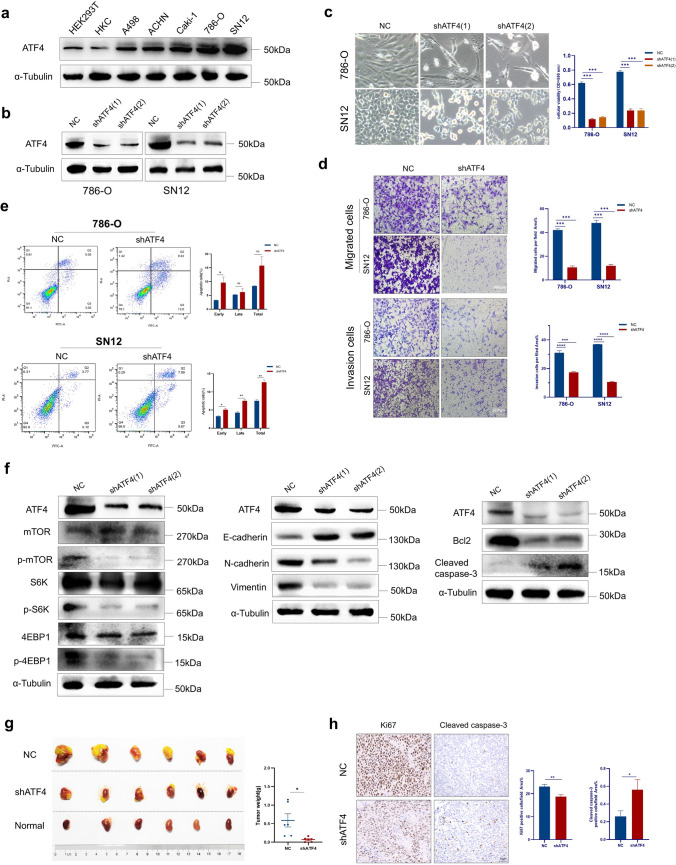
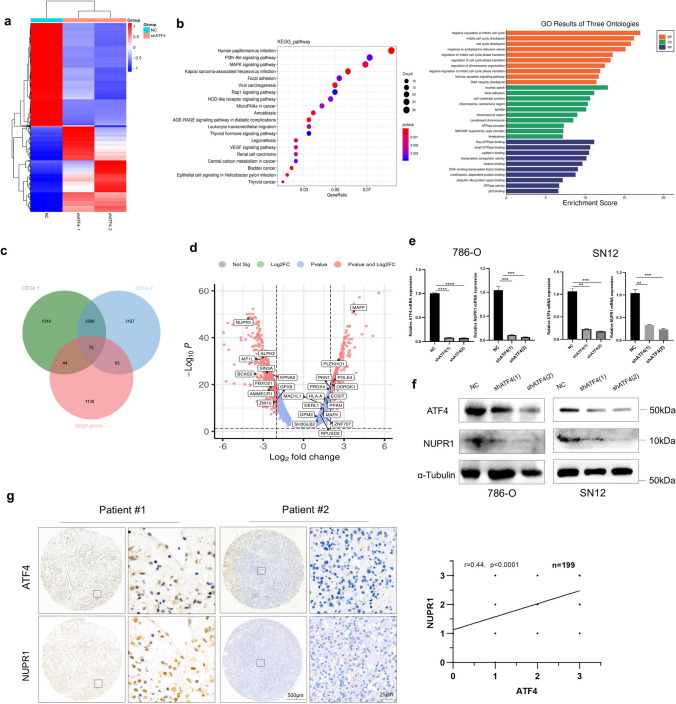
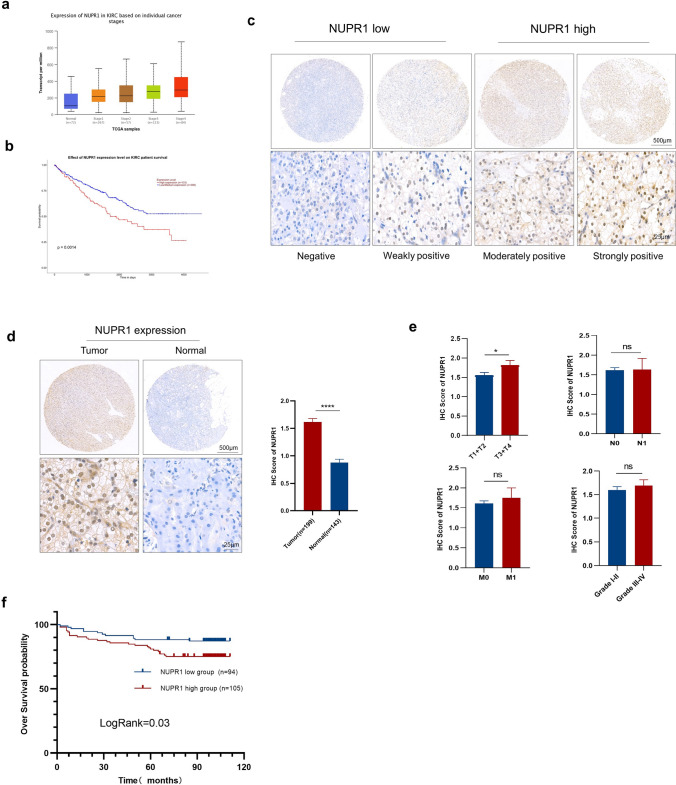
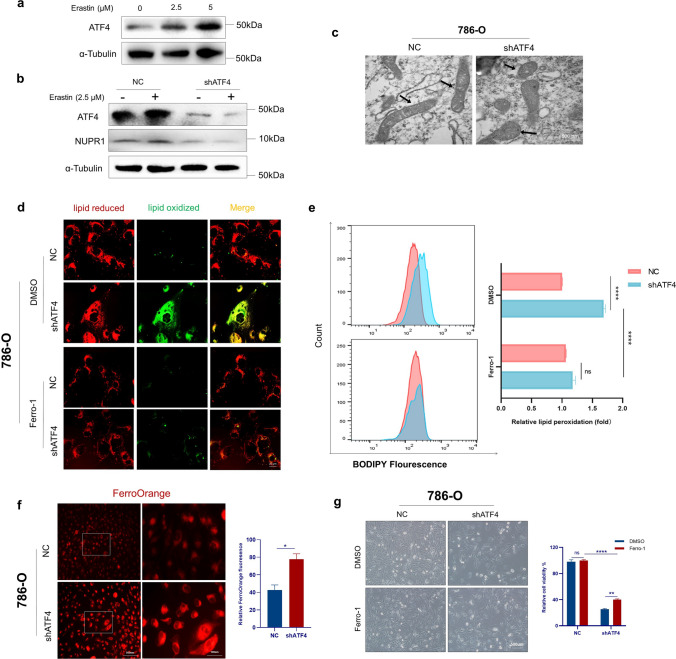
Cancer cells encounter unavoidable stress during tumor growth. The stress-induced transcription factor, activating transcription factor 4 (ATF4), has been reported to upregulate various adaptive genes involved in salvage pathways to alleviate stress and promote tumor progression. However, this effect is unknown in clear cell renal cell carcinoma (ccRCC). In this study, we found that ATF4 expression was remarkably upregulated in tumor tissues and associated with poor ccRCC outcomes. ATF4 depletion significantly impaired ccRCC cell proliferation, migration, and invasion in vitro and in vivo by inhibiting the AKT/mTOR and epithelial-mesenchymal transition (EMT)-related signaling pathway. RNA sequencing and functional studies identified nuclear protein 1 (NUPR1) as a key downstream target of ATF4 for repressing ferroptosis and promoting ccRCC cell survival. In addition, targeting ATF4 or pharmacological inhibition using NUPR1 inhibitor ZZW115 promoted antitumor immunity in syngeneic graft mouse models, represented by increased infiltration of CD4 and CD8 T cells. Furthermore, ZZW115 could improve the response to the PD-1 immune checkpoint blockade. The results demonstrate that the ATF4/NUPR1 signaling axis promotes ccRCC survival and facilitates tumor-mediated immunosuppression, providing a set of potential targets and prognostic indicators for ccRCC patients.
癌细胞在肿瘤生长过程中会遇到不可避免的应激。据报道,应激诱导的转录因子激活转录因子4(ATF4)会上调参与补救途径的各种适应性基因,以减轻应激并促进肿瘤进展。然而,在透明细胞肾细胞癌(ccRCC)中这种作用尚不清楚。在本研究中,我们发现ATF4在肿瘤组织中表达显著上调,且与ccRCC患者的不良预后相关。通过抑制AKT/mTOR和上皮-间质转化(EMT)相关信号通路,ATF4缺失在体外和体内均显著损害ccRCC细胞的增殖、迁移和侵袭。RNA测序和功能研究确定核蛋白1(NUPR1)是ATF4的关键下游靶点,可抑制铁死亡并促进ccRCC细胞存活。此外,在同基因移植小鼠模型中,靶向ATF4或使用NUPR1抑制剂ZZW115进行药理学抑制可促进抗肿瘤免疫,表现为CD4和CD8 T细胞浸润增加。此外,ZZW115可改善对PD-1免疫检查点阻断的反应。结果表明,ATF4/NUPR1信号轴促进ccRCC存活并促进肿瘤介导的免疫抑制,为ccRCC患者提供了一组潜在的靶点和预后指标。