Department of Biological Sciences, Columbia University, New York, New York, United States of America.
PLoS Negl Trop Dis. 2024 Oct 31;18(10):e0012626. doi: 10.1371/journal.pntd.0012626. eCollection 2024 Oct.
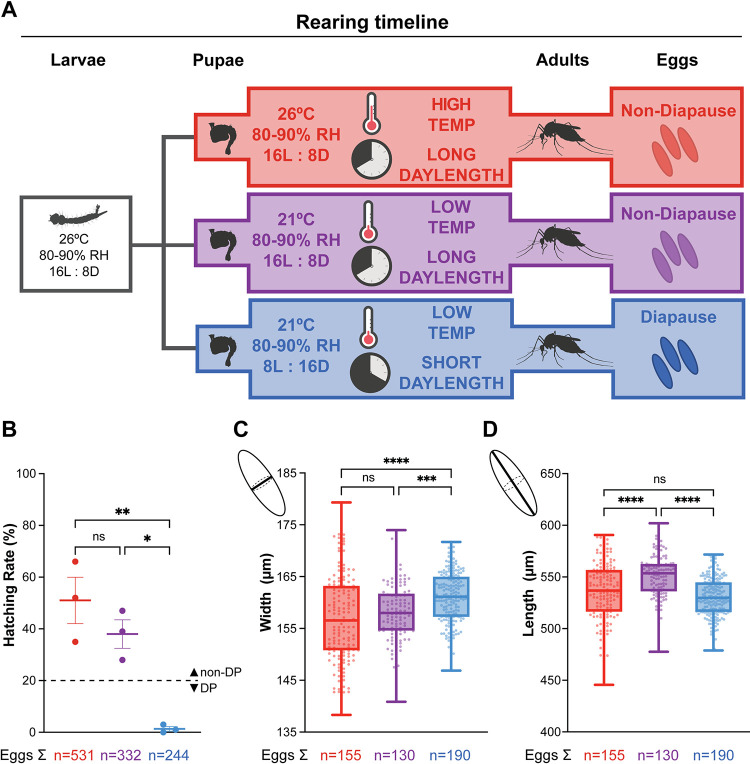
Aedes albopictus (Skuse 1894) mosquitoes can transmit deadly arboviruses and are globally invasive due to their ability to survive in both tropical and temperate climates. Although adults cannot survive harsh winters, females are capable of anticipating seasonal change and producing overwintering diapause (DP) eggs that remain in a state of arrested development over the winter and hatch when favorable conditions return in the spring. While low temperatures can facilitate DP entry under short photoperiods, temperature signals alone are not sufficient to induce DP.
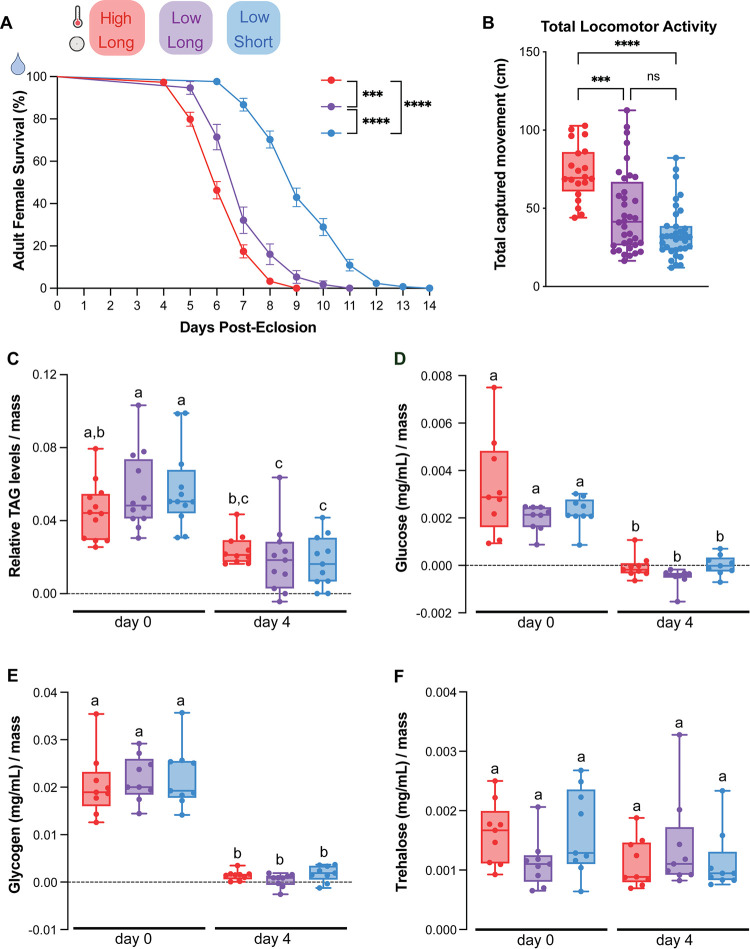
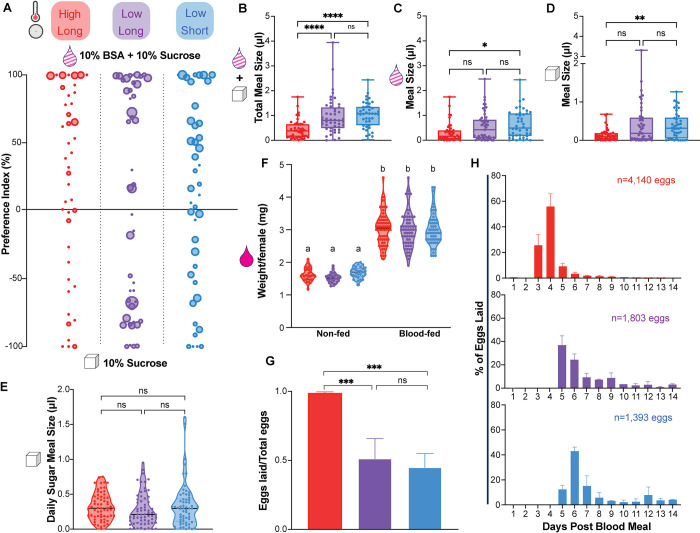
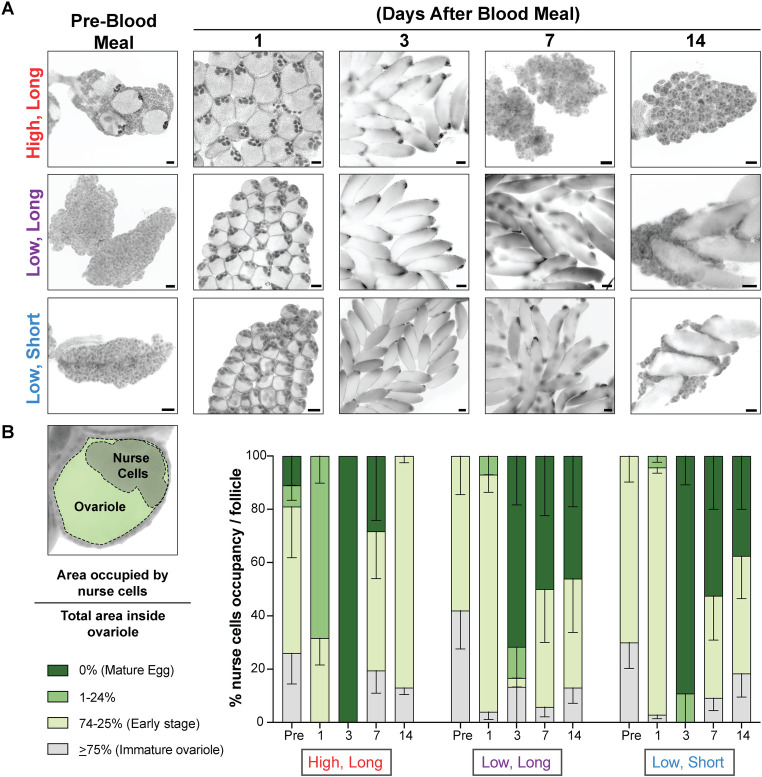
METHODOLOGY/PRINCIPAL FINDINGS: To identify maternal phenotypes predictive of DP egg production in laboratory conditions, we characterized aspects of maternal physiology and behavior to identify those that correlate with DP egg production and changes in photoperiod, versus changes in temperature. Neither changes in temperature nor photoperiod impacted protein preference, blood meal consumption, or total number of eggs produced per female. Egg retention and oviposition timing were influenced by temperature, independent of DP egg production. However, females housed under short photoperiod conditions showed increased starvation resistance, despite showing similar levels of locomotor activity and internal stores of triacylglycerols, glucose, glycogen, and trehalose compared to females housed in long photoperiods.
CONCLUSIONS/SIGNIFICANCE: These results suggest that temperature and photoperiod differentially affect maternal phenotypes and identify starvation resistance as a maternal phenotype that is influenced by photoperiod and correlates with DP egg status.
白纹伊蚊(Skuse 1894)能够传播致命的虫媒病毒,由于其在热带和温带气候下都能生存的能力而在全球范围内具有入侵性。尽管成蚊无法在严酷的冬季生存,但雌性能够预测季节变化,并产生滞育(DP)卵,这些卵在冬季处于休眠状态,当春季条件适宜时孵化。虽然低温可以促进短光照周期下 DP 的进入,但仅温度信号不足以诱导 DP。
方法/主要发现:为了确定实验室条件下预测 DP 卵产生的母体表型,我们对母体生理学和行为进行了特征分析,以确定与 DP 卵产生以及光照周期和温度变化相关的表型。温度或光照周期的变化都不会影响蛋白质偏好、血餐消耗或每个雌性产生的总卵数。尽管 DP 卵的产生不受影响,但卵的保留和产卵时间受到温度的影响。然而,在短光照周期条件下饲养的雌性表现出更强的抗饥饿能力,尽管它们的运动活性和三酰基甘油、葡萄糖、糖原和海藻糖等内部储存水平与在长光照周期下饲养的雌性相似。
结论/意义:这些结果表明,温度和光照周期对母体表型有不同的影响,并确定抗饥饿能力是一种受光照周期影响且与 DP 卵状态相关的母体表型。