Kristensen Jonas M, Kjøbsted Rasmus, Larsen Trine J, Carl Christian S, Hingst Janne R, Onslev Johan, Birk Jesper B, Thorup Anette, Steenberg Dorte E, Knudsen Jonas R, Henriksen Nicolai S, Needham Elise J, Halling Jens F, Gudiksen Anders, Rundsten Carsten F, Hanghøj Kristian E, Stinson Sara E, Hoier Birgitte, Hansen Camilla C, Jensen Thomas E, Hellsten Ylva, Pilegaard Henriette, Grarup Niels, Olesen Jesper, Humphrey Sean J, James David E, Pedersen Michael L, Richter Erik A, Hansen Torben, Jørgensen Marit E, Wojtaszewski Jørgen F P
August Krogh Section for Molecular Physiology, Department of Nutrition, Exercise and Sports, Faculty of Science, University of Copenhagen, Copenhagen, Denmark.
Greenland Center of Health Research, Institute of Institute of Health and Nature, University of Greenland, Nuuk, Greenland.
Nat Metab. 2024 Dec;6(12):2254-2266. doi: 10.1038/s42255-024-01153-1. Epub 2024 Oct 31.
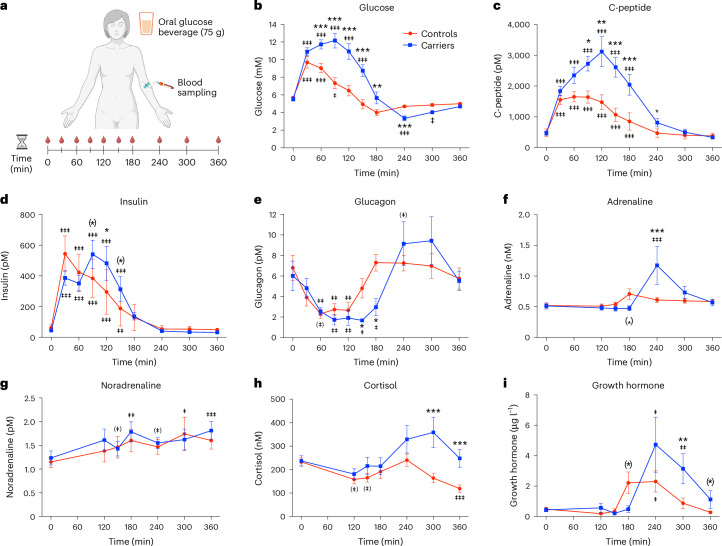
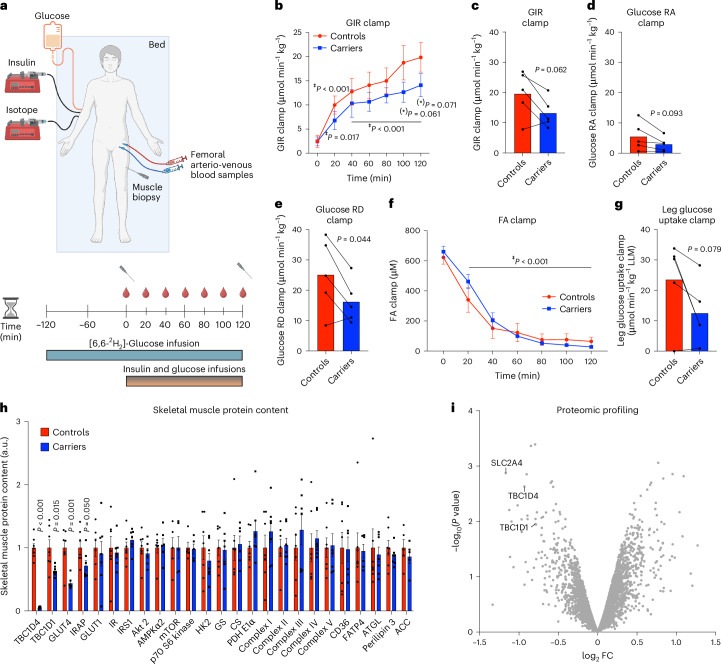
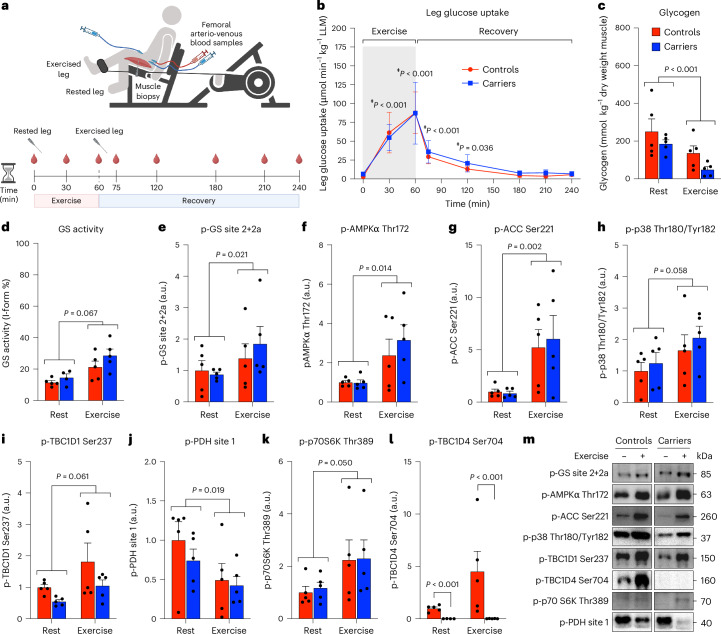
In the Greenlandic Inuit population, 4% are homozygous carriers of a genetic nonsense TBC1D4 p.Arg684Ter variant leading to loss of the muscle-specific isoform of TBC1D4 and an approximately tenfold increased risk of type 2 diabetes. Here we show the metabolic consequences of this variant in four female and four male homozygous carriers and matched controls. An extended glucose tolerance test reveals prolonged hyperglycaemia followed by reactive hypoglycaemia in the carriers. Whole-body glucose disposal is impaired during euglycaemic-hyperinsulinaemic clamp conditions and associates with severe insulin resistance in skeletal muscle only. Notably, a marked reduction in muscle glucose transporter GLUT4 and associated proteins is observed. While metabolic regulation during exercise remains normal, the insulin-sensitizing effect of a single exercise bout is compromised. Thus, loss of the muscle-specific isoform of TBC1D4 causes severe skeletal muscle insulin resistance without baseline hyperinsulinaemia. However, physical activity can ameliorate this condition. These observations offer avenues for personalized interventions and targeted preventive strategies.
在格陵兰因纽特人群中,4%的人是TBC1D4基因无义突变p.Arg684Ter的纯合携带者,该突变导致肌肉特异性TBC1D4亚型缺失,并使2型糖尿病风险增加约10倍。在此,我们展示了该突变在4名女性和4名男性纯合携带者及匹配对照中的代谢后果。延长葡萄糖耐量试验显示,携带者出现高血糖持续时间延长,随后出现反应性低血糖。在正常血糖-高胰岛素钳夹条件下,全身葡萄糖处置受损,且仅与骨骼肌中的严重胰岛素抵抗相关。值得注意的是,观察到肌肉葡萄糖转运蛋白GLUT4及相关蛋白显著减少。虽然运动期间的代谢调节仍正常,但单次运动的胰岛素增敏作用受损。因此,TBC1D4肌肉特异性亚型的缺失会导致严重的骨骼肌胰岛素抵抗,且无基线高胰岛素血症。然而,体育活动可以改善这种状况。这些观察结果为个性化干预和针对性预防策略提供了途径。