Quesada-Stoner Alejandra Catalina, Islam Sayeda, Siječić Amela, Malone Sara, Puerto-Torres Maria F, Cardenas Adolfo, Prewitt Kim, Alfonso Carreras Yvania, Alvarez-Arellano Shilel Y, Argüello-Vargas Deiby, Ceballo-Batista Gloria I, Diaz-Coronado Rosdali, Diniz Borborema Maria do Céu, Toledo Jacqueline Estefany, Fing Ever, Garay Zunilda, Hernández-González Cinthia J, Jimenez-Antolinez Yajaira V, Juárez Tobías María S, Lemos de Mendonça E Fontes Laura, Lopez-Facundo Norma A, Mijares Tobias Jose Miguel, Miralda-Méndez Scheybi T, Montalvo Erika, Cawich Zairie Niguelie, Portilla Figueroa Carlos Andres, Sahonero Marcela, Sánchez-Martín María, Serrano-Landivar Marcia X, Soledad García Valeria, Vasquez Annie, Velásquez Cabrera Daniela María, Carothers Bobbi J, Shelton Rachel C, Graetz Dylan, Acuña Carlos, Luke Douglas A, McKay Virginia R R, Agulnik Asya
Department of Global Pediatric Medicine, St. Jude Children's Research Hospital, TN, Memphis, USA.
Brown School, Washington University in St. Louis, Saint Louis, MO, USA.
Implement Sci Commun. 2024 Oct 31;5(1):122. doi: 10.1186/s43058-024-00664-y.
Adaptation of evidence-based interventions (EBIs) often occurs when implemented in new local contexts and settings. It is unclear, however, during which phase of implementation adaptations are most frequently made and how these changes may impact the fidelity, effectiveness, and sustainability of the EBI. Pediatric Early Warning Systems (PEWS) are EBIs for early identification of deterioration in hospitalized children with cancer. This study evaluates adaptations of PEWS made among resource-variable pediatric oncology hospitals in Latin America implementing and sustaining PEWS.
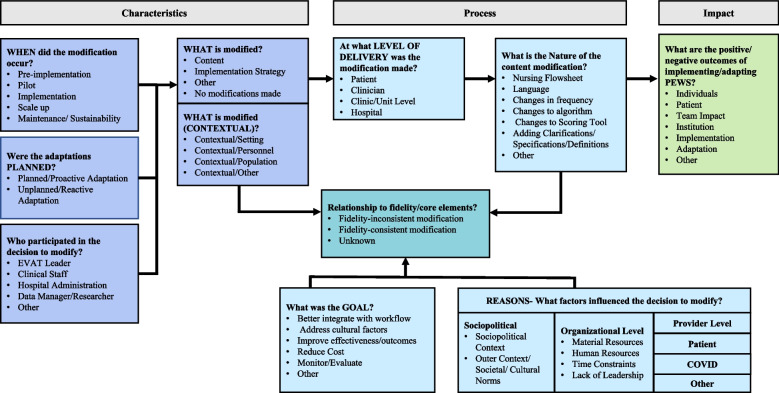
We conducted a cross-sectional survey among pediatric oncology centers participating in Proyecto Escala de Valoración de Alerta Temprana (EVAT), a collaborative to implement PEWS. Adaptations to PEWS were assessed via 3 multiple choice and 1 free text question administered as part of a larger study of PEWS sustainability. Descriptive statistics quantitatively described what, when, and why adaptations were made. Qualitative analysis of free text responses applied the Framework for Reporting Adaptations and Modifications Expanded (FRAME) to describe respondent perspectives on PEWS adaptations.
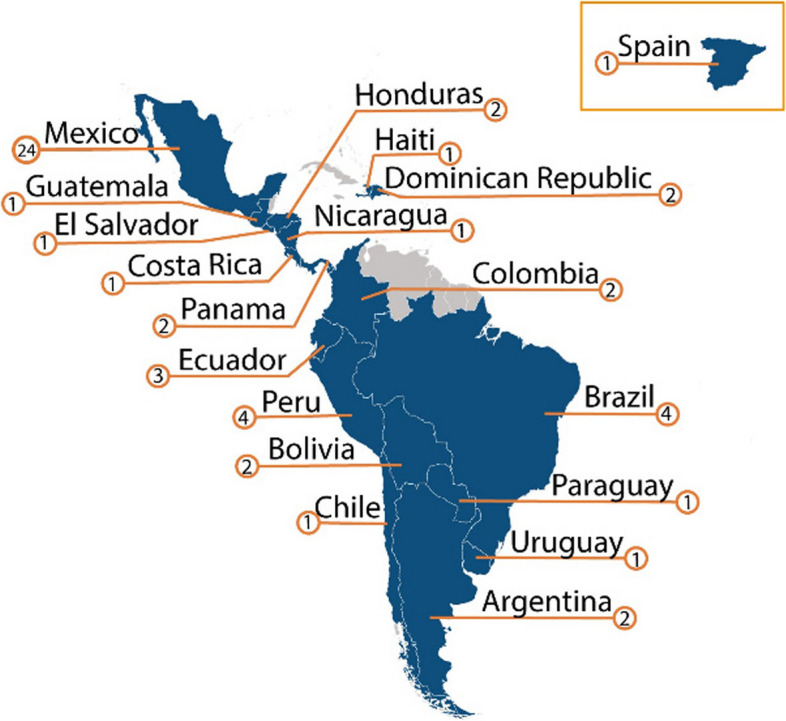
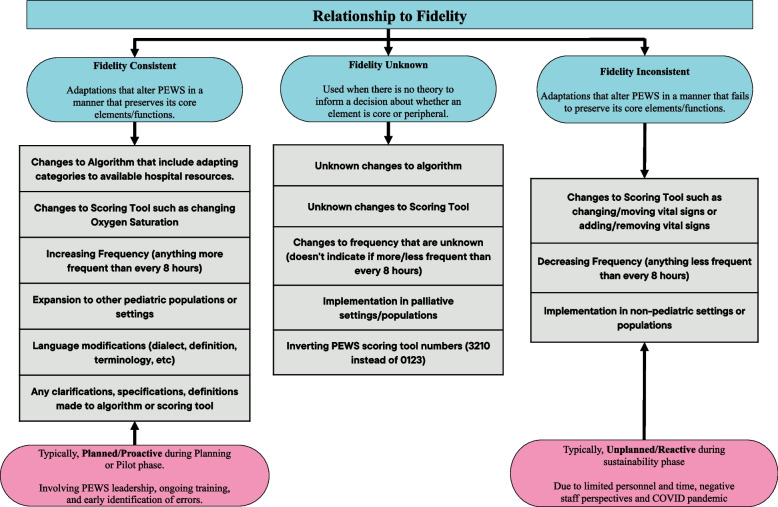
We analyzed 2,094 responses from 58 pediatric oncology centers across 19 countries in Latin America. Participants were predominantly female (82.5%), consisting of nurses (57.4%) and physicians (38.2%) who were PEWS implementation leaders (22.1%) or clinical staff (69.1%). Respondents described multiple PEWS adaptations across all implementation phases, with most occurring during the planning and piloting of EBIs. Adaptations included changes to PEWS content (algorithm, scoring tool, terminology, and use frequency) and context (personnel delivering or population). Respondents felt adaptations streamlined monitoring, enhanced effectiveness, improved workflow, increased comprehension, and addressed local resource limitations. Qualitative analysis indicated that most adaptations were categorized as fidelity consistent and planned; fidelity inconsistent adaptations were unplanned responses to unanticipated challenges.
Adaptations made to PEWS across implementation phases demonstrate how EBIs are adapted to fit dynamic, real-world clinical settings. This research advances implementation science by highlighting EBI adaptation as a potential strategy to promote widespread implementation and sustainability in hospitals of all resource levels.
循证干预措施(EBIs)在新的当地环境和场所实施时常常需要进行调整。然而,目前尚不清楚在实施的哪个阶段最常进行调整,以及这些变化如何影响循证干预措施的保真度、有效性和可持续性。儿科早期预警系统(PEWS)是用于早期识别住院癌症患儿病情恶化的循证干预措施。本研究评估了拉丁美洲资源条件各异的儿科肿瘤医院在实施和维持PEWS过程中对其进行的调整。
我们对参与“早期评估量表项目(EVAT)”的儿科肿瘤中心进行了横断面调查,该项目是一个实施PEWS的合作项目。通过作为PEWS可持续性更大规模研究一部分的3个多项选择题和1个自由文本问题来评估对PEWS的调整。描述性统计定量描述了调整的内容、时间和原因。对自由文本回复的定性分析应用了扩展的报告调整和修改框架(FRAME)来描述受访者对PEWS调整的看法。
我们分析了来自拉丁美洲19个国家58个儿科肿瘤中心的2094份回复。参与者主要为女性(82.5%),包括护士(57.4%)和医生(38.2%),他们是PEWS实施负责人(22.1%)或临床工作人员(69.1%)。受访者描述了在所有实施阶段对PEWS的多种调整,其中大多数发生在循证干预措施的规划和试点阶段。调整包括对PEWS内容(算法、评分工具、术语和使用频率)和背景(提供服务的人员或人群)的改变。受访者认为调整简化了监测、提高了有效性、改善了工作流程、增强了理解并解决了当地资源限制问题。定性分析表明,大多数调整被归类为与保真度一致且是计划好的;与保真度不一致的调整是对意外挑战的无计划应对。
在实施阶段对PEWS所做的调整展示了循证干预措施如何进行调整以适应动态的现实临床环境。本研究通过强调循证干预措施的调整是促进各级资源医院广泛实施和可持续性的潜在策略,推动了实施科学的发展。