Wang Hsiao-Chi, Torres Keila E, Xia Roger, Malogolowkin Marcio, Hsu Ssu-Wei, Chen Ching-Hsien, Shih Tsung-Chieh
Department of Research and Development, Kibio Inc; Houston, Texas, USA.
Department of Surgical Oncology, The University of Texas MD Anderson Cancer Center; Houston, Texas, USA.
Res Sq. 2024 Oct 16:rs.3.rs-5263500. doi: 10.21203/rs.3.rs-5263500/v1.
Neurofibromatosis type 1 (NF1) is a common inherited neurological disorder that can lead to the development of malignant peripheral nerve sheath tumors (MPNSTs), a highly aggressive form of sarcoma. Current treatment options for MPNSTs are limited, with poor prognosis and high recurrence rates. This study aims to explore the potential of targeting the Galectin-1 (Gal-1) and Ras interaction as a novel therapeutic strategy for MPNSTs.
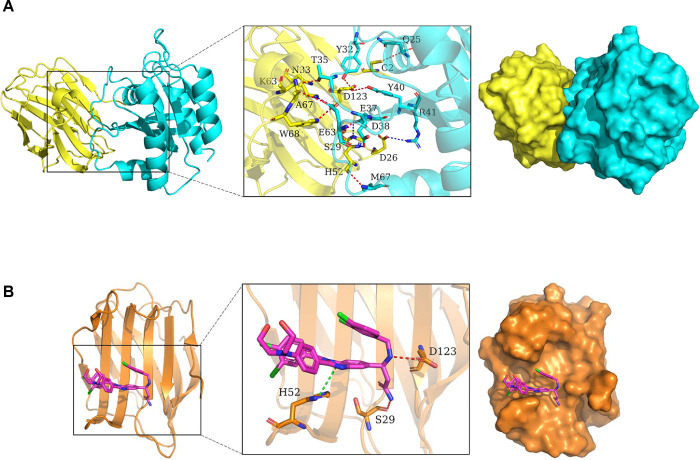
Molecular docking simulations were conducted to identify specific residues involved in the Gal-1 and H-Ras(G12V) interaction. LLS30, a compound designed to target the Ras binding pocket on Gal-1, was developed and tested. The efficacy of LLS30 was evaluated through in vitro assays, including cell viability, apoptosis, and co-immunoprecipitation studies, as well as in vivo assays using orthotopic MPNST xenograft and experimental lung metastasis models. Transcriptome sequencing was performed to analyze the impact of LLS30 on gene expression and signaling pathways.
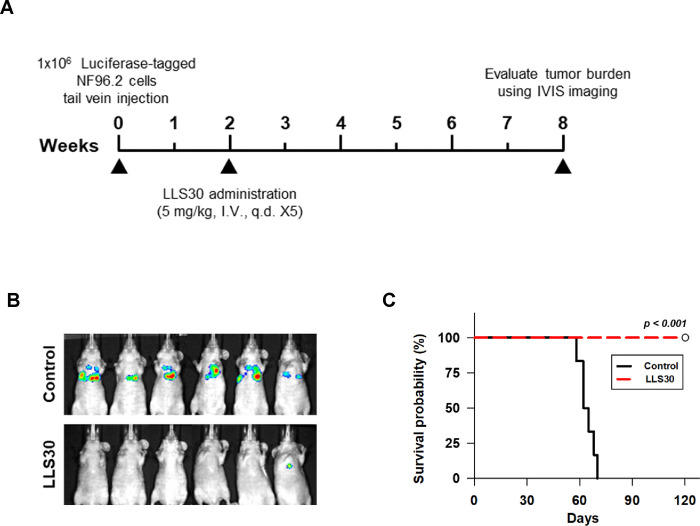
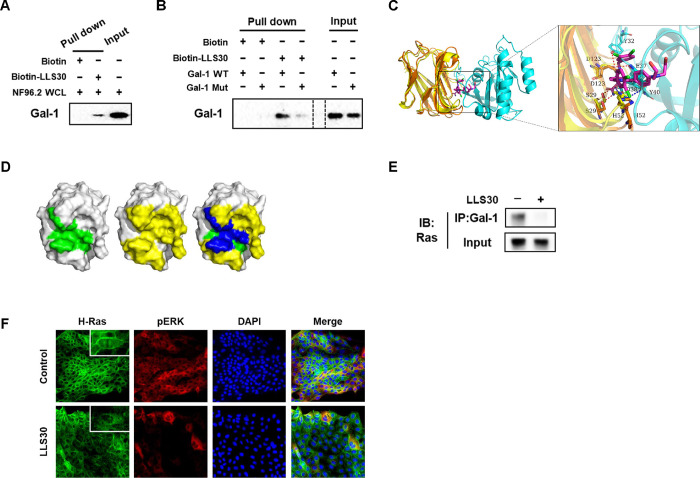
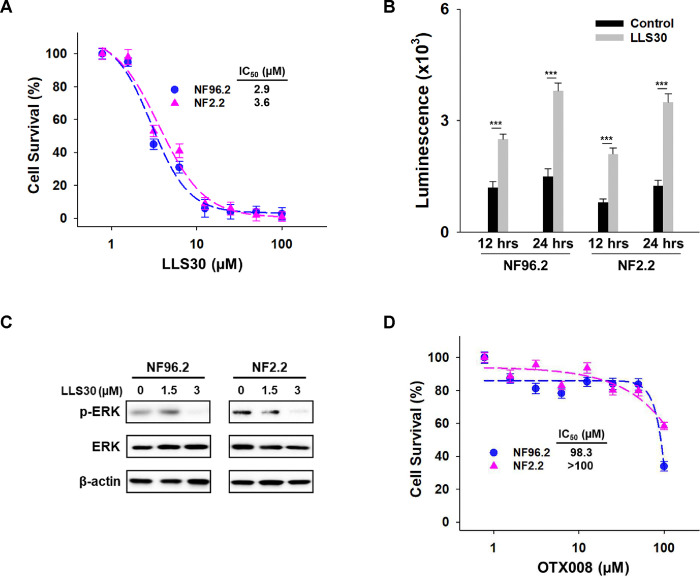
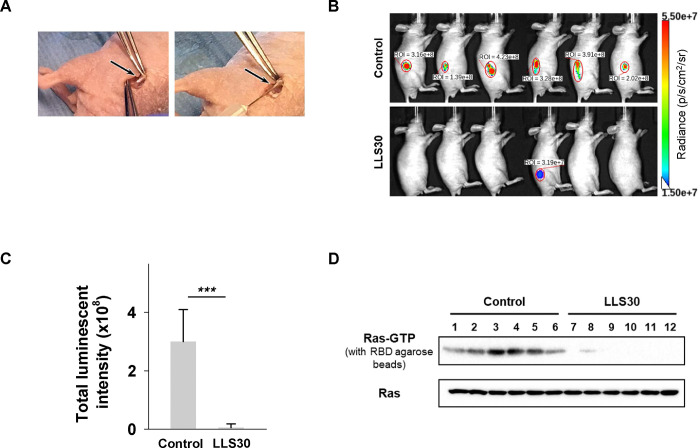
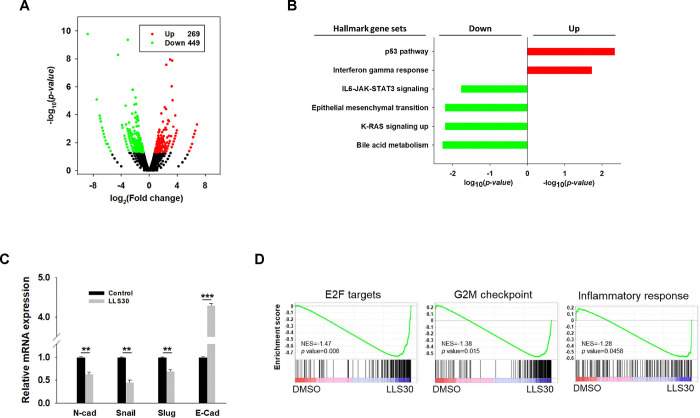
Molecular docking revealed key residues involved in the Gal-1/Ras interaction, and LLS30 was shown to bind to these residues, disrupting the interaction. LLS30 treatment resulted in Ras delocalization from the plasma membrane and suppression of the Ras/Erk signaling pathway. , LLS30 significantly reduced MPNST cell proliferation and induced apoptosis. , LLS30 demonstrated potent anti-tumor activity, reducing tumor burden and metastasis while improving survival in animal models. Transcriptome analysis showed that LLS30 downregulates critical pathways, including KRAS signaling and epithelial-mesenchymal transition (EMT).
Interference with the Gal-1/Ras interaction could lead to suppression of the Ras signaling pathway. LLS30 effectively disrupts the Gal-1/Ras interaction, resulting in significant anti-tumor and anti-metastatic effects in MPNST models. These findings indicated that targeting Gal-1 with LLS30 offers a promising therapeutic approach for treating MPNSTs and may also be applicable to other malignancies where Gal-1 and Ras are key oncogenic drivers.
1型神经纤维瘤病(NF1)是一种常见的遗传性神经系统疾病,可导致恶性外周神经鞘瘤(MPNSTs)的发生,这是一种侵袭性很强的肉瘤形式。目前MPNSTs的治疗选择有限,预后较差且复发率高。本研究旨在探索靶向半乳糖凝集素-1(Gal-1)与Ras相互作用作为MPNSTs新型治疗策略的潜力。
进行分子对接模拟以确定参与Gal-1与H-Ras(G12V)相互作用的特定残基。开发并测试了LLS30,一种设计用于靶向Gal-1上Ras结合口袋的化合物。通过体外试验评估LLS30的疗效,包括细胞活力、凋亡和免疫共沉淀研究,以及使用原位MPNST异种移植和实验性肺转移模型的体内试验。进行转录组测序以分析LLS30对基因表达和信号通路的影响。
分子对接揭示了参与Gal-1/Ras相互作用的关键残基,并且显示LLS30与这些残基结合,破坏了相互作用。LLS30处理导致Ras从质膜上脱离并抑制Ras/Erk信号通路。此外,LLS30显著降低了MPNST细胞增殖并诱导凋亡。而且,LLS30表现出强大的抗肿瘤活性,在动物模型中减轻了肿瘤负担和转移,同时提高了生存率。转录组分析表明LLS30下调了关键通路,包括KRAS信号通路和上皮-间质转化(EMT)。
干扰Gal-1/Ras相互作用可导致Ras信号通路的抑制。LLS30有效地破坏了Gal-1/Ras相互作用,在MPNST模型中产生了显著的抗肿瘤和抗转移作用。这些发现表明用LLS30靶向Gal-1为治疗MPNSTs提供了一种有前景的治疗方法,并且可能也适用于Gal-1和Ras是关键致癌驱动因素的其他恶性肿瘤。