Lee Sanghoon, Lee Da Young, So Insuk, Chun Jung Nyeo, Jeon Ju-Hong
Department of Physiology and Biomedical Sciences, Seoul National University College of Medicine, Seoul 03080, Republic of Korea.
Institute of Human-Environment Interface Biology, Seoul National University, Seoul 03080, Republic of Korea.
Oncol Lett. 2024 Oct 14;28(6):605. doi: 10.3892/ol.2024.14738. eCollection 2024 Dec.
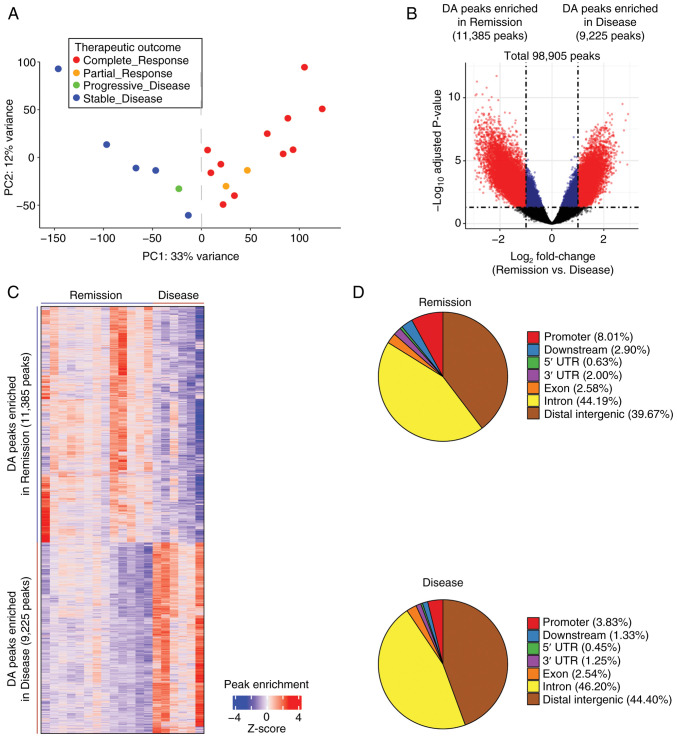
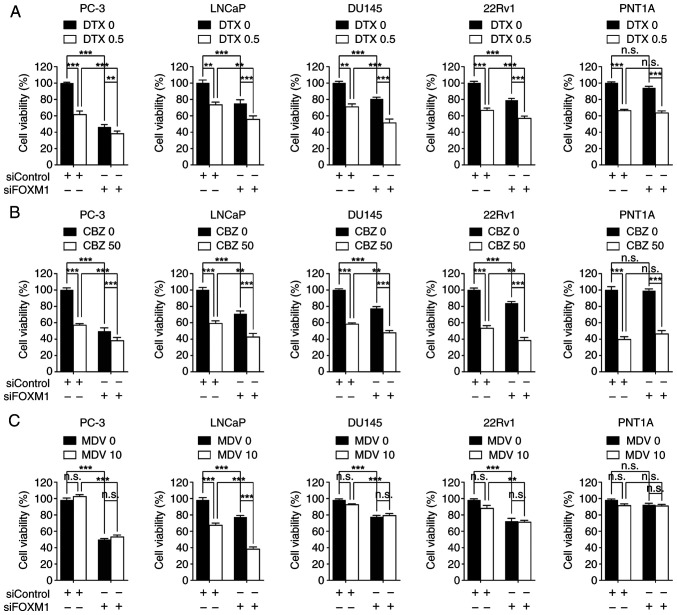
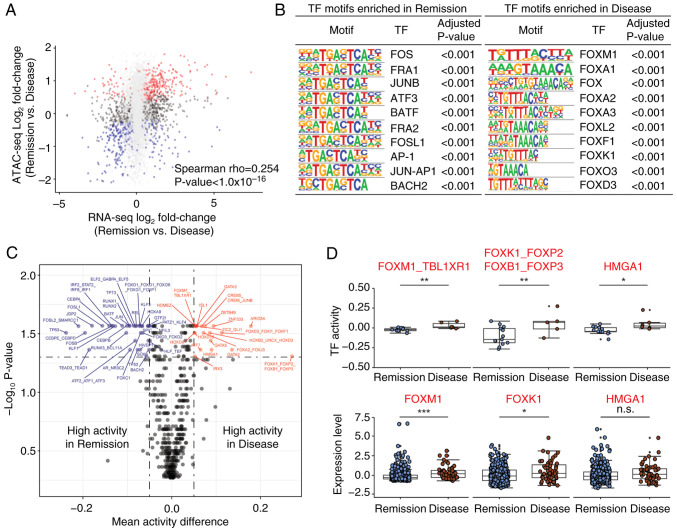
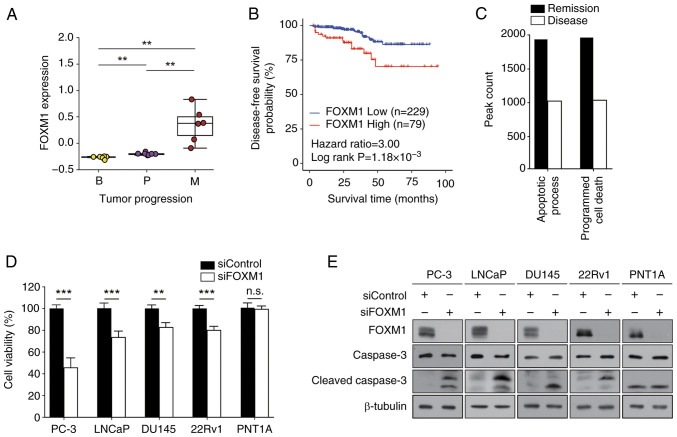
Treatment of advanced prostate cancer is challenging due to a lack of effective therapies. Therefore, it is important to understand the molecular mechanisms underlying therapeutic resistance in prostate cancer and to identify promising drug targets offering significant clinical advantages. Given the pivotal role of dysregulated transcriptional programs in the therapeutic response, it is essential to prioritize translational efforts targeting cancer-associated transcription factors (TFs). The present study investigated whether chromatin accessibility was associated with therapeutic resistance in prostate cancer using Assay for Transposase-Accessible Chromatin with sequencing (ATAC-seq) data. The bioinformatics analysis identified differences in chromatin accessibility between the drug response (Remission) and drug resistance (Disease) groups. Additionally, a significant association was observed between chromatin accessibility, transcriptional output and TF activity. Among TFs, forkhead box protein M1 (FOXM1) was identified as a TF with high activity and expression in the Disease group. Notably, the results of the computational analysis were validated by FOXM1 knockdown experiments, which resulted in suppressed cell proliferation and enhanced therapeutic sensitivity in prostate cancer cells. The present findings demonstrated that chromatin accessibility and TF activity may be associated with therapeutic resistance in prostate cancer. Additionally, these results provide the basis for future investigations aimed at understanding the molecular mechanisms of drug resistance and developing novel therapeutic approaches for prostate cancer.
由于缺乏有效的治疗方法,晚期前列腺癌的治疗具有挑战性。因此,了解前列腺癌治疗耐药的分子机制并确定具有显著临床优势的有前景的药物靶点非常重要。鉴于失调的转录程序在治疗反应中的关键作用,将针对癌症相关转录因子(TFs)的转化研究工作列为优先事项至关重要。本研究使用转座酶可及染色质测序分析(ATAC-seq)数据,调查了染色质可及性是否与前列腺癌的治疗耐药相关。生物信息学分析确定了药物反应(缓解)组和耐药(疾病)组之间染色质可及性的差异。此外,还观察到染色质可及性、转录输出和TF活性之间存在显著关联。在TFs中,叉头框蛋白M1(FOXM1)被确定为在疾病组中具有高活性和高表达的TF。值得注意的是,计算分析结果通过FOXM1敲低实验得到验证,该实验导致前列腺癌细胞增殖受到抑制,治疗敏感性增强。本研究结果表明,染色质可及性和TF活性可能与前列腺癌的治疗耐药相关。此外,这些结果为未来旨在了解耐药分子机制和开发前列腺癌新治疗方法的研究提供了基础。